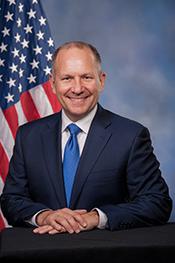
Lloyd Smucker
RRepublicanPA-11 · Representative
54
/ 100
Average
Attendance97
Avg: 96
Independence2
Avg: 4
Bipartisan Tone6
Avg: 15
Ethics Record100
Avg: 99
Transparency57
Avg: 53
Accountability Score — composite of attendance, independence, bipartisan tone, ethics record & transparency.
Methodology22
Bills Sponsored
0
Enacted into Law
3
Passed a Chamber
19
In Committee
All Sponsored Bills
HR5284Passed House
Claiming Age Clarity Act
Claiming Age Clarity Act This bill changes certain terms that are used by the Social Security Administration (SSA) to describe the ages at which a worker may claim Social Security retirement benefits. First, the SSA must use minimum monthly benefit age instead of early eligibility age . This refers to the earliest age (62 under current law) at which a worker may claim benefits. (Currently, the benefit amount of a worker who claims benefits early is reduced to account for the longer period during which the worker is expected to receive benefits.) Second, the SSA must use standard monthly benefit age instead of full retirement age and normal retirement age . These terms refer to the age at which a worker may claim benefits without a reduction in the benefit amount. (Currently, this age ranges from 65 to 67, depending on the worker's year of birth.) Finally, the SSA must use the term maximum monthly benefit age for any reference to age 70 as the maximum age at which a worker may receive delayed retirement credits. The SSA may not use the term delayed retirement credit. These terms refer to the mechanism that increases the benefit amount of a worker who delays claiming benefits after reaching the full retirement age. (Currently, a worker receives a credit for each month between the full retirement age and age 70 that the worker delays claiming benefits. Each credit increases the benefit amount that the worker will receive after claiming benefits by a specified percentage.)
HR2347Passed House
Survivor Justice Tax Prevention Act
Survivor Justice Tax Prevention Act This bill excludes from gross income certain damages received by an individual due to any sexual act or sexual contact and establishes the applicable burden of proof in court proceedings regarding the characterization of such damages for federal tax purposes. Under current law, amounts received as damages (other than punitive damages) from a judgment, award, or settlement of a claim may be excluded from gross income and, thus, are not subject to federal income tax, if attributable to a personal physical injury or physical sickness. The Internal Revenue Service (IRS) generally interprets personal physical injury to require observable bodily harm (e.g., bruising, cuts, swelling, or bleeding). Under the bill, amounts received as damages (other than punitive damages) from a judgment, award, or settlement due to any sexual act or sexual conduct, whether or not there are medical records or observable injuries of such act or contact, may be excluded from gross income. Further, if a judgment, award, or settlement states that damages are due to any sexual act or sexual conduct, then the IRS has the burden of proving otherwise in court proceedings related to the tax liability associated with such damages. Finally, the bill requires the IRS to promote public awareness of the exclusion from gross income of damages related to any sexual act or sexual contact.
HR9721In Committee
Fiscal Sponsorship Transparency Act of 2026
Fiscal Sponsorship Transparency Act of 2026 This bill requires certain charitable organizations to report to the Internal Revenue Service (IRS) information related to fiscal sponsorship arrangements. The bill also imposes excise taxes on improper conduit arrangements and disallows a federal tax deduction for contributions under such arrangements. The bill defines a fiscal sponsorship arrangement as an arrangement between a charitable organization required to file an annual information return with the IRS (Form 990) and a person that is not tax-exempt under which the organization (1) agrees (for consideration) to receive and administer contributions on behalf of the person, or (2) publicly solicits and agrees to receive and administer contributions for a specific project that furthers the organization’s tax-exempt purpose. The organization must retain discretion and control over the contributions, and the arrangement must be terminable by either party. The bill requires tax-exempt charitable organizations to report information related to fiscal sponsorship arrangements, including the names of the parties (other than individuals) to such arrangement, aggregate amounts transferred or made available for a specific project, and principal officer within the organization managing the arrangement. The bill imposes excise taxes on the organization and certain organization managers for amounts transferred under a similar arrangement if the organization fails to exercise discretion and control over the use of such funds. The bill defines this as an improper conduit arrangement. Finally, the bill disallows a tax deduction for contributions or gifts made under an improper conduit arrangement.
HR8804In Committee
Medicare Payment Integrity Enhancement Act of 2026
The proposal would allow the federal government to hire private companies to review Medicare claims before they are paid out, rather than only checking them after payment. These contractors would help catch billing errors and fraud upfront, potentially saving taxpayer money and reducing improper payments to healthcare providers. The change affects Medicare beneficiaries, hospitals, doctors, and other healthcare providers who bill the program.
HR8355In Committee
Accountable Produce is Medicine Act of 2026
The bill would require Medicare and Medicaid officials to test a new program that uses fresh produce as a medical treatment to help reduce chronic diseases like diabetes and heart disease. The program would likely provide eligible patients with prescriptions for fruits and vegetables, similar to how they receive prescriptions for medications, to see if better nutrition can improve health outcomes and lower healthcare costs.
HR8025In Committee
Protecting American Streaming and Innovation Act
This bill would likely impose new trade restrictions or tariffs on foreign streaming services and digital platforms to protect American companies in the entertainment and technology industries. The measure aims to give U.S.-based streaming services a competitive advantage against international competitors by making foreign services more expensive or harder to access. The bill affects streaming companies, tech firms, and consumers who use services like Netflix, Disney+, and other platforms.
HR7847In Committee
Stop Unemployment Fraud Act
This bill would likely establish new measures to detect and prevent people from fraudulently claiming unemployment benefits they're not entitled to, possibly through improved verification systems or penalties for those caught committing fraud. The changes would affect both unemployed workers seeking benefits and the government agencies that administer these programs. The bill has been sent to the House Committee on Ways and Means for review.
HR7808In Committee
Debt-to-GDP Transparency and Stabilization Act
Debt-to-GDP Transparency and Stabilization Act This bill requires the President's annual budget and congressional budget resolutions to include (1) the ratio of the public debt to the estimated gross domestic product (GDP), and (2) the ratio of the surplus or deficit to the estimated GDP.
HR6895In Committee
Debt Solution and Accountability Act
Debt Solution and Accountability Act This bill requires the Department of the Treasury to submit to Congress a debt report and a statement of intent on (1) any date on which the debt subject to limit reaches 99.5% of the federal debt limit, and (2) the date that is one month before the expiration of a suspension of the debt limit. The debt report must include the historical levels of the debt, current amount and composition of the debt, and future projections of the debt; the drivers and composition of future debt; and how the United States will meet debt obligations. The statement of intent must include a detailed explanation of proposals of the President to reduce or slow the growth of the debt, the impact of increasing the debt limit and of leaving the debt limit unchanged, and projections of the fiscal health and sustainability of major direct-spending entitlement programs (including Social Security, Medicare, and Medicaid). Within 180 days after the effective date of an increase in or suspension of the debt limit, Treasury must submit to Congress a detailed report on the progress of implementing the President's proposals to reduce or slow the growth of the debt. Treasury must make the information required by this bill available to the public on its website. Upon request, Treasury must submit to Congress specified financial and economic data relevant to determining the amount of the public debt.
HR5348Passed House
Social Security Child Protection Act of 2025
Social Security Child Protection Act of 2025 This bill directs the Social Security Administration to issue a new Social Security number to a child under the age of 14 if the child's Social Security card was lost or stolen while being mailed to the child.
HR6282In Committee
Providing Distance Education for Foreign Institutions Act
This bill would allow foreign educational institutions to offer distance learning programs to students in the United States, potentially making it easier for Americans to earn degrees or take courses from universities abroad without traveling. The legislation likely aims to expand educational options and international academic partnerships, though it would need to establish rules about which foreign schools qualify and how their programs are regulated. Students and educational institutions would be the primary groups affected by any new distance learning opportunities this creates.
HR6231In Committee
Improve and Enhance the Work Opportunity Tax Credit Act
This bill would make it easier and more valuable for businesses to hire workers from groups that face employment barriers, such as veterans, people with disabilities, and long-term unemployed individuals, by expanding and improving a tax credit that rewards companies for hiring these workers. The changes would likely increase the tax breaks companies receive when they employ people from these targeted groups, potentially encouraging more hiring of workers who might otherwise struggle to find jobs. The bill is currently under review by the House committee that handles tax policy.
HR4204In Committee
Medicare Patient Choice Act
The bill would expand options for Medicare beneficiaries to choose their healthcare coverage and providers, likely by allowing seniors to select from a broader range of plans or giving them more flexibility in how they receive care. The changes would affect millions of Medicare recipients and could influence how insurance companies and healthcare providers operate under the program. The proposal has been sent to two congressional committees for review and discussion.
HR3165In Committee
Student Loan Tax Elimination Act
This bill would eliminate federal income taxes on student loan forgiveness, so borrowers whose loans are canceled wouldn't have to pay taxes on the forgiven amount as if it were income. Currently, when student loans are forgiven through programs like Public Service Loan Forgiveness or income-driven repayment plans, borrowers may owe federal taxes on the forgiven balance, which can create a large unexpected tax bill. The change would affect millions of current and future student loan borrowers by reducing the financial burden of loan forgiveness programs.
HR2744In Committee
Medicare Enrollment Protection Act of 2025
Medicare Enrollment Protection Act of 2025 This bill provides for a special enrollment period for Medicare medical benefits for individuals who are enrolled in COBRA continuation coverage at the time they qualify for Medicare. The special enrollment period applies during each month of COBRA coverage and the three-month period after coverage ends; individuals may enroll during the special enrollment period once during their lifetime.
HR2696In Committee
Retirement Savings for Americans Act of 2025
This bill would likely make changes to retirement savings programs available to American workers, such as 401(k)s, IRAs, or other pension plans, with the goal of helping more people save for retirement. The specific changes could involve expanding who can access these accounts, increasing contribution limits, or making it easier for small businesses to offer retirement benefits to employees. Workers, employers, and financial institutions would be the main groups affected by any changes to these retirement savings rules.
HR2465In Committee
Ensuring Opportunities in Online Training Act
This bill would likely establish or expand rules to help workers access online job training programs and ensure those programs meet quality standards. It probably aims to make it easier for people to learn new skills through internet-based courses while protecting them from low-quality or fraudulent training providers. The legislation would affect workers seeking to retrain or advance their careers, as well as companies and educational organizations that offer online training.
HR2013In Committee
Medicare Home Health Accessibility Act
Medicare Home Health Accessibility Act This bill allows individuals to receive occupational therapy as a home health service under Medicare without the need for other services. Currently, individuals may only receive occupational therapy as a home health service if they first qualify for home health services based on other needs (e.g., physical therapy).
HR1633In Committee
Workforce Reentry Act
The legislation would create new programs and funding to help people rejoin the workforce after extended time away from employment, such as those returning from incarceration, military service, or caregiving responsibilities. It would provide job training, placement assistance, and support services to make the transition back to work easier for these individuals. The bill aims to address labor shortages while giving workers a second chance at stable employment.
HR1436In Committee
ENABLE Act
The legislation would modify tax rules to help small businesses and entrepreneurs retain more of their earnings by adjusting how certain business income is taxed. The changes would primarily benefit owners of small companies and self-employed individuals who currently face higher tax burdens on their business profits. The proposal aims to make it easier for these business owners to reinvest money back into their companies and create jobs.
HR1177In Committee
Improve and Enhance the Work Opportunity Tax Credit Act
Improve and Enhance the Work Opportunity Tax Credit Act This bill increases the work opportunity tax credit (WOTC) for wages paid during the first year of employment to certain employees. The bill also eliminates the maximum age limit applicable to Supplemental Nutrition Assistance Program (SNAP) benefit recipients for purposes of the WOTC. Under current law, an employer generally may claim a WOTC in the amount of 40% of up to $6,000 (or of up to $24,000 for certain veterans, $3,000 for summer youth employees, and $10,000 for long-term family aid recipients) of qualified wages paid during the first year of employment to an employee who is a member of a targeted group. (Exceptions and limitations apply.) The bill increases the WOTC to (1) 50% of up to $6,000 (or of up to $24,000 for certain veterans) of qualified first-year wages paid to an employee who is a member of a targeted group (other than a summer youth employee or recipient of long-term family aid), and (2) 50% of up to $12,000 (or of up to $48,000 for certain veterans) of qualified wages paid during the first year of employment to such employee if the employee works at least 400 hours during the year. Finally, the bill eliminates the maximum age limit applicable to SNAP benefit recipients and, thus, allows an employer to claim the WOTC for qualified first-year wages paid to an employee who is at least 18 years old and receiving SNAP benefits for a certain period of time.
HR1026In Committee
Primary Care Enhancement Act of 2025