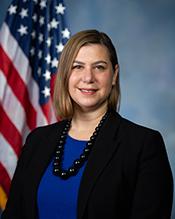
Elissa Slotkin
DDemocratMI · Senator
60
/ 100
Average
Attendance97
Avg: 97
Independence19
Avg: 23
Bipartisan Tone21
Avg: 14
Ethics Record100
Avg: 100
Transparency49
Avg: 47
Accountability Score — composite of attendance, independence, bipartisan tone, ethics record & transparency.
Methodology22
Bills Sponsored
0
Enacted into Law
0
Passed a Chamber
22
In Committee
All Sponsored Bills
S5554In Committee
Ovarian Cancer IMPACT Act
SRES907In Committee
A resolution supporting the designation of September 2026 as "National Ovarian Cancer Awareness Month".
S5344In Committee
A bill to require the Secretary of the Army to submit a report on efforts to support the production, testing, and sustainment of autonomous maneuver systems, components for such systems, and low-cost interceptors.
S5340In Committee
A bill to require a drone posture review.
S5345In Committee
A bill to provide for the delivery of artificial intelligence functional bills of materials, and for other purposes.
S5342In Committee
A bill to require a report on the advisability and feasibility of establishing a Drone Center of Excellence within the Army National Guard.
S5343In Committee
Military Leadership Removal Transparency Act of 2026
S5009In Committee
MERIT Act of 2026
The bill would require that anyone temporarily serving as Director of National Intelligence must have the same extensive national security qualifications that the permanent director needs, rather than allowing someone without those credentials to fill the role on an acting basis. This affects how the intelligence community operates during transitions or vacancies in leadership by ensuring continuity of expertise in this critical national security position.
S4845In Committee
Protect Our Polls Act
The bill would require Congress to explicitly approve any deployment of military troops or armed personnel at polling places, closing a loophole in federal law that currently allows such deployments without specific congressional authorization. This would affect election security decisions and military operations during federal elections, ensuring that voters and election officials have legislative oversight of armed presence at voting locations. The measure aims to prevent unauthorized military involvement in elections while maintaining Congress's constitutional power over such deployments.
S4710In Committee
Protecting America from Chinese Cars Act of 2026
The legislation would ban cars and trucks that have internet connectivity features and are made by or associated with companies from countries considered U.S. adversaries, such as China and Russia. This would prevent these vehicles from being sold or imported into the United States, affecting both foreign automakers and American consumers who might want to purchase them. The goal is to protect national security by preventing potential foreign surveillance or control through vehicle technology.
S4188In Committee
Public Integrity in Financial Prediction Markets Act of 2026
This bill would establish rules for prediction markets—platforms where people bet money on the outcomes of future events like elections or policy decisions—to prevent government officials and their staff from using insider information to place bets. The legislation aims to protect the integrity of both government decision-making and these financial markets by restricting who can participate and requiring transparency about trades made by public officials.
S4113In Committee
AI Guardrails Act of 2026
This bill would establish safety rules and oversight requirements for artificial intelligence systems used by the military and defense agencies to ensure they operate reliably and don't cause unintended harm. It likely aims to prevent AI from making dangerous decisions on its own in weapons systems or military operations without proper human control and review. The bill would affect how the Department of Defense develops, tests, and deploys AI technology across armed forces operations.
S3819In Committee
Paving the Way for American Industry Act
This bill likely aims to streamline federal regulations and government processes to make it easier for American businesses to operate and grow. Based on its referral to the Homeland Security and Governmental Affairs Committee, it probably focuses on reducing bureaucratic barriers that companies face when dealing with federal agencies. The bill would affect businesses of all sizes by potentially speeding up permitting, licensing, or approval processes.
S3766In Committee
Make Congress Drive Union Made Act
This bill would require members of Congress and federal employees to use vehicles made by union workers when traveling on official business. The measure aims to support American union manufacturing and ensure that federal spending goes toward products made by workers with union protections and higher labor standards.
S3600In Committee
National Housing Emergency Act of 2026
This bill would declare a national housing emergency and likely authorize federal funding and programs to address the shortage of affordable housing across the country. It would probably affect renters, homebuyers, construction companies, and local governments by providing tools like grants, loans, or regulatory changes to increase housing supply and make housing more affordable. The specific measures would depend on what Congress includes as the bill moves through the committee process.
S3511In Committee
PRIMED Act
S3167In Committee
No Troops in Our Streets Act of 2025
S3163In Committee
A bill to require the Secretary of Defense to seek to engage appropriate officials of Taiwan in a joint program with Taiwan to enable the fielding of uncrewed systems and counter-uncrewed systems capabilities.
S3112In Committee
Fairness for Fruits and Vegetables Act of 2025
This bill would likely change how fruits and vegetables are regulated or treated under federal agriculture and food programs, though the specific changes aren't yet clear from the title alone. Based on its focus, it probably aims to address fairness issues in how these crops are handled compared to other agricultural products—whether that means adjusting subsidies, labeling rules, trade practices, or how they're classified in food assistance programs. Farmers who grow produce, grocery stores that sell it, and consumers who buy it could all be affected depending on what specific fairness measures the bill includes.
S2745In Committee
Federal Firefighter Cancer Detection and Prevention Act of 2025
The legislation would establish new programs to help detect and prevent cancer in federal firefighters, who face elevated health risks from exposure to hazardous materials on the job. It would likely fund screening initiatives, research into cancer causes among firefighters, and preventive health measures for this workforce. The bill aims to protect firefighters' long-term health and ensure they receive proper medical monitoring and care related to occupational cancer risks.
S2259In Committee
Protecting Military Bases from Connected Vehicles of Concern Act of 2025
The military would be prohibited from purchasing or using connected vehicles (like cars and trucks with internet or wireless capabilities) made by certain foreign companies deemed security risks, particularly those from China. This restriction applies to all Department of Defense purchases and would affect military bases, personnel, and contractors who supply vehicles to the armed forces. The goal is to prevent potential foreign surveillance or hacking of military vehicles through their wireless connections.
S2040In Committee
Connected Vehicle National Security Review Act
The government would be required to review the national security risks of connected vehicles—cars and trucks that communicate with each other or external systems—before they become widespread on American roads. This review would examine whether foreign countries or bad actors could hack into these vehicles to cause harm, and would give federal agencies the power to block or restrict vehicle technology that poses security threats. The measure affects automakers, technology companies, and ultimately drivers who use connected vehicle features.