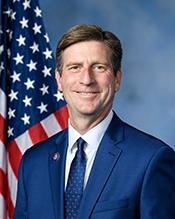
Greg Stanton
DDemocratAZ-4 · Representative
63
/ 100
Average
Attendance98
Avg: 96
Independence5
Avg: 4
Bipartisan Tone14
Avg: 15
Ethics Record100
Avg: 99
Transparency100
Avg: 53
Accountability Score — composite of attendance, independence, bipartisan tone, ethics record & transparency.
Methodology17
Bills Sponsored
0
Enacted into Law
4
Passed a Chamber
13
In Committee
All Sponsored Bills
HR741Passed House
Stronger Engagement for Indian Health Needs Act of 2025
Stronger Engagement for Indian Health Needs Act of 2025 This bill elevates the current position of the Director of the Indian Health Service within the Department of Health and Human Services (HHS) to Assistant Secretary for Indian Health within HHS.
HR9659In Committee
Fund Schools, Not ICE Act
The proposal would take money that was set aside for immigration enforcement but hasn't been spent yet and redirect it to the Department of Education to fund programs that help elementary and secondary schools, particularly those serving low-income students. This would shift federal funding from border and immigration operations to classroom resources and educational support. The bill is currently being reviewed by three congressional committees to determine whether it should move forward.
HR9301In Committee
Extreme Heat Congressional Advisory Commission Act
The proposal would create a new independent commission with members from both political parties to study extreme heat and develop plans to address its impacts on national security and public safety. The commission would work on both immediate and long-term solutions to help communities prepare for and reduce the effects of dangerous heat waves and related extreme weather. This would affect policymakers, emergency management officials, and communities vulnerable to heat-related dangers.
HR8557In Committee
Short-Term Holding Facility Standards Restoration Act.
The legislation would prevent immigration authorities from holding people in detention facilities for extended periods, establishing limits on how long someone can be kept in ICE custody. This would affect immigrants in the deportation process and potentially reduce the time families spend separated while awaiting immigration proceedings or removal decisions.
HR8287In Committee
Semiconductor Controls Effectiveness Act of 2026
This bill would likely strengthen or modify U.S. rules that control the export of advanced semiconductor technology and equipment to other countries, particularly those seen as national security concerns. The measure would probably give the government better tools to enforce these restrictions and prevent sensitive chip-making technology from reaching adversaries. Companies that manufacture or export semiconductors and computer equipment would be most directly affected by any new requirements or compliance rules.
HR8188In Committee
Tribal Roads Improvement Act
The bill would provide funding and support to improve roads on Native American tribal lands, which often face serious maintenance and safety problems due to limited resources. It aims to help tribes repair and upgrade their road infrastructure, benefiting both tribal members who depend on these roads for daily travel and economic development. The proposal has been sent to two House committees to review different aspects of the plan.
HR6481Passed House
Federal Building Threat Notification Act
Federal Building Threat Notification Act This bill requires the General Services Administration (GSA) and the Federal Protective Service (FPS) to develop and disseminate emergency communication guidance for building facility security committees to use in life safety events that threaten federal buildings owned and operated by GSA under the protection of FPS. ( Life safety events are events to which first responders deploy.) The guidance must include best practices and protocols relating to (1) procedures to inform building tenants of threats to the building or its occupants, and (2) instructions for safety practices in response to threats or heightened risk to the building or its occupants.
HR6480Passed House
To direct the Administrator of General Services to submit a report to Congress on the state of the real estate portfolio of the Public Building Service, and for other purposes.
This bill requires the General Services Administration to annually report to Congress on the state of the Public Building Service's real estate portfolio for the previous calendar year. (The Public Building Service acquires, manages, and disposes of space on behalf of more than 100 federal agencies. Currently, it owns or leases 359 million square feet in more than 8,500 buildings.) The report must include certain information about the portfolio, including the number of buildings owned, completed new construction, top customers, and the total number of leased spaces.
HR7714In Committee
To designate the facility of the United States Postal Service located at 101 North Colorado Street in Chandler, Arizona, as the "Mayor Coy Payne Memorial Post Office Building".
This bill designates the facility of the United States Postal Service located at 101 North Colorado Street in Chandler, Arizona, as the "Mayor Coy Payne Memorial Post Office Building".
HR4532In Committee
American Cooperation with Our Neighbors Act
The bill would strengthen diplomatic and economic partnerships between the United States and countries in the Western Hemisphere through increased cooperation on trade, security, and development initiatives. It aims to coordinate efforts with neighboring nations on issues like combating drug trafficking, addressing migration, and promoting regional stability. The measure affects U.S. foreign policy, international businesses engaged in trade with the region, and government agencies involved in diplomatic relations.
HR6992In Committee
EB–5 Regional Center Program Advisory Committee Authorization Act
This bill would create an advisory committee to oversee the EB-5 visa program, which allows foreign investors to get permanent residency in the United States by investing money in American businesses that create jobs. The committee would provide guidance on how the program operates and help ensure it's working effectively for both investors and the communities receiving investment. The change affects foreign investors seeking U.S. residency, American businesses looking for capital, and the government agencies managing the immigration program.
HR6701In Committee
HEAT Act of 2025
The proposal would direct federal funding and resources toward improving transportation infrastructure to help communities adapt to extreme heat and rising temperatures. It would likely support projects such as upgrading roads and transit systems to withstand hotter conditions, planting trees along transportation corridors for shade, and improving public transportation options to reduce vehicle emissions. This would affect cities and states planning infrastructure upgrades, transportation agencies, construction workers, and commuters who rely on public roads and transit systems.
HR5922In Committee
Improving Accessibility Through Microtransit Act
The bill would expand federal funding and support for microtransit services—smaller, flexible transportation options like shuttle buses and on-demand ride services—to help people in underserved areas get around more easily. This would particularly benefit rural communities, elderly residents, and people with disabilities who may have limited access to traditional public transportation. The legislation aims to make it easier for local governments to develop these smaller-scale transit solutions with federal backing.
HR3671In Committee
To designate the Federal building located at 300 West Congress Street in Tucson, Arizona, as the "Raúl M. Grijalva Federal Building".
This bill designates the federal building located at 300 West Congress Street in Tucson, Arizona, as the Raúl M. Grijalva Federal Building.
HR2907In Committee
Save BRIC Act
The bill aims to protect and preserve the Building and Research Innovation Center (BRIC), likely a federal facility or program involved in emergency management and disaster response. The legislation would prevent the closure or significant reduction of this center's operations and funding. It affects emergency management professionals, researchers, and communities that depend on the center's services and expertise.
HR2401In Committee
Urban Waters Federal Partnership Act of 2025
The federal government would coordinate efforts across multiple agencies to clean up and restore polluted waterways in urban areas, focusing on rivers, streams, and wetlands in cities where water quality has been damaged by industrial activity or neglect. This partnership would bring together the Environmental Protection Agency, Army Corps of Engineers, and other federal agencies to work with local communities and organizations on restoration projects. The bill would provide funding and support to help cities improve water quality, protect public health, and create recreational opportunities for residents living near these waterways.
HRES240Passed House
Expressing the profound sorrow of the House of Representatives on the death of the Honorable Raúl M. Grijalva.
The House of Representatives passed a resolution expressing its official condolences following the death of Representative Raúl M. Grijalva, a longtime member of Congress. This type of resolution is a ceremonial action that allows the chamber to formally acknowledge the passing of a colleague and honor their service. The measure does not create new laws or policies but serves as an official statement of respect from the House.