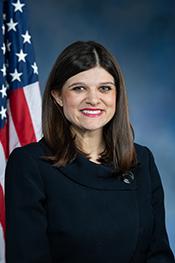
Haley M. Stevens
DDemocratMI-11 · Representative
57
/ 100
Average
Attendance99
Avg: 96
Independence4
Avg: 4
Bipartisan Tone25
Avg: 15
Ethics Record100
Avg: 99
Transparency46
Avg: 53
Accountability Score — composite of attendance, independence, bipartisan tone, ethics record & transparency.
Methodology39
Bills Sponsored
0
Enacted into Law
1
Passed a Chamber
37
In Committee
All Sponsored Bills
HR10608In Committee
Blue Collar Social Security Fairness Act
HR10464In Committee
Paul Whelan Hostage Compensation and Reintegration Act
HR10347In Committee
Data Science and Literacy Act of 2026
Data Science and Literacy Act of 2026 This bill establishes a grant program for data literacy education and requires additional reporting regarding secondary school teachers. Specifically, the bill directs the Department of Education to award grants to educational agencies, tribal schools, institutions of higher education, or consortia of such entities for programs to increase access to and support for data literacy, data science, and statistics education. The Institute of Education Sciences must evaluate the grant program within five years after the first grant is made to assess its effectiveness in improving access to data science and literacy. Additionally, the bill requires the National Center for Education Statistics to collect and report information on the number of science, technology, engineering, and math (STEM) teachers in secondary schools in each state.
HRES1519In Committee
Supporting the designation of September 17, 2026, as "National Physician Suicide Awareness Day" to raise awareness of, and promote a national discussion about, physician suicide and to reduce the stigma of mental health conditions, and for other purposes.
HR9768In Committee
Tariff Refund Act of 2026
The proposal would allow businesses and individuals to claim refunds for certain tariff payments by treating those tariffs as tax overpayments to the government. This would effectively give back money to importers and consumers who paid tariffs on goods brought into the United States. The change would primarily affect companies that import products and potentially lower costs for consumers by reducing the financial burden of tariffs.
HR9162In Committee
Protecting America from Chinese Cars Act of 2026
The proposal would ban cars and trucks with internet-connected technology from countries considered U.S. adversaries from being sold or imported into America, protecting national security by preventing foreign governments from potentially accessing vehicle data or controlling vehicles remotely. This would affect car manufacturers, dealerships, and consumers looking to buy vehicles, particularly those from countries like China and Russia. The measure is currently being reviewed by congressional committees to determine how it would work alongside existing trade and security laws.
HR9370In Committee
Protect Local Funding Act
The bill would block the federal government from finalizing, putting into effect, or enforcing a proposed rule that deals with how federal money is distributed to states, cities, organizations, and other recipients. This would prevent any new requirements or restrictions on how federal financial assistance is used until Congress takes further action. The measure affects states, local governments, nonprofits, and any organizations that receive federal funding.
HR9161In Committee
Secure Aluminum Supply Chains Act
The government would be required to investigate whether selling aluminum scrap to certain countries poses a national security risk, since aluminum can be used in military equipment and other sensitive applications. This would affect scrap metal dealers, recycling companies, and manufacturers who currently export these materials, potentially limiting their ability to sell to certain nations. The investigation would help determine if new rules are needed to protect American security interests while managing international trade.
HR9003In Committee
Keep Illegal Handguns Out of the Mail Act of 2026
The bill would prevent the U.S. Postal Service from enforcing new rules that would restrict or ban the mailing of handguns and other concealable firearms through the mail. This affects gun owners and dealers who currently rely on postal services to ship firearms, as well as the Postal Service's ability to update its shipping policies. The proposal is currently under review by a House committee.
HR8866In Committee
Build to Scale Reauthorization Act of 2026
The proposal would extend and update a federal program that helps regions across the country develop new technologies and strengthen their local economies through innovation hubs and partnerships between government labs, universities, and businesses. By reauthorizing this program, the government would continue funding efforts to support entrepreneurship and economic growth in communities that might otherwise lack resources for technological development. The measure affects regional economies, small businesses, researchers, and communities seeking to build competitive advantages in emerging industries.
HR8709In Committee
Homeownership Savings Act
The legislation would create special savings accounts that allow first-time homebuyers to set aside money tax-free specifically for down payments and closing costs on their first home purchase. People using these accounts could contribute a certain amount each year and withdraw the savings without paying taxes on the earnings, making it easier to save for homeownership. This would primarily benefit individuals and families working to afford their first home by reducing the tax burden on their savings.
HR8637In Committee
Release Your Taxes Act of 2026
Members of Congress would be required to publicly release their federal income tax returns, allowing voters to see how much money lawmakers earn and from what sources. The requirement would apply to both current members seeking reelection and candidates running for Congress for the first time, creating transparency around potential financial conflicts of interest. This would affect all 535 members of Congress and anyone running to join them.
HR8560In Committee
Shifting Forward Vehicle Technologies Research and Development Act
The federal government would fund research and development projects aimed at creating new vehicle technologies that could improve transportation efficiency, reduce emissions, or advance other automotive innovations. This funding would support everything from early-stage research to real-world demonstrations of these technologies, helping companies and researchers move promising ideas from the lab to practical use. The initiative would affect automakers, technology companies, research institutions, and ultimately consumers who would benefit from improved vehicles.
HCONRES90In Committee
Directing the Architect of the Capitol to place motor vehicle gas price trackers in the Hall of the House of Representatives and the Chamber of the Senate.
The proposal would require the installation of digital displays showing current gas prices in both the House and Senate chambers so that members of Congress can see real-time fuel costs while they work. The displays would serve as a constant reminder to lawmakers about gas prices that affect everyday Americans' budgets and transportation costs. This would apply to Congress members and staff who work in those chambers.
HR8356In Committee
Clean Slate through Consolidation Act
When borrowers consolidate their defaulted federal student loans into a new Direct Consolidation Loan, this bill would require credit reporting agencies to remove the default mark from their credit history once the consolidation is complete. This would help borrowers rebuild their credit scores more quickly after defaulting on student loans, making it easier for them to qualify for mortgages, car loans, and other credit in the future. The change would primarily benefit student loan borrowers who have fallen behind on payments and are trying to get back on track.
HR8238In Committee
RESTART Communities Act of 2026
The bill aims to help communities recover from environmental damage or economic decline by providing federal support for cleanup, restoration, and redevelopment projects. It would likely direct funding and resources to areas affected by pollution, industrial decline, or natural disasters, with the goal of making these neighborhoods safer and more economically viable for residents and businesses. The proposal is currently being reviewed by multiple House committees to determine which parts fall under their respective areas of responsibility.
HR8190In Committee
Social Security Customer Service Act
This bill would improve how the Social Security Administration serves people who receive or apply for benefits by requiring better customer service standards, faster response times, and more accessible ways to contact the agency. It aims to reduce wait times and make it easier for seniors, disabled individuals, and families receiving Social Security to get answers to their questions and resolve problems with their benefits.
HR8154In Committee
Hold ICE Accountable Act of 2026
This bill would create new oversight and accountability measures for Immigration and Customs Enforcement (ICE), likely including requirements for transparency, inspections, and reporting on how the agency operates detention facilities and conducts immigration enforcement activities. The legislation would affect ICE operations, detained immigrants, and potentially the communities where detention facilities are located by establishing standards for how the agency must document and justify its actions.
HR8027In Committee
Advanced Wastewater Treatment Assistance Act of 2026
This bill would provide federal funding and technical assistance to help communities upgrade their wastewater treatment systems to meet stricter environmental standards and handle modern pollution challenges. The money would go to cities, towns, and water districts to build or improve treatment plants that remove harmful chemicals and contaminants before water is released back into rivers, lakes, and oceans. This affects local governments and residents who depend on clean water systems, as well as the environment and public health in communities across the country.
HR7926In Committee
Stop Unfair Electricity Prices Act
This bill would give the federal government new authority to regulate electricity prices and prevent what lawmakers consider unfair pricing practices by power companies. It likely aims to protect consumers from sudden price spikes while ensuring energy companies can still operate profitably, though the specific mechanisms would depend on the bill's detailed provisions. The measure targets electricity markets and would primarily affect power utilities, energy companies, and the households and businesses that buy electricity from them.
HR7883In Committee
Addressing Teacher Shortages Act of 2026
Addressing Teacher Shortages Act of 2026 This bill directs the Department of Education (ED) to establish an Addressing Teacher Shortages Program. Through this program, ED shall award grants for local educational agencies to address teacher shortage challenges. Specifically, grant funds may be used to establish or expand teaching residency programs, teacher mentor programs, specified recruitment and training programs, and other evidence-based strategies to increase teacher retention and support teachers.
HR7852In Committee
No Getting Rich in Congress Act
This bill would restrict members of Congress from using their position to become wealthy through stock trading, business deals, or other financial activities that benefit from their insider knowledge or legislative power. The legislation aims to prevent lawmakers from profiting off information they learn through their work in Congress or from companies and industries they help regulate. It affects current and former members of Congress and is intended to reduce conflicts of interest and increase public trust in government.
HR7715In Committee
Justice for Allie Act
Without access to the specific provisions of this bill, it appears to address crime and law enforcement matters, likely related to a particular case or criminal justice issue suggested by its name. The bill has been sent to the House Judiciary Committee for review and consideration. To provide a concrete summary of what the bill would actually do, the specific legislative language and proposed changes would need to be examined.
HR7561In Committee
Local Infrastructure Tax Cuts Act
This bill would allow local governments and infrastructure projects to receive tax breaks or exemptions on certain activities or purchases related to building and maintaining roads, bridges, water systems, and other public infrastructure. The goal is to reduce costs for communities investing in these projects, potentially making it easier and cheaper for local areas to repair or expand their infrastructure. The bill is currently being reviewed by the House committee that handles tax policy.
HR7379In Committee
NASA C-UAS Act
The bill would establish or expand NASA's role in detecting and managing unmanned aircraft systems (drones) that could pose safety risks to people and property. It addresses how federal agencies should coordinate to identify and respond to unauthorized or dangerous drone activity, affecting both the space agency and other departments responsible for aviation safety and national security. The proposal has been sent to multiple committees to determine which agencies should have primary responsibility for different aspects of drone detection and management.
HR7337In Committee
Make Congress Drive Union-Made Act
This bill would require members of Congress and congressional staff to use vehicles made by union workers when traveling on official business. The measure aims to support union manufacturing jobs by directing federal spending toward union-made products, affecting how Congress conducts its day-to-day transportation and travel operations.
HR6990In Committee
PROTECT Act of 2026
The PROTECT Act of 2026 would strengthen environmental protections, though the specific measures are not yet detailed in available summaries. Based on its referral to the House Committee on Energy and Commerce, the bill likely addresses pollution control, conservation, or climate-related issues that affect both businesses and the general public. Once the committee reviews it, the specific impacts on industries, consumers, and environmental standards will become clearer.
HR5446In Committee
No Tariffs on Groceries Act
No Tariffs on Groceries Act This bill requires the President to receive congressional approval in order to impose duties (i.e., tariffs) on certain articles of food imported into the United States. The bill defines articles of food as (1) articles used for food or drink for man or other animals; (2) articles used for components of any articles used for food or drink for man or other animals; and (3) seeds, fertilizers, manures, and agrochemicals. Specifically, the President may impose duties on these articles of food only if (1) the President submits to Congress a request to impose the duties, and (2) the request is subsequently and specifically approved by an act of Congress. The bill provides an exception to this requirement for existing tariff-rate quotas on articles of food.
HR5338In Committee
Union Auto Workers Job Protection Act
The legislation would require the federal government to prioritize hiring union workers for certain government contracts and projects, and would establish protections to prevent the government from switching to non-union contractors. This would affect federal construction projects, vehicle maintenance, and other government operations, potentially increasing costs but ensuring stable wages and benefits for union workers involved in government work.
HR5162In Committee
Colorectal Cancer Early Detection Act
The proposal would expand access to colorectal cancer screening by requiring insurance plans to cover preventive screening tests without cost-sharing for eligible adults, and would support education and outreach programs to increase screening rates, particularly among underserved communities. This would affect millions of Americans by making early detection tests more affordable and accessible, potentially catching cancer at earlier, more treatable stages. The measure aims to reduce colorectal cancer deaths by encouraging more people to get screened regularly.
HR4903In Committee
Plastic Health Research Act
This bill would fund scientific research to study how plastics and plastic chemicals affect human health, including their potential links to diseases and health problems. The research would help doctors and public health officials better understand the risks posed by plastic exposure through food, water, and everyday products that consumers use. The findings could eventually inform government decisions about regulating plastics and protecting public health.
HR4736In Committee
No Chinese Cars Act
This bill would likely restrict or ban the import and sale of vehicles manufactured by Chinese companies in the United States, affecting both car buyers who want access to Chinese-made vehicles and American auto workers competing in the domestic market. The measure addresses concerns about foreign competition in the automotive industry and would be handled by the House committee responsible for trade and tariff policy.
HR4350In Committee
Unearth America’s Future Act
The proposal would modify tax rules related to mining, energy production, and natural resources on American land, likely affecting how companies pay taxes on these activities and potentially changing what revenue the government collects from these industries. The bill has been sent to multiple congressional committees to review different aspects, including how it impacts energy, jobs, education, and scientific research. Workers in mining and energy sectors, as well as communities near these operations, could see changes depending on what tax adjustments the committees ultimately recommend.
HR3259Reported
Post Quantum Cybersecurity Standards Act
The federal government would establish new security standards to protect computer systems and data from threats posed by quantum computers, which are expected to become powerful enough to break current encryption methods in the future. Government agencies, contractors, and critical infrastructure operators like power plants and hospitals would need to update their cybersecurity practices to meet these new standards. This would help prevent sensitive information like military secrets, financial records, and personal data from becoming vulnerable once quantum computing technology advances.
HR2897In Committee
To amend the Small Business Act to make disaster loans available for damages caused by prolonged power outages, and for other purposes.
HR2797In Committee
House Expansion Commission Act
This bill would establish a commission to study whether the House of Representatives should be expanded beyond its current 435 members and make recommendations about how such an expansion might work. The commission would examine questions like how many additional representatives should be added, how they would be apportioned among states, and what changes to House rules or procedures might be needed. The goal is to give Congress a detailed analysis to help inform future decisions about the size and structure of the House.
HR1350Passed House
DOE and NSF Interagency Research Act
DOE and NSF Interagency Research Act This bill provides statutory authority for a research and development partnership between the Department of Energy (DOE) and the National Science Foundation (NSF). Specifically, the bill requires DOE and NSF to enter into a memorandum of understanding to support cross-cutting and collaborative research and development that furthers the missions of both agencies. Through the partnership, DOE and NSF may conduct research in a variety of focus areas (e.g., artificial intelligence), promote multi-agency and cross-sector data sharing, support research infrastructure, and organize education and training initiatives. DOE and NSF must jointly report on their collaboration.
HR1892In Committee
Wireless Electric Vehicle Charging Grant Program Act of 2025
This bill would create a federal grant program to help fund the development and installation of wireless charging systems for electric vehicles on roads and highways. The grants would support research, testing, and deployment of technology that allows EVs to charge while driving or parked, potentially reducing the need for traditional charging stations. The program would benefit electric vehicle owners, transportation agencies, and companies developing wireless charging technology.
HR1101In Committee
Taxpayer Data Protection Act
Taxpayer Data Protection Act This bill restricts access to any public money receipt or payment system belonging to the Department of the Treasury. Specifically, access is limited to authorized Treasury officers, employees, or contractors meeting certain performance standards who have held a qualified position for at least a year, or who hold other qualifications as provided by the bill. The bill specifically prohibits special government employees (i.e., temporary appointees hired to perform specific tasks) from having access to such systems. The bill also provides that an individual accessing such systems shall be treated as an executive branch employee for purposes of federal criminal conflict of interest laws. Treasury's Office of Inspector General must investigate and report on each instance of unauthorized use or other access of such payment systems.