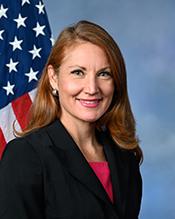
Melanie A. Stansbury
DDemocratNM-1 · Representative
61
/ 100
Average
Attendance98
Avg: 96
Independence1
Avg: 4
Bipartisan Tone27
Avg: 15
Ethics Record100
Avg: 99
Transparency74
Avg: 53
Accountability Score — composite of attendance, independence, bipartisan tone, ethics record & transparency.
Methodology18
Bills Sponsored
0
Enacted into Law
1
Passed a Chamber
17
In Committee
All Sponsored Bills
HR10527In Committee
Smithsonian Integrity and Historical Independence Act of 2026
HR9973In Committee
Indigenous Students Excel through Parity Act of 2026 (II)
The proposal would update how the federal government calculates and distributes funding to schools serving Native American students, aiming to ensure schools receive fairer and more adequate resources. This affects Native American students, teachers, and school administrators who rely on federal education dollars through the Bureau of Indian Education. The changes would modernize the funding formula to better reflect current student needs and school operating costs.
HR9935In Committee
Indigenous Students Excel through Parity Act of 2026
The federal government would update how it distributes funding to schools serving Native American students, aiming to make the allocation process fairer and more equitable. This affects Native American students, their families, and the schools in Indian communities that depend on federal dollars to operate. The changes would help ensure schools have adequate resources to provide quality education regardless of their location or size.
HR9820In Committee
CDC Tribal Public Health Security and Preparedness Act
The legislation would strengthen emergency preparedness and response capabilities for state, local, and tribal health departments by improving coordination, funding, and resources for handling public health crises like disease outbreaks and natural disasters. It affects public health officials, emergency responders, and the communities they serve by helping ensure these organizations have the tools and support needed to protect public health during emergencies. The bill aims to make the nation's public health system more resilient and better equipped to respond quickly when health threats emerge.
HR9300In Committee
Postsecondary Student Success Act of 2026
The federal government would provide money to schools and educational organizations to develop and run programs that help struggling students stay in school and graduate. These grants would support evidence-based approaches—meaning methods that research has shown actually work—targeting students who face the biggest barriers to completing their education. Schools serving low-income communities and students at risk of dropping out would be the primary beneficiaries of this funding.
HR6162Passed House
Albuquerque Indian School Act of 2025
Albuquerque Indian School Act of 2025 This bill takes three tracts of specified federal land (approximately 9.89 acres) in Albuquerque, New Mexico, into trust for the benefit of the 19 Pueblos of New Mexico. (These three tracts of land were historically part of the Albuquerque Indian School, which was an Indian boarding school until 1981.) The land is currently administered by the General Services Administration (GSA). Within 90 days of this bill's enactment, the GSA must (1) relocate all federal tenants on the land, and (2) transfer administrative jurisdiction over the land to the Department of the Interior. Within 90 days after the relocation of federal tenants and transfer of administrative jurisdiction, the bill requires (1) Interior to take the land into trust for the benefit of the 19 Pueblos, and (2) the federal government to convey its ownership interests in buildings and other structures located within Tract 1 to the Indian Pueblo Cultural Center to own in fee. (Tract 1, which is approximately 3.57 acres, contains a warehouse that is 76,682 square feet.) The bill requires the land taken into trust to be used for the educational, health, cultural, business, and economic development of the 19 Pueblos. Further, the land must remain subject to existing private and municipal encumbrances, rights-of-way, restrictions, easements of record, and utility service agreements. The bill prohibits gaming on the land taken into trust.
HR9002In Committee
SURS Extension Act
Small Practice, Underserved, and Rural Support Program Extension Act of 2023 or the SURS Extension Act This bill reauthorizes funds through FY2031 for the Centers for Medicare & Medicaid Services to contract with specified entities (e.g., quality improvement organizations) to provide technical assistance regarding the Merit-based Incentive Payment System (MIPS) and alternative payment models under Medicare, specifically for health professionals in practices with 15 or fewer professionals. (MIPS is an incentive program under Medicare that allows health professionals to receive payment adjustments based on certain performance measures.)
HR6989In Committee
Public Health Nursing Act
Public Health Nursing Act This bill establishes a grant program within the Department of Health and Human Services to support a public health nursing workforce in state, territorial, and local public health departments.
HR6700In Committee
TALENTS Act
The proposal would make it easier for federal agencies to hire and fire employees based on job performance, reduce certain civil service protections, and give agency leaders more flexibility in managing their workforce. This would affect millions of federal workers across government agencies by potentially changing how they're hired, evaluated, and protected from dismissal. The changes aim to improve government efficiency by allowing agencies to remove underperforming employees more quickly, though it could reduce job security for federal workers.
HR6674In Committee
CLAIM Act of 2025
The CLAIM Act would allow companies to stake claims on federal lands for mineral extraction and development. This legislation affects mining companies, environmental groups, and communities near federal lands by potentially expanding access to resources like metals and minerals on government-owned property. The bill is currently under review by the House Committee on Natural Resources.
HR6070In Committee
Community Connect Grant Program Act of 2025
The bill would create a grant program to help communities, particularly rural and underserved areas, improve their internet and broadband access and digital infrastructure. These grants would support projects like expanding high-speed internet networks, upgrading communications technology, and building digital skills programs for residents who lack reliable connectivity. The program aims to bridge the digital divide so that people in less-connected communities can participate more fully in education, work, and economic opportunities.
HR5860In Committee
SNAP BACK Act.
The bill would restore or increase federal funding for the Supplemental Nutrition Assistance Program (SNAP), which provides food assistance to low-income individuals and families. It affects millions of Americans who rely on SNAP benefits to purchase groceries, as well as state governments that administer the program. The proposal has been referred to multiple congressional committees for review and consideration.
HR4734In Committee
Hands Off Our Social Security Act
The legislation would prevent changes to Social Security benefits and payroll taxes without explicit congressional approval through a separate vote. It aims to protect current and future retirees, disabled workers, and their families from automatic benefit cuts or tax increases that might otherwise occur if the Social Security trust fund becomes depleted. The measure would require lawmakers to directly address any funding shortfalls rather than allowing them to happen through default mechanisms.
HR3670In Committee
IHS Provider Expansion Act
The proposal would expand the Indian Health Service's ability to hire and retain healthcare providers by increasing pay, improving working conditions, and streamlining hiring processes for doctors, nurses, and other medical staff serving Native American communities. This would help address critical shortages of healthcare workers on tribal lands and in rural areas where many Native Americans live. The measure aims to improve access to quality medical care for American Indian and Alaska Native populations.
HCONRES34In Committee
Expressing the need for the Senate to provide advice and consent to ratification of the United Nations Convention on Biological Diversity.
This concurrent resolution expresses that it is in the national interest for the Senate to provide its advice and consent for the ratification of the Convention on Biological Diversity.
HR2467In Committee
America's Red Rock Wilderness Act
This bill would protect millions of acres of red rock landscapes in the American West—primarily in Utah—by designating them as official wilderness areas where commercial development, mining, and motorized vehicles would be prohibited. The protected lands would remain open for hiking, camping, and other outdoor recreation, while also preserving the region's natural ecosystems and geological features. The bill would affect energy companies, outdoor recreation businesses, and local communities that depend on or use these public lands.
HR1811In Committee
Judicial Ethics Enforcement Act of 2025
Judicial Ethics Enforcement Act of 2025 This bill establishes the Office of Inspector General for the Judicial Branch to investigate alleged misconduct in the judicial branch, including the Supreme Court; to conduct and supervise audits and investigations; and to prevent and detect waste, fraud, and abuse.
HR635In Committee
WaterSMART Access for Tribes Act
This bill would give Native American tribes better access to federal water management programs and funding that were previously difficult for them to obtain. It aims to help tribes develop water infrastructure, manage water resources on their lands, and participate more directly in decisions about water projects that affect their communities. The changes would make it easier for tribes to apply for and receive grants and technical assistance from federal water agencies.