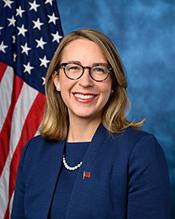
Hillary J. Scholten
DDemocratMI-3 · Representative
53
/ 100
Average
Attendance96
Avg: 96
Independence6
Avg: 4
Bipartisan Tone14
Avg: 15
Ethics Record100
Avg: 99
Transparency36
Avg: 53
Accountability Score — composite of attendance, independence, bipartisan tone, ethics record & transparency.
Methodology41
Bills Sponsored
0
Enacted into Law
3
Passed a Chamber
36
In Committee
All Sponsored Bills
HR10601In Committee
Muskegon County Environmental Infrastructure Act
HR10603In Committee
Kent County Environmental Infrastructure Act
HR10602In Committee
Ottawa County Environmental Infrastructure Act
HR10399In Committee
Currency Options, Information, and Navigation Act
HR9530In Committee
Quiet Skies Act
The federal government would be required to create rules banning passengers from making voice calls on their cell phones during flights on commercial airlines. This would apply to all scheduled passenger flights traveling between states or within a single state, protecting both travelers and flight crews from disruptive phone conversations at high altitudes. The Transportation Department would be responsible for developing and enforcing these regulations.
HR10286In Committee
Consumer Affordability and Pricing Concessions Act
HR10134In Committee
Local Health Care Protection Act of 2026
HR10133In Committee
Fair Prescription Pricing Act of 2026
HR10004In Committee
Defending Our Energy and Water Act
The proposal would require the military to follow new environmental rules when building and operating data centers, particularly to protect water resources from being depleted or contaminated. This affects military operations and defense contractors who build these facilities, as they would need to meet stricter standards for water usage and conservation. The bill is currently being reviewed by two House committees to determine which parts each should handle.
HR10005In Committee
Data Center Resource Disclosure Act
The federal government would survey how much energy, water, and other resources data centers use across the country to better understand their environmental impact. This information would help policymakers and companies make decisions about managing data center operations more efficiently. The survey would be conducted by the Commerce Department's communications and information office.
HR8999Reported
To designate the facility of the United States Postal Service located at 324 Washington Avenue, Suite 1 in Grand Haven, Michigan, as the "Ell Thomas Simantz Post Office Building".
This bill designates the facility of the United States Postal Service located at 324 Washington Avenue, Suite 1 in Grand Haven, Michigan, as the "Ell Thomas Simantz Post Office Building".
HR9818In Committee
Women’s Business Centers Improvement Act of 2026
The legislation would strengthen federal support for women's business centers, which provide training, counseling, and resources to help women start and grow their own businesses. These centers, funded through the Small Business Administration, would receive improvements to better serve female entrepreneurs across the country. The changes aim to make it easier for women to access the tools and guidance they need to launch successful companies.
HR9714In Committee
Capping Appointed Positions Act
The proposal would cap the total number of high-level federal positions (Schedule C and Schedule G roles) that can exist across all government agencies, potentially reducing the size of the executive branch workforce. These positions are typically filled by presidential appointees and senior staff rather than career civil servants, so the bill would limit how many political appointees agencies can hire. The change would affect federal agencies and their operations, though the specific impact would depend on what the cap is set at.
HR9483In Committee
Clean Ports for Commerce Act
The Army Corps of Engineers would be required to plan ahead before dredging waterways that contain PFAS (a group of toxic chemicals found in many industrial products and firefighting foams) to prevent spreading this contamination to other areas. This affects communities near rivers, harbors, and other waterways where dredging happens, as well as the Corps and companies involved in dredging operations. The goal is to protect public health and water quality by ensuring the Corps thinks through how to handle PFAS-contaminated sediment before removing it from the water.
HR9484In Committee
Water Reservoir Transparency Act
The Army would be required to study how new businesses and industries that use water affect the water levels that the Corps of Engineers maintains in its reservoirs across the country. This research would help lawmakers understand whether growing commercial and industrial water demand is straining the water supplies that these reservoirs provide for communities, agriculture, and other uses. The findings could inform future decisions about water management and whether new water users need to be regulated or managed differently.
HR8882Passed House
Main Street Competes Act
Main Street Competes Act This bill requires the Department of Justice (DOJ) and the Federal Trade Commission (FTC) to separately report biennially to the Small Business Administration (SBA) on how such agency's enforcement of federal antitrust law has promoted competition and deterred anticompetitive conduct that harms small businesses. The reports must include the number of antitrust inquiries, investigations, and enforcement actions conducted by the agencies. Further, the SBA must report to Congress a summary of the DOJ and FTC reports that includes, as appropriate, recommendations for administration actions that may promote competition and deter anticompetitive conduct. The bill replaces a requirement that the President report annually to Congress about the role of small businesses in the economy on an industry-by-industry basis.
HR9299In Committee
Advancing Next-Generation Genetic Learning for Effective Resource Strategy Act
The federal government would create a grant program that gives money to states, tribes, and other organizations to use a new DNA-based monitoring technique to track fish populations in lakes and rivers. This eDNA method allows scientists to identify which fish species are present by analyzing tiny DNA fragments in water samples, making fish surveys faster and less disruptive than traditional methods. The grants would help fishing agencies and conservation groups adopt this technology to better manage sport fish populations and improve hunting and fishing opportunities.
HR9077In Committee
Hormone Health Data and Research Act
The federal government would study how hormone levels change in women going through perimenopause (the years leading up to menopause) and evaluate the accuracy and usefulness of hormone tests during this time. The National Institutes of Health and the Department of Health and Human Services would work together to understand these hormonal changes better and determine which tests doctors should use to help women during this life stage. This research could help doctors provide better care and treatment options for women experiencing perimenopause symptoms.
HR8998In Committee
Researching Innovative Shipbuilding and Next-Generation Transit Infrastructure for Durable and Efficient Systems
The Transportation Research Board would be required to study new ship hull designs and alternative building materials that could make water-based transportation systems more efficient and able to carry larger loads. This research could help improve how barges, ferries, and other waterborne vessels operate, potentially benefiting shipping companies, ports, and communities that rely on water transportation. The bill is currently under review by the House Committee on Transportation and Infrastructure.
HRES1317In Committee
Expressing support for the designation of May 24 as "National Aviation Maintenance Technician Day" or "National AMT Day" to commemorate the work of aviation maintenance professionals.
This resolution would officially recognize May 24 as a national day to honor aviation maintenance technicians, the skilled workers who inspect, repair, and maintain aircraft to ensure they are safe to fly. The designation would celebrate the critical contributions these professionals make to aviation safety and the transportation industry. The measure has been referred to the House Committee on Transportation and Infrastructure for consideration.
HR8835In Committee
Streamlined Apportionment, Flexibility, and Efficiency Transit Act
The proposal would reduce federal regulations and paperwork requirements for public transit agencies that receive government funding, allowing them to operate with more flexibility and potentially lower administrative costs. This would affect local bus, train, and other public transportation systems across the country that depend on federal dollars. The changes aim to let transit agencies spend less time on compliance paperwork and more resources on actual transportation services.
HR8708In Committee
Main Street BRIDGE Act
The proposal would require the Small Business Administration and the Minority Business Development Agency to work together more closely through their local business centers to provide better support and resources to small business owners. This collaboration would help small businesses, particularly those owned by minorities, access services like training, counseling, and funding information more easily by coordinating between the two agencies' networks. The bill is currently being reviewed by congressional committees to determine whether it should move forward.
HR8664In Committee
SBA AI Adoption Reporting Act of 2026
The Small Business Administration would be required to follow through on a recommendation about helping small businesses adopt artificial intelligence technology. This would affect small business owners by potentially providing them with guidance, resources, or support to implement AI tools in their operations. The measure is currently under review by the House Committee on Small Business.
HRES1214In Committee
Celebrating the 75th anniversary of the International Hearing Society.
This resolution honors the International Hearing Society on its 75th anniversary, recognizing the organization's work in advancing hearing healthcare and supporting professionals in the audiology and hearing aid fields. The measure celebrates the society's contributions to helping people with hearing loss access better care and technology over the past seven decades.
HR8491In Committee
Postal Alert and Weather Preparedness Act
The proposal would require the U.S. Postal Service to develop and implement plans for alerting the public about severe weather events and other emergencies, similar to how weather services currently warn communities about dangerous conditions. This would affect mail carriers and postal workers who operate in hazardous conditions, as well as the general public who might receive timely warnings about threats in their areas. The bill aims to improve coordination between the Postal Service and emergency management agencies to better protect both postal employees and the communities they serve.
HR8424In Committee
Promoting Access to Local Agriculture Act of 2026
Promoting Access to Local Agriculture Act of 2026 This bill directs the Department of Agriculture (USDA) to establish a streamlined process for farmers and ranchers to provide benefits under certain federal nutrition programs. These programs include the Supplemental Nutrition Assistance Program (SNAP); the Senior Farmers Market Nutrition Program (SFMNP); the Special Supplemental Nutrition Program for Women, Infants, and Children (WIC); and the Gus Schumacher Nutrition Incentive Program (GusNIP). Specifically, USDA must establish a streamlined application process for farmers and ranchers to apply to be vendors under the nutrition programs, including by developing a single application for the programs or an information sharing system. USDA must also develop a streamlined process for these vendors to use standardized technology to process program benefits (such as a single piece of equipment or a mobile application). Further, USDA must ensure that the program benefit processing equipment and systems made available by a state agency are appropriate for the entity. For example, this includes ensuring wireless or mobile processing equipment and technology systems are appropriate for farmers markets and other direct-to-consumer markets.
HR8186In Committee
Roadway Resiliency Act
This bill would fund and support improvements to roads and highways to make them more resistant to damage from extreme weather, flooding, and other environmental hazards. It likely aims to help states and local communities upgrade their transportation infrastructure to withstand climate-related challenges and reduce costly repairs from weather disasters. The proposal affects drivers, communities relying on road access, and transportation agencies responsible for maintaining highways and roads.
HR7376Reported
Local Water Protection Act
This bill would give states and local communities stronger authority to protect their water supplies from pollution and contamination, potentially including the ability to set their own water quality standards that are stricter than federal requirements. It affects water utilities, municipalities, environmental groups, and residents who depend on clean drinking water and recreational waterways. The legislation has advanced through committee and is now scheduled for consideration by the full House.
HR7665In Committee
Friends in the Field Act
The bill aims to support agricultural programs and initiatives, though the specific details are not yet clear from the title alone. Based on its referral to the House Agriculture Committee, it likely addresses farming practices, food production, or rural agricultural communities. Once the bill moves through committee, its concrete provisions—such as funding levels, which farmers it helps, or what agricultural activities it promotes—will become clearer.
HR5784Passed House
AI–WISE Act
Artificial Intelligence Wisdom for Innovative Small Enterprises Act or the AI–WISE Act This bill requires the Small Business Administration (SBA) to establish and maintain educational resources and modules on artificial intelligence tools. These resources and modules for small businesses must include information about how artificial intelligence models work and how to identify, evaluate, and manage the risks of artificial intelligence. The resources and modules must be published on an existing SBA learning platform. The SBA also must establish an advisory working group to advise the SBA about relevant information for inclusion in the resources and modules.
HR7191In Committee
Fatigued Pilot Protection Act
The proposal would establish new rules to protect airline pilots from excessive fatigue by limiting how many hours they can work consecutively and requiring adequate rest periods between flights. These changes would apply to both commercial airlines and cargo carriers, aiming to improve safety for passengers and crew members while preventing pilot exhaustion-related accidents. The measure is currently being reviewed by the aviation subcommittee.
HR7076In Committee
To require the Secretary of Defense to report on certain contracts and awards to small business concerns, and for other purposes.
The Department of Defense would have to regularly report to Congress on how much money it awards to small businesses through contracts and what types of businesses receive these awards. This would give lawmakers and the public better visibility into whether the Pentagon is meeting its goals for supporting small companies and help identify any patterns in how defense contracts are distributed. The reporting requirement aims to ensure small businesses get fair opportunities to compete for military spending.
HR7002In Committee
Justice for Exploited Children Act
This bill would strengthen protections against child labor and exploitation by establishing or expanding penalties for companies and individuals who employ children illegally or in dangerous conditions. It likely aims to improve enforcement of child labor laws and could affect businesses that hire workers, labor enforcement agencies, and organizations working to protect children's safety. The bill has been sent to the House Committee on Education and Workforce for review.
HR1098Passed House
To reauthorize the Junior Duck Stamp Conservation and Design Program Act of 1994.
This bill reauthorizes through FY2031 the Junior Duck Stamp Conservation and Design Program administered by the U.S. Fish and Wildlife Service (FWS). By way of background, the program is an art- and science-based curriculum that teaches wetland and waterfowl conservation to students in kindergarten through high school. The program hosts a national art competition and the winning design is featured on the junior duck stamp sold by the FWS. The revenue generated from the sale of the stamp is used to support activities for students who participate in the program.
HR5858In Committee
CATCH IT Act
The CATCH IT Act would likely establish or modify programs related to food safety, agricultural practices, or food waste prevention, though the specific details depend on the bill's full text. Based on its referral to the House Agriculture Committee, it probably affects farmers, food producers, or consumers by changing how certain agricultural or food-related activities are regulated or supported. Without access to the complete bill language, the exact impact on these groups cannot be determined.
HR6312In Committee
Tri-Share Child Care Pilot Act of 2025
The bill would create a pilot program where the federal government, states, and families share the costs of child care to make it more affordable for working parents. The program would test this cost-sharing approach in select areas to see if it helps more families access quality child care without spending too much of their income on it. This would primarily affect low- and middle-income families struggling with child care expenses.
HR6228In Committee
Unlocking Affordable Housing Act
This bill would likely make it easier and cheaper to build housing by streamlining transportation and infrastructure requirements or by funding improvements to roads, transit, and utilities that support new residential development. The goal appears to be removing barriers that make housing construction expensive and time-consuming, which could help make homes more affordable for renters and buyers. The bill would primarily affect developers, local governments, and people struggling with housing costs.
HR4962In Committee
Toll of Tariffs Act of 2025
Toll of Tariffs Act of 2025 This bill requires the U.S. International Trade Commission to study and report to Congress on the inflationary impact of the tariffs imposed by executive orders issued during the period beginning on or after January 20, 2025, and ending on the date of the bill's enactment.
HR3931In Committee
Kids on the Go Act of 2025
The proposal would establish new federal programs and funding to improve transportation options for children, such as safe routes to schools and public transit access for young people. It aims to help communities build better infrastructure that makes it easier and safer for kids to get around without relying on cars. Families, schools, and local governments would benefit from grants and resources to support these transportation improvements.
HR3735In Committee
IG Act of 2025
The legislation would establish new rules and oversight mechanisms for federal inspectors general—officials who investigate waste, fraud, and misconduct within government agencies. These changes would affect how inspectors general operate independently, report their findings, and interact with agency leadership and Congress. The bill aims to strengthen accountability and transparency across federal government operations.
HR1542In Committee
Pay Our Coast Guard Parity Act of 2025
Pay Our Coast Guard Parity Act of 2025 This bill provides continuing appropriations to the Coast Guard for pay and benefits when there is a Coast Guard-specific funding lapse. Under the bill, a Coast Guard-specific funding lapse occurs when (1) a bill providing appropriations for the Coast Guard for a fiscal year has not been enacted before the beginning of that fiscal year, and no joint resolution providing continuing appropriations for the Coast Guard is in effect; and (2) a bill providing appropriations for the Department of Defense (DOD) for the fiscal year has been enacted before the beginning of the fiscal year, or a joint resolution providing continuing appropriation for DOD is in effect. If a Coast Guard-specific funding lapse occurs, the bill provides appropriations to the Coast Guard for pay and allowances for military members of the Coast Guard who perform active service or inactive-duty training; pay and benefits for certain civilian employees and contract employees; the payment of a death gratuity; payments for travel related to funerals, the dignified transfer of remains, and unit memorial services; and the temporary continuation of the basic allowance for housing for dependents of members of the Coast Guard dying on active duty. The bill generally provides the appropriations to the Coast Guard until the earlier of the enactment of specified Coast Guard appropriations legislation, the termination of the availability of appropriations for DOD, or two weeks after the beginning of the Coast Guard-specific funding lapse.