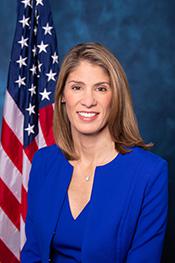
Lori Trahan
DDemocratMA-3 · Representative
67
/ 100
Above Average
Attendance96
Avg: 96
Independence2
Avg: 4
Bipartisan Tone61
Avg: 15
Ethics Record100
Avg: 99
Transparency66
Avg: 53
Accountability Score — composite of attendance, independence, bipartisan tone, ethics record & transparency.
Methodology12
Bills Sponsored
0
Enacted into Law
1
Passed a Chamber
11
In Committee
All Sponsored Bills
HR10295In Committee
9-8-8 Call Center Improvement Act
HRES1503In Committee
Supporting the goals of Overdose Awareness Day and strengthening efforts to combat the opioid crisis in the United States.
HR9941In Committee
Right to IVF Act of 2026
The bill would protect and expand access to fertility treatments like in vitro fertilization (IVF) across the country, ensuring that people struggling to have children can access these medical procedures. It would likely affect fertility clinics, insurance companies, and patients seeking reproductive care, while potentially addressing coverage requirements and removing barriers to these treatments. The proposal has been sent to multiple congressional committees for review and consideration.
HR9690In Committee
Water Emergency and Technical Assistance Act
The proposal would provide funding and technical support to help communities deal with drinking water and water pollution emergencies, such as contaminated water supplies or sewage system failures. It updates existing federal water safety laws to ensure that local governments and water systems have access to expert assistance and money when water-related crises occur. The bill affects water utilities, local governments, and residents who depend on safe drinking water and clean waterways.
HR7145In Committee
To amend title XIX of the Social Security Act to establish a definition of essential health system in statute and for other related purposes.
This bill would create an official legal definition of what counts as an "essential health system" under Medicaid, the government health insurance program for low-income Americans. The change would help clarify which health services and facilities must be included in state Medicaid programs and could affect how states organize and fund their healthcare systems for millions of beneficiaries.
HR6823In Committee
To direct the Secretary of Defense to establish a pilot program to facilitate the development of certain traumatic brain injury diagnostics for members of the Armed Forces.
The Department of Defense would create a test program to help develop better ways to diagnose traumatic brain injuries in military members, which are common injuries from combat and training accidents. The program would work to improve diagnostic tools so that service members with brain injuries can be identified and treated more quickly and accurately. This affects active-duty soldiers, veterans, and military medical personnel who deal with these injuries.
HR6350In Committee
College Athletics Reform Act
The bill would establish new rules for how college athletes can earn money from their names, images, and likenesses, and would give the federal government oversight of college sports programs. It affects student-athletes, colleges and universities, and sports organizations by setting standards for athlete compensation and potentially changing how college sports are governed at the national level.
HR5895In Committee
Protect Patients from Healthcare Abuse Act
The bill aims to protect patients from mistreatment and fraud in the healthcare system by establishing new rules and oversight mechanisms for healthcare providers and insurers. It would give patients stronger protections against practices like unnecessary medical procedures, unfair billing, and denial of needed care. The legislation affects patients, healthcare workers, hospitals, insurance companies, and government agencies responsible for monitoring healthcare quality and fairness.
HR5536In Committee
HEADACHE Act
Headache Education, Access, Diagnosis, and Care Health Equity Act or the HEADACHE Act This bill temporarily establishes a federal initiative, an advisory council, and related reporting to address headache disorders. The bill defines headache disorder as a medical condition for which a headache is a principal symptom, including primary conditions (e.g., tension-type headaches, migraines) and secondary conditions (i.e., headaches that are symptoms of other health conditions). Specifically, the Department of Health and Human Services (HHS) must establish a coordinated federal initiative to take actions that advance research and improve care for headache disorders. Also, HHS must establish an advisory council comprised of certain federal and non-federal members to advise HHS on headache disorders and hold annual research meetings. Finally, HHS must annually report to Congress on headache disorders, including (1) an annually updated national plan, (2) evaluations of all relevant federally funded efforts, and (3) recommendations for priority actions. The requirements of the bill sunset five years after the bill’s enactment.
HRES666In Committee
Supporting the goals of Overdose Awareness Day and strengthening efforts to combat the opioid crisis in the United States.
This resolution recognizes Overdose Awareness Day.
HR1442Passed House
To ban the sale of products with a high concentration of sodium nitrite to individuals, and for other purposes.
Youth Poisoning Protection Act This bill makes a consumer product with a concentration of sodium nitrite of 10% or greater a banned hazardous product. The restriction does not apply to specified drugs, medical devices, cosmetics, or food products.
HR1509In Committee
Accelerating Kids’ Access to Care Act of 2025
Accelerating Kids’ Access to Care Act of 2025 This bill requires states to establish a process through which qualifying out-of-state providers may temporarily treat children under Medicaid and the Children's Health Insurance Program (CHIP) without undergoing additional screening requirements. Specifically, states must establish a process through which qualifying out-of-state providers may enroll for five years as participating providers to treat individuals under the age of 21 without undergoing additional screening requirements. A qualifying out-of-state provider (1) must not have been excluded or terminated from participating in a federal health care program or state Medicaid program; and (2) must have been successfully enrolled in Medicare or a state Medicaid program based on a determination that the provider posed a limited risk of fraud, waste, or abuse. The bill’s changes take effect three years after enactment.