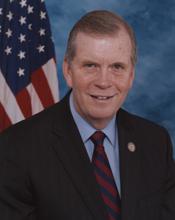
Tim Walberg
RRepublicanMI-5 · Representative
63
/ 100
Average
Attendance99
Avg: 96
Independence2
Avg: 4
Bipartisan Tone13
Avg: 15
Ethics Record100
Avg: 99
Transparency100
Avg: 53
Accountability Score — composite of attendance, independence, bipartisan tone, ethics record & transparency.
Methodology23
Bills Sponsored
0
Enacted into Law
4
Passed a Chamber
18
In Committee
All Sponsored Bills
HR4307Passed House
Enhancing Detection of Human Trafficking Act
Enhancing Detection of Human Trafficking Act This bill requires the Department of Labor to provide training and education to its employees on how to effectively assist law enforcement in detecting human trafficking. The bill directs Labor to determine which employees should receive the training and education based on their official duties. Further, it requires the training and education to include information that is appropriate for the employees' location or environment; that reflects current trends and best practices for the location or environment; and that is relevant to detecting human trafficking, identifying suspected victims, and referring potential cases to the Department of Justice and other appropriate authorities.
HR10639In Committee
Regional Great Lakes Partnership Act of 2026
HR5505In Committee
Equal Campus Access Act of 2026
Equal Campus Access Act of 2025 This bill prohibits funding made available under the Higher Education Act of 1965 from being provided to any public institution of higher education (IHE) that denies certain campus rights to religious student organizations. Specifically, the bill prohibits a public IHE from receiving these funds if it denies a religious student organization any right, benefit, or privilege that is otherwise afforded to other student organizations at the IHE because of the religious student organization's beliefs, practices, speech, leadership standards, or standards of conduct.
HR2805Reported
PLAN for Broadband Act
Proper Leadership to Align Networks for Broadband Act or the PLAN for Broadband Act This bill requires the National Telecommunications and Information Administration (NTIA) to develop and implement a national strategy to improve the coordination and management of federal broadband programs to meet the goal of providing high-speed, affordable broadband internet access services to all individuals in the United States. The strategy must also address barriers, costs, and administrative burdens for state, local, and tribal governments participating in these programs. The NTIA must also develop and publish for public comment a plan for the implementation of the national strategy. Among other requirements, the implementation plan must (1) describe the roles and responsibilities of relevant agencies and interagency mechanisms, and (2) provide a plan for holding agencies accountable for objectives identified in the strategy. The NTIA must submit the strategy and implementation plan to Congress and must periodically brief Congress on implementation progress. Finally, the Government Accountability Office must submit a report to Congress that assesses the efficacy of the strategy and implementation plan and makes recommendations for improving them.
HR8195In Committee
Responsible Cormorant Management and Control Act of 2026
This bill would allow wildlife officials to more easily manage and control cormorant populations, likely through expanded hunting, culling, or other removal methods, to address concerns about these birds damaging fish populations and commercial fishing operations. The legislation would primarily affect fishing communities, wildlife agencies, and environmental groups who have different views on how to balance cormorant conservation with protecting fish stocks and fishing livelihoods.
HR10351In Committee
TEAM USA Act
HR8876In Committee
Aquatic Invasive Species Control and Prevention Act of 2026
The proposal would strengthen federal efforts to prevent, manage, and eliminate invasive aquatic species like zebra mussels and Asian carp that damage waterways, fisheries, and infrastructure across the country. It updates existing laws to give government agencies and states better tools and coordination to stop these species from spreading and to remove them where they've already taken hold. The changes would affect water management agencies, fishing communities, power plants, and anyone who uses lakes and rivers for recreation or commerce.
HR9609In Committee
Less Bureaucracy, Better Student Aid Act
The proposal would transfer control of all federal student loans and student debt management from the Department of Education to the Treasury Department, and would give Treasury authority over policies that determine who qualifies for student aid. This change would consolidate student loan operations under a different federal agency, potentially affecting millions of borrowers and how student aid programs are administered. The bill is currently being reviewed by two congressional committees to determine its feasibility and implications.
HR9607In Committee
Less Bureaucracy, Better Workforce Development Act
Less Bureaucracy, Better Workforce Development Act This bill transfers specified functions relating to education and workforce development programs from the Department of Education (ED) to the Department of Labor's Employment and Training Administration (ETA). Specifically, the bill transfers to the ETA all the functions and authorities exercised by ED before the bill's effective date related to ED's Office of Career, Technical, and Adult Education. This office administers adult education and family literacy programs under Title II of the Workforce Innovation and Opportunity Act and career and technical education programs under the Carl D. Perkins Career and Technical Education Act of 2006. (On July 15, 2025, ED announced an interagency agreement with Labor for Labor to manage competitions, provide technical assistance, and integrate ED's programs with Labor's existing programs, while ED must maintain its statutory responsibilities and program oversight.) Additionally, the bill transfers to the ETA all personnel and appropriations related to the functions that are transferred under this bill. The bill outlines the authority of the Office of Management and Budget (OMB) related to the functions that are transferred under this bill, including that OMB must ensure that this bill does not create a net increase in full-time equivalent employees at the ETA or ED. Further, OMB must certify compliance with the bill to specified congressional committees. The transfer of these functions does not affect any suits, proceedings, or applications for benefits, services, licenses, permits, certificates, or financial assistance that are pending on the date of this bill's enactment.
HR7893In Committee
FAFSA Verification Efficiency Act
FAFSA Verification Efficiency Act This bill requires the Department of Education (ED) to verify the Social Security number (SSN) and citizenship status of any individual who is required to provide information to ED for federal student aid. Currently, ED must work with the Social Security Administration (SSA) to verify the SSN of a student who is applying for federal student aid. This bill expands the requirement so that ED must work with the SSA to verify the SSN and citizenship status of any individual who is required to provide information to ED on the Free Application for Federal Student Aid (FAFSA) form, including contributors. A contributor refers to anyone (the student, the student’s spouse, the student's biological or adoptive parent, or a parent’s spouse) who is required to provide information on the FAFSA form.
HR9381In Committee
AWARE Act
I don't have enough information to write an accurate summary. The bill title "AWARE Act" and referral to the Education and Workforce Committee suggest it relates to workforce or education issues, but without knowing the specific subjects or provisions of the bill, I cannot provide a factual description of what it would actually do or who it affects. Could you provide the bill's subjects or key provisions?
HR2616Passed House
Stopping Indoctrination and Protecting Kids Act
Parental Rights Over The Education and Care of Their Kids Act or the PROTECT Kids Act This bill requires public elementary and middle schools, as a condition of receiving certain federal funds for elementary and secondary education, to obtain parental consent before changing a student's gender on school forms or changing a student's sex-based accommodations. Specifically, an elementary school or a school consisting of only grades 5-8 must obtain parental consent before changing a minor student's (1) gender markers, pronouns, or preferred name on any school form; or (2) sex-based accommodations, including locker rooms or bathrooms.
HRES1236In Committee
Expressing support for the designation of May 2026 as "Motorcycle Safety Awareness Month".
This resolution expresses support for the designation of a Motorcycle Safety Awareness Month. It also recognizes the contribution of motorcycles to transportation.
HR8210In Committee
A Stronger Workforce for America Act of 2026
Based on the title and subject matter, this bill likely aims to strengthen America's workforce through changes to labor and employment policies, though the specific provisions are not yet detailed in public materials. The bill has been referred to committees that typically handle worker training, education, labor standards, and tax incentives related to employment. Once the committees review it, they will determine which parts fall under their jurisdiction and develop the legislation further.
HR4386Passed House
America the Beautiful Motorcycle Fairness Act
America the Beautiful Motorcycle Fairness Act This bill allows an additional motorcycle, including passengers, to accompany a motorcyclist with an America the Beautiful Annual Pass when visiting federal recreational lands and waters. In 2024, the Department of the Interior limited the pass coverage to one motorcycle per pass rather than two. The bill specifies that the pass must cover the entrance fee and standard amenity recreation fee for the passholder and any passengers on the motorcycle along with one additional motorcycle with its passengers. The bill also codifies current Interior policy that the pass covers the fees for a passholder and any accompanying passengers in a noncommercial vehicle.
HR7638In Committee
FAIR Act of 2026
Fifth Amendment Integrity Restoration Act of 2026 or the FAIR Act of 2026 This bill establishes more stringent requirements for the federal government with respect to civil asset forfeiture. Civil asset forfeiture generally refers to the seizure and forfeiture of property in connection with federal crimes. Specifically, the bill makes various changes to the general rules governing civil forfeiture proceedings. Among the changes, the bill generally requires the government to notify interested parties within 7 days (currently, 60 days) of a seizure, requires an indigent property owner to be represented by counsel regardless of whether the owner requests counsel, requires the government to meet a higher evidentiary standard in order to prove that seized property is connected to a crime, and expands the factors courts must consider in determining whether a forfeiture of property is constitutionally excessive. Additionally, the bill eliminates statutory authority for equitable sharing (i.e., sharing of federally forfeited assets with state, local, or tribal law enforcement agencies that participate in law enforcement efforts resulting in a forfeiture). It directs forfeiture proceeds to be deposited into the general fund of the Treasury instead of the Department of Justice (DOJ) Assets Forfeiture Fund. The bill requires a prompt probable cause hearing following the seizure of money involved in a structuring offense (i.e., structuring currency transactions to evade currency reporting requirements). Finally, the bill requires the annual report on deposits to the DOJ Assets Forfeiture Fund to specify total deposits from each type of forfeiture.
HR6482In Committee
To rename the community-based outpatient clinic of the Department of Veterans Affairs in Michigan Center, Michigan, as the "Captain Herbert Elfring VA Clinic".
This bill designates the outpatient clinic of the Department of Veterans Affairs in Michigan Center, Michigan, as the Captain Herbert Elfring Department of Veterans Affairs Clinic or the Captain Herbert Elfring VA Clinic.
HR2528In Committee
Association Health Plans Act
This bill would allow small businesses and self-employed workers to band together to purchase health insurance as a group, potentially lowering costs by giving them the bargaining power of larger employers. The change would let these associations operate across state lines and with fewer regulatory requirements than traditional group health plans. Small business owners and self-employed individuals could benefit from more affordable coverage options, though consumer protections might be reduced compared to standard health insurance plans.
HR3170In Committee
Improving Access to Workers’ Compensation for Injured Federal Workers Act of 2025
Improving Access to Workers' Compensation for Injured Federal Workers Act of 2025 This bill expands the role of nurse practitioners and physician assistants in providing services to injured federal workers under the federal workers' compensation program. Specifically, under the program, nurse practitioners and physician assistants acting within the scope of their practice may (1) prescribe or recommend treatment for injured federal workers; (2) certify the nature of an injury and probable extent of disability; (3) provide prescribed treatment for injured federal workers; and (4) participate, with a physician designated by the Department of Labor, in a mandatory workers' compensation examination of an injured worker. In general, only physicians may fulfill these roles under current law.
HRES367In Committee
Expressing support for the designation of May 2025 as "Motorcycle Safety Awareness Month".
This resolution expresses support for the designation of a Motorcycle Safety Awareness Month. It also recognizes the contribution of motorcycles to transportation.
HR2165In Committee
Choice in Automobile Retail Sales Act of 2025
Choice in Automobile Retail Sales Act of 2025 This bill limits the authority of the Environmental Protection Agency (EPA) with regard to regulating emissions standards for new motor vehicles. Specifically, the EPA is prohibited from prescribing a regulation related to new motor vehicle emissions standards that (1) mandates the use of any specific technology, or (2) results in limited availability of new motor vehicles based on the type of new motor vehicle engine.
HRES140In Committee
Providing amounts for the expenses of the Committee on Education and Workforce in the One Hundred Nineteenth Congress.
This resolution provides amounts for the expenses of the House Committee on Education and Workforce for the 119th Congress.
HRES117Passed House
Electing a Member to a certain standing committee of the House of Representatives.
This resolution elects Representative Michael Guest of Mississippi as Chair of the Committee on Ethics.