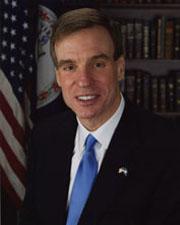
Mark R. Warner
DDemocratVA · Senator
55
/ 100
Average
Attendance96
Avg: 97
Independence22
Avg: 23
Bipartisan Tone21
Avg: 14
Ethics Record100
Avg: 100
Transparency17
Avg: 47
Accountability Score — composite of attendance, independence, bipartisan tone, ethics record & transparency.
Methodology48
Bills Sponsored
0
Enacted into Law
0
Passed a Chamber
44
In Committee
All Sponsored Bills
S5586In Committee
Ensuring Accurate Payments to Specialty Pharmacies Act
S5576In Committee
Artificial Intelligence Risk Management and Security Act of 2026
S5496In Committee
Health CARE Act of 2026
S5498In Committee
Alpha-gal Allergen Inclusion Act
S5508In Committee
Telecommunications Cybersecurity and Resilience Act
S5499In Committee
STOP TICKS Act
S5443In Committee
Health Infrastructure Security and Accountability Act of 2026
S3630Reported
A bill to designate the facility of the United States Postal Service located at 46164 Westlake Drive in Sterling, Virginia, as the "Firefighter Trevor Brown Post Office Building".
This bill designates the facility of the United States Postal Service located at 46164 Westlake Drive in Sterling, Virginia, as the "Firefighter Trevor Brown Post Office Building".
S4623Reported
A bill to designate the facility of the United States Postal Service located at 12109 New Kent Highway in New Kent, Virginia, as the "Patricia Paige Post Office".
This bill designates the facility of the United States Postal Service located at 12109 New Kent Highway in New Kent, Virginia, as the "Patricia Paige Post Office".
S5358In Committee
FAIRR Act
S5246In Committee
MATCH IT Act of 2026
S5223In Committee
NO PROFIT Act
The bill would make it illegal for people to buy or sell stocks and other securities if they have access to secret, nonpublic information from social media accounts run by government officials. This rule would apply to anyone who knows about such information, whether they work in government or not, and would prevent them from using that inside information to make profitable trades. The law aims to stop unfair advantages in the stock market that could come from early access to government officials' private social media posts.
S5217In Committee
RECOVER PII Act
When personal information belonging to federal employees and contractors was exposed in data breaches, this bill would provide free identity protection services to those affected individuals to help prevent fraud and theft. The coverage would help people whose names, Social Security numbers, or other sensitive data were compromised monitor their credit and receive alerts if someone tries to use their information illegally.
S5187In Committee
PHD Talent Act of 2026
The Department of Energy would create a new program that brings together universities, national labs, other federal science agencies, and private companies to help students earn science and engineering doctorates faster. This partnership approach aims to build up America's supply of scientists and engineers by making graduate education more efficient and connected to real-world research and industry needs. The program would affect graduate students pursuing advanced degrees in science and engineering fields, as well as the institutions and companies involved in training them.
S815Reported
A bill to designate the outdoor amphitheater at the Blue Ridge Music Center in Galax, Virginia, as the "Rick Boucher Amphitheater".
This bill designates the outdoor amphitheater at the Blue Ridge Music Center, located at 700 Foothills Road in Galax, Virginia, as the Rick Boucher Amphitheater.
S5051In Committee
AI AGENT Act of 2026
The bill would make it easier for people to switch between online services like social media platforms and email providers by requiring companies to let users transfer their data and port their accounts to competitors. It aims to reduce the barriers that lock customers into using one company's services and promote competition among tech companies. The measure would affect major online service providers and their millions of users who currently face difficulties moving their accounts and information between platforms.
S5061In Committee
Secure A.I. Development Act of 2026
The bill would require better tracking and reporting of safety problems and security risks related to artificial intelligence systems, helping government agencies and the public understand when AI causes harm or poses dangers. It would establish clearer processes for documenting and responding to AI-related incidents, affecting companies that develop or use AI technology as well as consumers and workers who interact with these systems. The measure aims to create more transparency around AI safety issues so problems can be identified and fixed before they cause widespread damage.
S5057In Committee
Safeguarding Against Fabricated Exploitation Through Artificial Intelligence Act of 2026
The federal government would be banned from using certain types of artificial intelligence systems in its operations and decision-making processes. This affects federal agencies and employees who currently use or plan to use AI tools, potentially slowing down some government functions while protecting against risks the bill's sponsors believe these AI models pose. The measure is currently under review by the Senate committee responsible for government operations and security.
S5054In Committee
Data Center Tax Accountability and Disclosure Act of 2026
The bill would remove tax breaks that allow AI data centers to depreciate equipment faster than other businesses, potentially increasing their tax bills. It would also require data center operators to report detailed information about how much electricity and water their facilities use, giving regulators and the public better visibility into the resource demands of artificial intelligence infrastructure.
S5055In Committee
National Workforce Transition Fund Act of 2026
The government would create a new National Workforce Transition Board to help workers learn new skills and get training as artificial intelligence and other new technologies change jobs and industries. This board would coordinate education and support programs to help people adapt to these technological changes and find new employment opportunities. The proposal is currently being reviewed by the Senate Finance Committee.
S5034In Committee
Medicare Advantage Supplemental Benefits Transparency Act of 2026
Medicare Advantage plans would be required to publicly disclose more detailed information about the supplemental benefits they offer to seniors, such as dental, vision, and hearing coverage. This increased transparency would help older adults and their families better understand and compare what extra benefits different plans include before choosing their coverage. The change aims to make it easier for Medicare beneficiaries to make informed decisions about which plan best meets their needs.
S4876Introduced
DNII Act of 2026
The bill would establish clearer procedures for filling the position of Director of National Intelligence when it becomes vacant, ensuring the intelligence community has stable leadership during transitions. It would likely specify how long an acting director can serve and what steps must be taken to nominate and confirm a permanent replacement, affecting how the government's intelligence agencies operate during leadership changes.
S4728In Committee
Combat Emerging Threats to Critical Infrastructure Act of 2026
The federal government would update its plans for protecting critical infrastructure sectors like energy, water, and transportation from cyber attacks and physical threats by having the Cybersecurity and Infrastructure Security Agency coordinate with agencies responsible for each sector. These updated plans would help identify vulnerabilities and improve how the government responds to emergencies that could affect essential services that Americans rely on daily. The bill is currently under review by the Senate committee that oversees homeland security matters.
S4699In Committee
Guaranteeing Universal Access to Cybersecurity Act
The bill would restore federal funding to the Multi-State Information Sharing and Analysis Center, an organization that helps state and local governments share information about cybersecurity threats and coordinate responses to attacks. This funding supports the center's work protecting critical infrastructure like power grids, water systems, and emergency services from cyber threats that could affect millions of Americans.
S4585In Committee
Discount Window Preparedness Act
The Federal Reserve would be required to regularly test its discount window—the emergency lending system that banks use during financial crises—to ensure it works properly when needed. This testing requirement would help identify and fix any problems in the system before a real emergency occurs, protecting banks and the broader financial system from unexpected failures. The bill is currently under review by the Senate Banking Committee.
SJRES135In Committee
A joint resolution providing for congressional disapproval under chapter 8 of title 5, United States Code, of the rule submitted by the Bureau of Consumer Financial Protection relating to the withdrawal of the rule relating to "Consumer Financial Protection Circular 2024-04: Whistleblower Protections Under CFPA Section 1057".
Congress is considering blocking a rule change by the Consumer Financial Protection Bureau that would withdraw protections for whistleblowers who report wrongdoing at financial companies. If approved, this resolution would prevent the agency from removing those whistleblower safeguards, keeping workers who expose fraud or illegal practices at banks and financial institutions protected from retaliation. The measure is currently under review by the Senate Banking Committee.
S4467In Committee
Ensuring Seniors’ Access to Quality Care Act
Ensuring Seniors' Access to Quality Care Act This bill repeals certain restrictions under Medicare and Medicaid that prohibit the approval of nurse-aide training and competency evaluation programs in skilled nursing facilities that have been subject to specified regulatory actions (e.g., civil penalties) for substandard quality of care. The Centers for Medicare & Medicaid Services (CMS) must still disapprove such programs for up to two years; however, the CMS must rescind the disapproval upon completion of corrective action and may require additional oversight of the program for purposes of rescission. The bill also allows Medicaid and Medicare providers (e.g., skilled nursing facilities) to access, through the National Practitioner Data Bank, disciplinary information for affiliated physicians and other health care practitioners, as reported by state licensing authorities.
S4476In Committee
Workforce Transparency Act of 2026
The bill would allow companies that develop or use artificial intelligence to voluntarily report information about how AI affects their workforce, such as job changes, worker displacement, or hiring patterns. The Labor Department would then collect and analyze this data to better understand AI's impact on American workers and employment. This voluntary reporting system would help policymakers and the public track how AI technology is reshaping the job market.
S4302In Committee
Improving IRS Customer Service Act
This bill aims to make the IRS easier to deal with by improving customer service for people filing taxes and responding to IRS inquiries. The changes could include things like shorter wait times, clearer communications, and better access to help when taxpayers have questions or problems with their returns. The bill would affect millions of Americans who interact with the IRS each year.
S4233In Committee
Save Struggling Hospitals Act
This bill would provide financial assistance to hospitals that are struggling financially, likely through grants, loans, or other federal support to help them stay open and continue serving their communities. The aid would primarily benefit rural and underserved hospitals that face challenges competing with larger medical centers or dealing with high uninsured patient populations. Patients in these areas would be the main beneficiaries, as the funding aims to prevent hospital closures that could leave communities without nearby medical care.
S4118In Committee
Hospice CARE Act of 2026
This bill would make changes to how hospice care is paid for and regulated under Medicare, likely aiming to improve access to end-of-life care services for seniors and ensure hospice providers can continue operating sustainably. The legislation would affect Medicare beneficiaries receiving hospice services, hospice care organizations, and potentially the costs taxpayers bear for these services. The bill is currently being reviewed by the Senate Finance Committee to determine its financial impact and feasibility.
S4046In Committee
Economy of the Future Commission Act of 2026
This bill would create a new commission to study how the U.S. economy is changing and prepare recommendations for Congress on how to adapt policies for future economic challenges. The commission would likely examine emerging industries, workforce needs, and technological changes to help lawmakers make informed decisions about economic policy. This affects workers, businesses, and policymakers who need to understand long-term economic trends.
S3939In Committee
Chesapeake WATERS Act
This bill aims to protect and restore the Chesapeake Bay and its surrounding waterways through environmental conservation measures. It likely establishes or strengthens protections for water quality, wildlife habitats, and fishing grounds that affect communities, businesses, and recreational users throughout the Chesapeake region spanning multiple states.
S3729In Committee
PBM Reporting Transparency Act
This bill would require pharmacy benefit managers (the companies that insurance plans use to manage prescription drug coverage) to publicly report detailed information about their business practices, including how they negotiate drug prices and what fees they charge. The transparency requirements would help patients, doctors, and policymakers understand how these middlemen operate and whether they're keeping drug costs artificially high. The measure primarily affects pharmacy benefit managers and could influence how insurance companies and patients access prescription medications.
S3534In Committee
A bill to amend the Internal Revenue Code of 1986 to provide a credit for increasing wages paid to child care providers.
The bill would allow businesses and organizations that employ child care workers to claim a tax credit if they increase wages paid to those workers. This tax break is designed to help child care providers earn higher pay, which could make it easier for child care facilities to attract and keep qualified staff. The measure would reduce the federal taxes owed by employers who raise child care worker wages.
S3505In Committee
Relief for Survivors of Miners Act of 2025
S2720In Committee
Yes in God's Backyard Act
This bill would make it easier to build affordable housing and other community projects by reducing zoning restrictions and regulatory barriers that currently prevent development. The legislation aims to help communities address housing shortages by streamlining the approval process for new construction, which could benefit renters and homebuyers struggling with high housing costs as well as local governments seeking to expand their housing supply. The bill has been sent to the Senate Banking Committee for review.
S2718In Committee
A bill to amend the Community Development Banking and Financial Institutions Act of 1994 to provide for capitalization assistance to enhance liquidity.
This bill would give more money to community development banks and financial institutions that serve low-income areas and underserved communities, helping them have more cash available to lend to small businesses and residents who might otherwise struggle to get loans. By boosting these institutions' financial resources, the bill aims to increase lending and investment in neighborhoods that traditional banks often overlook. The measure targets financial institutions that focus on community development rather than maximizing profits for shareholders.
S2594In Committee
IEIS Act
S2329In Committee
Medicare Orthotics and Prosthetics Patient-Centered Care Act
Medicare would be required to cover orthotics and prosthetics (artificial limbs and supportive devices) based on what doctors determine patients need, rather than applying strict cost limits that might prevent people from getting necessary equipment. This change would affect Medicare beneficiaries who need these devices to maintain mobility and independence, as well as the companies that manufacture and supply them. The goal is to ensure that seniors and disabled individuals can access the devices their doctors recommend without being denied coverage due to budget restrictions.
S2304In Committee
Methane Reduction and Economic Growth Act
This bill would likely use tax incentives or penalties related to methane emissions to encourage companies to reduce their methane output while supporting economic growth. The measure would probably affect oil, gas, and agricultural businesses that produce methane as a byproduct of their operations, as well as companies that develop methane reduction technologies. The specific tax changes would be determined by the Finance Committee as it reviews the proposal.
S1928In Committee
Gerald E. Connolly Esophageal Cancer Awareness Act of 2025
The legislation would establish a national awareness campaign about esophageal cancer, including efforts to educate the public about risk factors and early warning signs of the disease. The bill would direct federal health agencies to develop and distribute information to help people recognize symptoms and seek medical care earlier, potentially improving outcomes for patients diagnosed with this type of cancer.
S1634In Committee
ACCESS Act of 2025
S1058In Committee
Preserving Patient Access to Home Infusion Act
Preserving Patient Access to Home Infusion Act This bill specifically includes pharmacy services and home infusion drugs that are administered without a pump as part of covered home infusion therapy under Medicare. The bill also allows nurses and physician assistants to establish and review the plan of care for home infusion therapy, and it specifies that payment may be made regardless of whether a practitioner is physically present in the home at the time the drug is administered.
S980In Committee
Alleviating Spaceport Traffic by Rewarding Operators Act of 2025
Alleviating Spaceport Traffic by Rewarding Operators Act of 2025 This bill allows the Department of Transportation (DOT) to establish a pilot grant program for projects to construct, repair, maintain, or improve transportation infrastructure and facilities for space launch and reentry sites. Launch and reentry site operators may use the grants for projects that (1) are located at, or adjacent to, a launch or reentry site; (2) directly enable or support transportation safety or transportation activities (i.e., the movement of people or property to, from, or within a launch site); and (3) are made generally available, subject to reasonable commercial terms. DOT may also issue a supplemental matching grant to an operator of a launch or reentry site.
S772In Committee
Employer Participation in Repayment Act
SCONRES66In Committee
A concurrent resolution to commemorate the 75th anniversary of the Blue Ridge Parkway.
Commemorates the 75th anniversary of the Blue Ridge Parkway in North Carolina and Virginia. Acknowledges the historic and enduring scenic, recreational, and economic value of the Blue Ridge Parkway.
S1207In Committee
A bill to authorize the Secretary of the Interior to study the suitability and feasibility of designating the National D-Day Memorial in Bedford, Virginia, as a unit of the National Park System.
Directs the Secretary of the Interior, through the Director of the National Park Service (NPS), to conduct a study of the National D-Day Memorial in Bedford, Virginia, to evaluate its national significance and the suitability and feasibility of designating it as a unit of the National Park System. Requires the identification of alternatives for the management, administration, and protection of the Memorial.