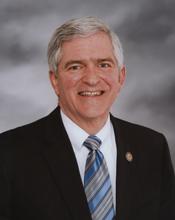
Daniel Webster
RRepublicanFL-11 · Representative
51
/ 100
Average
Attendance98
Avg: 96
Independence3
Avg: 4
Bipartisan Tone0
Avg: 15
Ethics Record100
Avg: 99
Transparency38
Avg: 53
Accountability Score — composite of attendance, independence, bipartisan tone, ethics record & transparency.
Methodology8
Bills Sponsored
0
Enacted into Law
1
Passed a Chamber
7
In Committee
All Sponsored Bills
HR9590In Committee
SAFE for Manatees Act
The federal government would study whether manatees could be relocated to new habitats as an alternative to their current homes. This research would help determine if manatees could survive and thrive in different areas, potentially addressing overcrowding or environmental challenges in their existing habitats. The study would affect conservation efforts for these endangered marine mammals and could influence future wildlife management decisions.
HR9326In Committee
USA Act
The federal government would work to increase American involvement in developing international technical standards for artificial intelligence and other emerging technologies, with the National Institute of Standards and Technology and State Department taking the lead in these efforts. This aims to ensure the United States has a stronger voice in shaping global rules and specifications for AI and similar technologies rather than letting other countries dominate these decisions. The change would affect technology companies, researchers, and government agencies involved in standards-setting and international negotiations.
HR3831Passed House
Florida Safe Seas Act of 2025
Florida Safe Seas Act of 2025 This bill prohibits shark feeding in the U.S. Exclusive Economic Zone (EEZ) seaward of Florida for any purpose other than to harvest sharks, subject to limited exceptions. (Florida state waters generally extend 3 miles from the shore in the Atlantic Ocean and 9 miles from the shore in the Gulf of America. The EEZ is seaward of and adjacent to state waters and generally extends to 200 miles from the U.S. coastline.) Specifically, the bill makes it unlawful to introduce, or attempt to introduce, food or any other substance into these waters to attract sharks for any purpose other than to harvest sharks. Exceptions allow shark feeding (1) for research programs funded by federal appropriations, or (2) to the extent that the feeding presents no public health hazard or safety risk (as determined by the National Oceanic and Atmospheric Administration or under state law).
HR6167In Committee
HEALTH Act of 2025
The bill proposes changes to tax rules related to health care, though the specific provisions are not yet detailed in the referral. Congress is sending it to two committees—Ways and Means (which handles taxes) and Energy and Commerce (which handles health policy)—to review how the tax changes would affect the health care system. The committees will determine what parts of the proposal fall under their authority before moving forward.
HR4906In Committee
USA Act
The bill aims to strengthen America's competitiveness in science and technology by supporting research, development, and innovation across various sectors including communications and space exploration. It would likely provide funding and resources to help U.S. companies, universities, and research institutions keep pace with international competitors and develop new technologies. The legislation would affect scientists, engineers, technology workers, and companies involved in research and development.
HR1365In Committee
America First Energy Act
America First Energy Act This bill places certain restrictions on board members and employees of the Foundation for Energy Security and Innovation of the Department of Energy (DOE). The foundation is an independent, agency-related foundation that assists DOE in addressing energy and environmental challenges through science and technology solutions, including by accelerating the development and commercialization of critical energy technologies and fostering public-private partnerships. Specifically, the bill requires the foundation's voting board members, executive director, officers, and employees to be U.S. citizens, U.S. nationals, non-U.S. nationals ( aliens under federal law) admitted as refugees, or non-U.S. nationals lawfully admitted for permanent residence. Finally, the bill directs the foundation to require covered individuals listed on an application for a research and development award from the foundation to disclose all current and pending research support received or expected to be received by the individuals. Covered individuals means individuals who (1) contribute in a substantive, meaningful way to the scientific development or execution of a research and development project proposed to be carried out with an award from the foundation; and (2) are designated as a covered individual by the foundation.
HR1361In Committee
Collision Avoidance Systems Act of 2025
Collision Avoidance Systems Act of 2025 This bill allows for the use of a pulsating light system for vehicle braking. Specifically, Federal Motor Vehicle Safety Standard Number 108 (Standard 108) must be deemed to allow for the use of a pulsating light system on covered vehicles (i.e., passenger cars, multipurpose passenger vehicles, trucks, buses, trailers, and motorcycles). The Department of Transportation must issue regulations to update Standard 108 to (1) include performance-based standards for pulsating light systems, and (2) allow for the use of the systems on motor vehicles. As background, Standard 108 regulates all automotive lighting, signaling, and reflective devices. Under the bill, a pulsating light system includes a system for a high-mounted stop lamp in which the lamp pulses rapidly no more than four times and for no more than 1.2 seconds when the brake of the vehicle is applied and then converts to a continuous light (as a normal stop lamp) until the brake is released.
HR1235In Committee
Federal Infrastructure Bank Act of 2025
Federal Infrastructure Bank Act of 2025 This bill establishes the Federal Infrastructure Bank and the Federal Infrastructure Bank Holding Company (FIBHC). The bank shall be a wholly owned subsidiary of the FIBHC. The bank must provide equity investments, direct loans, and loan guarantees for the planning, predevelopment, design, construction, operation, or maintenance of revenue-producing infrastructure projects in the United States with sufficient revenue sources and guarantees to support the interest and principal payments to the bank. At least 10% of the loans, equity investments, and loan guarantees must be for infrastructure projects in rural areas. Entities eligible for loans, equity investments, and loan guarantees include corporations, joint ventures, states, and governmental entities. The bank is prohibited from providing funding for infrastructure projects that are owned, directed, controlled, financed, or influenced by the Chinese government or the Chinese Communist Party. The Board of Governors of the Federal Reserve System shall have oversight and supervisory authority over the FIBHC and the bank. The bank must establish an Infrastructure Guarantee Fund to cover loans and loan guarantees in the event of nonpayment by loan recipients. The FIBHC may issue equity securities, make dividend payments on the securities, and issue bonds. The bill provides for a tax credit in an amount equal to 10% of the amount a taxpayer paid to the FIBHC for an equity investment issued within three years of the formation of the FIBHC.