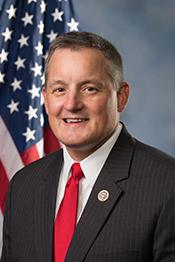
Bruce Westerman
RRepublicanAR-4 · Representative
66
/ 100
Above Average
Attendance99
Avg: 96
Independence2
Avg: 4
Bipartisan Tone27
Avg: 15
Ethics Record100
Avg: 99
Transparency100
Avg: 53
Accountability Score — composite of attendance, independence, bipartisan tone, ethics record & transparency.
Methodology12
Bills Sponsored
0
Enacted into Law
2
Passed a Chamber
10
In Committee
All Sponsored Bills
HRES1623In Committee
Expressing support for the recognition of October 2026, as "National Dyslexia Awareness Month".
HR10136In Committee
Crossett Experimental Forest Act of 2026
HR9250In Committee
Great American Outdoors Act 250
This bill would provide funding and support to modernize and maintain five major federal agencies that manage America's public lands, wildlife, and Native American education systems as the country approaches its 250th anniversary in 2026. The money would go toward updating facilities, improving services, and strengthening operations at the National Park Service, Fish and Wildlife Service, Bureau of Land Management, Forest Service, and Bureau of Indian Education. The bill affects millions of Americans who visit national parks and public lands, hunters and fishers, Native American communities, and local economies that depend on tourism and natural resource management.
HR8840In Committee
Fair Care Act of 2026
The proposal aims to reduce what Americans pay for medical care, prescription medications, and health insurance by addressing factors that drive up healthcare costs. It would affect patients, insurance companies, pharmaceutical manufacturers, and healthcare providers across the country. The bill has been sent to multiple congressional committees for review and consideration.
HR1897In Committee
ESA Amendments Act of 2025
ESA Amendments Act of 2025 This bill reauthorizes through FY2031 the Endangered Species Act and generally narrows protections provided under the act. The bill directs the Fish and Wildlife Service and the National Marine Fisheries Service to submit a National Listing Work Plan that establishes a five-year schedule and plan for addressing listing of endangered or threatened species and designation of critical habitats for such species. Under the plan, the bill gives the Services flexibility on the timing of acting on listing petitions and eliminates the requirement for the Services to act within 12 months on listing petitions. The bill limits what land may be designated as critical habitat for an endangered or threatened species. It also limits protections provided to threatened species and allows a state to regulate the recovery of such species if the Services determine the state's proposed recovery strategy would conserve the species. The bill provides statutory authority for Conservation Benefit Agreements, which allow private landowners to voluntarily enter agreements to reduce threats to candidate species in exchange for being allowed to continue their operations if the species is later listed. The bill also modifies the permitting process for certain other voluntary conservation agreements, including by exempting incidental take permits (e.g., permits to harm or kill a species) from environmental review requirements. The bill also makes a variety of other changes to the act, including limiting consultation requirements, judicial review, and awards for attorneys’ fees in certain cases.
HRES1173In Committee
Expressing support for the designation of April 2026 as "Second Chance Month".
This resolution would officially recognize April 2026 as "Second Chance Month" to raise awareness about rehabilitation and reentry programs for people who have been incarcerated or involved in the criminal justice system. The designation aims to highlight opportunities for formerly incarcerated individuals to rebuild their lives through job training, education, and community support. While the resolution itself doesn't create new programs or funding, it expresses Congress's support for giving people a fresh start after serving their time.
HR4776Passed House
SPEED Act
Standardizing Permitting and Expediting Economic Development Act or the SPEED Act This bill limits the scope of the National Environmental Policy Act of 1969 (NEPA) and modifies the environmental review of major federal actions under NEPA to generally limit the number of federal actions that trigger NEPA review and to expedite the review process. For example, the bill redefines major federal actions , including to specify that an agency may not determine that an action is a major federal action based solely on the provision of federal funds. It also excludes from the requirement for NEPA review certain proposed agency actions that have already been reviewed under another federal, state, or tribal environmental review statute that meets the requirements of NEPA. The bill directs an agency, when preparing an environmental document for a proposed agency action, to consider only those effects proximately caused by the immediate project or action under consideration. Agencies may not consider effects that are speculative, attenuated from the project or action, separate in time or place from the project or action, or in relation to separate projects or actions. The bill modifies the requirement for agencies to prepare an environmental assessment to apply to agency actions that are not likely to have a reasonably foreseeable significant effect on the quality of the human environment. (Currently, the requirement only applies to actions that do not have such an effect.) The bill makes a variety of other modifications to NEPA, including by limiting judicial review of NEPA cases.
HRES821In Committee
Expressing support for the recognition of October 2025 as "National Dyslexia Awareness Month".
HRES289In Committee
Expressing support for the designation of April 2025 as "Second Chance Month".
This resolution supports the designation of Second Chance Month to promote awareness of unnecessary legal and social barriers that prevent individuals with criminal records from becoming productive members of society.
HR471Passed House
Fix Our Forests Act
Fix Our Forests Act This bill establishes requirements for managing forests on federal land, including requirements concerning reducing wildfire threats, expediting the review of certain forest management projects, and implementing forest management projects and other activities. Specifically, the bill (1) designates certain firesheds at high risk for wildfires as fireshed management areas; (2) directs the U.S. Forest Service and U.S. Geological Survey to jointly establish an interagency Fireshed Center that is responsible for duties related to assessing and predicting fire, including maintaining a fireshed registry on a publicly accessible website that provides interactive geospatial data on individual firesheds; and (3) makes other requirements related to reducing wildfire. Next, the bill expedites the review of certain forest management projects under the National Environmental Policy Act (NEPA) of 1969 and exempts certain activities from NEPA review. It also establishes intra-agency strike teams to accelerate the review and any interagency consultation processes under NEPA, the Endangered Species Act of 1973, and the National Historic Preservation Act. It also limits consultation requirements concerning threatened and endangered species under the Forest and Rangeland Renewable Resources Planning Act of 1974 and the Federal Land Management and Policy Act of 1976. Finally, it limits litigation involving fireshed management projects and limits remedies that courts may provide. Additionally, the bill supports reducing community wildfire risks, carrying out forest restoration and stewardship activities (including watershed protection and restoration), conducting biochar demonstration projects, advancing technologies to address forest wildfires, and assisting wildland firefighters and their families.
HR1275In Committee
Focus on Learning Act
Focus on Learning Act This bill requires certain federal actions to address the use of mobile devices in elementary and secondary schools. First, the bill directs the Office of the Surgeon General, in consultation with the Department of Health and Human Services (HHS), to study and report on the use of mobile devices in elementary and secondary schools nationwide. Among other elements, this study must include the impact of mobile device use on student learning and academic achievement, student educational outcomes, and student mental health. Second, the Department of Education, in consultation with HHS, must establish a pilot program to award grants to local educational agencies (LEAs) to enable participating schools served by such LEAs to purchase secure containers and install lockers in order to create a school environment free of mobile devices.
HRES90In Committee
Providing amounts for the expenses of the Committee on Natural Resources in the One Hundred Nineteenth Congress.
This resolution provides amounts for the expenses of the House Committee on Natural Resources for the 119th Congress.