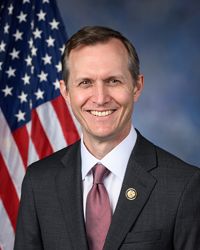
George Whitesides
DDemocratCA-27 · Representative
60
/ 100
Average
Attendance97
Avg: 96
Independence7
Avg: 4
Bipartisan Tone36
Avg: 15
Ethics Record100
Avg: 99
Transparency48
Avg: 53
Accountability Score — composite of attendance, independence, bipartisan tone, ethics record & transparency.
Methodology19
Bills Sponsored
0
Enacted into Law
0
Passed a Chamber
19
In Committee
All Sponsored Bills
HR10750In Committee
Advanced Nuclear Fission and Fusion Propulsion Systems Act
HR10719In Committee
Protecting Kids from Human-Like Chatbots Act
HRES1557In Committee
Commemorating the 50th anniversary of the rollout of Space Shuttle Enterprise from the Rockwell International plant in Palmdale, California.
HR10350In Committee
Protecting Elders from Wire Fraud Act
HR10180In Committee
Self-Improving AI Monitoring Act
HR10181In Committee
Stop Predator Dumping Act
HR10137In Committee
No Insider Trading on National Security Act of 2026
HR10069In Committee
Military Readiness Through Resilient Lands Act
HR10042In Committee
Understanding AI in the Classroom Act
The National Science Foundation would be required to organize and complete workshops that help teachers learn how to effectively use artificial intelligence tools in their classrooms. These workshops would provide educators with practical training and resources to integrate AI technology into their teaching methods. The bill affects teachers, students, and schools across the country by supporting professional development in this emerging area of education.
HR9945In Committee
Lowering Energy Costs through Grid Modernization Act
The bill would provide support and funding to help upgrade America's electrical grid with newer, more efficient conductor technology and related systems that can better handle modern electricity demands. This would affect utility companies, electrical workers, and ultimately consumers who depend on reliable power, while potentially reducing energy losses during transmission and improving grid reliability across the country.
HR9889In Committee
PILOT Act
The Department of Defense would be required to study and report back to Congress on whether it could hire more test pilots and flight test engineers from civilian pilot training schools to help with military aircraft testing. This could expand the pool of qualified professionals available to test new military aircraft and equipment. The report would help Congress understand if this approach could improve military testing capabilities while potentially reducing costs.
HR9692In Committee
TOTAL Screen Time Act
The federal government would work with technology experts to create a voluntary standard that allows parents and users to set limits on how much time they spend on phones, tablets, and similar devices. This standard would not be mandatory for companies to use, but would give device makers a common framework they could adopt if they choose to. The goal is to help people, especially children, manage their screen time more easily across different types of devices.
HR9534In Committee
Wildfire Response Modernization Act
The Air Force would be required to buy satellite imagery and data from private companies to help the Department of Defense with its operations and to support wildfire detection and response efforts run by U.S. Northern Command. This would allow the military and emergency responders to use commercial satellite technology to better monitor and fight wildfires across the country. The change affects defense contractors who provide satellite data services and government agencies involved in national security and disaster response.
HR9449In Committee
Global Climate Resilience Act of 2026
The proposal would allow the United States to forgive or reduce debt owed by developing countries, with the money saved going toward projects that help those nations prepare for and withstand climate change, natural disasters, and other challenges. This would primarily affect developing countries and could free up their resources to invest in infrastructure, healthcare, and other priorities instead of debt payments. The measure is currently being reviewed by congressional committees that handle foreign policy and financial matters.
HR8841In Committee
Veteran Scam Victims Foundation Act
The proposal would create a new foundation to help veterans who have been victims of scams and fraud recover their losses and get support. This foundation would work to identify scams targeting veterans, provide financial assistance to those who have been defrauded, and potentially help prevent future scams through education and awareness programs. Veterans who fall prey to common scams—like fake charities, investment schemes, or romance fraud—would be the primary beneficiaries of this new resource.
HR9235In Committee
Disaster Ready Infrastructure Act of 2026
States and local governments would be required to assess how natural disasters like floods, hurricanes, and earthquakes could damage their roads, bridges, and other transportation systems when they develop long-term transportation plans. This would help communities better prepare for and protect critical infrastructure that people depend on to get around, work, and receive emergency services. The requirement would apply to transportation planning efforts that receive federal funding.
HR8773In Committee
Containing Effects of Mineral Extraction Act of 2026
The proposal would add new requirements to contracts and permits for large-scale mining operations that are located close to cities and towns, giving the government more control over how these projects operate in populated areas. This would affect mining companies, local communities, and potentially consumers who rely on minerals, by ensuring that extraction activities near urban areas follow stricter conditions to protect nearby residents.
HR7150In Committee
To amend title 38, United States Code, to require the Secretary of Veterans Affairs to submit to Congress a quarterly report on housing loans insured, guaranteed, or under laws administered by the Secretary, and for other purposes.
The Department of Veterans Affairs would be required to provide Congress with detailed quarterly reports on the housing loans it insures and guarantees for veterans, tracking how many loans are being issued and their status. This would give lawmakers better visibility into how the VA's home loan program is operating and help them monitor whether veterans are getting the housing benefits they're entitled to. The bill also includes other unspecified changes to veterans' housing loan policies.
HR6164In Committee
To designate the facility of the United States Postal Service located at 28201 Franklin Parkway in Santa Clarita, California, as the "Deputy Ryan Clinkunbroomer Post Office Building".
This bill designates the facility of the United States Postal Service located at 28201 Franklin Parkway in Santa Clarita, California, as the "Deputy Ryan Clinkunbroomer Post Office Building".