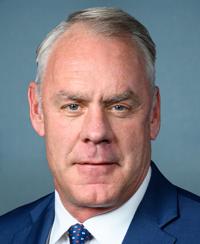
Ryan K. Zinke
RRepublicanMT-1 · Representative
50
/ 100
Average
Attendance97
Avg: 96
Independence3
Avg: 4
Bipartisan Tone6
Avg: 15
Ethics Record100
Avg: 99
Transparency29
Avg: 53
Accountability Score — composite of attendance, independence, bipartisan tone, ethics record & transparency.
Methodology10
Bills Sponsored
0
Enacted into Law
1
Passed a Chamber
8
In Committee
All Sponsored Bills
HR10529In Committee
A River Runs Through It Act
HR8665Passed House
Allied Defense Sales Act
Allied Defense Sales Act This bill directs the Department of State to implement a strategy to encourage foreign entities to participate in a multinational military procurement process. The State Department must also periodically report on the strategy and its implementation. Under the bill, this process involves the sale by the United States to a lead foreign nation of defense articles or services which are subsequently transferred to other qualifying countries. The strategy must incorporate existing efforts by the State Department to, for example, survey interest, identify countries and partners who could serve as lead purchase coordinators, review pathways for participation for countries that are ineligible for foreign military financing loans, identify challenges and solutions regarding compliance with the Arms Export Control Act, and identify opportunities to develop and promote exportable defense articles and services (including for purposes of supporting the trilateral security partnership between Australia, the United Kingdom, and the United States).
HR6120In Committee
SROS Act
The proposal would modify how certain retirement savings accounts are taxed, potentially affecting individuals who save money through employer-sponsored plans or individual retirement accounts. The changes would impact both workers contributing to these accounts and the tax revenue collected by the federal government. The measure is currently under review by the House committee responsible for tax policy.
HR4753In Committee
LEAD Act of 2025
The bill would establish new programs and initiatives to strengthen U.S. leadership and engagement in international affairs, likely including diplomatic efforts, foreign aid, and partnerships with other countries. It would affect how the State Department and other federal agencies conduct their work overseas and could impact American businesses, nonprofits, and citizens involved in international activities. The legislation has been sent to the House Foreign Affairs Committee for review and debate.
HR3613Reported
Streamlining Foreign Military Sales Act of 2025
The legislation would speed up the process for the U.S. government to approve and deliver military equipment and weapons sales to foreign countries that are U.S. allies. By reducing bureaucratic delays and paperwork requirements, the bill aims to help American defense contractors complete international weapons deals faster while maintaining national security reviews. This would primarily affect defense companies, foreign governments seeking to purchase military equipment, and U.S. military officials overseeing these international transactions.
HR1762In Committee
Forest Service Accountability Act
The bill would establish new oversight and reporting requirements for how the U.S. Forest Service manages public forests and lands, likely including requirements to track spending, environmental impacts, or how decisions are made. This would affect both the Forest Service's operations and potentially the timber companies, outdoor recreation businesses, and environmental groups that interact with federal forests. The goal appears to be making the agency more transparent and accountable to Congress and the public about its management practices.
HR598In Committee
FIR Act
Based on the title and subject matter, this bill likely addresses forest management or land use policies affecting public lands. The referral to the Forestry and Horticulture Subcommittee suggests it may involve timber harvesting, forest conservation, fire prevention, or similar natural resource management issues that impact landowners, environmental groups, and communities near federal forests.
HR718In Committee
Public Lands in Public Hands Act
This bill would prevent the federal government from selling off public lands and instead keep them in public ownership for uses like recreation, conservation, and resource management. It affects everyone who uses national forests, parks, and other federal lands for hunting, fishing, hiking, or other outdoor activities, as well as communities that depend on these lands for timber, mining, or other economic uses. The bill is currently being reviewed by lawmakers who focus on forest and land management issues.
HR907In Committee
Northern Montana Water Security Act of 2025
Northern Montana Water Security Act of 2025 This bill modifies and ratifies a specified water rights settlement agreement entered into by the United States, Montana, and the Fort Belknap Indian Community of the Fort Belknap Reservation of Montana (i.e., the Gros Ventre and Assiniboine Tribes). The bill also authorizes wastewater infrastructure on the Blackfeet Indian Reservation in Montana. The bill requires the community's water rights to be held in trust for the benefit of the community and its allottees. The community must enact a tribal water code to regulate its water rights. Additionally, the bill authorizes the Department of the Interior and the Department of Agriculture (as applicable) to enter negotiations with Montana to exchange certain state lands for federal lands to be held in trust for the benefit of the community. The bill prohibits gaming on the land taken into trust. The bill also establishes the Aaniiih Nakoda Settlement Trust Fund (and specified accounts) for purposes of carrying out this bill, establishes the Fort Belknap Indian Community Water Settlement Implementation Fund (and specified accounts) for purposes of carrying out this bill, and provides funding for specified accounts established by the bill. The bill also authorizes Interior to plan, design, construct, operate, maintain, and replace community water distribution and wastewater treatment facilities for the Blackfeet Tribe of the Blackfeet Indian Reservation of Montana.
HR717In Committee
Wildlife Movement Through Partnerships Act of 2025
Wildlife Movement Through Partnerships Act of 2025 This bill establishes additional support for wildlife movement areas. It also reauthorizes and modifies (1) the Partners for Fish and Wildlife Program, and (2) wildlife-related cooperative research and training programs. Specifically, the bill establishes within the Department of the Interior a grant program for projects that improve or conserve habitat quality in movement areas of terrestrial vertebrate species. At least 50% of the amounts made available to carry out the grant program must be used for projects that directly conserve, restore, or enhance big game movement areas. Interior must also establish a research program that provides funds to state fish and wildlife agencies and Indian tribes to collect and analyze data on the identification, characteristics, or management of movement areas. The bill reauthorizes through FY2031 and expands the Partners for Fish and Wildlife Program to allow Interior to use program funds to provide technical assistance to other federal agencies to implement voluntary programs with a focus on migration corridor or seasonal habitat conservation efforts on private and tribal land. The bill also reauthorizes through FY2031 cooperative research and training programs for fish and wildlife resources. At least 50% of the funding must be used for projects that improve habitat quality in movement areas of big game and other wildlife. Additionally, the bill directs the U.S. Geological Survey to work with, and provide technical assistance to, federal agencies, states, and Indian tribes to build on existing efforts to map movement areas.