HR10037Referred to Committee
Virtual-Based Opioid Treatment for Veterans Act
Introduced
In Committee
3
Passed One Chamber4
Passed Both5
Signed into Law119th
Congress
2026-08-03
Introduced
2
Cosponsors
HR
ⓘType
Sponsor
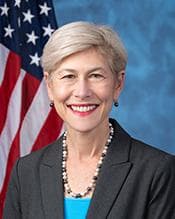
Deborah K. Ross
Democrat · NC · Representative
Votes with party: 99.0% (671 recorded votes)
Top industries funding sponsor:
- Progressive Groups$78k
- Climate & Environment$1k
Full profile: /officials/R000305
Source: Congress.gov · FEC
Cosponsors (2)
Members who have signed on to support this bill since introduction. Source: Congress.gov.
Latest Action
The most recent step in the bill's legislative path. Committee Activity below shows referrals and reports; the full action-by-action history including floor proceedings lives at Congress.gov →
Committee Activity
Currently in
- House Committee on Veterans' AffairsReferred To · 2026-08-03
Plain-English Summary
The Department of Veterans Affairs would test a program allowing veterans to receive opioid addiction treatment through telehealth and virtual visits rather than requiring in-person appointments at VA facilities. This pilot program aims to make it easier for veterans struggling with opioid use disorder to access medication-assisted treatment and counseling from home or other convenient locations. The program would help determine whether virtual treatment options can improve access to care for veterans in rural areas or those with transportation challenges.
AI-assisted summary generated from the official bill metadata (title, subjects, actions) sourced from Congress.gov. Cached and reviewed. Always verify against the official text linked below.
Subjects
Armed Forces and National Security
Full Bill Text
Verbatim text published on Congress.gov via GovInfo. Use Cmd+F / Ctrl+F to search within this excerpt.
[Congressional Bills 119th Congress] [From the U.S. Government Publishing Office] [H.R. 10037 Introduced in House (IH)] <DOC> 119th CONGRESS 2d Session H. R. 10037 To direct the Secretary of Veterans Affairs to carry out a pilot program to expand access to virtual-based opioid treatment for covered veterans, and for other purposes. _______________________________________________________________________ IN THE HOUSE OF REPRESENTATIVES August 3, 2026 Ms. Ross (for herself, Mr. Davis of North Carolina, and Mrs. Miller of West Virginia) introduced the following bill; which was referred to the Committee on Veterans' Affairs _______________________________________________________________________ A BILL To direct the Secretary of Veterans Affairs to carry out a pilot program to expand access to virtual-based opioid treatment for covered veterans, and for other purposes. Be it enacted by the Senate and House of Representatives of the United States of America in Congress assembled, SECTION 1. SHORT TITLE. This Act may be cited as the ``Virtual-Based Opioid Treatment for Veterans Act''. SEC. 2. DEPARTMENT OF VETERANS AFFAIRS PILOT PROGRAM TO EXPAND ACCESS TO VIRTUAL-BASED OPIOID TREATMENT FOR COVERED VETERANS. (a) Establishment.--Not later than 180 days after the date of the enactment of this Act, the Secretary of Veterans Affairs shall establish and carry out a pilot program on expanding access to virtual- based opioid treatment for covered veterans. Under the pilot program, the Secretary shall-- (1) conduct outreach to covered veterans and the families of covered veterans with respect to options for virtual-based opioid treatment furnished through the Veterans Community Care Program of the Department of Veterans Affairs established and operated under section 1703 of title 38, United States Code; (2) develop referral networks for virtual-based opioid treatment options for covered veterans that are designed around overcoming barriers associated with opioid treatment; (3) create a referral pipeline for covered veterans into these virtual-based opioid treatment programs, assisted by a national public awareness campaign around these treatment programs, as a supplement to existing Department of Veterans Affairs direct care programs; (4) ensure that clinicians of the Veterans Health Administration and peer-support specialists are aware of community care network-associated virtual-based opioid treatment programs for patients experiencing barriers to the access of direct care provided by the Department of Veterans Affairs; and (5) launch an interagency task-force with covered Secretaries to ensure a coordinated, whole-of-Government approach dedicated to ensuring cross-agency integration of the pilot program. (b) Study and Report.-- (1) In general.--As part of the pilot program, the Secretary of Veterans Affairs shall carry out a study on the societal impact of barriers to treatment for substance use disorder and submit to the appropriate agency heads and congressional committees a report on such study. Such report shall include-- (A) a description of the findings of such study; and (B) recommendations of the Secretary with respect to incorporating virtual-based opioid treatment models with proven success in overcoming such barriers. (2) Annual update.--Not later than 1 year after the date on which the Secretary submits the report under paragraph (1), and on an annual basis thereafter until the opioid crisis is no longer deemed a public health emergency, the Secretary shall update the report under paragraph (1) and submit to the appropriate agency heads and congressional committees a revised report that includes a summary of the progress of the pilot program toward resolving and overcoming the treatment barriers identified in the study under paragraph (1). (c) Sunset.-- (1) In general.--Except as provided in paragraph (2), the authority of the Secretary of Veterans Affairs to carry out the pilot program under this section shall terminate on the date that is 2 years after the date of the enactment of this Act. (2) Extension.--If…
Show the remaining 354 wordsHide the remaining 354 words
the Secretary determines the pilot program is effective in improving health-related outcomes for covered veterans in receipt of care under the pilot program, the Secretary may extend such authority for such period as the Secretary determines appropriate. (d) Definitions.--In this section: (1) The term ``appropriate agency heads and congressional committees'' means-- (A) the Secretary of Health and Human Services; (B) the Secretary of Defense; (C) the Attorney General of the United States; (D) the Committee on Veterans' Affairs of the Senate; (E) the Committee on Veterans' Affairs of the House of Representatives; (F) the Committee on Health, Education, Labor, and Pensions of the Senate; and (G) the Committee on Energy and Commerce of the House of Representatives. (2) The term ``barriers'' means barriers to the access of traditional, in-person medication-assisted opioid treatment, as defined by the Centers for Disease Control or the Substance Abuse and Mental Health Services Administration. (3) The term ``covered Secretaries'' means-- (A) the Secretary of Health and Human Services, acting through the Assistant Secretary for Mental Health and Substance Abuse; (B) the Secretary of Veterans Affairs, acting through the Under Secretary for Health; (C) the Secretary of Defense, acting through the Assistant Secretary of Defense for Health Affairs; and (D) the Attorney General, acting through the Director for the Health Services Division of the Federal Bureau of Prisons. (4) The term ``covered veteran'' means a veteran who is enrolled in the system of annual patient enrollment established and operated under section 1705 of title 38, United States Code. (5) The term ``virtual-based opioid treatment'' means treatment programs under the Veterans Community Care Program of the Department of Veterans Affairs that-- (A) incorporate same-visit, same-clinician behavioral counseling and medication-assisted treatment in each visit; (B) are conducted entirely through telemedicine or telehealth; (C) are from licensed, board-certified psychiatric clinicians whose practices possess Drug Enforcement Administration licenses authorizing medication-assisted treatment; and (D) meet outcome-based eligibility benchmarks, such as on minimum thresholds for patient retention, toxicology compliance, patient-reported outcomes, and reduction in emergency department utilization or escalation of care, as determined by the Secretary of Veterans Affairs, in consultation with the covered Secretaries. <all>
Related legislation
Bills by the same sponsor or covering overlapping subjects.
- HR10525Tropospheric Ozone Research Act of 2026Referred to Committee · 2026-09-21
- HR9971Advancing International and Foreign Language Education ActReferred to Committee · 2026-07-27
- HRES1410Congratulating the Carolina Hurricanes on winning the 2026 Stanley Cup Championship, the team's first Stanley Cup win in 20 years.Referred to Committee · 2026-06-30
- HR9481RETURN ActReferred to Committee · 2026-06-25