Public Health and Research Reforms in Controlled Substances Act of 2026
Sponsor
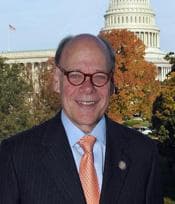
Full profile: /officials/C001068
Source: Congress.gov · FEC
Cosponsors (0)
Members who have signed on to support this bill since introduction. Source: Congress.gov.
No cosponsors on record. Bills can pass without cosponsors — this often means the sponsor introduced the bill alone, either because it's a messaging bill, a chairman's mark, or simply early in the legislative cycle.
Latest Action
The most recent step in the bill's legislative path. Committee Activity below shows referrals and reports; the full action-by-action history including floor proceedings lives at Congress.gov →
Referred to the Committee on Energy and Commerce, and in addition to the Committees on the Judiciary, Oversight and Government Reform, Natural Resources, Agriculture, and Transportation and Infrastructure, for a period to be subsequently determined by the Speaker, in each case for consideration of such provisions as fall within the jurisdiction of the committee concerned.
2026-10-29
Source: Congress.gov
Committee Activity
Currently in
- House Committee on Transportation and InfrastructureReferred To · 2026-10-29
- House Committee on AgricultureReferred To · 2026-10-29
- House Committee on Natural ResourcesReferred To · 2026-10-29
- House Committee on the JudiciaryReferred To · 2026-10-29
- House Committee on Oversight and Government ReformReferred To · 2026-10-29
- House Committee on Energy and CommerceReferred To · 2026-10-29
Plain-English Summary
Plain-English summary pending. Introduced on 2026-10-29. Check back soon — summaries are generated as bills progress through Congress.
Full Bill Text
Verbatim text published on Congress.gov via GovInfo. Use Cmd+F / Ctrl+F to search within this excerpt.
[Congressional Bills 119th Congress] [From the U.S. Government Publishing Office] [H.R. 10923 Introduced in House (IH)] <DOC> 119th CONGRESS 2d Session H. R. 10923 To amend the Controlled Substances Act to better align such Act with modern medical knowledge, establish a new system for the scheduling of controlled substances, redelegate certain authorities, promote scientific research, and for other purposes. _______________________________________________________________________ IN THE HOUSE OF REPRESENTATIVES October 29, 2026 Mr. Cohen introduced the following bill; which was referred to the Committee on Energy and Commerce, and in addition to the Committees on the Judiciary, Oversight and Government Reform, Natural Resources, Agriculture, and Transportation and Infrastructure, for a period to be subsequently determined by the Speaker, in each case for consideration of such provisions as fall within the jurisdiction of the committee concerned _______________________________________________________________________ A BILL To amend the Controlled Substances Act to better align such Act with modern medical knowledge, establish a new system for the scheduling of controlled substances, redelegate certain authorities, promote scientific research, and for other purposes. Be it enacted by the Senate and House of Representatives of the United States of America in Congress assembled, SECTION 1. SHORT TITLE. This Act may be cited as the ``Public Health and Research Reforms in Controlled Substances Act of 2026''. SEC. 2. TABLE OF CONTENTS. The table of contents for this Act is as follows: Sec. 1. Short title. Sec. 2. Table of contents. TITLE I--AMENDMENTS TO CONTROLLED SUBSTANCES ACT Sec. 101. Findings and declarations. Sec. 102. Definitions. Sec. 103. Authority and criteria for classification of substances. Sec. 104. Schedules of controlled substances. Sec. 105. Treatment of controlled substance analogues. Sec. 106. Rules and regulations. Sec. 107. Persons required to register. Sec. 108. Registration requirements. Sec. 109. Denial, revocation, or suspension of registration. Sec. 110. Quotas applicable to certain substances. Sec. 111. Records and reports of registrants. Sec. 112. Order forms. Sec. 113. Prescriptions. Sec. 114. Prohibited acts A--penalties. Sec. 115. Prohibited acts B--penalties. Sec. 116. Prohibited acts C--penalties. Sec. 117. Distribution to persons under age twenty-one. Sec. 118. Distribution in or near schools. Sec. 119. Denial of Federal benefits to drug traffickers and possessors. Sec. 120. Drug paraphernalia. Sec. 121. Administrative hearings. Sec. 122. Judicial review. TITLE II--AMENDMENTS TO CONTROLLED SUBSTANCES IMPORT AND EXPORT ACT Sec. 201. Exportation of controlled substances. Sec. 202. Exemption authority. Sec. 203. Registration requirements. Sec. 204. Prohibited acts A--penalties. TITLE III--AMENDMENTS TO OFFICE OF NATIONAL DRUG CONTROL POLICY REAUTHORIZATION ACT OF 1998 Sec. 301. Definitions. Sec. 302. Appointment and duties of Director and Deputy Director. Sec. 303. Development, submission, implementation, and assessment of National Drug Control Strategy. Sec. 304. Federal evolving or emerging drug threat classification and response system; media campaign. TITLE IV--MARIJUANA DESCHEDULING Sec. 401. Conforming amendments to other laws. Sec. 402. Effect on other law. Sec. 403. Public meetings. Sec. 404. Special rule for Federal employee testing. TITLE V--REVISION OF UNITED STATES SENTENCING GUIDELINES Sec. 501. Revision of United States Sentencing Guidelines regarding sentencing for drug offenses. Sec. 502. Resentencing. TITLE VI--EFFECTIVE DATE Sec. 601. Effective date. TITLE I--AMENDMENTS TO CONTROLLED SUBSTANCES ACT SEC. 101. FINDINGS AND DECLARATIONS. Section 101 of the Controlled Substances Act (21 U.S.C. 801) is amended-- (1) in paragraph (1), by inserting ``public'' before ``health''; and (2) in paragraph (2), by striking ``and possession and improper use of controlled substances have a substantial and detrimental effect on the health and general welfare of the American people'' and inserting ``and improper use of controlled substances may represent a threat to public health''. SEC. 102. DEFINITIONS. Section 102 of the Controlled Substances Act (21 U.S.C. 802) is amended-- (1) by…
Show the remaining 12,477 wordsHide the remaining 12,477 words
striking paragraph (1); (2) by redesignating paragraphs (2) through (60) as paragraphs (1) through (59), respectively; (3) in paragraph (5), as so redesignated, by striking ``IV, or V'' and inserting ``or IV''; (4) in paragraph (13), as so redesignated, by striking ``, except as used in schedule I(c) and schedule II(a)(4). As used in schedule I(c), the term `isomer' means any optical, positional, or geometric isomer. As used in schedule II(a)(4), the term `isomer' means any optical or geometric isomer''; (5) in paragraph (22)(A), as so redesignated, by striking ``Attorney General'' and inserting ``Secretary''; (6) in paragraph (31), as so redesignated-- (A) in subparagraph (A), by striking clauses (i) through (iii) and inserting the following: ``(i)(I) the chemical structure of which is substantially similar to the chemical structure of a controlled substance in schedule I or II; and ``(II) which has a stimulant, depressant, or hallucinogenic effect on the central nervous system that is substantially similar to or greater than the stimulant, depressant, or hallucinogenic effect on the central nervous system of a controlled substance in schedule I or II; or ``(ii) with respect to a particular person, which such person represents or intends to have a stimulant, depressant, or hallucinogenic effect on the central nervous system that is substantially similar to or greater than the stimulant, depressant, or hallucinogenic effect on the central nervous system of a controlled substance in schedule I or II.''; and (B) in subparagraph (B), by striking ``paragraph (34) or (35)'' and inserting ``paragraph (33) or (34)''; (7) in paragraph (33), as so redesignated, by striking ``Attorney General'' each place it appears and inserting ``Secretary''; (8) in paragraph (34), as so redesignated, by striking ``Attorney General'' each place it appears and inserting ``Secretary''; (9) in paragraph (38)(A), as so redesignated-- (A) in the matter preceding clause (i)-- (i) by striking ``Attorney General establishes'' and inserting ``Secretary, in consultation with the Attorney General, establishes''; and (ii) by striking ``Attorney General, in consultation with'' and inserting ``Secretary, in consultation with the Attorney General and''; and (B) in clause (iii), by striking ``Attorney General'' and inserting ``Secretary, in consultation with the Attorney General,''; (10) in paragraph (40)(A), as so redesignated, in the matter following clause (lxxv), by striking ``Attorney General'' and inserting ``Secretary''; (11) in paragraph (43), as so redesignated, by striking ``marihuana,''; (12) in paragraph (44)(B), as so redesignated-- (A) by striking ``Attorney General'' and inserting ``Secretary''; and (B) by striking ``202(c)'' and inserting ``202''; (13) in paragraph (51)(B)(viii), as so redesignated, by striking ``, IV, or V'' each place it appears and inserting ``or IV''; (14) in paragraph (54), as so redesignated, by striking ``, IV, or V'' each place it appears and inserting ``or IV''; (15) in paragraph (55), as so redesignated, by striking ``, IV, or V'' each place it appears and inserting ``or IV''; and (16) by striking paragraph (59), as so redesignated, and inserting the following: ``(59)(A) Except as provided in subparagraph (B), the term `fentanyl-related substance' means any substance that is structurally related to fentanyl by 1 or more of the following modifications: ``(i) By replacement of the phenyl portion of the phenethyl group by any monocycle, whether or not further substituted in or on the monocycle. ``(ii) By substitution in or on the phenethyl group with alkyl, alkenyl, alkoxyl, hydroxyl, halo, haloalkyl, amino, or nitro groups. ``(iii) By substitution in or on the piperidine ring with alkyl, alkenyl, alkoxyl, ester, ether, hydroxyl, halo, haloalkyl, amino, or nitro groups. ``(iv) By replacement of the aniline ring with any aromatic monocycle whether or not further substituted in or on the aromatic monocycle. ``(v) By replacement of the N-propionyl group with another acyl group. ``(B) A substance that satisfies the definition of the term `fentanyl-related substance' in subparagraph (A) shall nonetheless not be treated as a fentanyl-related substance if the substance is controlled by action of the Secretary under section 201. ``(C) The Secretary may by order publish in the Federal Register a list of substances that satisfy the definition of the term `fentanyl- related substance' in subparagraph (A). ``(60) The term `drug-specific mortality' means the risk of death associated with single use consumption of a drug or other substance. ``(61) The term `drug-related mortality' means the extent to which life is shortened by the use of a drug or other substance. ``(62) The term `drug-specific damage' means the extent to which use of a drug or other substance damages a person's physical health. ``(63) The term `drug-related damage' means the extent to which use of a drug or substance contributes to damage to a person's physical health, including consequences of use. ``(64) The term `withdrawal' means a group of behavioral and physical signs and symptoms that occur upon discontinuation of drug or other substance consumption that may have resulted from physical dependence or precipitation by a reversal agent for the drug or other substance's pharmacological target. ``(65) The term `economic cost' means-- ``(A) a direct cost (such as a cost related to health care, police interaction, social services, or crime); and ``(B) an indirect cost (such as loss of productivity or absenteeism). ``(66)(A) The term `therapeutic value' means the extent to which a drug or other substance provides a measurable improvement in patient health. ``(B) The Secretary, through notice and comment rulemaking, shall provide (and periodically update to incorporate new scientific evidence) additional specificity to the definition in subparagraph (A) and provide corresponding evaluation criteria. In so doing, the Secretary shall consider-- ``(i) severity of the conditions and existence of efficacious alternative interventions, which may be influenced by the tolerability and accessibility of the drug or other substance; ``(ii) improvements in health or health-related metrics, which may include-- ``(I) survival; ``(II) relief of pain; ``(III) reduction in anxiety, as measured by the Generalized Anxiety Disorder 7-Item (or any successor test) or such other tests; ``(IV) reduction in depression symptoms, as assessed by the Patient Health Questionnaire-9 (or any successor test) or such other tests; ``(V) reduction in post-traumatic stress disorder symptoms, as assessed by the Clinician-Administered PTSD Scale for DSM-5 (or any successor test) or such other tests; ``(VI) reduction in substance use disorder symptoms, as defined by the Diagnostic and Statistical Manual of Mental Disorders; and ``(VII) patient-reported quality of life; ``(iii) safety profile, tolerability, and patient adherence related to the administration of the drug or other substance as prescribed; and ``(iv) such other facts as the Secretary determines appropriate. ``(C) The existence of an effective alternative drug or other substance for a medical need shall not substantially reduce the therapeutic value of a drug or other substance. ``(67) The term `benefit to society' means, with respect to a drug or other substance, any medical, scientific, or other uses of the drug or other substance that may improve public health or quality of life, as influenced by the therapeutic value of the drug or other substance, or improve social cohesion. ``(68) The term `multicriteria decision analysis' means a mathematically driven model that scores options across multiple criteria, assigns numerical weights to those criteria, and aggregates the weighted scores through a defined calculation to yield a comparative ranking for decision making in an outcome with multiple objectives. ``(69)(A) The term `threat to public health' means, with respect to a drug or other substance, the relative likelihood that development of a substance use disorder, misuse, or nonmedical use of the drug or other substance would cause or contribute to harm to others, either individually or collectively, and the chronicity and severity of such harm. ``(B) The Secretary, through notice and comment rulemaking, shall provide (and periodically update to incorporate new scientific evidence) additional specificity to the definition in subparagraph (A) and provide corresponding evaluation criteria. In so doing, the Secretary shall consider health problems associated with substance use disorder, misuse, or nonmedical use of the drug or other substance, including-- ``(i) the rates of fatal and nonfatal overdoses and poisonings; ``(ii) potentially fatal withdrawal syndromes; ``(iii) the relative frequency of emergency medical service encounters (in comparison to other substances); ``(iv) emergency department visits including hospitalization; ``(v) development of diagnosable substance-related clinical illness; ``(vi) the relative frequency of drug treatment admissions; ``(vii) comparisons of national and subnational trends; and ``(viii) other relevant public health or public safety factors. ``(70) The term `substance use disorder' means the pattern of behavior from the recurrent use of drugs or other substances that cause the criteria defined in the Diagnostic and Statistical Manual of Mental Disorders, 5th edition, text revision (or any successor manual). ``(71) The term `misuse' means the use of prescription drugs in a manner or dose other than as prescribed. ``(72) The term `nonmedical use'-- ``(A) means the use of a drug or other substance in a manner not directed by a health care provider; and ``(B) includes misuse.''. SEC. 103. AUTHORITY AND CRITERIA FOR CLASSIFICATION OF SUBSTANCES. Section 201 of the Controlled Substances Act (21 U.S.C. 811) is amended-- (1) in subsection (a)-- (A) by striking ``Attorney General'' each place it appears and inserting ``Secretary''; (B) in paragraph (1)-- (i) in subparagraph (A), by striking ``a potential for abuse'' and inserting ``the potential for development of a substance use disorder (not including isolated or occasional nontherapeutic purposes)''; and (ii) in subparagraph (B), by striking ``schedule'' and inserting ``schedules''; and (C) in the matter following paragraph (2), by striking ``request of the Secretary, or (3)'' and inserting ``request of the Attorney General, (3) at the request of the Director of the Office of National Drug Control Policy, or (4)''; (2) by striking subsection (b) and inserting the following: ``(b)(1) The Secretary shall, before initiating proceedings under subsection (a) to control a drug or other substance or to remove a drug or other substance entirely from the schedules-- ``(A) request from the Attorney General a law enforcement evaluation with respect to such drug or other substance of the factor described in subsection (c)(10); ``(B) make publicly available a scientific and medical evaluation of the drug or other substance, using the factors described in subsection (c), which shall include the recommendations of the Secretary with respect to the appropriate schedule, if any, under which such drug or other substance should be listed; and ``(C) after completion of such evaluation, request from the Committee established under paragraph (3) a multicriteria decision analysis, which shall-- ``(i) include the recommendations of the Committee with respect to the appropriate schedule, if any, under which such drug or other substance should be listed; ``(ii) descriptions of-- ``(I) the evidence and data sources used; ``(II) the numerical weights and the reasons for choosing them; ``(III) the score assigned to each criterion before the scores are aggregated; and ``(IV) uncertainty ranges and sensitivity analyses showing whether reasonable changes in weights alter the result; and ``(iii) be made publicly available. ``(2) If the Committee recommends that a drug or other substance not be controlled or not be removed, the Secretary shall not so control or remove the drug or other substance. Subject to the previous sentence, if the Secretary determines that these facts and all other relevant data constitute substantial evidence such as to warrant control or substantial evidence that the drug or other substance should be removed entirely from the schedules, the Secretary shall initiate proceedings for control or removal, as the case may be, under subsection (a). ``(3)(A) The Secretary shall establish a Committee for the purpose of conducting the evaluation and providing the recommendations described in paragraph (1). ``(B) The Committee shall be composed of at least 15 and not more than 25 members, who shall be appointed by the Secretary in consultation with the Director of the Office of National Drug Control Policy. Such members shall include the following: ``(i) At least 6 members with substantial expertise in behavioral, molecular, or clinical pharmacology, selected from the membership of-- ``(I) the American Society for Pharmacology and Experimental Therapeutics; ``(II) the College on Problems of Drug Dependence; ``(III) the American College of Neuropsychopharmacology; ``(IV) the American Society of Addiction Medicine; ``(V) the Society of Biological Psychiatry; and ``(VI) the American College of Medical Toxicology. ``(ii) At least 5 members who-- ``(I) are licensed, registered, or otherwise permitted, by the United States or the jurisdiction in which they practice, to prescribe controlled substances in the course of professional practice; ``(II) have significant expertise in addiction medicine or medical toxicology; and ``(III) hold-- ``(aa) a subspecialty board certification in addiction medicine from the American Board of Preventive Medicine; ``(bb) a board certification in addiction medicine from the American Board of Addiction Medicine; ``(cc) a subspecialty board certification in addiction psychiatry from the American Board of Psychiatry and Neurology; ``(dd) a subspecialty board certification in addiction medicine from the American Osteopathic Association; or ``(ee) a subspecialty board certification in medical toxicology from the American College of Medical Toxicology. ``(iii) At least 2 members who work for a nonprofit organization that advocates for persons with substance use disorders. ``(iv) At least 2 members who have a significant publication record on epidemiological trends in emerging or existing drugs. ``(v) At least 2 members who-- ``(I) have significant experience in providing intensive case management to persons with substance use disorders; and ``(II) hold State certifications in substance use counseling. ``(C)(i) The Secretary shall ensure that the Committee meets regularly and at appropriate intervals so that any matter to be reviewed can be presented to the Committee not more than 60 days after the matter is ready for such review. ``(ii) Meetings of the Committee may be held using electronic communication. ``(iii) The Secretary shall, as appropriate, provide education and training to each new Committee member before such member participates in the Committee's activities, including education regarding-- ``(I) requirements under this title and related regulations of the Secretary; and ``(II) the administrative processes and procedures related to Committee meetings. ``(iv) Committee members (other than officers or employees of the United States), while attending meetings or conferences of the Committee or otherwise engaged in its business, shall be entitled to receive compensation for each day so engaged, including travel time, at rates to be fixed by the Secretary, but not to exceed the daily equivalent of the rate in effect for positions classified above grade GS-15 of the General Schedule. ``(v) While serving away from their homes or regular places of business, Committee members may be allowed travel expenses (including per diem in lieu of subsistence) as authorized by section 5703 of title 5, for persons in the Government service employed intermittently.''; (3) by striking subsection (c) and inserting the following: ``(c) In making any finding under subsection (a) of this section or under subsection (b) of section 202, the Secretary shall consider the following factors with respect to each drug or other substance proposed to be controlled or removed from the schedules: ``(1) The state of current scientific knowledge regarding the drug or other substance, including routes of administration and pharmacological effects, if known. ``(2) Its actual or relative pattern or potential for nonmedical use, misuse, and developments of substance use disorders. ``(3) Its history and current trends of nonmedical use, misuse, and developments of substance use disorders, including subnational geographical trends. ``(4) The nature of, and actual (or, if unknown, the potential) magnitude of, threats to public health related to misuse, nonmedical use, and developments of substance use disorders, including drug-specific mortality, drug-related mortality, drug-specific damage, and drug-related damage. ``(5) Its therapeutic applications, including self-reported therapeutic use, and extent of therapeutic use and epidemiology of therapeutic use. ``(6) Prevalence of medical conditions or disease that the drug or substance is used in, or has the potential for use for, treatment for a currently met or unmet therapeutic utility. ``(7) Whether the drug or other substance is an immediate precursor of a substance already controlled under this title. ``(8) Its marketing authorizations as a medicinal product. ``(9) Its industrial, agricultural, and veterinary use. ``(10) Its illicit manufacture and traffic and related information. ``(11) What threat to public health, if any, from scheduling the drug or other substance, including replacement by alternative drugs or substances. ``(12) The extent to which the drug or other substance is used to reduce the severity of an individual's substance use disorder with respect to the use of another scheduled drug or substance, along with harms to the individual and society associated with use of that other scheduled drug or substance. ``(13) Other medical and scientific matters relevant for a recommendation on scheduling of the drug or other substance. ``(14) Other such factors which relate to harms to one's self or society, benefits to self or society, including economic costs.''; (4) in subsection (d)-- (A) in paragraph (1), by striking ``Attorney General'' and inserting ``Secretary''; (B) in paragraph (2), by striking ``Secretary of Health, Education, and Welfare'' each place it appears and inserting ``Secretary of Health and Human Services''; (C) in paragraph (3)-- (i) by striking ``Secretary of Health, Education, and Welfare'' each place it appears and inserting ``Secretary of Health and Human Services''; (ii) in the matter preceding subparagraph (A), by striking ``, after consultation with the Attorney General,''; (iii) in subparagraph (A), by striking ``recommend to the Attorney General that he initiate proceedings for scheduling the drug or substance, pursuant to subsections (a) and (b) of this section,'' and inserting ``prepare an analysis''; (iv) in subparagraph (B), by striking ``recommend to the Attorney General that he''; and (v) in subparagraph (C)(i), by striking ``if he deems that additional controls are necessary to protect the public health and safety, recommend to the Attorney General that he''; (D) in paragraph (4)-- (i) by striking ``Attorney General'' each place it appears and inserting ``Secretary of Health and Human Services''; (ii) in subparagraph (A)-- (I) by striking ``, after consultation with the Secretary of Health, Education, and Welfare,''; (II) by striking ``, after consultation with the Secretary and'' and inserting a comma; (III) by striking ``or V, whichever is most appropriate'' and inserting ``, as appropriate''; and (IV) by striking ``, after consultation with the Secretary,''; and (iii) in subparagraph (B)-- (I) in the matter preceding clause (i)-- (aa) by striking ``, after consultation with the Secretary of Health, Education, and Welfare and''; (bb) by striking ``or V, whichever is most appropriate'' and inserting ``, as appropriate''; and (cc) by striking ``, after consultation with the Secretary,''; (II) in clause (ii), by striking ``or V''; and (III) in the matter following clause (ii), by striking ``or V''; and (E) in paragraph (5), by striking ``Secretary of Health, Education, and Welfare or the Attorney General'' and inserting ``Secretary of Health and Human Services''; (5) in subsection (e), by striking ``Attorney General'' each place it appears and inserting ``Secretary''; (6) by striking subsection (f); (7) by striking subsection (j); (8) by redesignating subsections (g) through (i) as subsections (f) through (h), respectively; (9) in subsection (f), as so redesignated-- (A) by striking ``Attorney General'' each place it appears and inserting ``Secretary''; (B) in paragraph (1), by striking ``titles II and III of the Comprehensive Drug Abuse Prevention and Control Act (21 U.S.C. 802 et seq.)'' and inserting ``this title and title III of this Act''; and (C) in paragraph (3)-- (i) by striking ``abuse'' each place it appears and inserting ``the development of a substance use disorder''; and (ii) in subparagraph (C), by striking ``Upon the recommendation of the Secretary of Health and Human Services, a'' and inserting ``A''; (10) in subsection (g), as so redesignated-- (A) by striking paragraph (1) and inserting the following: ``(1) Upon recommendation by the Director of the Office of National Drug Control Policy, the Secretary may, by order, place a drug or other substance in schedules E and I, II, III, or IV on a temporary basis as necessary to avoid an imminent significant threat to public health. Such drug or other substance may be so placed in schedules E and I, II, III, or IV without regard to the requirements of subsection (b) relating to the Secretary of Health and Human Services if the substance is not listed in any other schedule in section 202 or if no exemption or approval is in effect for the substance under section 505 of the Federal Food, Drug, and Cosmetic Act. Such an order may not be issued before the expiration of 30 days from-- ``(A) the date of the publication by the Secretary of a notice in the Federal Register of the intention to issue such order and the grounds upon which such order is to be issued, and ``(B) the date the Director of the Office of National Drug Control Policy has transmitted the notice required by paragraph (4).''; (B) in paragraph (2)-- (i) by striking ``Attorney General'' and inserting ``Secretary''; and (ii) by adding at the end the following: ``The Director of the Office of National Drug Control Policy may terminate such order if the Director finds that the scheduling is no longer necessary to protect the public health.''; (C) in paragraph (3)-- (i) by striking ``Attorney General'' and inserting ``Secretary''; and (ii) by striking ``paragraphs (4), (5), and (6) of subsection (c), including actual abuse, diversion from legitimate channels, and clandestine importation, manufacture, or distribution'' and inserting ``paragraphs (3), (4), (6), (11), and (12) of subsection (c)''; and (D) in paragraph (4)-- (i) by striking ``Attorney General shall transmit notice of an order proposed to be issued under paragraph (1)'' and inserting ``Director of the Office of National Drug Control Policy shall transmit notice of a recommendation of the Director for an order under paragraph (1)''; (ii) by striking ``Attorney General shall take'' and inserting ``Secretary shall take''; and (iii) by striking ``Secretary in response'' and inserting ``Director of the Office of National Drug Control Policy in response''; and (11) in subsection (h), as so redesignated-- (A) in paragraph (1)-- (i) by striking ``Attorney General'' each place it appears and inserting ``Secretary''; and (ii) in subparagraph (B), by striking ``abuse'' and inserting ``the development of a substance use disorder, nonmedical use,''; (B) in paragraph (2), by striking ``Attorney General'' each place it appears and inserting ``Secretary''; (C) by striking paragraph (3); (D) by redesignating paragraphs (4) through (6) as paragraphs (3) through (5), respectively; and (E) in paragraph (5), as so redesignated, by striking ``Attorney General'' and inserting ``Secretary''. SEC. 104. SCHEDULES OF CONTROLLED SUBSTANCES. Section 202 of the Controlled Substances Act (21 U.S.C. 812) is amended-- (1) in subsection (a)-- (A) by striking the first sentence and inserting the following: ``There are established four schedules of controlled substances, to be known as schedules I, II, III, and IV, and five additional schedules, to be known as schedules A, B, C, D, and E.''; and (B) by striking ``the two-year period beginning one year after the date of enactment of this title'' and inserting ``the two-year period beginning on May 24, 2028,''; (2) by striking subsection (b) and inserting the following: ``(b) Except where control is required by United States obligations under an international treaty, convention, or protocol, in effect on the date of enactment of the Public Health and Research Reforms in Controlled Substances Act of 2026, and except in the case of an immediate precursor, a drug or other substance may not be placed in any schedule unless the findings required for such schedule are made with respect to such drug or other substance. The placement of an immediate precursor, a drug, or other substance in any of the schedules shall be made to reasonably balance public health and safety with therapeutic value. Each drug or other substance placed in a schedule described in paragraph (1) shall also be placed in a schedule described in paragraph (2). The findings required for each of the schedules are as follows: ``(1) Schedules for potential risks to users and society.-- ``(A) Schedule i.--The drug or other substance presents a high risk of misuse or development of a substance use disorder and the consequences of the use of the drug or other substance pose a particularly high threat to public health. ``(B) Schedule ii.--The drug or other substance presents a lower risk of misuse or development of a substance use disorder than those in schedule I and the consequences of the use of the drug or other substance pose a threat to public health less than the particularly high threat to public health referred to in subparagraph (A). ``(C) Schedule iii.--The drug or other substance presents a lower risk of misuse or development of a substance use disorder than those in schedule II and the consequences of the use of the drug or other substance pose a threat to public health less than the threat to public health referred to in subparagraph (B). ``(D) Schedule iv.--The drug or substance presents a risk of misuse or development of a substance use disorder lower than those in schedule III and the consequences of the use of the drug or other substance pose a threat to public health less than the threat to public health referred to in subparagraph (B). ``(2) Schedules for therapeutic value.-- ``(A) Schedule a.--The drug or other substance has high therapeutic value. ``(B) Schedule b.--The drug or other substance has moderate therapeutic value. ``(C) Schedule c.--The drug or other substance has low therapeutic value. ``(D) Schedule d.--The drug or other substance is of limited therapeutic value. ``(E) Schedule e.--The drug or other substance is of unknown or has no therapeutic value.''; and (3) by striking subsection (c) and inserting the following: ``(c)(1) Except as otherwise provided in this subsection, the Secretary shall reevaluate each drug or other substance placed in a schedule pursuant to this title, as in effect on the day before the date of enactment of the Public Health and Research Reforms in Controlled Substances Act of 2026, to determine whether such drug or other substance shall-- ``(A) be placed in the schedules described in subsection (b) pursuant to this title; or ``(B) be removed from the schedules under this title. ``(2) Before a drug or other substance is placed in, or removed from, a schedule under paragraph (1), the Secretary shall publish the proposed placement or removal in the Federal Register and accept public comments and provide opportunity for a hearing on the proposed placement or removal for a period of not less than 60 days. ``(3) Not later than 2 years after the date of enactment of the Public Health and Research Reforms in Controlled Substances Act of 2026, the Secretary shall conduct the reevaluation described in paragraph (1) for each of the following: ``(A) Fentanyl. ``(B) Cocaine. ``(C) Amphetamine. ``(D) Methylphenidate. ``(E) Methadone. ``(F) Methamphetamine. ``(G) Phencyclidine. ``(H) Ketamine. ``(I) 3,4-methylenedioxymethylamphetamine. ``(J) Buprenorphine. ``(K) Diazepam. ``(L) Flurazepam. ``(M) Anabolic steroids. ``(N) Lysergic acid diethylamide. ``(O) Psilocybin. ``(P) Psilocin. ``(Q) N,N-dimethyltryptamine. ``(R) 2,5-dimethoxy-4-methylamphetamine. ``(S) 4-Bromo-2,5-dimethoxyphenethylamine. ``(T) Zolpidem. ``(U) Phenobarbital. ``(V) Mescaline. ``(W) Ibogaine. ``(X) Diacetylmorphine. ``(Y) Morphine. ``(Z) Codeine. ``(AA) Oxycodone. ``(BB) Oxymorphone. ``(CC) Hydromorphone. ``(DD) Hydrocodone. ``(EE) Alprazolam. ``(FF) Clonazepam. ``(4)(A) Not later than 8 years after the date of enactment of the Public Health and Research Reforms in Controlled Substances Act of 2026, the Secretary shall conduct the reevaluation described in paragraph (1) for each drug or other substance not listed in paragraphs (3) or (6). ``(B) With respect to each drug or other substance described in paragraph (1) but not listed in paragraph (3) or (6), the Secretary shall designate the drug or other substance as-- ``(i) a high-priority substance; or ``(ii) a low-priority substance. ``(C) In conducting the reevaluations required by paragraph (1), the Secretary shall prioritize the reevaluations of high-priority substances designated under subparagraph (B). ``(D) For the purpose of designating drugs and other substances under subparagraph (B), not later than 1 year after the date of enactment of the Public Health and Research Reforms in Controlled Substances Act of 2026, the Secretary shall establish, by rule, a process for such designation. Such process shall include-- ``(i) the criteria that the Secretary will consider in making such designations; ``(ii) cost-benefit analysis, where appropriate; and ``(iii) a consideration of the relative potential for the development of a substance use disorder from the use of each drug or other substance, its therapeutic value, and its potential utility for treatment based on animal models or an application for an investigational new drug under section 505(i) of the Federal Food, Drug, and Cosmetic Act. ``(5) In the case that the Secretary fails to fulfill the requirements of paragraph (3) or (4)(A) with respect to a drug or other substance, the drug or other substance shall be placed in schedule I, II, III, or IV and schedule A, B, C, D, or E as follows: ---------------------------------------------------------------------------------------------------------------- `` Schedule I Schedule II Schedule III Schedule IV ---------------------------------------------------------------------------------------------------------------- Schedule A Fentanyl Amphetamine, its Ketamine Lysergic acid salts, optical diethylamide isomers, and salts of its optical isomers .......................... Methylphenidate 3,4-methylenedioxy Psilocybin methylamphetamine .......................... Methadone .................... Psilocin .......................... Hydrocodone .................... Buprenorphine .......................... Hydromorphone .................... Codeine .......................... Oxymorphone .................... ..................... .......................... Oxycodone .................... ..................... .......................... Methamphetamine .................... ..................... ---------------------------------------------------------------------------------------------------------------- Schedule B Cocaine Alprazolam Diazepam Zolpidem Diacetylmorphine .................... Ibogaine Any substance in schedule V of section 202(c), as in effect on the day before the date of enactment of the Public Health and Research Reforms in Controlled Substances Act of 2026 Morphine .................... Flurazepam Any substance in subsection (d) of schedule III of section 202(c), as in effect on the day before the date of enactment of the Public Health and Research Reforms in Controlled Substances Act of 2026 .......................... .................... Phenobarbital ..................... .......................... .................... Clonazepam ..................... ---------------------------------------------------------------------------------------------------------------- Schedule C .......................... .................... Anabolic steroids ..................... ---------------------------------------------------------------------------------------------------------------- Schedule D .......................... Phencyclidine .................... ..................... ---------------------------------------------------------------------------------------------------------------- Schedule E 2 benzylbenzimidazole Any novel analog of Any novel analog of Any substance in opioid and its salts a schedule II a schedule III subsection (d) of substance not substance not schedule I of placed in another placed in another section 202(c), as schedule, as in schedule, as in in effect on the day effect on the day effect on the day before the date of before the date of before the date of enactment of the enactment of the enactment of the Public Health and Public Health and Public Health and Research Reforms in Research Reforms in Research Reforms in Controlled Controlled Controlled Substances Act of Substances Act of Substances Act of 2026 2026 2026 Any substance in .................... .................... N, N- paragraphs (1) or (2) of Dimethyltryptamine subsection (e) of schedule I of section 202(c), as in effect on the day before the date of enactment of the Public Health and Research Reforms in Controlled Substances Act of 2026 .......................... .................... .................... 4-Bromo .......................... .................... .................... 2,5- dimethoxyphenethylam ine .......................... .................... .................... Mescaline .......................... .................... .................... Peyote ---------------------------------------------------------------------------------------------------------------- ``(6) The Secretary shall remove marihuana and tetrahydrocannabinols from the schedules under this title. The previous sentence is retroactive and shall apply to any offense committed, case pending, conviction entered, and, in the case of a juvenile, any offense committed, case pending, or adjudication of juvenile delinquency entered before, on, or after the date of enactment of the Public Health and Research Reforms in Controlled Substances Act of 2026. For the purposes of this title, marihuana and tetrahydrocannabinols shall each be deemed to be a drug or other substance that does not meet the requirements for inclusion in any schedule. ``(7) The Secretary may request the submission from an interested entity of relevant information concerning a drug or other substance as necessary to fulfill the requirements of this subsection. Such entity shall have 60 days to comply with any such request. ``(8) In scheduling or rescheduling a controlled substance analogue under this section, the Secretary shall-- ``(A) place such substance in the same or lesser numerical schedule as the parent substance; and ``(B) place such substance in schedule E if the therapeutic value of such analog is not established.''. SEC. 105. TREATMENT OF CONTROLLED SUBSTANCE ANALOGUES. Section 203(a) of the Controlled Substances Act (21 U.S.C. 813(a)) is amended by striking ``in schedule I'' and inserting the following: ``in-- ``(1) whichever of schedules I, II, III, and IV is placed the drug or other substance from which the controlled substance analogue is derived, as determined by the Secretary; and ``(2) schedule E.''. SEC. 106. RULES AND REGULATIONS. Section 301 of the Controlled Substances Act (21 U.S.C. 821) is amended to read as follows: ``rules and regulations ``Sec. 301. ``(a) Except with respect to the registration of scientific investigators under section 302, the Attorney General is authorized to promulgate rules and regulations and to charge reasonable fees relating to the registration and control of the manufacture, distribution, and dispensing of controlled substances and to listed chemicals. ``(b) The Secretary is authorized to promulgate rules and regulations and to charge reasonable fees relating to the registration of scientific investigators under section 302.''. SEC. 107. PERSONS REQUIRED TO REGISTER. Section 302 of the Controlled Substances Act (21 U.S.C. 822) is amended-- (1) in subsection (e)(4)-- (A) in subparagraph (A)(ii), by striking ``Attorney General'' and inserting ``Secretary''; (B) in subparagraph (B), by striking ``Attorney General'' and inserting ``Secretary''; and (C) in subparagraph (C), by striking ``Attorney General may, in consultation with the Secretary'' and inserting ``Secretary may, in consultation with the Attorney General''; (2) in subsection (f)(2)(A), by striking ``the same schedule as the first controlled substance, or is in a schedule with a higher numerical designation'' and inserting ``another schedule with another numerical or alphabetical designation''; (3) by striking subsection (h); (4) by redesignating subsection (i) as subsection (h); (5) in subsection (h), as so redesignated-- (A) in paragraph (1)(B)-- (i) in clause (i), by striking ``Attorney General'' and inserting ``Secretary''; and (ii) in clause (iii), by striking ``Attorney General'' and inserting ``Secretary''; (B) in paragraph (2)(A)(i), by striking ``Attorney General'' and inserting ``Secretary''; and (C) by striking paragraph (3); and (6) by adding at the end the following: ``(i) Nothing in this section shall be construed to prevent an institution of higher education from applying for a registration for the purposes of conducting scientific research.''. SEC. 108. REGISTRATION REQUIREMENTS. Section 303 of the Controlled Substances Act (21 U.S.C. 823) is amended-- (1) by striking subsection (c); (2) by redesignating subsections (d) through (o) as subsections (c) through (n), respectively; (3) in subsection (d), as so redesignated-- (A) in the matter preceding paragraph (1), by striking ``, IV, or V'' and inserting ``or IV''; and (B) in paragraph (1), by striking ``, IV, or V'' and inserting ``or IV''; (4) in subsection (e), as so redesignated, by striking ``, IV, or V'' and inserting ``or IV''; (5) in subsection (f), as so redesignated-- (A) in paragraph (1)-- (i) in the matter preceding subparagraph (A)-- (I) by striking ``The Attorney General shall register practitioners (including pharmacies, as distinguished from pharmacists) to dispense, or conduct research with,'' and inserting ``The Attorney General shall register practitioners (including pharmacies, as distinguished from pharmacists) who are not scientific investigators to dispense, and the Secretary shall register practitioners who are scientific investigators to conduct research with,''; (II) by striking ``II, III, IV, or V'' and inserting ``I, II, III, or IV''; (III) by striking ``and shall modify'' and inserting ``, and the Attorney General shall modify''; (IV) by striking ``Attorney General may deny'' and inserting ``Attorney General (or Secretary, as applicable) may deny''; and (V) by striking ``Attorney General determines'' and inserting ``Attorney General (or Secretary, as applicable) determines''; and (ii) in the matter following subparagraph (E), by striking ``II, III, IV, or V'' and inserting ``I, II, III, or IV''; (B) by striking paragraph (2); and (C) by redesignating paragraph (3) as paragraph (2); (6) in subsection (g), as so redesignated, by striking ``III, IV, or V'' and inserting ``II, III, or IV''; (7) in subsection (i), by striking ``(e)'' and inserting ``(d)''; (8) in subsection (j), as so redesignated-- (A) in paragraph (1)-- (i) in the matter preceding paragraph (A), by striking ``II, III, IV, or V'' and inserting ``I, II, III, or IV''; and (ii) in subparagraph (B), by striking ``(g)'' and inserting ``(f)''; (B) in paragraph (3), by striking ``(g)'' and inserting ``(f)''; (C) in paragraph (4), by striking ``II, III, IV, or V'' and inserting ``I, II, III, or IV''; and (D) in paragraph (13)-- (i) in subparagraph (H), by striking ``(g)'' and inserting ``(f)''; (ii) in subparagraph (J)(ii), by striking ``(g)'' and inserting ``(f)''; and (iii) in subparagraph (K), by striking ``(g)'' and inserting ``(f)''; (9) in subsection (l), as so redesignated-- (A) in paragraph (1)-- (i) in the matter preceding subparagraph (A)-- (I) by striking ``II, III, IV, or V'' and inserting ``I, II, III, or IV''; and (II) by inserting ``and Secretary'' after ``Attorney General''; and (ii) in subparagraph (B), in the matter preceding clause (i), by striking ``II, III, IV, or V'' and inserting ``I, II, III, or IV''; (B) in paragraph (2)(A), by inserting ``and Secretary'' after ``Attorney General''; and (C) in paragraph (3)(B), by striking ``II, III, IV, or V'' and inserting ``I, II, III, or IV''; (10) in subsection (m), as so redesignated-- (A) by striking the subsection heading and inserting the following: ``Special Provisions for Continuity of Research for Newly Scheduled Substances''; (B) in paragraph (1)-- (i) by striking ``schedule I'' and inserting ``scheduled substances''; and (ii) by striking ``subparagraph (A) or (B) of''; (C) by striking paragraph (3) and inserting the following: ``(3) Expedited procedures for researcher without a current research registration.-- ``(A) In general.--Subject to subsection (C), a practitioner who is a scientific investigator may conduct research under this subsection on and after the date that is 45 days after the date on which the practitioner sends a notice to the Secretary containing the following information, with respect to each substance with which the practitioner will conduct research: ``(i) The chemical name of the substance. ``(ii) The quantity of the substance to be used in the research. ``(iii) Demonstration that the research is in the category described in paragraph (2), which demonstration may be satisfied-- ``(I) in the case of a grant, contract, cooperative agreement, other transaction, or intramural research project, by identifying the sponsoring agency and supplying the number of the grant, contract, cooperative agreement, other transaction, or project; or ``(II) in the case of an application under section 505(i) of the Federal Food, Drug, and Cosmetic Act, by supplying the application number and the sponsor of record on the application. ``(iv) Demonstration that the researcher is authorized to conduct research with respect to the substance under the laws of the State in which the research will take place. ``(B) Secretary action.--The Secretary shall-- ``(i) treat notice received under subparagraph (A) as a sufficient application for a research registration; and ``(ii) not later than 45 days of receiving such a notice that contains all information required under subparagraph (A)-- ``(I) register the applicant; or ``(II) serve an order to show cause upon the applicant in accordance with section 304(c). ``(C) Research with limited amounts for pilot studies.-- ``(i) In general.--The Secretary shall establish, within the National Institute on Drug Abuse, a process for expedited approval of a registration under this paragraph for well- qualified persons seeking to conduct preclinical, nonhuman research described in paragraph (2) with 1 or more scheduled substances-- ``(I) using only a limited amount of such substances (as the Secretary may determine appropriate); and ``(II) consisting of only a single set of experiments (as determined by the Secretary). ``(ii) Description of storage.--To be eligible for expedited approval under this subparagraph, a person shall submit to the Secretary a description of how the person will store the scheduled substances referred to in clause (i). The Secretary shall establish guidelines for storage and recordkeeping requirements that may be less stringent than guidelines for storage and recordkeeping requirements with respect to other controlled substance registrations. ``(iii) Timeline.--The Secretary shall approve or deny a request that is eligible for expedited approval under this subparagraph not later than 15 days after the Secretary receives such request. ``(iv) Provision by national institute on drug abuse.--The Secretary, acting through the Director of the National Institute on Drug Abuse, shall provide to a person whose registration is approved under this subparagraph the amounts of substances necessary to conduct the research for which the registration was approved.''; (D) in paragraph (4), by striking ``Attorney General'' and inserting ``Secretary''; and (E) in paragraph (5)-- (i) in the matter preceding subparagraph (A)-- (I) by striking ``a schedule I'' and inserting ``the scheduled''; and (II) by striking ``of schedule I'' and inserting ``such''; and (ii) in subparagraph (A), by striking ``Attorney General'' and inserting ``Secretary''; and (11) in subsection (n), as so redesignated-- (A) in paragraph (1), in the matter preceding subparagraph (A)-- (i) by striking ``Attorney General'' each place it appears and inserting ``Secretary''; and (ii) by striking ``Drug Enforcement Administration'' and inserting ``Department of Health and Human Services''; and (B) in paragraph (2), by striking ``Attorney General'' and inserting ``Secretary''. SEC. 109. DENIAL, REVOCATION, OR SUSPENSION OF REGISTRATION. Section 304 of the Controlled Substances Act (21 U.S.C. 824) is amended-- (1) in subsection (a), in the matter preceding paragraph (1), by inserting after ``Attorney General'' the following: ``(or with respect to a practitioner who is a scientific investigator, the Secretary)''; and (2) in subsections (b) through (h), by inserting after ``Attorney General'' each place it appears the following: ``(or Secretary, as applicable)''. SEC. 110. QUOTAS APPLICABLE TO CERTAIN SUBSTANCES. Section 306 of the Controlled Substances Act (21 U.S.C. 826) is amended-- (1) in subsections (a) through (f), by striking ``Attorney General'' each place it appears and inserting ``Secretary''; (2) in subsection (h)(1)-- (A) by striking ``Attorney General'' each place it appears and inserting ``Secretary''; and (B) in subparagraph (B)(ii)-- (i) by inserting ``to the public'' after ``written response''; and (ii) by striking ``Attorney General's'' and inserting ``Secretary's''; and (3) in subsection (i)-- (A) in paragraph (1)-- (i) in subparagraph (A), by striking ``Attorney General by regulation'' and inserting ``Secretary by regulation''; (ii) in subparagraph (B)(i), by inserting ``and the Director of the Office of National Drug Control Policy'' after ``Secretary of Health and Human Services''; and (iii) in subparagraph (C)-- (I) by striking ``Attorney General'' each place it appears and inserting ``Secretary''; and (II) by striking ``reductions'' and inserting ``alterations''; (B) in paragraph (2)-- (i) in subparagraph (A), by striking ``Attorney General, in consultation with the Secretary of Health and Human Services'' and inserting ``Secretary, in consultation with the Attorney General''; and (ii) in subparagraph (B), by striking ``Attorney General'' and inserting ``Secretary''; and (C) in paragraph (3)-- (i) in the matter preceding subparagraph (A), by striking ``Attorney General'' each place it appears and inserting ``Secretary''; and (ii) in subparagraph (B), by striking ``Secretary of Health and Human Services'' and inserting ``Attorney General''. SEC. 111. RECORDS AND REPORTS OF REGISTRANTS. Section 307 of the Controlled Substances Act (21 U.S.C. 827) is amended-- (1) in subsection (a)(2), by striking ``Attorney General'' and inserting ``Secretary''; and (2) in subsection (c)(1)-- (A) in subparagraph (A), by striking ``II, III, IV, or V'' and inserting ``I, II, III, or IV''; and (B) in subparagraph (B), by striking ``II, III, IV, or V'' and inserting ``I, II, III, or IV''. SEC. 112. ORDER FORMS. Section 308(d) of the Controlled Substances Act (21 U.S.C. 828(d)) is amended-- (1) in paragraph (1)-- (A) by striking ``The Attorney General shall issue'' and inserting ``With respect to scientific investigators conducting research with a controlled substance, the Secretary, and with respect to any other person, the Attorney General, shall issue''; and (B) by striking ``the Attorney General shall, before'' and inserting ``the Secretary or Attorney General, as applicable, shall, before''; and (2) in paragraph (2), by striking ``Attorney General'' and inserting ``Secretary or Attorney General, as applicable,''. SEC. 113. PRESCRIPTIONS. Section 309 of the Controlled Substances Act (21 U.S.C. 829) is amended-- (1) in subsection (a), by striking ``schedule II'' each place it appears and inserting ``schedule I or II''; (2) by striking subsection (c); (3) by redesignating subsections (d) through (f) as subsections (c) through (e), respectively; (4) in subsection (c), as so redesignated, by striking ``abuse potential'' and inserting ``potential for the development of a substance use disorder''; and (5) in subsection (e), as so redesignated-- (A) in the subsection heading, by striking ``Schedule II'' and inserting ``Schedule I or II''; and (B) by striking ``schedule II'' each place it appears and inserting ``schedule I or II''. SEC. 114. PROHIBITED ACTS A--PENALTIES. Section 401 of the Controlled Substances Act (21 U.S.C. 841) is amended-- (1) in subsection (b)-- (A) in paragraph (1)-- (i) by striking subparagraphs (A), (B), and (D); (ii) by redesignating subparagraphs (C) and (E) as subparagraphs (A) and (B), respectively; (iii) in subparagraph (A), as so redesignated-- (I) by striking ``, except as provided in subparagraphs (A), (B), and (D)''; (II) by striking ``less than twenty years or''; (III) by striking ``$1,000,000'' and inserting ``$10,000,000''; (IV) by striking ``$5,000,000'' and inserting ``$50,000,000''; (V) by striking ``prior conviction for a felony drug offense'' and inserting ``prior conviction for a serious drug felony''; (VI) by striking ``if death or serious bodily injury results from the use of such substance shall be sentenced to life imprisonment'' and inserting ``if death or serious bodily injury results from the use of such substance shall be sentenced to not more than life imprisonment''; (VII) by striking ``$2,000,000'' and inserting ``$20,000,000''; (VIII) by striking ``is an individual or $10,000,000'' and inserting ``is an individual or $75,000,000''; and (IX) by striking the last sentence; and (iv) in subparagraph (B), as so redesignated-- (I) in clause (i)-- (aa) by striking ``Except as provided in subparagraphs (C) and (D), in'' and inserting ``In''; (bb) by striking ``$500,000'' and inserting ``$5,000,000''; and (cc) by striking ``$2,500,000'' and inserting ``$25,000,000''; and (II) in clause (ii)-- (aa) by striking ``$1,000,000'' and inserting ``$10,000,000''; and (bb) by striking ``$5,000,000'' and inserting ``$50,000,000''; (B) in paragraph (2)-- (i) by striking ``$250,000'' and inserting ``$5,000,000''; (ii) by striking ``$1,000,000'' and inserting ``$25,000,000''; (iii) by striking ``$500,000'' and inserting ``$10,000,000''; and (iv) by striking ``$2,000,000'' and inserting ``$50,000,000''; (C) by striking paragraphs (3) and (4); (D) by redesignating paragraphs (5) through (7) as paragraphs (3) through (5), respectively; (E) in paragraph (3), as so redesignated-- (i) in subparagraph (C), by striking ``$500,000'' and inserting ``$5,000,000''; and (ii) in subparagraph (D), by striking ``$1,000,000'' and inserting ``$25,000,000''; (F) in paragraph (4), as so redesignated, by striking ``in accordance with title 18, United States Code,'' and inserting ``an amount not to exceed the amount authorized in accordance with title 18, United Stated Code, $5,000,000 if the defendant is an individual, or $25,000,000 if the defendant is not an individual,''; and (G) in paragraph (5), as so redesignated-- (i) by amending the paragraph heading to read as follows: ``Distribution to facilitate a crime of violence''; (ii) by striking ``section 16 of title 18'' and inserting ``section 16(a) of title 18, United States Code''; and (iii) by striking ``shall be imprisoned not more than 20 years and fined in accordance with title 18, United States Code'' and inserting ``shall be fined an amount not to exceed the amount authorized in accordance with title 18, United States Code, $5,000,000 if the defendant is an individual, or $25,000,000 if the defendant is not an individual, imprisoned not more than 20 years, or both''; and (2) by adding at the end the following: ``(i) Prior Schedule V Substances.-- ``(1) In general.--Notwithstanding any other provision of this title or other Federal law, no person shall be subject to a sentence for an offense under this section or section 1010 with respect to a prior schedule V substance that is greater than the maximum sentence which was applicable on the day before the date of enactment of the Public Health and Research Reforms in Controlled Substances Act of 2026. ``(2) Prior schedule v substance described.--In this subsection, the term `prior schedule V substance' means a drug or other substance in schedule V on the day before the date of enactment of the Public Health and Research Reforms in Controlled Substances Act of 2026.''. SEC. 115. PROHIBITED ACTS B--PENALTIES. Section 402(c)(2)(B) of the Controlled Substances Act (21 U.S.C. 842(c)(2)(B)) is amended by striking ``, marihuana,''. SEC. 116. PROHIBITED ACTS C--PENALTIES. Section 403(d)(1) of the Controlled Substances Act (21 U.S.C. 843(d)(1)) is amended by striking ``, marihuana,''. SEC. 117. DISTRIBUTION TO PERSONS UNDER AGE TWENTY-ONE. Section 418(a) of the Controlled Substances Act (21 U.S.C. 859(a)) is amended by striking the last sentence. SEC. 118. DISTRIBUTION IN OR NEAR SCHOOLS. Section 419(a) of the Controlled Substances Act (21 U.S.C. 860(a)) is amended by striking the last sentence. SEC. 119. DENIAL OF FEDERAL BENEFITS TO DRUG TRAFFICKERS AND POSSESSORS. Section 421 of the Controlled Substances Act (21 U.S.C. 862) is amended by striking ``an addict'' each place it appears and inserting ``a person with a substance use disorder''. SEC. 120. DRUG PARAPHERNALIA. Section 422(d) of the Controlled Substances Act (21 U.S.C. 863(d)) is amended-- (1) in the matter preceding paragraph (1), by striking ``marijuana,''; and (2) in paragraph (5), by striking ``, such as a marihuana cigarette,''. SEC. 121. ADMINISTRATIVE HEARINGS. Section 505(a) of the Controlled Substances Act (21 U.S.C. 875(a)) is amended-- (1) by striking ``his'' and inserting ``their''; and (2) by inserting ``and Secretary of Health and Human Services'' after ``Attorney General''. SEC. 122. JUDICIAL REVIEW. Section 507 of the Controlled Substances Act (21 U.S.C. 877) is amended by inserting ``or Secretary of Health and Human Services'' after ``Attorney General'' each place it appears. TITLE II--AMENDMENTS TO CONTROLLED SUBSTANCES IMPORT AND EXPORT ACT SEC. 201. EXPORTATION OF CONTROLLED SUBSTANCES. Section 1003(e) of the Controlled Substances Import and Export Act (21 U.S.C. 953(e)) is amended-- (1) in the matter preceding paragraph (1), by striking ``or any controlled substances in schedule V''; and (2) in paragraph (3), by striking ``or V''. SEC. 202. EXEMPTION AUTHORITY. Section 1006 of the Controlled Substances Import and Export Act (21 U.S.C. 956) is amended-- (1) in subsection (a), by striking ``(except a substance in schedule I)'' each place it appears; and (2) in subsection (b), by striking ``or V''. SEC. 203. REGISTRATION REQUIREMENTS. Section 1008(c)(1) of the Controlled Substances Import and Export Act (21 U.S.C. 958(c)(1)) is amended by striking ``, IV, or V'' and inserting ``or IV''. SEC. 204. PROHIBITED ACTS A--PENALTIES. Section 1010 of the Controlled Substances Import and Export Act (21 U.S.C. 960) is amended-- (1) in subsection (b)-- (A) by striking paragraphs (1), (2), (4), and (7); (B) by redesignating paragraphs (3), (5), and (6) as paragraphs (1) through (3), respectively; and (C) in paragraph (1), as so redesignated-- (i) by striking ``, except as provided in paragraphs (1), (2), and (4)''; (ii) by striking ``if death or serious bodily injury results from the use of such substance shall be sentenced to a term of imprisonment of not less than twenty years and not more than life'' and inserting ``if death or serious bodily injury results from the use of such substance shall be sentenced to a term of imprisonment of not more than life''; (iii) by striking ``$1,000,000'' and inserting ``$10,000,000''; (iv) by striking ``$5,000,000'' and inserting ``$50,000,000''; (v) by striking ``prior conviction for a felony drug offense'' and inserting ``prior conviction for a serious drug felony''; (vi) by striking ``if death or serious bodily injury results from the use of such substance shall be sentenced to life imprisonment'' and inserting ``if death or serious bodily injury results from the use of such substance shall be sentenced to a term of imprisonment of not more than life''; (vii) by striking ``$2,000,000'' and inserting ``$20,000,000''; (viii) by striking ``$10,000,000 if the defendant is other than an individual'' and inserting ``$75,000,000 if the defendant is other than an individual''; and (ix) by striking the last sentence; (2) by striking subsection (c); (3) by redesignating subsection (d) as subsection (c); and (4) in subsection (c), as so redesignated-- (A) in paragraph (7), by striking ``section 959 of this title.'' and inserting ``section 1009,''; and (B) in the matter following paragraph (7), by striking ``fined in accordance with title 18'' and inserting ``fined an amount not to exceed the amount authorized in accordance with title 18, United States Code, $5,000,000 if the defendant is an individual, or $25,000,000 if the defendant is not an individual,''. TITLE III--AMENDMENTS TO OFFICE OF NATIONAL DRUG CONTROL POLICY REAUTHORIZATION ACT OF 1998 SEC. 301. DEFINITIONS. Section 702 of the Office of National Drug Control Policy Reauthorization Act of 1998 (21 U.S.C. 1701) is amended-- (1) by redesignating paragraph (3) through (17) as paragraphs (4) through (8) and (12) through (20), respectively; (2) by inserting after paragraph (2) the following: ``(3) Covered drug-related threat.--The term `covered drug- related threat' means any substance-related or drug-market development that may warrant coordinated Federal monitoring or response, including a threat involving a new chemical entity, known chemical entity, class, combination, adulterant, contaminant, precursor, formulation, manufacturing or trafficking practice, route of administration, or pattern of use or exposure.''; (3) by striking paragraph (8), as so redesignated, and inserting the following: ``(7) Evolving or emerging drug threat.--The term `evolving or emerging drug threat' means a new, growing, changing, geographically expanding, increasing in severity, or otherwise material threat to public health or public safety involving a drug, class, combination, adulterant, contaminant, precursor chemical, formulation, method of manufacture, distribution, marketing, administration, use, co-use, or pattern of exposure.''; and (4) by inserting after paragraph (8), as so redesignated, the following: ``(9) Federal classification.--The term `Federal classification' means a classification issued under section 709(c) identifying a covered drug-related threat as a threat being monitored, a threat of interest, a threat of concern, or a threat of high consequence. ``(10) Federal designation.--The term `Federal designation' means a designation by the Director under section 709(d) that a covered drug-related threat constitutes an evolving or emerging drug threat in the United States. ``(11) Federal criteria.--The term `Federal criteria' means the criteria, metrics, standards, and procedures established under section 709(b)(6).''. SEC. 302. APPOINTMENT AND DUTIES OF DIRECTOR AND DEPUTY DIRECTOR. Section 704(b) of the Office of National Drug Control Policy Reauthorization Act of 1998 (21 U.S.C. 1703(b)) is amended-- (1) by striking paragraph (12); and (2) by redesignating paragraphs (14) through (16) and (18) through (21) as paragraphs (12) through (18), respectively. SEC. 303. DEVELOPMENT, SUBMISSION, IMPLEMENTATION, AND ASSESSMENT OF NATIONAL DRUG CONTROL STRATEGY. Section 706(a)(2) of the Office of National Drug Control Policy Reauthorization Act of 1998 (21 U.S.C. 1705(a)(2)) is amended by adding at the end the following: ``Such Strategy shall identify classifications, designations, agency compliance, missed deadlines, resource constraints, funding, data gaps, and corrective actions.''. SEC. 304. FEDERAL EVOLVING OR EMERGING DRUG THREAT CLASSIFICATION AND RESPONSE SYSTEM; MEDIA CAMPAIGN. Section 709 of the Office of National Drug Control Policy Reauthorization Act of 1998 (21 U.S.C. 1708) is amended-- (1) by striking the section heading and inserting ``federal evolving or emerging drug threat classification and response system; media campaign''; (2) in subsection (a), after the first sentence, by inserting the following: ``The Coordinator shall administer the Federal classification system established under subsection (c), coordinate preparation and implementation of Emerging Threat Response Plans, facilitate interagency information sharing, and monitor adherence to actions and deadlines established under this section.''; (3) in subsection (b)-- (A) in paragraph (1)-- (i) by striking subparagraph (B) and inserting the following: ``(B) identify, assess, and recommend Federal classifications and Federal designations for covered drug-related threats using the Federal criteria required under paragraph (6);''; (ii) in subparagraph (C), by striking ``(d)'' and inserting ``(f)''; (iii) in subparagraph (D), by striking ``and'' at the end; (iv) in subparagraph (E), by striking the period at the end and inserting a semicolon; and (v) by adding at the end the following: ``(F) coordinate collection, validation, integration, and dissemination of public-health, scientific, regulatory, intelligence, enforcement, treatment, prevention, and supply-chain information; ``(G) identify gaps in surveillance, toxicology, laboratory testing, epidemiology, clinical guidance, research, treatment, prevention, enforcement, and regulatory capacity; and ``(H) recommend lead and supporting agencies for actions under this section.''; (B) in paragraph (3), by striking subparagraphs (A) through (C) and inserting the following: ``(A) senior representatives of the Office, Department of Justice, Drug Enforcement Administration, Department of Health and Human Services, Centers for Disease Control and Prevention, Food and Drug Administration, National Institutes of Health, Substance Abuse and Mental Health Services Administration, Centers for Medicare & Medicaid Services, Department of Homeland Security, U.S. Customs and Border Protection, Department of State, Department of Defense, Department of Veterans Affairs, Indian Health Service, and such other agencies as the Director determines appropriate; ``(B) representatives of State, local, Tribal, and territorial governments; and ``(C) representatives of poison control centers, medical examiner and coroner systems, forensic laboratories, health systems, academic institutions, nonprofit organizations that primarily serve impacted populations, and other entities with relevant expertise.''; (C) in paragraph (4)-- (i) by striking ``calendar year, before June 1'' and inserting ``quarter''; and (ii) by adding at the end the following: ``Members may participate in meetings through secure electronic means.''; and (D) by striking paragraph (6) and inserting the following: ``(6) Federal criteria and procedures.-- ``(A) In general.--The Director, acting through the Committee and in consultation with relevant Federal agencies, shall establish, publish, and periodically update Federal criteria and procedures for-- ``(i) identifying and monitoring covered drug-related threats; ``(ii) assigning, elevating, reducing, or removing Federal classifications; ``(iii) making or terminating Federal designations; and ``(iv) conducting expedited review of urgent threats. ``(B) Required components.--The Federal criteria and procedures described in subparagraph (A) shall require consideration, as applicable, of-- ``(i) fatal and nonfatal overdoses; ``(ii) poisonings; ``(iii) emergency medical services encounters; ``(iv) emergency department visits; ``(v) hospitalizations; ``(vi) clinical illness; ``(vii) prevalence of use and substance use disorder; ``(viii) treatment admissions; ``(ix) drug seizures; ``(x) forensic identifications; ``(xi) potency; ``(xii) price; ``(xiii) availability; ``(xiv) geographic spread; ``(xv) pharmacology and toxicology; ``(xvi) dependence potential; ``(xvii) adulteration; ``(xviii) chemical conversion; ``(xix) manufacturing and formulation changes; ``(xx) youth and vulnerable-population exposure; and ``(xxi) other relevant public-health or public-safety evidence. ``(C) Increase of threshold percentage.--An increase by a threshold percentage (as determined by the Director) or more during an appropriate 12-month period in one or more designated measures, occurring in at least 3 of the 4 census regions (as in effect on the date of enactment of the Public Health and Research Reforms in Controlled Substances Act of 2026), shall require review by the Emerging Threats Committee for Federal classification or Federal designation. ``(D) No required threshold for federal action.-- The Director has the authority to make an individual determination that no numerical, temporal, or geographic threshold shall be required where credible evidence (as the Director shall define and make publicly available) demonstrates that severity, potency, speed of spread, novelty, concealment, impact on a particular population, or lack of detection or treatment capacity warrants Federal action without meeting the requirements set forth in the Federal criteria and procedures described in subparagraph (A). ``(E) Public comment; interim criteria.--Before finalizing or materially revising the Federal criteria and procedures described in subparagraph (A), the Director shall provide an opportunity for public comment and appropriate scientific, public-health, regulatory, and law-enforcement review, except that interim criteria may be issued for not more than 180 days to address an urgent threat.''; (4) by redesignating subsections (c) through (g) as subsections (d), (f) through (h), and (n), respectively; (5) by inserting after subsection (b) the following: ``(c) Federal Classification System.-- ``(1) Authority.--The Director, in consultation with the Coordinator, Committee, and the heads of relevant National Drug Control Program agencies, may assign a Federal classification to a covered drug-related threat, as follows: ``(A) Threat being monitored.--A covered drug- related threat for which there is a potential or documented risk of harm, but available information is limited, preliminary, geographically restricted, or insufficient to determine likely scope or severity. The Director shall require, as appropriate, enhanced surveillance, identification of data gaps, designation of a lead analytical agency, and criteria for elevation or removal. ``(B) Threat of interest.--A covered drug-related threat associated with developing evidence of overdose, poisoning, toxicity, dependence, morbidity, mortality, interaction with other substances, or other material harm, where national extent or causation remains uncertain. The Director shall require, as appropriate, a preliminary interagency assessment, priority research and testing, consultation with State and local partners, and measurable indicators for possible elevation. ``(C) Threat of concern.-- ``(i) In general.--A covered drug-related threat for which clear and convincing evidence demonstrates at least 2 of the following: ``(I) Increasing prevalence. ``(II) Increasing morbidity and mortality. ``(III) Geographic expansion. ``(IV) Increased clinical encounters. ``(V) Increased treatment demand. ``(VI) Increased availability or seizures. ``(VII) Meaningful effects within a particular population. ``(ii) Requirements.--The Director shall require, as appropriate, a formal interagency assessment (which may include conducting or supporting a study), standardized detection, clinical and public-health guidance, prevention and treatment planning, supply and enforcement analysis, and consideration of formal designation. ``(D) Threat of high consequence.--A covered drug- related threat having, or presenting a substantial risk of, a major, rapidly escalating, severe, or sustained effect on overdose, addiction, morbidity, health-system utilization, public safety, community well-being, or quality of life. The Director shall require, as appropriate, an emergency Committee meeting, an interim whole-of-government action memorandum within 30 days, identification of immediately available authorities and resources, and formal designation unless the Director publishes reasons for declining designation. ``(2) Written determination and review.--Each classification or reclassification pursuant to this subsection shall be supported by a written determination identifying the evidence considered, material data limitations, required actions, responsible agencies, review date, and conditions for elevation, reduction, or removal. Threats being monitored or of interest shall be reviewed at least once every 6 months, and threats of concern or high consequence shall be reviewed at least once every 90 days.''; (6) in subsection (d), as so redesignated-- (A) in paragraph (1), by striking ``an emerging drug threat'' and inserting ``a covered drug-related threat as an evolving or emerging drug threat''; (B) by redesignating paragraphs (2) and (3) as paragraphs (3) and (4), respectively; and (C) by inserting after paragraph (1) the following: ``(2) Scope.--A designation under paragraph (1) may apply with respect to a substance, class, combination, mixture, adulterant, contaminant, precursor chemical, formulation, method of manufacture or administration, trafficking or marketing practice, or pattern of use or exposure.''; (7) by inserting after subsection (d), as so redesignated, the following: ``(e) Government-Wide Effect and Uniformity.-- ``(1) Exclusive formal system.--Notwithstanding any other provision of law, the system established under this section shall be the exclusive mechanism for issuing a formal, government-wide Federal classification or designation of an evolving or emerging drug threat. ``(2) Controlling effect.--A Federal classification or Federal designation issued under this section shall control for Federal interagency terminology, identification of the official Federal threat level, interagency planning, response priorities, National Drug Control Program budget submissions, implementation reporting, performance measurement, and coordinated government-wide public communications. ``(3) Agency referral.--A Federal agency identifying a covered drug-related threat that may warrant coordinated government-wide action shall promptly refer the matter and supporting information to the Director. ``(4) Agency-specific products.--A Federal agency may issue an intelligence assessment, scientific evaluation, public- health advisory, regulatory notice, enforcement alert, or other agency-specific product describing a substance or trend as emerging or threatening, but may not represent that product as the formal government-wide Federal classification or designation unless issued under this section. ``(5) Nonpreemption.--Nothing in this section shall be construed to preempt any law, action, or authority of a State, a territory, a political subdivision of a State or territory, the District of Columbia, or an Indian Tribe.''; (8) in subsection (f), as so redesignated-- (A) in paragraph (1), by striking ``(c)'' and inserting ``(d)''; (B) in paragraph (2), by striking ``(c)(3)'' and inserting ``(d)(3)''; (C) in paragraph (3)-- (i) in subparagraph (E)-- (I) by striking ``(f)'' and inserting ``(h)''; and (II) by striking ``and'' at the end; (ii) by redesignating subparagraph (F) as subparagraph (G); and (iii) by inserting after subparagraph (E) the following: ``(F) additional measures, including descriptions of-- ``(i) agency-specific assignments, lead and supporting agencies, and completion deadlines; ``(ii) data-sharing requirements and procedures for resolving material data conflicts; ``(iii) testing, toxicology, reference standards, and laboratory capacity; ``(iv) epidemiology, surveillance, prevention, treatment, recovery, clinical guidance, source and supply intelligence, interdiction, regulatory and scheduling options, and research; ``(v) legal, scientific, workforce, appropriations, and operational barriers; ``(vi) procedures for monitoring adherence, missed deadlines, and corrective action; and ``(vii) criteria for updating or terminating the plan; and''; (D) in paragraph (4)-- (i) in subparagraph (A), by striking ``(c)'' and inserting ``(d)''; and (ii) in subparagraph (C), by striking ``(c)'' and inserting ``(d)''; and (E) by adding at the end the following: ``(5) Requirements of officials and agencies.--A Federal official or agency shall complete all actions required of such official or agency in an Emerging Threat Response Plan under this subsection. If a Federal official or agency is unable to complete such an action, the Federal official or agency shall, not later than 15 days before the deadline required under such Plan, submit to the Director a written explanation explaining the inability.''; and (9) by inserting after subsection (h), as so redesignated, the following: ``(i) Information Sharing and Public Dashboard.-- ``(1) Information sharing.--In carrying out this section, the Director shall facilitate timely information sharing, subject to privacy, civil-liberties, law-enforcement-sensitive, proprietary, and national-security protections. ``(2) Public dashboard.--The Director shall maintain a public dashboard identifying each current Federal classification and Federal designation, its basis, known distribution, data limitations, lead agencies, required actions, review date, and response-plan status. Sensitive information may be maintained in a nonpublic annex to such public dashboard. ``(j) Requests for Prioritization.--Upon classification of a threat of interest, concern, or high consequence, the Director may request that relevant agencies prioritize research, testing, surveillance, clinical guidance, reference standards, and other necessary activities. ``(k) Reduction, Termination, and Continued Monitoring.-- ``(1) Reduction, termination.--The Director may reduce a Federal classification or terminate a Federal designation under this section if the Committee submits to the Director a report that such classification or designation is no longer warranted. ``(2) Continued monitoring.--A threat reduced or terminated under paragraph (1) shall remain subject to monitoring for at least 1 year unless the Director determines that such continued monitoring is unnecessary. ``(l) Rule of Construction.--A Federal classification or Federal designation under this section shall not be construed to schedule a substance, establish criminal liability, determine any Food and Drug Administration regulatory status, create a private right of action, or authorize the Office to compel a decision committed by law to another Federal agency. ``(m) Emerging Drug Threat Rapid Response Fund.-- ``(1) Establishment.--There is established in the Treasury an Emerging Drug Threat Rapid Response Fund (in this subsection referred to as the `Fund'). ``(2) Authorization of appropriations.--There is authorized to be appropriated $5,000,000 into the Fund, to remain available until expended. ``(3) Grants.--The Director may, in consultation with the Coordinator and the heads of relevant Federal agencies, using amounts in the Fund, make grants for the purpose of assisting in the research and rapid response measures inserted or added into this section by the Public Health and Research Reforms in Controlled Substances Act of 2026.''. TITLE IV--MARIJUANA DESCHEDULING SEC. 401. CONFORMING AMENDMENTS TO OTHER LAWS. (a) National Forest System Drug Control Act of 1986.--The National Forest System Drug Control Act of 1986 (16 U.S.C. 559b et seq.) is amended-- (1) in section 15002(a) (16 U.S.C. 559b(a)) by striking ``marijuana and other''; (2) in section 15003(2) (16 U.S.C. 559c(2)) by striking ``marijuana and other''; and (3) in section 15004(2) (16 U.S.C. 559d(2)) by striking ``marijuana and other''. (b) Interception of Communications.--Section 2516 of title 18, United States Code, is amended-- (1) in subsection (1)(e), by striking ``, marihuana,''; and (2) in subsection (2) by striking ``, marihuana''. (c) FMCSA Provisions.-- (1) Conforming amendment.--Section 31301(5) of title 49, United States Code, is amended by striking ``section 31306,'' and inserting ``sections 31306, 31306a, and subsections (b) and (c) of section 31310,''. (2) Definition.--Section 31306(a) of title 49, United States Code, is amended-- (A) by striking ``means any substance'' and inserting the following: ``means-- ``(A) any substance''; and (B) by striking the period at the end and inserting ``; and ``(B) any substance not covered under subparagraph (A) that was a substance under such section as of December 1, 2018, and specified by the Secretary of Transportation.''. (3) Disqualifications.--Section 31310(b) of title 49, United States Code, is amended by adding at the end the following: ``(3) In this subsection and subsection (c), the term `controlled substance' has the meaning given such term in section 31306(a).''. (d) FAA Provisions.--Section 45101 of title 49, United States Code, is amended-- (1) by striking ``means any substance'' and inserting the following: ``means-- ``(A) any substance''; and (2) by striking the period at the end and inserting ``; and ``(B) any substance not covered under subparagraph (A) that was a substance under such section as of December 1, 2018, and specified by the Secretary of Transportation.''. (e) FRA Provisions.--Section 20140(a) of title 49, United States Code, is amended-- (1) by striking ``means any substance'' and inserting the following: ``means-- ``(A) any substance''; and (2) by striking the period at the end and inserting ``; and ``(B) any substance not covered under subparagraph (A) that was a substance under such section as of December 1, 2018, and specified by the Secretary of Transportation.''. (f) FTA Provisions.--Section 5331(a)(1) of title 49, United States Code, is amended-- (1) by striking ``means any substance'' and inserting the following: ``means-- ``(A) any substance''; and (2) by striking the period at the end and inserting ``; and ``(B) any substance not covered under subparagraph (A) that was a substance under such section as of December 1, 2018, and whose use the Secretary of Transportation decides has a risk to transportation safety.''. SEC. 402. EFFECT ON OTHER LAW. Nothing in title I or this title relating to marihuana or tetrahydrocannabinols (including any amendments made by such titles) shall affect or modify-- (1) the Federal Food, Drug, and Cosmetic Act (21 U.S.C. 301 et seq.); (2) section 351 of the Public Health Service Act (42 U.S.C. 262); or (3) the authority of the Commissioner of Food and Drugs and the Secretary of Health and Human Services-- (A) under-- (i) the Federal Food, Drug, and Cosmetic Act (21 U.S.C. 301 et seq.); or (ii) section 351 of the Public Health Service Act (42 U.S.C. 262); or (B) to promulgate Federal regulations and guidelines that relate to products containing cannabis or cannabis-derived compounds under the Act described in paragraph (1) or the section described in paragraph (2). SEC. 403. PUBLIC MEETINGS. Not later than 1 year after the date of enactment of this Act, the Secretary of Health and Human Services, acting through the Commissioner of Food and Drugs, shall hold not fewer than 3 public meetings to address the regulation, safety, manufacturing, product quality, marketing, labeling, and sale of products containing cannabis or cannabis-derived compounds. SEC. 404. SPECIAL RULE FOR FEDERAL EMPLOYEE TESTING. Section 503 of the Supplemental Appropriations Act, 1987 (Public Law 100-71; 5 U.S.C. 7301 note) is amended by adding at the end the following: ``(h) Marijuana.-- ``(1) Continued testing.--Notwithstanding the Public Health and Research Reforms in Controlled Substances Act of 2026 and the amendments made thereby, the Secretary of Health and Human Services may continue to include marijuana for purposes of drug testing of Federal employees subject to this section, Executive Order 12564, or other applicable Federal laws and orders. ``(2) Definition.--The term `marijuana' has the meaning given to the term `marihuana' in section 102 of the Controlled Substances Act (21 6 U.S.C. 802).''. TITLE V--REVISION OF UNITED STATES SENTENCING GUIDELINES SEC. 501. REVISION OF UNITED STATES SENTENCING GUIDELINES REGARDING SENTENCING FOR DRUG OFFENSES. (a) Guidelines.--During the period described in subsection (b), pursuant to its authority under section 994 of title 28, United States Code, the United States Sentencing Commission shall review and amend Federal sentencing guidelines, including section 2D1.1 (relating to unlawful manufacturing, importing, exporting, or trafficking (including possession with intent to commit these offenses); attempt or conspiracy) of the United States Sentencing Guidelines Manual, to be consistent with the amendments made by this Act. (b) Period Described.--The period described in this subsection is-- (1) not later than 180 days after the date on which a substance is rescheduled, in the case of any substance rescheduled pursuant to this Act, or the amendments made by this Act, during the 3-year period beginning after the date of enactment of this Act; or (2) not later than 180 days after the date of enactment of this Act in every other case. (c) Emergency Authority.--The United States Sentencing Commission shall carry out this section in accordance with the procedure set forth in section 21(a) of the Sentencing Act of 1987 (28 U.S.C. 994 note), as though the authority under that Act had not expired. SEC. 502. RESENTENCING. (a) Motion.--In the case of a defendant who has been sentenced for a criminal offense for which the penalties have been reduced by this Act, or amendments made by this Act, the court may, upon motion of the defendant, the Director of the Bureau of Prisons, the attorney for the Government, or the court, impose a reduced sentence as if this Act, and the amendments made by this Act, were in effect at the time the offense was committed. (b) BOP Resentencing List.-- (1) In general.--Not later than 90 days after the date of enactment of this Act, the Director of the Bureau of Prisons shall-- (A) produce a list of individuals in the custody or under the supervision of the Bureau of Prisons who are eligible for a sentence reduction under subsection (a); (B) notify the individuals on the list of such eligibility; and (C) with respect to each individual, file a motion for such sentence reduction in the appropriate court of jurisdiction. (2) Rule of construction.--Nothing in this subsection may be construed to prohibit an individual who is not on the list produced under paragraph (1) from filing a motion for a sentence reduction for which the individual is eligible under subsection (a). TITLE VI--EFFECTIVE DATE SEC. 601. EFFECTIVE DATE. (a) In General.--Except as specified in subsection (b), this Act and the amendments made by this Act shall take effect on the date of enactment of this Act. (b) Special Rule.--A drug or other substance placed in a schedule pursuant to the Controlled Substances Act (21 U.S.C. 801 et seq.), as in effect on the day before the date of enactment of this Act, shall continue to be subject to the provisions of the Controlled Substance Act (and any regulations thereunder) as in effect on such day until such time that the drug or other substance is, pursuant to this Act and the amendments made by this Act-- (1) placed in schedule I, II, III, or IV and schedule A, B, C, D, or E of section 202(b) of the Controlled Substances Act (21 U.S.C. 812(b)), as amended by this Act; or (2) removed from the schedules of controlled substances. <all>
Related legislation
Bills by the same sponsor or covering overlapping subjects.
- HR10909Deaths in Custody Reporting Reform ActReferred to Committee · 2026-10-26
- HR10844Mobile Stroke Units Improve Health Outcomes Act of 2026Referred to Committee · 2026-10-19
- HJRES218Proposing an amendment to the Constitution of the United States to abolish the electoral college and to provide for the direct election of the President and Vice President of the United States.Referred to Committee · 2026-10-01
- HR10653Police Training and Independent Review Act of 2026Referred to Committee · 2026-10-01