HR3784Referred to Committee
Farmers Feeding America Act of 2025
Introduced
In Committee
3
Passed One Chamber4
Passed Both5
Signed into Law119th
Congress
2025-06-05
Introduced
28
Cosponsors
HR
ⓘType
Sponsor
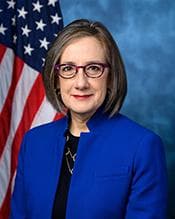
Andrea Salinas
Democrat · OR · Representative
Votes with party: 97.2% (670 recorded votes)
Top industries funding sponsor:
- Climate & Environment$24k
Full profile: /officials/S001226
Source: Congress.gov · FEC
Cosponsors (28)
Members who have signed on to support this bill since introduction. Source: Congress.gov.
- Becca Balint (D-VT)Original· 2025-06-05
- Christopher R. Deluzio (D-PA-17)Original· 2025-06-05
- Cleo Fields (D-LA-6)Original· 2025-06-05
- Emanuel Cleaver (D-MO-5)Original· 2025-06-05
- Jill N. Tokuda (D-HI-2)Original· 2025-06-05
- Jim Costa (D-CA-21)Original· 2025-06-05
- Jimmy Panetta (D-CA-19)Original· 2025-06-05
- Juan Vargas (D-CA-52)Original· 2025-06-05
- Marilyn Strickland (D-WA-10)Original· 2025-06-05
- Mary Gay Scanlon (D-PA-5)Original· 2025-06-05
- Melanie A. Stansbury (D-NM-1)Original· 2025-06-05
- Raja Krishnamoorthi (D-IL-8)Original· 2025-06-05
- Robert Garcia (D-CA-42)Original· 2025-06-05
- Salud O. Carbajal (D-CA-24)Original· 2025-06-05
- Shri Thanedar (D-MI-13)Original· 2025-06-05
- Suzan K. DelBene (D-WA-1)Original· 2025-06-05
- Troy A. Carter (D-LA-2)Original· 2025-06-05
- Jahana Hayes (D-CT-5)· 2025-06-12
- Judy Chu (D-CA-28)· 2025-06-30
- Sharice Davids (D-KS-3)· 2025-07-10
- Lizzie Fletcher (D-TX-7)· 2025-12-02
- Kim Schrier (D-WA-8)· 2026-03-04
- Thomas R. Suozzi (D-NY-3)· 2026-03-04
- Maxine Dexter (D-OR-3)· 2026-03-09
- Suzanne Bonamici (D-OR-1)· 2026-04-13
- Darren Soto (D-FL-9)· 2026-04-14
- Ritchie Torres (D-NY-15)· 2026-04-15
- Seth Magaziner (D-RI-2)· 2026-04-20
Latest Action
The most recent step in the bill's legislative path. Committee Activity below shows referrals and reports; the full action-by-action history including floor proceedings lives at Congress.gov →
Committee Activity
Currently in
- House Committee on AgricultureReferred To · 2025-06-05
Previously
- Agriculture CommitteeReferred To · 2025-06-05
Plain-English Summary
Farmers Feeding America Act of 2025 This bill reauthorizes The Emergency Food Assistance Program (TEFAP), increases funding for the program, and provides additional delivery options for geographically isolated states (i.e., Hawaii, Alaska, Puerto Rico, the Northern Mariana Islands, the U.S. Virgin Islands, and Guam). TEFAP is a federal program that helps supplement the diets of people with low income by providing them with emergency food assistance at no cost. Through TEFAP, the Department of Agriculture (USDA) purchases a variety of commodities and makes those food products (e.g., canned, frozen, dried, and fresh fruits and vegetables, eggs, meat, dairy, and whole-grain and enriched grain products) available to state distributing agencies. The bill increases funding for purchasing commodities under the program. Further, the bill directs USDA to coordinate with geographically isolated states to (1) establish alternative delivery options for allocated commodities, and (2) allow for the states to order commodities through the USDA Department of Defense Fresh Fruit and Vegetable Program. USDA may also provide geographically isolated states the ability to directly purchase domestically grown food in lieu of receiving a portion of the commodities. Under this option, USDA may distribute as cash to the state up to 20% of the cash value of the commodities that are allocated to the state under TEFAP. Further, USDA may consider additional factors beyond lowest price in determining winning bids for contracts for fresh produce packages (including product variety and transportation distance).
Plain-English rewrite of the Congressional Research Service summary published on Congress.gov. Cached and reviewed.
Subjects
Agriculture and Food
Full bill text is not yet cached locally.
Related legislation
Bills by the same sponsor or covering overlapping subjects.
- HR10698ICE Shootings Transparency ActReferred to Committee · 2026-10-01
- HR10458Grand Ronde Land Transfer Act of 2026Referred to Committee · 2026-09-16
- HR10116Lifeline for First Responders ActReferred to Committee · 2026-08-17
- HR10102Data Center Community Reinvestment Act of 2026Referred to Committee · 2026-08-13