Aviation-Impacted Communities Act
Sponsor
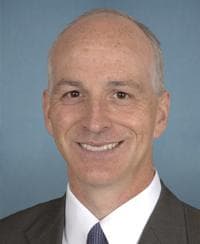
Full profile: /officials/S000510
Source: Congress.gov · FEC
Cosponsors (17)
Members who have signed on to support this bill since introduction. Source: Congress.gov.
17 cosponsors on record at Congress.gov. The named list is syncing into Govwatch and will appear here shortly — view on Congress.gov in the meantime.
Latest Action
The most recent step in the bill's legislative path. Committee Activity below shows referrals and reports; the full action-by-action history including floor proceedings lives at Congress.gov →
Committee Activity
Currently in
- House Committee on Transportation and InfrastructureReferred To · 2025-01-31
Plain-English Summary
Aviation-Impacted Communities Act This bill increases access to noise mitigation measures for aviation-impacted communities. Under the bill, an aviation-impacted community is a community that is located not more than one mile from any point at which a commercial or cargo jet route is 3,000 feet or less above ground level. The bill expands noise mitigation program funding under the Airport Improvement Program to include aviation-impacted communities that are not currently within the 65 day-night average sound level (DNL) standard. The Federal Aviation Administration (FAA) must conduct outreach to aviation-impacted communities to inform them of the opportunity to be a designated community. A designated community must form a community board to provide information to airport operators and the FAA concerning aviation impacts (e.g., aircraft noise). A community board may petition the FAA to conduct a community assessment and, based on the assessment, the FAA must devise an action plan that alleviates or addresses the community’s concerns. In addition, the FAA must enter into an agreement with the National Academy of Sciences to conduct a study and provide the FAA with a framework and diagnostic tool for conducting community assessments. The FAA must provide grants for necessary noise mitigation in a designated community for residences, hospitals, nursing homes, adult or child day care centers, schools, and places of worship. Further, the FAA and airport operators must provide (1) noise mitigation grants for communities subject to significant frequency of overhead flights, and (2) noise mitigation for residences impacted by significant nighttime aircraft noise.
Plain-English rewrite of the Congressional Research Service summary published on Congress.gov. Cached and reviewed.
Subjects
Related legislation
Bills by the same sponsor or covering overlapping subjects.
- HR10707Internationally Trained Physicians Assistance Act of 2026Referred to Committee · 2026-10-01
- HR10708Immigrants in Nursing and Allied Health Act of 2026Referred to Committee · 2026-10-01
- HR10077Safety Starts at the Top Act of 2026Referred to Committee · 2026-08-10
- HRES1468Encouraging Congress to pursue reforms to ensure that all United States citizens contribute to funding the operations of the Federal Government in proportion to the economic gains they realize.Referred to Committee · 2026-07-30