Ending Child Soldiers in Africa Act
Sponsor
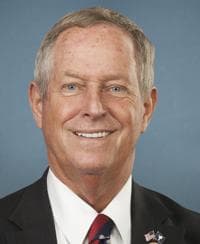
Full profile: /officials/W000795
Source: Congress.gov · FEC
Cosponsors (1)
Members who have signed on to support this bill since introduction. Source: Congress.gov.
Latest Action
The most recent step in the bill's legislative path. Committee Activity below shows referrals and reports; the full action-by-action history including floor proceedings lives at Congress.gov →
Referred to the Committee on Foreign Affairs, and in addition to the Committee on Armed Services, for a period to be subsequently determined by the Speaker, in each case for consideration of such provisions as fall within the jurisdiction of the committee concerned.
2026-06-10
Source: Congress.gov
Committee Activity
Currently in
- House Committee on Foreign AffairsReferred To · 2026-06-10
- House Committee on Armed ServicesReferred To · 2026-06-10
Plain-English Summary
The Defense Secretary would be required to study and report on how the use of child soldiers in African countries affects U.S. national security and interests. The report would help Congress understand the connections between this human rights problem and potential threats or challenges to American security. This affects policymakers and military officials who need to understand regional instability in Africa.
AI-assisted summary generated from the official bill metadata (title, subjects, actions) sourced from Congress.gov. Cached and reviewed. Always verify against the official text linked below.
Subjects
Full Bill Text
Verbatim text published on Congress.gov via GovInfo. Use Cmd+F / Ctrl+F to search within this excerpt.
[Congressional Bills 119th Congress] [From the U.S. Government Publishing Office] [H.R. 9256 Introduced in House (IH)] <DOC> 119th CONGRESS 2d Session H. R. 9256 To require the Secretary of Defense to submit a report on the effects of child soldiering in Africa on United States national security interests. _______________________________________________________________________ IN THE HOUSE OF REPRESENTATIVES June 10, 2026 Mr. Wilson of South Carolina (for himself and Mr. Panetta) introduced the following bill; which was referred to the Committee on Foreign Affairs, and in addition to the Committee on Armed Services, for a period to be subsequently determined by the Speaker, in each case for consideration of such provisions as fall within the jurisdiction of the committee concerned _______________________________________________________________________ A BILL To require the Secretary of Defense to submit a report on the effects of child soldiering in Africa on United States national security interests. Be it enacted by the Senate and House of Representatives of the United States of America in Congress assembled, SECTION 1. SHORT TITLE. This Act may be cited as the ``Ending Child Soldiers in Africa Act''. SEC. 2. REPORT REGARDING CHILD SOLDIERS IN AFRICA. (a) Report Required.--Not later than 180 days after the date of the enactment of this Act, the Secretary of Defense, in coordination with the Secretary of State and the Commander of the United States Africa Command, shall submit to the congressional defense committees a report on the effects of child soldiering in Africa on United States national security interests. (b) Elements.--The report required under subsection (a) shall include-- (1) an assessment of the connections between child soldiering and-- (A) violent extremism; (B) terrorism; (C) transnational criminal organizations; (D) forced population displacement; (E) regional instability in the Sahel and West Africa, including the Lobito corridor; and (F) threats to access to critical minerals and strategic supply chains throughout Africa; (2) an assessment of the methods used by extremist organizations to recruit and indoctrinate children in Africa, including the exploitation of religion and ideological narratives; (3) an evaluation of current efforts by the United States and allies and partners of the United States to prevent child soldier recruitment in Africa and support demobilization and reintegration efforts; (4) an assessment of lessons learned from successful African-led reconciliation, rehabilitation, and reintegration initiatives, including community-based programs and nongovernmental organizations operating in formerly conflict- affected regions; (5) an assessment of the feasibility of creating programs within the United States Central Command, the United States Southern Command, and the United States Indo-Pacific Command to combat child soldiering in each respective region, and specifically in Bolivia, Cambodia, the Dominican Republic, El Salvador, Guatemala, Honduras, Panama, Papua New Guinea, Philippines, Tajikistan, and Syria, based on information collected pursuant to submission of the report required in subsection (a); (6) a feasibility assessment regarding the establishment of an Africa-based center or coordinating mechanism to-- (A) consolidate lessons learned and best practices related to preventing child soldier recruitment; (B) support research, training, and capacity building to combat child soldier schemes for governments, militaries, civil society organizations, and private sector stakeholders in covered countries; (C) counter extremist recruitment and radicalization of children; and (D) promote regional stability and post-conflict reconciliation; (7) an assessment of the feasibility of the establishment of such Africa-based center or coordinating mechanism within a country that is a member of the East African Community, and in Uganda specifically; and (8) a description, with respect to such Africa-based center or coordinating mechanism, of-- (A) potential models for staffing and support of such center or coordinating mechanism using existing United States Government personnel, covered country participation, nongovernmental organizations, and regional civil society expertise; (B)…
Show the remaining 170 wordsHide the remaining 170 words
opportunities to leverage existing reconciliation and rehabilitation expertise developed in covered countries; and (C) the potential role of such a center or mechanism in supporting broader United States Africa Command objectives related to countering transnational threats and promoting regional stability. (c) Covered Country Defined.--In this section, the term ``covered country'' means a country that has entered into a partnership with the United States Africa Command and-- (1) has entered into a memorandum of understanding with the United States regarding the America First Global Health Strategy of the Department of State, including-- (A) Angola; (B) Botswana; (C) Burkina Faso; (D) Burundi; (E) Cameroon; (F) Cote D'Ivoire; (G) Democratic Republic of the Congo; (H) Eswatini; (I) Ethiopia; (J) Guinea; (K) Kenya; (L) Lesotho; (M) Liberia; (N) Madagascar; (O) Malawi; (P) Mozambique; (Q) Niger; (R) Nigeria; (S) Rwanda; (T) Senegal; (U) Sierra Leonne; and (V) Uganda; or (2) with respect to which a waiver is in effect pursuant to section 404(c)(1) of the Child Soldiers Prevention Act of 2008 (22 U.S.C. 2370c-1(c)(1)). <all>
Related legislation
Bills by the same sponsor or covering overlapping subjects.
- HR8775Ending Predator Access to Union Power ActPassed House · 2026-09-16
- HR10354To impose targeted sanctions on the Houthi terrorists and their supporters, and to support the internationally recognized Government of Yemen in their fight against Houthi terrorists.Referred to Committee · 2026-09-14
- HR10183SRBIJA ActReferred to Committee · 2026-08-27
- HRES1451Recognizing Charleston as the appropriate host city for the 2027 annual meeting of the Organization for Security and Cooperation in Europe Parliamentary Assembly.Referred to Committee · 2026-07-23