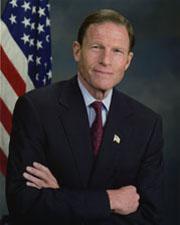
Richard Blumenthal
DDemocratCT · Senator
57
/ 100
Average
Attendance99
Avg: 97
Independence14
Avg: 23
Bipartisan Tone14
Avg: 14
Ethics Record100
Avg: 100
Transparency43
Avg: 47
Accountability Score — composite of attendance, independence, bipartisan tone, ethics record & transparency.
Methodology101
Bills Sponsored
0
Enacted into Law
2
Passed a Chamber
95
In Committee
All Sponsored Bills
SRES936Introduced
A resolution designating October 8, 2026, as "National Hydrogen and Fuel Cell Day".
This resolution designates October 8, 2026, as National Hydrogen and Fuel Cell Day.
SRES943Introduced
A resolution supporting the goals and ideals of a National Move Over Law Day.
S5618In Committee
Judicial Ethics Enforcement Act of 2026
Judicial Ethics Enforcement Act of 2026 This bill establishes the Office of Inspector General for the Judicial Branch to investigate alleged misconduct in the judicial branch, including the Supreme Court; to conduct and supervise audits and investigations; and to prevent and detect waste, fraud, and abuse.
S5591In Committee
Veterans Crisis Line Support and Safety Act of 2026
S5542In Committee
Military Officer Promotion Integrity Act of 2026
S5490In Committee
A bill to designate Ukraine under section 244 of the Immigration and Nationality Act to provide certain nationals of Ukraine with continued eligibility for temporary protected status, and for other purposes.
S5448In Committee
Anti-Corruption Tax (ACT) Act
S5445In Committee
GRACE for Military Survivors Act
S5311In Committee
Cabin Air Safety Act of 2026
S5353In Committee
No Bonuses for Utility Executives Act
S5312In Committee
PROTECT Act
S5306In Committee
Affordable Electricity Rates Act of 2026
SRES828In Committee
A resolution expressing the sense of the Senate that President Trump's lawsuit against the Internal Revenue Service, the resulting settlement from that lawsuit, the purported "Anti-Weaponization Fund", and the purported grant of immunity from tax investigations to the plaintiffs in President Trump's lawsuit, should be rejected, equal protection arguments by others with similar claims should be forestalled, and this settlement should not serve as a precedent and should never be repeated.
S5219In Committee
Compassionate Care Act
The proposal would enhance how hospitals and healthcare providers support patients nearing the end of their lives, likely including measures to improve pain management, expand access to hospice care, and ensure patients have clear conversations with doctors about their treatment preferences. The changes would affect patients, their families, healthcare workers, and medical facilities across the country. The bill is currently under review by the Senate committee responsible for health policy.
S5201In Committee
Lori Jackson-Nicolette Elias Domestic Violence Survivor Protection Act
The legislation would expand federal gun restrictions to prevent more people convicted of domestic violence offenses from legally owning or obtaining firearms. This would affect domestic violence abusers by closing gaps in current law that sometimes allow those convicted of certain abuse-related crimes to still possess guns, while also protecting victims by reducing abusers' access to weapons.
S5166In Committee
Food Labeling Modernization Act of 2026
The proposal would update food labeling rules to require clearer and more detailed information about nutrients in packaged foods, helping shoppers better understand what they're eating. This would affect food manufacturers, who would need to update their labels to meet the new requirements, and consumers who would have access to more transparent nutritional information when making purchasing decisions. The bill is currently under review by a Senate committee.
S5042In Committee
Social Security 2100 Act
The legislation would make changes to Social Security to ensure the program remains financially stable for current retirees and future beneficiaries, while potentially increasing benefits for some recipients. The bill addresses concerns about Social Security's long-term funding by proposing adjustments to how the program operates, affecting millions of Americans who rely on retirement, disability, and survivor benefits. The proposal is currently under review by the Senate Finance Committee.
SRES807In Committee
A resolution directing the Senate Legal Counsel to bring a civil action in the name of the Senate to enforce the Foreign Emoluments Clause contained in clause 8 of section 9 of article I of the Constitution of the United States.
The Senate would authorize its legal team to file a lawsuit to enforce the constitutional rule that prevents federal officials from accepting gifts or payments from foreign governments without Congress's approval. This resolution allows the Senate as an institution to take legal action to ensure that government leaders follow this anti-corruption requirement. The measure is currently under review by the Senate's rules committee.
S4936In Committee
STOP Frontovers Act of 2026
The federal government would be required to create new safety standards for cars to prevent injuries and deaths caused by low-speed collisions, protecting children, pedestrians, cyclists, and pets. These standards would likely involve technology or design changes to vehicles to reduce harm during accidents that happen at slower speeds, such as in parking lots or residential areas. The Transportation Department would develop and enforce these new safety rules.
S4874In Committee
Tristan's Law
The bill would establish new safety rules for ice cream trucks and other frozen dessert vehicles to protect children who buy food from them. It likely addresses concerns like vehicle visibility, stopping procedures, and how these trucks operate in areas where kids are present. The changes would affect ice cream truck operators and potentially the companies that own or manage these vehicles.
S4843In Committee
Enhancing Mental Health and Suicide Prevention Through Campus Planning Act
Colleges and universities would be required to develop detailed mental health and suicide prevention plans that address student needs, train staff to recognize warning signs, and establish clear procedures for helping students in crisis. The bill aims to reduce suicide rates among college students by ensuring schools have comprehensive strategies in place, affecting both students seeking mental health support and the institutions responsible for their wellbeing.
S4724In Committee
No Toxic Chemicals in Food Packaging Act of 2026
The proposal would ban certain chemicals from being used in products that touch food, like food packaging and containers, by declaring them unsafe. This would affect food manufacturers, packaging companies, and potentially consumers by changing what materials can be used for items like plastic wraps, can linings, and food storage containers. The bill is currently being reviewed by a Senate committee.
S4696In Committee
Right to Record Act of 2026
This bill would create a legal right for people to sue if they are prevented from recording, watching, or peacefully protesting police activities, making it easier for citizens to hold law enforcement accountable in court. The law would protect journalists, activists, and ordinary people who document police conduct or participate in demonstrations against police actions. It affects police departments, individuals who interact with law enforcement, and the court system that would handle these lawsuits.
S4700In Committee
Complete America’s Great Trails Act
Landowners who donate conservation easements on their property to protect National Scenic Trails would receive a tax credit to reduce their federal income taxes. The credit would apply to qualified donations that help preserve these scenic trail corridors for public use and conservation purposes. This would give property owners a financial incentive to voluntarily protect land along these nationally recognized trails.
S4646In Committee
SAFEGUARD Veterans Act of 2026
The bill would make it a crime for people to charge veterans illegal fees when helping them apply for Veterans Affairs benefits, with penalties including fines and potential jail time. This protects veterans from scammers and unscrupulous representatives who might try to profit by charging them money to file benefit claims they're entitled to. The measure targets fraud and exploitation targeting military veterans seeking healthcare, disability payments, and other VA benefits they've earned.
SRES753In Committee
A resolution expressing the sense of the Senate to reduce traffic fatalities to zero by 2050.
The Senate is expressing its goal to eliminate all traffic deaths by 2050 through improved safety measures and technology. This resolution calls for coordinated efforts across government agencies, vehicle manufacturers, and transportation systems to reduce the roughly 40,000 annual traffic fatalities that currently occur in the United States. The measure affects drivers, passengers, pedestrians, and transportation companies as it outlines a long-term vision for safer roads and vehicles.
SRES752In Committee
A resolution expressing support for the designation of the month of May 2026 as "Progressive Supranuclear Palsy and Corticobasal Degeneration Awareness Month".
This resolution asks Congress to officially recognize May 2026 as a month dedicated to raising awareness about progressive supranuclear palsy and corticobasal degeneration, two rare neurological diseases that affect how the brain controls movement and thinking. The designation would help patients, families, and medical professionals draw attention to these conditions and encourage research and support for people living with them. This is a symbolic measure that doesn't create new laws or funding, but shows congressional support for these disease awareness efforts.
S4636In Committee
Homeowners’ Escrow Savings Act
The proposal would require mortgage lenders and servicers to pay interest on money that homeowners place in escrow accounts—accounts where funds are held to cover future property taxes and insurance payments. Currently, lenders typically hold these escrow balances without paying any interest, meaning homeowners lose out on potential earnings from their own money. The change would benefit homeowners by allowing them to earn modest returns on funds that are held in their accounts.
S4572In Committee
Ending Passenger Rail Forced Arbitration Act
The bill would prevent Amtrak from forcing passengers to sign agreements that require them to settle disputes through private arbitration instead of going to court. This change would give train passengers the right to sue Amtrak in court if they have complaints about their service or experience injuries, rather than being locked into a private dispute-resolution process. The measure affects anyone who buys an Amtrak ticket and wants to protect their legal rights.
S4543In Committee
Extinction Prevention Act of 2026
The bill would set aside dedicated federal funding to protect and restore populations of butterflies across North America, native plants in the Pacific Islands, freshwater mussels throughout the United States, and desert fish species in the Southwest. These conservation efforts would help prevent species extinction and maintain healthy ecosystems that support wildlife and benefit communities that depend on these natural resources. The funding would support activities like habitat restoration, research, and monitoring programs run by government agencies and conservation organizations.
SJRES150In Committee
A joint resolution providing for congressional disapproval under chapter 8 of title 5, United States Code, of the rule submitted by the Bureau of Consumer Financial Protection relating to the withdrawal of the rule relating to "Limited Applicability of Consumer Financial Protection Act's 'Time or Space' Exception With Respect to Digital Marketing Providers".
Congress is considering blocking a recent rule change by the Consumer Financial Protection Bureau that would have limited how much certain digital marketing companies can avoid consumer protection laws. If approved, this resolution would undo the agency's decision to withdraw protections for consumers dealing with online advertisers and data brokers. The vote would affect how strictly financial consumer protections apply to companies that market financial products and services online.
S3000In Committee
FRAUD in VA Disability Exams Act of 2025
The legislation would establish stronger oversight and accountability measures for disability exams conducted by the Department of Veterans Affairs, aiming to prevent fraud and ensure veterans receive accurate evaluations for their benefits. It would likely include requirements for better training of examiners, improved documentation standards, and penalties for those who falsify exam results or provide fraudulent assessments. Veterans and VA officials would be the primary groups affected by these changes to the disability claims process.
S3395In Committee
Mammography Access for Veterans Act of 2025
The legislation would ensure that veterans have access to mammography screenings and breast cancer services through the Department of Veterans Affairs health system. This would help female veterans and veterans with breast cancer risk factors receive preventive care and early detection services without having to seek treatment outside the VA system. The bill aims to improve health outcomes for veterans by making these important cancer screening services more readily available.
S4140In Committee
Carlton H. Ingram Veterans’ Benefits Protection Act
This bill would protect veterans' benefits by preventing certain debts or legal judgments from being used to reduce or take away the disability payments and other benefits that veterans receive from the government. The measure aims to ensure that veterans can keep their earned benefits even if they owe money to creditors or face other financial obligations, safeguarding the income that many disabled veterans depend on to support themselves and their families.
S3098In Committee
Presumptive CLARITY Act of 2025
The legislation would establish that certain health conditions are presumed to be service-connected for veterans exposed to burn pits and other environmental hazards during military service, meaning veterans wouldn't have to prove the connection between their illness and their service to receive VA benefits. This would streamline the benefits process for veterans suffering from respiratory diseases, cancers, and other conditions linked to burn pit exposure in Iraq, Afghanistan, and other locations. The change would affect hundreds of thousands of veterans and potentially expand their access to healthcare and disability compensation.
S4269In Committee
Restoring College Access and Affordability Act
This bill would likely make college more affordable and accessible by reducing costs for students and expanding financial aid programs. The exact changes would depend on the specific provisions, but similar bills typically address student loan debt, grant funding, or tuition assistance for low- and middle-income students. It would primarily affect current and prospective college students and their families.
S4237In Committee
A bill to amend title 38, United States Code, to modify the eligibility requirements for transfer of unused entitlement to Post-9/11 Educational Assistance, and for other purposes.
The bill would change the rules for how military members and veterans can pass along unused GI Bill education benefits to their family members. Currently, service members must meet certain time-in-service requirements before they can transfer their education benefits to spouses or children, and this bill would modify those eligibility rules. The changes would affect active-duty service members, veterans, and their families who rely on these education benefits to pay for college or training programs.
SJRES103In Committee
A joint resolution providing for congressional disapproval under chapter 8 of title 5, United States Code, of the rule submitted by the Department of Veterans Affairs relating to "Reproductive Health Services".
This resolution would block a Department of Veterans Affairs rule that expands reproductive health services available to veterans, including services like contraception and fertility treatments. The Senate rejected the measure, meaning the VA rule will remain in effect. The vote split largely along party lines, with supporters arguing the rule overreaches federal authority and opponents saying it improves healthcare access for veterans.
S4149In Committee
Social Determinants for Moms Act
Social Determinants for Moms Act This bill requires the Department of Health and Human Services (HHS) to establish a task force and a grant program to address social determinants of maternal health, such as housing, transportation, and nutrition. The task force, composed of federal and nonfederal stakeholders, must develop strategies and coordinate efforts to eliminate preventable maternal mortality, severe maternal morbidity, and maternal health disparities. Additionally, HHS must award grants to community-based organizations, nonprofits, tribal organizations, public health departments, or consortia of these entities to address social determinants of maternal health and eliminate disparities in maternal health outcomes.
S2061In Committee
Molly R. Loomis Research for Descendants of Toxic Exposed Veterans Act of 2025
The bill would establish a research program to study the health effects of toxic exposure on veterans and their descendants, ensuring that families affected by environmental hazards like Agent Orange or burn pits receive better medical understanding and support. This would help the Department of Veterans Affairs and medical researchers gather data on how toxic exposure during military service impacts not just the veterans themselves, but also their children and grandchildren. The research findings could lead to improved healthcare, benefits, and compensation for affected veterans and their families.
S1665In Committee
OATH Act of 2025
The bill would establish new requirements or procedures related to oaths taken by members of the armed forces and national security personnel, likely addressing how military members and security officials swear in or commit to their duties. The measure has been approved by the Veterans' Affairs Committee with modifications and is moving forward in the legislative process. The specific changes would affect active duty service members, veterans, and potentially other federal security personnel who take official oaths.
S2264In Committee
Advancing VA’s Emergency Response to (AVERT) Crises Act of 2025
This bill would strengthen the Department of Veterans Affairs' ability to respond quickly to emergencies and crises affecting veterans, likely by giving the VA more flexibility to deploy resources, hire staff, and make decisions without lengthy bureaucratic delays during urgent situations. The changes would help the VA better handle sudden surges in demand for services, natural disasters, or other emergencies that impact veterans' access to healthcare and benefits. Veterans and VA employees would be the primary groups affected by these emergency response improvements.
S4060In Committee
Prediction Markets Security and Integrity Act of 2026
This bill would establish rules and oversight for prediction markets—platforms where people bet money on the outcomes of future events like elections or disease outbreaks—to protect against fraud, manipulation, and illegal activity. The legislation aims to ensure these markets operate transparently and securely while preventing bad actors from using them to spread misinformation or profit from manipulating public opinion, particularly on health-related predictions.
S3871In Committee
Preventing Roadside and Work Zone Deaths Act of 2026
This bill aims to reduce deaths and injuries that occur in work zones on highways and roadways by establishing new safety standards and requirements for construction sites, emergency responders, and drivers. It would likely require better warning systems, traffic control measures, and safety protocols to protect construction workers, road crews, and motorists who travel through these dangerous areas. The legislation affects transportation departments, construction companies, emergency services, and the general public who use roadways.
S3875In Committee
Responsible Firearms Marketing Act
This bill would regulate how firearms and ammunition are marketed and advertised, likely requiring companies to follow certain standards when promoting these products to the public. The rules would apply to gun manufacturers, ammunition makers, and retailers to ensure their marketing practices meet specific responsible conduct guidelines. The measure aims to address concerns about how firearms are promoted while the Commerce Committee reviews whether such regulations are appropriate.
S3872In Committee
A bill to amend title XVIII of the Social Security Act to provide coverage for wigs as durable medical equipment under the Medicare program, and for other purposes.
This bill includes medically necessary cranial prostheses (e.g., wigs) as covered durable medical equipment under the Medicare program.
S3873In Committee
Jaime’s Law
Without access to the specific text of Jaime's Law, I cannot provide an accurate summary of what this bill would do. To write a factual summary, I would need to know the bill's actual provisions—for example, whether it addresses sentencing, victim protections, law enforcement procedures, or another aspect of the criminal justice system. If you can provide the bill number or its specific provisions, I'd be happy to write a clear summary.
S3874In Committee
Prohibiting Political Prosecutions Act of 2026
This bill would restrict the federal government's ability to prosecute political candidates and officeholders, likely by requiring special approval or establishing new legal standards before bringing criminal charges against them. The measure appears designed to prevent what supporters view as politically motivated prosecutions, though it could limit the government's power to hold elected officials accountable for crimes. The bill would primarily affect federal prosecutors, political candidates, and sitting government officials.
S3691In Committee
Commission on Equity and Reconciliation in the Uniformed Services Act
This bill would create a new commission to study and address historical inequities and injustices experienced by members of the military and veterans, likely examining issues like discrimination, unequal treatment, and barriers faced by certain groups in the armed forces. The commission would investigate these problems and recommend ways the military and government can make things fairer and more equitable for all service members and veterans going forward.
S3658In Committee
SHIFT Act
The SHIFT Act addresses management and use of public lands and natural resources, though the specific details of what changes it would make are not clear from the title alone. Based on its referral to the Commerce, Science, and Transportation Committee, the bill likely aims to adjust how the federal government handles activities like energy development, conservation, or resource extraction on publicly owned land. The legislation would affect federal land managers, energy companies, environmental groups, and communities that depend on public lands for recreation or economic activity.
S3654In Committee
MOLD Act
The MOLD Act addresses mold contamination issues in military facilities and housing to protect the health and safety of service members and their families. The bill likely establishes standards for identifying, reporting, and remediating mold problems in barracks, military bases, and military-connected housing, while potentially requiring the Department of Defense to improve inspection and maintenance procedures to prevent future mold-related health hazards.
SRES566Introduced
A resolution recognizing that care provided by employees of the Department of Veterans Affairs is essential for meeting the health care needs of veterans of the United States.
This resolution recognizes that the Department of Veterans Affairs (VA) is essential in providing health care to veterans, training the medical workforce, conducting research, working to end veteran suicide, improving public health, and improving the preparedness of the country for emergencies. Further, the resolution urges the VA to support its employees and reaffirms a commitment to ensuring veterans have timely access to care, whether provided by the VA or community care providers.
S3533In Committee
Shadow Docket Sunlight Act of 2025
The Supreme Court would be required to publicly disclose more information about emergency decisions it makes outside of regular oral arguments and written opinions, often called "shadow docket" rulings. These decisions currently receive minimal public explanation, so the bill aims to increase transparency by requiring the Court to publish detailed reasoning and voting records for these emergency orders. This would affect anyone interested in understanding how the Court operates, including legal professionals, journalists, and citizens who want to follow major judicial decisions.
S3516In Committee
Stopping Grinch Bots Act of 2025
Stopping Grinch Bots Act of 2025 This bill makes it unlawful to use tools such as bots to circumvent a website's security or control measures related to purchasing limits or inventory management. Specifically, the bill makes it unlawful to circumvent a security measure, access control system, or other technological control or measure that a website or online service uses to enforce posted purchasing limits or manage inventory. The bill also prohibits the sale of certain products or services obtained through such a violation. The bill provides for enforcement by the Federal Trade Commission and state attorneys general or other authorized state officers.
S3492In Committee
Essential Caregivers Act of 2025
Essential Caregivers Act of 2025 This bill prohibits certain health care facilities from limiting the access of essential caregivers to residents of those facilities, including during designated emergency periods. Specifically, the bill generally prohibits Medicare skilled nursing facilities, Medicaid nursing facilities, Medicaid intermediate care facilities, and associated inpatient rehabilitation facilities from restricting the access of essential caregivers to residents of the facilities, including during emergency periods in which visitation rights are otherwise restricted. During emergency periods, facilities may restrict access for an initial period of up to seven days and for one additional maximum seven-day period (if the additional period is approved by the state health department). Facilities may restrict access for a total of 7 days (or 14 days with the approval of the state health department) during an emergency period. Essential caregivers must agree to comply with any safety protocols set by the facility, which may be no more stringent for caregivers compared to those for staff. Caregivers who fail to comply with these requirements may be denied access, subject to an appeals process.
S610Passed Senate
Ensuring VetSuccess On Campus Act of 2025
Ensuring VetSuccess On Campus Act of 2025 This bill requires the Department of Veterans Affairs to ensure that the VetSuccess on Campus (VSOC) program is located in every state. The program supports veterans, servicemembers, and qualified dependents who are transitioning from military service to college life. The VA must ensure that at least one VSOC counselor is located in each state.
S3466In Committee
Honor Our Promise to Veterans Act of 2025
Honor Our Promise to Veterans Act of 2025 This bill addresses the provision of care at the Department of Veterans Affairs (VA), including regarding scheduling, non-VA provider requirements, staffing, and infrastructure. Regarding scheduling, the VA must (1) ensure appointments for urgent and nonurgent care for veterans are scheduled within certain time frames, and (2) provide information about driving and wait times for care at VA facilities, Veteran Community Care Program (VCCP) facilities, and via telehealth. The bill also addresses requirements for non-VA providers under the VCCP, including by (1) extending the time limit for providers to submit claims to the VA for payment, (2) requiring certain training relevant to veterans, and (3) authorizing the Office of Inspector General of the VA to audit entities providing care under the VA’s authority. The bill provides compensation for veterans who are disabled or die due to VCCP hospital care, medical services, or extended care services. The bill addresses VA staffing matters, including by (1) removing the cap on pay limitation waivers for critical health care personnel, (2) offering certain retirement benefits to VA police officers, (3) requiring the VA to establish a telework policy, and (4) establishing scholarship programs for certain individuals in medical or infrastructure programs who commit to a period of obligated service at the VA. The VA must also address infrastructure matters, including by (1) authorizing funding for certain land acquisitions for medical facilities, and (2) requiring the VA to develop performance metrics for capital asset management programs.
S3458In Committee
Background Check Completion Act of 2025
Background Check Completion Act of 2025 This bill prohibits a licensed gun dealer from transferring a firearm to an unlicensed person prior to the completion of a background check. Current law permits a licensed gun dealer to transfer a firearm to an unlicensed person if a submitted background check remains incomplete after three business days.
S3390In Committee
Tracking and Restricting Adversarial Circumvention of Embargoes Act of 2025
This bill would create new tools and requirements to track and prevent foreign companies and individuals from finding ways around U.S. trade embargoes and sanctions against countries like Iran, North Korea, and Russia. It likely aims to close loopholes that allow sanctioned countries to obtain restricted goods and technology through intermediaries or shell companies. The measure would affect international businesses, shipping companies, and intelligence agencies involved in enforcing trade restrictions.
S3361In Committee
No Palaces Act
S3367In Committee
Junk Fee Prevention Act
SRES527Introduced
A resolution supporting the goals and ideals of a National Move Over Law Day.
This resolution expresses support for the goals and ideals of a National Move Over Law Day. It also urges national, state, and regional incident management organizations to spread awareness and promote the existence of, and adherence to, state move over laws. Move over laws generally require motorists to move at least one lane over when an emergency or rescue activity is taking place, including on the shoulder or side of the roadway, or, if the motorist is unable to do so safely, to slow down and pass the scene with caution.
S3255In Committee
SWIFT Act
The proposal would establish new procedures and requirements for how federal agencies distribute social welfare benefits to eligible recipients. It aims to streamline the application process and reduce delays so that people who qualify for assistance programs can receive their benefits more quickly. The changes would affect millions of Americans who rely on federal aid programs for food, housing, healthcare, and other essential support.
SRES124In Committee
A resolution recognizing the 250th anniversary of the United States Marine Corps.
This resolution honors the 250th anniversary of the United States Marine Corps, which was established in 1775. The resolution recognizes the historical significance of the Marines and celebrates their contributions to national defense and military service over the past two and a half centuries.
S3059In Committee
Boosting Benefits and COLAs for Seniors Act
The proposal would increase Social Security benefits for current and future retirees and adjust those benefits more frequently to keep up with inflation. This would put more money in the pockets of seniors and disabled individuals who rely on Social Security, though it would require changes to how the program is funded.
S2977In Committee
FAST Justice Act
The legislation would establish new procedures and timelines for federal agencies to respond to Freedom of Information Act (FOIA) requests, aiming to speed up how quickly Americans can obtain government documents. It would set stricter deadlines for agencies to process requests and potentially impose penalties for agencies that fail to meet these timelines. The bill affects federal employees, journalists, researchers, and any members of the public seeking access to government records.
S2942In Committee
A bill for the relief of Valent Kolami.
S2956In Committee
Used Car Safety Recall Repair Act
S2842In Committee
Stop CMV Act of 2025
This bill aims to address cytomegalovirus (CMV), a common virus that can cause serious health problems in newborns and people with weakened immune systems, likely through funding research, improving screening, or expanding treatment options. The legislation would affect pregnant women, newborns, immunocompromised patients, and healthcare providers working to prevent or manage CMV infections. The bill is currently under review by the Senate health committee.
S2799In Committee
Forced Arbitration Injustice Repeal Act
Forced Arbitration Injustice Repeal Act This bill prohibits a predispute arbitration agreement from being valid or enforceable if it requires arbitration of an employment, consumer, antitrust, or civil rights dispute.
S2784In Committee
Congressional Tribute to Constance Baker Motley Act of 2025
This bill honors Constance Baker Motley, a pioneering civil rights lawyer and federal judge who fought against racial discrimination and helped advance equal rights for African Americans and other minorities. The tribute recognizes her groundbreaking legal work and judicial career as a significant contribution to American civil rights history. The bill has been referred to the Senate Banking Committee for consideration.
S2682Passed Senate
Captain Paul W. 'Bud' Bucha VA Medical Center Act of 2025
Captain Paul W. “Bud” Bucha VA Medical Center Act of 2025 This bill designates the medical center of the Department of Veterans Affairs in West Haven, Connecticut, as the Captain Paul W. “Bud” Bucha Department of Veterans Affairs Medical Center or the Captain Paul W. “Bud” Bucha VA Medical Center.
S2640In Committee
Cruise Passenger Protection Act of 2025
S2541In Committee
Food Date Labeling Act of 2025
Food Date Labeling Act of 2025 This bill establishes uniform requirements for quality and discard date phrases (e.g., best by and use by ) placed voluntarily on food labels. Specifically, if a food is labeled with a quality date (i.e., the date after which the quality of the item may deteriorate), the label must include the phrase BEST If Used By or the abbreviation BB . Similarly, if a food is labeled with a discard date (i.e., the date after which the item should not be consumed), the label must include the phrase USE By or the abbreviation UB . Abbreviations may be used only if an item’s packaging is too small to fit the full phrase. Quality and discard dates must be written in a single, easy-to-read font and placed in a prominent location on an item’s label or package. The phrase or freeze by may be added after a quality or discard date phrase where appropriate. The Department of Health and Human Services (HHS) and the Department of Agriculture (USDA) must promulgate regulations to carry out these provisions and ensure that the uniform phrases are standardized across all food products. HHS and USDA may specify alternative quality and discard date phrases through regulations. The bill specifies that no state or local government may enforce a requirement related to quality and discard date phrases that differs from the requirements of the bill. The bill does not apply to infant formula, which is subject to separate labeling requirements under current law.
S1245In Committee
Servicemembers and Veterans Empowerment and Support Act of 2025
Servicemembers and Veterans Empowerment and Support Act of 2025 This bill modifies and implements policies and procedures related to Department of Veterans Affairs (VA) health care and benefits for veterans who have experienced military sexual trauma (MST), which is generally defined as physical assault of a sexual nature, battery of a sexual nature, or sexual harassment that occurred while the veteran was serving in the military. In the case of any veteran who claims that a covered mental health condition (e.g., post-traumatic stress disorder) based on MST was incurred or aggravated by active service, the VA must consider (1) a diagnosis of the condition by a mental health professional, (2) a medically proven link between current symptoms and MST, and (3) credible corroborating evidence that MST occurred. The VA may not deny a veteran's claim of compensation for a covered mental health condition based on MST without first (1) advising the veteran that nonmilitary evidence and behavioral evidence may constitute credible corroborating evidence, and (2) allowing the veteran an opportunity to furnish the corroborating evidence or advise the VA of potential sources of such evidence. The Veterans Benefits Administration must conduct an annual special focus review on the accuracy of the processing of claims for disability compensation for disabilities relating to MST. Additionally, the bill (1) expands eligibility for MST counseling and treatment to former members of the reserve components regardless of duty status, and (2) requires various outreach by the VA to inform potentially eligible individuals about MST care.
SRES336In Committee
A resolution celebrating the 100th anniversary of Pratt & Whitney.
This resolution celebrates the achievements and legacy of the Connecticut company Pratt & Whitney on its 100 th anniversary and recognizes the company for its excellence in engineering, innovation, and public service. It also commends and thanks the past and present skilled employees of Pratt & Whitney, including machinists, engineers, technicians, and veterans.
SCONRES19In Committee
A concurrent resolution recognizing the need to improve physical access to many federally funded facilities for all people of the United States, particularly people with disabilities.
This resolution calls for better physical access to federal buildings and facilities for everyone, especially people with disabilities. It recognizes that many government-funded locations currently have barriers that prevent people with mobility challenges or disabilities from entering or moving around easily. The measure urges improvements like ramps, elevators, accessible bathrooms, and other accommodations to ensure equal access to services and spaces that taxpayer money supports.
S2072In Committee
MORE Savings Act
Maximizing Opioid Recovery Emergency Savings Act or the MORE Savings Act This bill modifies coverage of opioid treatments and recovery support services under Medicare, Medicaid, and private health insurance. Specifically, the bill requires the Center for Medicare and Medicaid Innovation to test a model in which specified opioid treatments and recovery support services are provided under Medicare without cost-sharing (e.g., coinsurance, copayments, and deductibles). The bill also allows state Medicaid programs to cover recovery support services as part of medication-assisted treatment (MAT) and increases the applicable Federal Medical Assistance Percentage for MAT. Additionally, beginning in 2027, private health insurers must cover specified opioid treatments and MAT-associated recovery support services without cost-sharing.
S1955In Committee
Equal Access to Justice for Victims of Gun Violence Act
Equal Access to Justice for Victims of Gun Violence Act This bill removes limitations on the civil liability of gun manufacturers and the disclosure of gun trace data in civil actions. Specifically, the bill repeals the Protection of Lawful Commerce in Arms Act, which prohibits civil actions against a firearm or ammunition manufacturer, seller, importer, dealer, or trade association for damages resulting from the criminal or unlawful misuse of a firearm. Additionally, the bill states that firearms trace data maintained by the Bureau of Alcohol, Tobacco, Firearms and Explosives is not immune from legal process. Such data is subject to discovery; is admissible as evidence; and may be used, relied on, or disclosed in a civil action or administrative proceeding.
S1855In Committee
Care for Military Kids Act
Care for Military Kids Act This bill requires a state Medicaid program to consider active-duty members of the Armed Forces and their dependents who are receiving home- and community-based services to be residents of that state even if they are relocated to another state because of their military service, unless the member chooses not to be considered as such. The requirement applies beginning in 2028. The bill provides funds through FY2030 for the Centers for Medicare & Medicaid Services to implement the bill.
S1857In Committee
A bill to amend title 14, United States Code, to require the retention of certain enlisted members of the Coast Guard who have completed 18 or more, but less than 20, years of service, and for other purposes.
SRES243In Committee
A resolution condemning the financial entanglements of World Liberty Financial, Inc. with President Donald J. Trump, the Trump family, and the Trump Administration.
SRES244In Committee
A resolution affirming that the underlying purpose of the Foreign Emoluments Clause renders the acceptance and transfer of a plane from the government of Qatar, without the explicit consent of Congress, an illegal emolument, withholding the consent of the Senate to the acceptance and transfer of plane from the government of Qatar, and demanding the transfer of any plane received by President Donald J. Trump or entities under his control from the government of Qatar to the permanent control of the United States Government.
This resolution argues that accepting a plane from Qatar's government would violate the Constitution's Foreign Emoluments Clause, which bars the president from receiving gifts from foreign governments without Congress's permission, and demands that any such plane be transferred to permanent U.S. government control instead. The resolution asserts that President Trump cannot legally accept or keep such a gift and calls on the Senate to formally withhold approval for the transfer. The measure has been referred to the Senate committee that handles homeland security and governmental affairs.
S605In Committee
CHAMPVA Children's Care Protection Act of 2025
CHAMPVA Children's Care Protection Act of 2025 This bill provides that a child shall be eligible for medical care under the Civilian Health and Medical Program of the Department of Veterans Affairs (CHAMPVA) until the child's 26th birthday, regardless of the child's marital status.
S1609In Committee
Ellie’s Law
I don't have enough information to write an accurate summary. "Ellie's Law" is a vague title, and the subjects listed only indicate it relates to health without specifying what problem it addresses or what changes it would make. To provide a meaningful summary, I would need details about the bill's actual provisions—such as whether it addresses a specific disease, healthcare access, insurance coverage, or another health-related issue.
S1594In Committee
Captive Primate Safety Act
This bill would restrict or ban the private ownership of primates like monkeys and apes by individuals and require existing private owners to comply with new safety and care standards. The law aims to protect both public safety—since primates can carry diseases and become dangerous—and the animals themselves by ensuring they receive proper care. It would likely affect zoos, sanctuaries, and private collectors who currently keep primates.
S1601In Committee
Journalist Protection Act
Journalist Protection Act This bill establishes new criminal offenses for intentional acts (or attempts to commit acts) that cause bodily injury to a journalist.
S1537In Committee
Veterans’ Transition to Trucking Act of 2025
Veterans' Transition to Trucking Act of 2025 This bill authorizes the Department of Veterans Affairs (VA) to act as a state approving agency to approve multi-state apprenticeship programs (i.e., non-federal apprenticeship programs operating in more than one state) for purposes of VA educational assistance benefits. (State approving agencies are designated by states to provide, among other duties, approval of courses of education for purposes of VA education benefits.)
S1538In Committee
Better CARE for Animals Act of 2025
The legislation would establish new standards and protections for animal care across various settings, though the specific provisions are still being developed in committee. The bill aims to improve conditions for animals in agriculture, research facilities, and other regulated environments by setting clearer guidelines for how they should be treated. Animal welfare advocates, farmers, researchers, and pet owners would all be affected by any new rules that emerge from this proposal.
S1420In Committee
Child Care Nutrition Enhancement Act of 2025
Child Care Nutrition Enhancement Act of 2025 This bill increases and modifies reimbursements for meals and snacks served under the Child and Adult Care Food Program (CACFP). CACFP is a Food and Nutrition Service program that provides federal reimbursements for meals and snacks provided to eligible children and adults who are enrolled at participating child care centers, day care homes (i.e., private homes that provide nonresidential child care services), and adult day care centers. Specifically, the bill eliminates the two-tiered system for CACFP reimbursement rates for day care homes and generally makes all day care homes eligible for the same reimbursement rates. Under current law, day care homes located in a low-income area or with a low-income provider receive higher reimbursement rates (i.e., Tier I rates). Day care homes that do not qualify for Tier I rates receive Tier II rates, which are lower. Further, the bill provides an additional 10-cent reimbursement for each eligible meal and snack served in the CACFP. The bill also allows the provider of a family or group day care home to serve reimbursable meals and snacks to their own children when serving meals and snacks to children in their care. Specifically, the bill eliminates the current requirement that the child of a day care home provider meet the program's income eligibility requirement in order for the day care provider to receive reimbursement for the meals and snacks served to their child.
SRES171In Committee
A resolution supporting the goals and ideals of "National Youth HIV/AIDS Awareness Day".
This resolution expresses support for National Youth HIV/AIDS Awareness Day, a day dedicated to educating young people about HIV and AIDS prevention, testing, and treatment. The resolution aims to raise awareness among teenagers and young adults about the importance of understanding these health issues and reducing stigma around HIV/AIDS in youth communities. It does not create new laws or programs, but rather shows congressional backing for the goals of this awareness day.
S1330In Committee
BRAIN Act
I don't have access to the specific details of this BRAIN Act bill to provide an accurate summary of what it would do. To write a factual summary, I would need information about the bill's actual provisions, such as whether it funds brain research, addresses neurological diseases, establishes new programs, or makes other specific changes. Could you provide the bill number or additional details about its content?
S1033In Committee
SAFE Bet Act
S1032In Committee
Major Richard Star Act
Major Richard Star Act This bill allows a veteran with a combat-related disability to receive retirement pay, without reduction, concurrently with their disability compensation. This includes veterans with a combat-related disability and fewer than 20 years of creditable service. (Currently, veterans who receive combat-related special compensation and retirement pay are subject to an offset in retirement pay for concurrent receipt of such benefits.)
S611In Committee
Caring for Survivors Act of 2025
Caring for Survivors Act of 2025 This bill increases the monthly rate of dependency and indemnity compensation payable to surviving spouses through the Department of Veterans Affairs (VA). Dependency and indemnity compensation is a monthly payment made to eligible survivors (i.e., spouses, parents, or children) of (1) certain veterans who died as a result of a service-connected condition; (2) service members killed while on active military duty or active or inactive duty for training; or (3) veterans who did not die from a service-connected condition, but were totally disabled by a service-connected disability for a certain period of time. The bill also (1) reduces, from 10 years to 5 years, the period of time that certain veterans must have been rated totally disabled due to a service-connected disability in order for a survivor to qualify for benefits; and (2) specifies the amount that is payable to survivors of veterans who were rated totally disabled for a period of less than 10 years before their death.
S889In Committee
Extreme Risk Protection Order Expansion Act of 2025
Extreme Risk Protection Order Expansion Act of 2025 This bill establishes grants to support the implementation of extreme risk protection order laws at the state and local levels, extends federal firearms restrictions to individuals who are subject to extreme risk protection orders, and expands related data collection. Extreme risk protection order laws, or red flag laws, generally allow certain individuals (e.g., law enforcement officers or family members) to petition a court for a temporary order that prohibits an at-risk individual from purchasing and possessing firearms. Among its provisions, the bill directs the Department of Justice to establish a grant program to help states, local governments, Indian tribes, and other entities implement extreme risk protection order laws; extends federal restrictions on the receipt, possession, shipment, and transportation of firearms and ammunition to individuals who are subject to extreme risk protection orders; and requires the Federal Bureau of Investigation to compile records from federal, tribal, and state courts and other agencies that identify individuals who are subject to extreme risk protection orders.
S726In Committee
Ethan's Law
Ethan's Law This bill establishes a framework to regulate the storage of firearms on residential premises at the federal, state, and tribal levels. At the federal level, the bill establishes statutory requirements for firearms on residential premises to be safely stored if a minor is likely to gain access without permission or if a resident is ineligible to possess a firearm. An individual who violates the requirements is subject to criminal penalties. A firearm stored in violation of the requirements is subject to seizure and forfeiture. At the state and tribal levels, the bill requires the Department of Justice to award grants to implement functionally identical requirements for the safe storage of firearms.
S609In Committee
BRAVE Act of 2025
Building Resources and Access for Veterans' Mental Health Engagement Act of 2025 or the BRAVE Act of 2025 This bill addresses mental health services and care provided by the Department of Veterans Affairs (VA), including matters related to personnel, Vet Center administration, care for women veterans, and access to care. The bill authorizes the VA to waive the licensure or certification requirement for individual licensed professional mental health counselor appointees for a reasonable period of time. The bill also extends the Staff Sergeant Parker Gordon Fox Suicide Prevention Grant Program and increases the maximum annual grant amount. The VA must provide Vet Centers with guidance for assessing outreach activities and implement processes to periodically assess the extent to which (1) veterans and eligible members of the Armed Forces experience barriers to obtaining services at Vet Centers, and (2) Vet Center staff may encounter barriers to providing services. Among other requirements, the VA must also survey and host listening sessions with women veterans to gauge the effectiveness of the VA’s suicide prevention, lethal-means safety, and mental health resources and messaging campaigns; initiate efforts to modify the Recovery Engagement and Coordination for Health-Veterans Enhanced Treatment (REACH VET) program to incorporate risk factors weighted for women; annually offer a mental health consultation to veterans who are receiving compensation for a service-connected disability relating to a mental health diagnosis; and implement a pilot program to provide access to mental health residential treatment programs for veterans with a spinal cord injury or disorder.
S455In Committee
Protecting Sensitive Locations Act
Protecting Sensitive Locations Act This bill prohibits immigration enforcement actions within 1,000 feet of a sensitive location except in exigent circumstances, such as the imminent risk of death, violence, or physical harm to any person. Sensitive locations include health care facilities; schools and school bus stops; places that provide assistance for people such as children, pregnant women, and abuse victims; child care facilities; places that provide disaster or emergency services; places of worship; courthouses and lawyers’ offices; facilities used as polling places; certain labor union facilities; and public assistance offices. The prohibition shall apply to Department of Homeland Security officers and agents, as well as state employees pursuing immigration enforcement actions. If an enforcement action is carried out in violation of this prohibition (1) no information resulting from the action may be entered into the record in a resulting removal proceeding, and (2) the affected individual may move to immediately terminate such a proceeding. U.S. Immigration and Customs Enforcement and U.S. Customs and Border Protection shall annually report to Congress about enforcement actions taken at sensitive locations in the preceding year.
S413In Committee
Plum Island Preservation Study Act
This bill would direct the federal government to study Plum Island, a small island off the coast of New York, to determine how best to preserve it and manage its natural resources. The study would likely examine the island's wildlife, ecosystems, and historical significance to help lawmakers decide whether to protect it as a nature preserve or take other conservation measures. The findings would inform future decisions about how the island should be used and protected for the public benefit.
S256In Committee
Pardon Transparency and Accountability Act of 2025