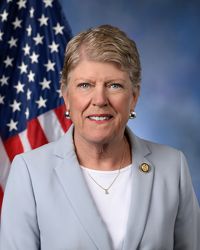
Julia Brownley
DDemocratCA-26 · Representative
53
/ 100
Average
Attendance97
Avg: 96
Independence1
Avg: 4
Bipartisan Tone6
Avg: 15
Ethics Record100
Avg: 99
Transparency46
Avg: 53
Accountability Score — composite of attendance, independence, bipartisan tone, ethics record & transparency.
Methodology28
Bills Sponsored
0
Enacted into Law
2
Passed a Chamber
26
In Committee
All Sponsored Bills
HRES1592In Committee
Expressing support for the designation of October 2026 as "National Learning Disabilities Awareness Month".
HR210In Committee
Dental Care for Veterans Act
Dental Care for Veterans Act This bill expands eligibility for veterans for dental care provided by the Department of Veterans Affairs (VA). Specifically, the bill makes all veterans who are enrolled in the VA health care system eligible for VA-provided dental services. Currently, only veterans who have a service-connected dental issue or meet other narrow criteria are eligible for certain dental services. The bill phases in eligibility over four years based upon existing eligibility, degree of service-connected disability or other disability, prisoner of war status, award of a Purple Heart, financial need, or VA health care eligibility.
HR6780In Committee
Producing Real Opportunities for Technology and Entrepreneurs Investing in Nutrition Act
This bill aims to support agricultural innovation and food entrepreneurship by creating opportunities for technology companies and startups to develop new nutrition-related products and services. It likely provides funding, tax incentives, or regulatory support to help entrepreneurs bring food and agricultural innovations to market while addressing nutrition challenges. The proposal affects farmers, food companies, tech startups, and potentially consumers seeking better access to nutritious food options.
HR8496In Committee
Marine Mammal Climate Change Protection Act of 2026
The proposal would require the federal government to create a plan for protecting certain marine mammals from the effects of climate change, such as rising ocean temperatures and changing food sources. This would give the Commerce Department new responsibilities to monitor how climate impacts these animals and develop strategies to help them survive. The plan would affect marine conservation efforts and could influence policies related to ocean management and environmental protection.
HR4876In Committee
Reproductive Freedom for Veterans Act
This bill would ensure that veterans and their families have access to reproductive health services, including abortion and contraception, through the Department of Veterans Affairs medical system regardless of state laws that might otherwise restrict these services. The measure aims to protect veterans' ability to make their own reproductive choices without being limited by where they live or their military status. It affects millions of veterans and their dependents who rely on VA healthcare.
HR658Passed House
To amend title 38, United States Code, to establish qualifications for the appointment of a person as a marriage and family therapist, qualified to provide clinical supervision, in the Veterans Health Administration.
This bill establishes eligibility requirements for the appointment of an individual in the Veterans Health Administration (VHA) as a marriage and family therapist who is qualified to provide clinical supervision. In order to be appointed as a marriage and family therapist in the VHA who is qualified to provide clinical supervision, a person must hold an appropriate master’s degree, be licensed or certified, and (1) be authorized to provide clinical supervision in the state they are licensed in, or (2) be designated as an approved supervisor by the American Association for Marriage and Family Therapy.
HJRES144In Committee
Providing for congressional disapproval under chapter 8 of title 5, United States Code, of the rule submitted by the Department of Veterans Affairs relating to "Reproductive Health Services".
Congress is considering blocking a new Veterans Affairs rule that would expand reproductive health services available to veterans. If approved, this would prevent the VA from implementing the rule and keep current reproductive health policies in place for veterans seeking these services. The measure is currently under review by the House Committee on Veterans' Affairs.
HR659Passed House
Veterans Law Judge Experience Act of 2025
Veterans Law Judge Experience Act of 2025 This bill requires the Chairman of the Board of Veterans’ Appeals to prioritize individuals with three or more years of legal professional experience in relevant legal areas when recommending individuals to the Department of Veterans Affairs to serve as members of the Board.
HR1404In Committee
CHAMPVA Children’s Care Protection Act of 2025
CHAMPVA Children's Care Protection Act of 2025 This bill provides that a child shall be eligible for medical care under the Civilian Health and Medical Program of the Department of Veterans Affairs (CHAMPVA) until the child's 26th birthday, regardless of the child's marital status.
HR4637In Committee
Veterans’ Surviving Spouse Equity Act of 2025
The proposal would change how surviving spouses of military veterans receive benefits, likely aiming to ensure more equitable treatment across different circumstances or time periods of service. The changes would affect widows and widowers who depend on veterans' benefits for financial support after their spouse's death. The measure is currently being reviewed by a congressional subcommittee that handles veterans' disability and memorial programs.
HR6684In Committee
Zero Food Waste Act
Zero Food Waste Act This bill directs the Environmental Protection Agency to establish a grant program to study and reduce food waste. States, local governments, territorial governments, tribal governments, and nonprofit organizations may apply for the grants.
HR5995In Committee
Have You Served Act
Have You Served Act This bill requires the Department of Veterans Affairs (VA) to provide grants to certain states (including U.S. territories and possessions and the District of Columbia), American Indian tribes, or Alaska Native tribes to carry out campaigns to encourage human services professionals, state and local governments, and community providers to ask consumers whether they or a loved one have served in the Armed Forces. To be eligible, a state, American Indian tribe, or Alaska Native tribe must develop and submit a veteran suicide prevention plan to the VA. Such grants must be used for training about (1) how to appropriately ask consumers whether they or a loved one have served in the Armed Forces, and (2) resources available through the VA or other providers for members of the Armed Forces and veterans to encourage the trained individuals to refer consumers to such resources. The VA must also develop a plan to work with each federal department and agency to implement similar campaigns.
HR5997In Committee
Helping Homeless Veterans Act of 2025
HR5906In Committee
Same Day Registration Act of 2025
This bill would allow people to register to vote on the same day they cast their ballot, rather than requiring them to register in advance. The change would apply to federal elections and would affect voters who miss earlier registration deadlines or want to register closer to Election Day. The bill aims to make voting more accessible by removing the need to plan ahead for voter registration.
HRES793In Committee
Expressing support for the designation of October 2025 as "National Learning Disabilities Awareness Month".
HR5545In Committee
Katie Meyer’s Law
This bill addresses mental health support and crisis resources for college students, likely inspired by concerns about student suicide prevention on campuses. It would probably require or encourage colleges to improve access to mental health services, crisis hotlines, and counseling for students struggling with depression, anxiety, or other mental health challenges. The legislation aims to help universities better identify and support students in crisis before tragedies occur.
HR5306In Committee
Gun Suicide Prevention Act of 2025
The proposal would require gun manufacturers and dealers to include information about suicide prevention resources with firearms and ammunition sales, similar to warning labels on other products. It aims to reduce gun-related suicides by making people aware of crisis hotlines and mental health services at the point of purchase. The measure would affect gun makers, retailers, and potentially millions of Americans who buy firearms.
HRES684In Committee
Expressing support for the designation of September 9, 2025, as "National Firearm Suicide Prevention Day" to educate about the growing firearm suicide crisis in the United States and promote the importance of storing firearms safely and securely as an essential component of suicide prevention.
This resolution expresses support for the designation of National Firearm Suicide Prevention Day.
HR4636In Committee
SOIL Act
The bill would establish new programs and funding to improve soil health and conservation practices on farms across the country. Farmers would gain access to technical assistance and financial incentives to adopt methods that protect soil quality, reduce erosion, and increase carbon storage in the ground. These changes aim to help agricultural producers maintain productive land while addressing environmental concerns related to soil degradation.
HR4440In Committee
Protecting Federal Employee Rights to Personnel Files Act of 2025
HR3272In Committee
COMPOST Act
The COMPOST Act would likely establish or expand programs to encourage composting of food waste and agricultural materials, helping farmers and food producers reduce waste while creating useful soil amendments. The bill probably affects agricultural operations, food processing companies, and potentially consumers by promoting composting practices that benefit soil health and reduce landfill waste. The specific details of incentives, requirements, or funding would depend on the bill's full text.
HR1288In Committee
DRIVE Act of 2025
Driver Reimbursement Increase for Veteran Equity Act of 2025 or the DRIVE Act of 2025 This bill increases the mileage reimbursement rate available to beneficiaries for travel to or from Department of Veterans Affairs (VA) facilities in connection with vocational rehabilitation, required counseling, or for the purpose of examination, treatment, or care. Specifically, the bill makes the reimbursement rate for such travel equal to or greater than the mileage reimbursement rate for government employees using private vehicles when no government vehicle is available. The bill also requires the VA to ensure that an allowance based on mileage is paid not later than 90 days after the request is properly submitted to the VA.
HR1854In Committee
Climate Agricultural Conservation Practices Act
Climate Agricultural Conservation Practices Act This bill requires the Natural Resources Conservation Service (NRCS) to consider climate benefits in reviews or revisions of its conservation practice standards. Climate benefits include a reduction in agricultural greenhouse gas emissions, an increase in carbon sequestration, or mitigation against (or adaptation to) increased weather volatility. As background, NRCS administers most of the Department of Agriculture conservation programs, which assist producers and landowners who wish to practice conservation on agricultural lands. The NRCS conservation practice standards provide guidance and set out minimum quality criteria for implementing federally funded conservation practices.
HR220In Committee
Veterans Infertility Treatment Act of 2025
Veterans Infertility Treatment Act of 2025 This bill requires the Department of Veterans Affairs (VA) to furnish infertility treatments, standard fertility preservation services, or both to a covered veteran or partner of a covered veteran. A covered veteran is a veteran who is enrolled in the VA health care system and has infertility or is at risk of having infertility, as determined by a licensed physician. The VA may furnish up to three completed in vitro fertilization cycles that result in live birth, or 10 attempted cycles, whichever occurs first. Additionally, the VA may furnish in vitro fertilization treatment using donated gametes or embryos. The VA must receive consent to furnish an in vitro fertilization cycle from the covered veteran, the partner of a covered veteran, and the third-party donor (if applicable). For purposes of paying travel expenses for treatment or services to the partner of a covered veteran, the VA must deem the partner to be a veteran receiving treatment or care. The VA must prescribe regulations related to the provision of infertility treatments and standard fertility preservation services as required by this bill. Prior to the enactment of such regulations, the VA must ensure that (1) counseling and treatment furnished under existing authority is available to a veteran and the veteran's partner, regardless of whether they are married; and (2) treatment under existing authority may be furnished using donated gametes or embryos.
HR219In Committee
Improving Menopause Care for Veterans Act of 2025
Improving Menopause Care for Veterans Act of 2025 This bill requires the Government Accountability Office (GAO) to study and report on the medical services furnished by the Department of Veterans Affairs (VA) for veterans experiencing perimenopause, genitourinary syndrome of menopause, and menopause stages. The VA must also report to Congress on a strategic plan to (1) implement any recommendations GAO makes in its report, (2) improve the quality of menopause care, and (3) improve the access of veterans to menopause care.
HR211In Committee
Equal Access to Contraception for Veterans Act
Equal Access to Contraception for Veterans Act This bill prohibits the Department of Veterans Affairs from requiring payment from a veteran for any contraceptive item that is required to be covered by health insurance plans without a cost-sharing requirement.
HR917In Committee
Mortgage Debt Tax Forgiveness Act of 2025
Mortgage Debt Tax Forgiveness Act of 2025 This bill makes permanent the exclusion of the discharge of qualified principal residence indebtedness from gross income for federal tax purposes. Under current law, a taxpayer may generally exclude from gross income up to $750,000 (or $375,000 if married but filing a separate federal tax return) from the discharge of indebtedness that is (1) incurred to purchase, build, or substantially improve a principal residence (or refinance such indebtedness); and (2) secured by the principal residence. The discharge must currently occur before January 1, 2026, and some limitations apply.
HRES60In Committee
Expressing the support of the House of Representatives for the naming of new or undedicated facilities of the Department of Veterans Affairs after women veterans and minority veterans in order to reflect the diversity of all who have served in the Armed Forces of the United States.
This resolution supports the naming of new or undedicated Department of Veterans Affairs facilities after women veterans and minority veterans to reflect the diversity of all who have served in the Armed Forces.