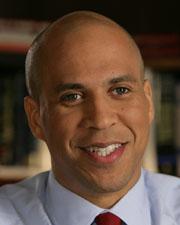
Cory A. Booker
DDemocratNJ · Senator
55
/ 100
Average
Attendance96
Avg: 97
Independence17
Avg: 23
Bipartisan Tone4
Avg: 14
Ethics Record100
Avg: 100
Transparency46
Avg: 47
Accountability Score — composite of attendance, independence, bipartisan tone, ethics record & transparency.
Methodology105
Bills Sponsored
0
Enacted into Law
1
Passed a Chamber
99
In Committee
All Sponsored Bills
S5687In Committee
A bill to codify the process for petitions for executive clemency, and for other purposes.
S5680In Committee
MILLER Act
S5678In Committee
NAMES Act
S5627In Committee
John Lewis Equality in Medicare and Medicaid Treatment Act of 2026
John Lewis Equality in Medicare and Medicaid Treatment Act of 2026 This bill requires the Center for Medicare and Medicaid Innovation to test a payment model that addresses social determinants of health and health disparities, particularly with respect to minorities, underserved areas, and high-risk individuals. The bill also generally incorporates consideration of such factors into the selection, implementation, and evaluation of other models, including the decision as to whether to expand a model's duration and scope.
S5631In Committee
SOAR Act
S5679In Committee
NO SELF Act
S5566In Committee
Public Service Educational Assistance Act
SRES910In Committee
A resolution expressing support for the designation of October 2026 as "Lewy Body Dementia Awareness Month".
S5565In Committee
Abortion is Health Care Everywhere Act of 2026
S5553In Committee
Transit-Oriented Housing Development Act of 2026
S5564In Committee
STOP Neglected Diseases of Poverty Act
SRES872In Committee
A resolution celebrating the 65th anniversary of the establishment of the Peace Corps, and commending its volunteers and contributions to global peace, friendship, and development.
S5430In Committee
South Asian Heart Health Awareness and Research Act of 2026
S5431In Committee
Diversify Act
S5410In Committee
Firefighter PFAS Injury Compensation Act of 2026
SRES853In Committee
A resolution recognizing suicide as a serious public health problem and expressing support for the designation of September 8, 2026, as "988 Day" and the role of 988 Suicide and Crisis Lifeline.
S5365In Committee
Community Mental Wellness Worker Training Act
S5376In Committee
FITNESS Act
S5325In Committee
Delaney Hall Closure Act
S5283In Committee
Momnibus Act
S5261In Committee
FIRE Cancer Act of 2026
S5149In Committee
A bill to designate the facility of the United States Postal Service located at 16 Rev Dr Martin Luther King Drive in Willingboro, New Jersey, as the "James A. Cotten Post Office".
This bill designates the facility of the United States Postal Service located at 16 Rev Dr Martin Luther King Drive in Willingboro, New Jersey, as the "James A. Cotten Post Office".
S4443Reported
Eastern Mediterranean Gateway Act
The bill would increase military and energy cooperation between the United States and countries in the Eastern Mediterranean region, including nations like Greece, Israel, and Egypt, to improve regional security and reduce dependence on unreliable energy sources. This would affect military personnel, defense contractors, energy companies, and diplomats involved in international relations, while potentially strengthening alliances in a strategically important part of the world.
S5099In Committee
A bill to amend the Public Health Service Act to reauthorize a grant program for addressing dental workforce needs.
The federal government would continue funding grants that help train and support dentists and dental professionals in areas where they're needed most, such as rural communities and low-income neighborhoods. These grants help dental schools, training programs, and healthcare organizations prepare more dental workers and place them where patient access to dental care is limited. The program aims to address shortages of dentists and dental hygienists across the country.
S5100In Committee
A bill to name the community-based outpatient clinic of the Department of Veterans Affairs in Newton, New Jersey, as the "Anthony 'Tony' J. Gallopo VA Clinic".
This bill would officially name the Veterans Affairs outpatient clinic in Newton, New Jersey after Anthony "Tony" J. Gallopo, honoring his contributions. The clinic provides healthcare services to veterans in the area, and the naming would recognize Gallopo's legacy. This is a ceremonial designation that does not change how the clinic operates or what services it provides.
S3542In Committee
Upper Raritan River Watershed Wild and Scenic River Study Act of 2025
This bill would direct the federal government to study whether a section of the Upper Raritan River in New Jersey should be protected as a Wild and Scenic River, a designation that restricts development and preserves the river's natural character. The study would examine the river's ecological, cultural, and recreational value to determine if it meets federal standards for protection. If approved after the study, the designation would limit dam construction, mining, and other industrial activities along that stretch of river while potentially boosting outdoor recreation and tourism in the area.
S5022In Committee
Cannabis Administration and Opportunity Act
The bill would remove federal criminal penalties for cannabis and reclassify it so it's no longer a controlled substance, while allowing people previously convicted of cannabis offenses to have those convictions cleared from their records. It would also direct money toward communities and individuals harmed by decades of drug enforcement policies. The proposal affects millions of Americans with cannabis convictions, cannabis businesses, and communities that experienced heavy enforcement of drug laws.
S4988In Committee
Advanced Coursework Equity Act
The bill aims to increase access to advanced academic programs like gifted education and honors courses for students from underrepresented groups, including low-income students and students of color. It would likely require schools to review their enrollment practices, reduce barriers to entry, and work to ensure these challenging courses are available to a broader range of students rather than concentrated among already-privileged groups. This would affect students, teachers, school administrators, and families seeking equal opportunities in quality education.
S4977In Committee
REDACT Act
This bill would allow victims and their families to sue if their private information—like medical or personal files—gets exposed when documents related to the Epstein case are released to the public. It creates a legal right for people to take action and seek damages if their sensitive personal details are shared in a way that violates their privacy, even when those documents are being made public for transparency purposes.
S4913In Committee
MOMMIES Act
Maximizing Outcomes for Moms through Medicaid Improvement and Enhancement of Services Act or the MOMMIES Act This bill establishes a series of programs and requirements under Medicaid and the Children's Health Insurance Program (CHIP) relating to maternal health. For example, the bill expands eligibility for coverage under Medicaid and CHIP from 60 days to one year after the last day of pregnancy and requires such coverage to include oral health services. The bill also establishes a demonstration program in which states receive grants to implement or expand models for maternity care homes that provide services to Medicaid or CHIP beneficiaries. The Government Accountability Office must report on (1) gaps in coverage under Medicaid and CHIP for pregnant and postpartum women, and (2) the use of telehealth by state Medicaid programs to increase access to maternity care.
S4914In Committee
Green Ribbon Act of 2026
The Green Ribbon Schools Program recognizes schools that excel in environmental sustainability, environmental education, and student health, and this bill would give states more resources and support to help more schools participate in and earn this recognition. The expanded program would help schools across the country adopt greener practices, teach students about environmental issues, and create healthier learning environments. Students, teachers, and school administrators would benefit from increased funding and technical assistance to make their schools more environmentally friendly.
SRES779In Committee
A resolution recognizing the contributions of Black people to the musical heritage of the United States and the need for greater access to music education for Black students and designating June 2026 as "Black Music Month".
This resolution honors the significant impact Black musicians and artists have had on American music throughout history, from jazz and blues to hip-hop and R&B. It also calls for increased music education opportunities for Black students in schools and designates June 2026 as a national month to celebrate Black musical contributions and heritage.
SRES780In Committee
A resolution expressing support for the designation of June 19, 2026, as "World Sickle Cell Awareness Day" in order to increase public awareness across the United States and global community about sickle cell disease and the continued need for empirical research, early detection screenings, novel effective treatments leading to a cure, and preventative care programs with respect to complications from sickle cell anemia and conditions relating to sickle cell disease.
This resolution calls for the United States to officially recognize June 19, 2026, as "World Sickle Cell Awareness Day" to help educate the public about sickle cell disease, a serious inherited blood disorder that primarily affects Black Americans and people of African descent. The resolution emphasizes the importance of funding research to find better treatments and cures, improving early detection through screening programs, and developing ways to prevent complications from the disease. By designating this day, Congress aims to draw attention to the ongoing health challenges faced by sickle cell patients and encourage greater investment in finding solutions.
S4786In Committee
Governors’ Right to Inspect Act of 2026
State governors would gain the authority to inspect immigration detention facilities within their borders to check on health and safety conditions, and would be required to report their findings to Congress. This would allow governors to directly oversee how detained immigrants are being treated in facilities located in their states, rather than relying solely on federal inspections. The bill aims to increase transparency and accountability regarding conditions in these detention centers.
SJRES154In Committee
A joint resolution providing for congressional disapproval under chapter 8 of title 5, United States Code, of the rule submitted by the Bureau of Consumer Financial Protection relating to the withdrawal of the rule relating to "Equal Credit Opportunity (Regulation B); Revocations or Unfavorable Changes to the Terms of Existing Credit Arrangements".
Congress is considering blocking a decision by the Consumer Financial Protection Bureau to withdraw protections that prevent lenders from unfairly canceling or worsening credit terms for borrowers. If approved, this resolution would force the agency to keep the existing rule in place, which protects consumers from sudden changes to their credit arrangements like interest rate hikes or account closures without proper justification. The measure affects banks, credit card companies, and millions of Americans who rely on credit for purchases and loans.
S4454In Committee
Firearm Safety Act of 2026
Firearm Safety Act of 2026 This bill allows the Consumer Product Safety Commission (CPSC) to issue safety standards for firearms and firearm components. Under current law, firearms, shells, cartridges, and components thereof are excluded from the CPSC's rulemaking authority.
S4434In Committee
CLEAN Mergers Act
The proposal would change antitrust laws to allow the government to force companies to sell off parts of their business if they complete mergers or acquisitions that are found to harm competition. This gives federal regulators a stronger tool to break up deals they believe would reduce consumer choice or unfairly advantage large corporations, affecting businesses across industries and ultimately the prices and options available to consumers.
S4403In Committee
Neighborhood Tree Act of 2026
The bill would give states and local communities more federal funding and support to plant and care for trees in forests and urban areas. This assistance would help communities manage their forests better, protect against wildfires, and increase tree coverage for environmental benefits. The funding would be available to state forestry agencies and local organizations working on tree planting and maintenance projects.
S4391In Committee
Farmland for Farmers Act of 2026
The legislation would prevent large corporations from buying agricultural land going forward, though it would allow existing corporate-owned farmland to remain in place. The goal is to keep farmland in the hands of individual farmers and family operations rather than large companies, which supporters argue helps preserve rural communities and keep farming more affordable for people who want to work the land. The measure would primarily affect corporate investment firms and large agribusiness companies looking to expand their land holdings.
SRES675In Committee
A resolution supporting the designation of the week of April 11 through April 17, 2026, as "Black Maternal Health Week", founded by Black Mamas Matter Alliance, Inc., to bring national attention to the maternal and reproductive health crisis in the United States and the importance of reducing maternal mortality and morbidity among Black women and birthing people.
This resolution designates April 11-17, 2026, as "Black Maternal Health Week" to raise awareness about the higher rates of pregnancy-related deaths and health complications that Black women and pregnant people experience in the United States. The week aims to highlight the maternal health crisis and push for solutions to reduce these disparities. The designation was created by the Black Mamas Matter Alliance organization to draw national attention to this public health issue.
SJRES183In Committee
A joint resolution to direct the removal of United States Armed Forces from hostilities within or against the Islamic Republic of Iran that have not been authorized by Congress.
This joint resolution directs the President to remove U.S. Armed Forces from hostilities within or against Iran unless a declaration of war or authorization to use military force for such purpose has been enacted. The resolution specifies that it shall not be construed to prevent the United States from defending against an attack on the United States or its personnel or facilities in other nations.
S4225In Committee
DOULA for VA Act of 2026
Delivering Optimally Urgent Labor Access for Veterans Affairs Act of 2026 or the DOULA for VA Act of 2026 This bill requires the Department of Veterans Affairs (VA) to establish a five-year pilot program to furnish doula services to pregnant veterans who are enrolled in the VA health care system. The program must furnish doula services through eligible entities by expanding the VA's Whole Health model to measure the impact that doula support services have on birth and mental health outcomes of pregnant veterans. The Whole Health model is a holistic approach that looks at the many areas of life that may affect health in order to make a health plan suited for each individual based on his or her health goals.
SRES661Introduced
A resolution recognizing the 205th anniversary of the independence of Greece and celebrating democracy in Greece and the United States.
This resolution honors Greece's 205th anniversary of independence from Ottoman rule and celebrates the democratic traditions shared by both Greece and the United States. The measure, which passed the Senate without objection, recognizes the historical significance of Greek independence and the ongoing partnership between the two nations based on their common commitment to democratic values.
S4143In Committee
Fair Wages for Incarcerated Workers Act of 2026
This bill would require incarcerated people who work while in prison to be paid at least the federal minimum wage for their labor, rather than the pennies per hour or nothing they typically earn now. The law would affect both state and federal prisons, ensuring that people doing jobs like maintenance, food service, or manufacturing inside correctional facilities receive fair compensation for their work. Supporters argue this would help incarcerated workers save money for reentry into society, while opponents raise concerns about implementation costs and prison operations.
SJRES118In Committee
A joint resolution to direct the removal of United States Armed Forces from hostilities within or against the Islamic Republic of Iran that have not been authorized by Congress.
This joint resolution directs the President to remove U.S. Armed Forces from hostilities within or against Iran unless a declaration of war or authorization to use military force for such purpose has been enacted. The resolution specifies that it shall not be construed to prevent the United States from defending against an attack on the United States or its personnel or facilities in other nations.
S4136In Committee
Sentencing Commission Improvements Act
Sentencing Commission Improvements Act This bill adds one nonvoting member to the U.S. Sentencing Commission and requires the new member to be a public defender.
SRES646In Committee
A resolution recognizing March 14, 2026, as "Black Midwives Day" and the longstanding and invaluable contributions of Black midwives to maternal and infant health in the United States.
This resolution designates March 14, 2026, as "Black Midwives Day" to honor the historical and ongoing contributions of Black midwives to maternal and infant health care in the United States. The measure recognizes the important role these healthcare providers have played in delivering babies and supporting pregnant women, particularly in underserved communities. It is a symbolic recognition rather than a law that creates new programs or funding.
S4096In Committee
A bill to amend the Consolidated Farm and Rural Development Act to modify provisions relating to rural decentralized water systems grants.
This bill revises and reauthorizes through FY2031 a program that provides financial assistance for rural water systems under the Consolidated Farm and Rural Development Act. Under the existing program, the Department of Agriculture may provide grants to nonprofit organizations that in turn must provide subgrants and loans to individuals for household water well systems or individually owned household decentralized wastewater systems in rural areas. This bill modifies the eligibility requirements for subgrants. To be eligible for a subgrant, an individual must be a member of a household with an annual combined income that is no more than 60% of the median nonmetropolitan household income for the area served by the nonprofit (currently, the state or territory in which the individual resides). The bill also allows a subgrant for a household decentralized wastewater system to include sufficient additional funding to cover the cost of a performance warranty with a duration of at least five years. In addition, the bill allows loans to be awarded to an individual who is a member of a household with an annual combined income that is 60% to 100% of the median nonmetropolitan household income for the area.
S4042In Committee
Keep Your Pay Act
The bill would likely change how workers' paychecks are taxed or allow employees to keep more of their earnings by modifying tax withholding rules or tax rates. Based on its title and focus on taxation, it probably aims to reduce the amount of money the government takes from workers' paychecks or give people more control over their tax deductions. The proposal would affect millions of American workers and their take-home pay.
S4018In Committee
GAAME Act of 2026
Guarantee Access to Arts and Music Education Act of 2026 or the GAAME Act of 2026 This bill specifies that funds that support the instructional needs of elementary and secondary students from low-income families (i.e., Title I funds) may be used for arts and music programs. First, the bill specifies that schools operating school-wide programs may include descriptions related to arts and music education in their comprehensive plans. Such a plan may include a description of (1) how sequential, standards-based arts education taught by certified educators and providers meet the challenging state academic standards, and (2) how sequential, standards-based music education taught by certified educators align with the challenging state academic standards. Second, the bill specifies that schools operating targeted assistance programs may use funds for arts and music programs that address the academic needs of students. This assistance may include providing support for certified educators, professional development, supplies, instruments, and other expenses.
SRES628In Committee
A resolution expressing support for the designation of March 2026 as "Music in Our Schools Month".
Congress would officially recognize March 2026 as "Music in Our Schools Month" to highlight the importance of music education for students. The resolution is a symbolic gesture intended to encourage schools to promote and celebrate music programs, though it does not create new funding or requirements. This type of resolution raises awareness about music's role in student learning and development without changing any laws or policies.
S3953In Committee
African American History Act of 2026
This bill would likely establish or expand federal programs and funding to promote the study, preservation, and public understanding of African American history and culture. It could support museums, educational initiatives, historical sites, or cultural institutions focused on documenting and sharing African American experiences and contributions. The measure would affect educators, students, cultural organizations, and communities interested in learning about this important part of American history.
S3914In Committee
Supreme Court Ethics and Investigations Act
This bill would establish ethics rules and oversight procedures for Supreme Court justices, likely including requirements for financial disclosures, conflict-of-interest guidelines, and a process for investigating potential ethical violations. The measure would affect how the nation's highest court operates internally and could increase public transparency about justices' financial interests and potential conflicts. It would essentially create accountability mechanisms for Supreme Court justices similar to those that already exist for lower court judges and other federal officials.
SRES615Introduced
A resolution celebrating Black History Month.
This resolution recognizes Black History Month as an opportunity to reflect on U.S. history and to commemorate the contributions of African Americans. It calls for the United States to (1) honor the contribution of pioneers who helped to ensure its legacy; and (2) move forward as a nation "indivisible, with liberty and justice for all."
S3860In Committee
Office of Small Farms Establishment Act of 2026
Office of Small Farms Establishment Act of 2026 This bill requires the Department of Agriculture (USDA) to establish the Office of Small Farms within the farm production and conservation mission area. The office must coordinate, review, and implement various programs and activities related to small farms, ranches, and forest operations. Under the bill, a small farm, ranch, or forest operation (1) is less than 180 acres or meets another USDA-determined, acreage-based definition of small; and (2) has an annual gross cash farm income of less than $350,000. Among other things, the activities of the office related to small farms, ranches, and forest operations must include coordinating USDA efforts to improve support for these operators; providing or coordinating technical assistance for these operators for USDA grant, cost-share, and loan programs; and providing grants of not more than $25,000 to these operators directly or through cooperative agreements with other entities for areas including equipment and infrastructure repairs and upgrades, uninsured losses, business planning, and conservation practice adoption. In addition, the Office of Small Farms must designate a small farms coordinator in each state.
S3864In Committee
Federal Jobs Guarantee Development Act of 2026
This bill would establish a federal program to create direct government jobs for people who want to work but cannot find employment in the private sector, guaranteeing a job opportunity to any American willing to work. The program would likely set wages, working conditions, and types of work available through federal employment, affecting both job seekers looking for guaranteed work and taxpayers who would fund the initiative. The bill is still in early stages and has been sent to the Senate Finance Committee for review.
S3824In Committee
State Authority to Protect Civil Rights
This bill would give state governments more power to enforce civil rights protections and prosecute crimes related to discrimination and civil rights violations. It likely aims to strengthen state-level enforcement mechanisms so that states can take action against violations of civil rights laws without waiting for federal intervention. The bill would primarily affect state law enforcement agencies, civil rights organizations, and individuals who experience discrimination based on protected characteristics like race, religion, or other factors.
S3803In Committee
Right to Redress Act
The bill would establish or expand legal rights allowing people to sue the federal government for damages in certain situations where they believe they've been wronged by government actions or policies. It likely aims to make it easier for citizens to seek compensation through the courts when they feel the government has violated their rights or caused them harm. The specific scope and limitations would depend on which government actions the bill covers and what types of claims it allows.
S3809In Committee
AI Grand Challenges Act of 2026
The bill would establish major research goals and funding programs to advance artificial intelligence development in areas like healthcare, climate science, and national security. It would likely direct federal agencies and private companies to work together on ambitious AI projects while setting standards for safety and responsible use. The legislation aims to keep the United States competitive in AI technology while ensuring these powerful tools are developed carefully.
S3804In Committee
Under Color of Law Accountability Act
This bill would make it easier to hold police officers and other government officials legally accountable when they abuse their power or violate people's rights while performing their duties. It likely aims to strengthen protections for citizens by clarifying or expanding the circumstances under which individuals can sue or prosecute officials for misconduct, addressing concerns about excessive force and civil rights violations.
S3806In Committee
SECURES Act of 2026
The SECURES Act would likely strengthen security measures and oversight for transportation infrastructure and public works projects across the country. Based on its referral to the Commerce, Science, and Transportation Committee, it probably aims to protect critical transportation systems—such as highways, bridges, ports, or rail networks—from security threats while ensuring these projects are built and maintained safely. The bill would affect transportation agencies, construction companies, and potentially the traveling public who depend on these systems.
S3807In Committee
Miranda’s Law
Without access to the specific text of this bill, the vague title suggests it likely addresses transportation safety or infrastructure issues, possibly named after a person or incident. Based on its referral to the Commerce, Science, and Transportation Committee, it probably affects drivers, passengers, or transportation companies in some way related to safety regulations, vehicle standards, or road infrastructure. To provide an accurate summary of what the bill would actually do, the specific legislative language would need to be reviewed.
S3776In Committee
The Federal Grant Neutrality Act
The bill would likely establish rules to prevent the federal government from using grant money to favor certain states, regions, or political groups over others when distributing funds to states, cities, and organizations. This would aim to ensure that federal grants are awarded based on objective criteria like need or merit rather than political considerations. The change would affect state and local governments, nonprofits, and other organizations that receive federal funding.
SRES590In Committee
A resolution designating January 23, 2026, as "Maternal Health Awareness Day".
This resolution designates January 23, 2026, as Maternal Health Awareness Day.
S3699In Committee
FOCUS Act
The FOCUS Act addresses immigration policy, though the specific details of what it would change are not yet clear from the title alone. Based on its referral to the Judiciary Committee, the bill likely proposes modifications to how immigration cases are handled, processed, or enforced in the United States. Once the committee reviews it, the actual impacts on immigrants, immigration courts, or enforcement agencies will become apparent.
S3702In Committee
Dignity for Detained Immigrants Act
This bill would establish new standards for how immigration authorities treat people in detention, likely including requirements for medical care, safe conditions, and limits on how long someone can be held without a hearing. The legislation would affect both detained immigrants and the federal agencies responsible for their care, potentially requiring changes to detention facilities and procedures across the country.
S355Passed Senate
FDA Modernization Act 3.0
FDA Modernization Act 3.0 This bill requires the Food and Drug Administration (FDA) to publish an interim final rule implementing a provision of the Consolidated Appropriations Act of 2023 that authorized the use of certain alternatives to animal testing to support investigational use of a new drug. The rule must replace references to animal tests, data, studies, models, and research with references to nonclinical tests, data, studies, models, and research throughout the FDA’s regulations governing investigational new drug applications, and may make other changes to the regulations as appropriate. The rule must be published within one year of the bill’s enactment, and must take immediate effect as an interim final rule.
S3548In Committee
Fair Competition for Small Business Act of 2025
This bill would likely establish new rules to protect small businesses from unfair competitive practices by larger companies, such as predatory pricing or exclusive dealing arrangements that squeeze out smaller competitors. The legislation would probably give small business owners better tools to challenge anti-competitive behavior in court or through regulatory agencies. Small business owners, entrepreneurs, and potentially consumers who benefit from competitive markets would be the main beneficiaries of these protections.
S3544In Committee
Federal Firearm Licensing Act
Federal Firearm Licensing Act This bill generally requires an individual to obtain a license before purchasing, receiving, or possessing a firearm. The bill also requires background checks for firearms transfers between private parties (i.e., unlicensed individuals). Specifically, this bill requires individuals who purchase, receive, or possess a firearm to have a valid federal firearm purchasing license (or a state firearm purchasing license with substantially similar requirements). The bill requires the Bureau of Alcohol, Tobacco, Firearms and Explosives to establish a federal system for issuing firearm purchasing licenses and sets forth requirements for the system, including eligibility requirements for a license (e.g., training in firearms safety and background investigation and criminal history check), standards for denying or revoking a license, and requirements for reporting transactions. The bill makes it unlawful to (1) purchase, receive, or possess a firearm without a valid firearm purchaser license; or (2) sell or transfer a firearm to an individual who does not have a valid firearm purchaser license or fail to report such a sale or transfer to law enforcement. Additionally, the bill prohibits a firearm transfer between private parties unless a federal firearms licensee (e.g., gun dealer) first takes possession of the firearm to conduct a background check.
S3498In Committee
EQIP Improvement Act of 2025
This bill would make changes to the Environmental Quality Incentives Program (EQIP), a federal program that helps farmers and ranchers pay for conservation practices like soil improvement, water management, and wildlife habitat protection. The changes likely aim to streamline how the program operates, expand its funding or eligibility, or adjust which conservation practices receive support to better meet current agricultural and environmental needs.
S3443In Committee
Zero Food Waste Act
Zero Food Waste Act This bill directs the Environmental Protection Agency to establish a grant program to study and reduce food waste. States, local governments, territorial governments, tribal governments, and nonprofit organizations may apply for the grants.
S3346In Committee
Freedom to Heal Act of 2025
Based on the title and referral to the Judiciary Committee, this bill likely addresses healthcare policy issues, possibly related to patient rights, medical treatment access, or regulatory barriers in healthcare. Without more specific details about the bill's provisions, the exact impact on patients, doctors, or healthcare companies cannot be determined, but the focus appears to be on expanding or protecting some aspect of medical freedom or treatment options.
S3271In Committee
In-Home CARE Act
The legislation would expand access to in-home health care services for seniors and people with disabilities, allowing them to receive medical treatment and assistance with daily activities in their own homes rather than in institutional settings. The bill would likely increase funding or coverage for home-based care services, which could help patients maintain independence while reducing costs compared to nursing homes or hospitals. This would primarily affect elderly Americans, disabled individuals, their families, and home health care workers.
S3243In Committee
Ending Forced Arbitration of Race Discrimination Act of 2025
Ending Forced Arbitration of Race Discrimination Act of 2025 This bill prohibits a predispute arbitration agreement or predispute joint-action waiver from being valid or enforceable with respect to a case relating to a race discrimination dispute at the election of the person alleging the discrimination.
S2949In Committee
Colorectal Cancer Payment Fairness Act
S2926In Committee
New York-New Jersey Watershed Protection Act
New York-New Jersey Watershed Protection Act This bill establishes programs to restore and protect the New York-New Jersey Watershed. The watershed is composed of all land area the surface water of which drains into the New York-New Jersey Harbor, the waters contained within that land area, and associated estuaries. Specifically, the bill requires the U.S. Fish and Wildlife Service to establish the New York-New Jersey Watershed Restoration Program, a nonregulatory program, to coordinate restoration and protection activities among government entities and conservation partners throughout the watershed. The bill also establishes the New York-New Jersey Watershed Restoration Grant Program, a voluntary grant and technical assistance program, to provide competitive matching grants to certain entities to implement restoration and protection activities for the watershed. The federal government may not maintain ownership of any land acquired under the bill except for the purpose of promptly transferring ownership to grant recipients. The bill ceases to have force or effect on October 1, 2031.
S2858In Committee
SHINE for Autumn Act of 2025
The bill aims to improve health outcomes during the fall and winter months, likely by expanding access to health information, screening programs, or preventive care services for seniors and other vulnerable populations during seasons when health risks typically increase. The legislation would affect older Americans and potentially healthcare providers who deliver these services.
S2302In Committee
Access to Birth Control Act
S2667In Committee
West Bank Violence Prevention Act of 2025
This bill would likely establish measures to reduce violence in the West Bank region, potentially through funding, diplomatic efforts, or support for peacekeeping initiatives. The legislation would affect U.S. foreign policy toward the Israeli-Palestinian conflict and could influence how American aid or military assistance is distributed in the region. The bill is currently under review by the Senate Foreign Relations Committee.
S2411In Committee
Scale-Up Manufacturing Investment Company Act of 2025
S2324In Committee
Pesticide Injury Accountability Act of 2025
The legislation would allow people who suffer health injuries from pesticide exposure to sue pesticide manufacturers for damages, similar to how people can sue other companies for harmful products. It would make pesticide makers more accountable for the safety of their products and could result in compensation for workers, farmers, and others who experience illness or injury from pesticide exposure. The bill is currently under review by the Senate's agriculture committee.
S2203In Committee
Break the Cycle of Violence Act
Break the Cycle of Violence Act This bill establishes federal grant programs and related entities to support violence intervention initiatives. Specifically, the bill directs the Department of Health and Human Services (HHS) to award grants for coordinated community violence intervention initiatives in communities disproportionately impacted by homicides and community violence. HHS must also establish several related entities, including an Office of Community Violence Intervention to administer programs and activities related to violence intervention; the Community Violence Intervention Advisory Committee to advise and assist the office and HHS; and the National Community Violence Response Center to provide training and technical assistance, coordinate research, and develop data collection policies. Additionally, the bill directs the Department of Labor to award grants for job training and workforce programs in communities disproportionately affected by gun violence to connect youth ages 16 to 24 to in-demand occupations.
S2186In Committee
Preventing Pretrial Gun Purchases Act
Preventing Pretrial Gun Purchases Act This bill prohibits the sale or disposition of a firearm or ammunition to a person who is subject to a pretrial release order that prohibits the person from purchasing, possessing, or receiving firearms. It also establishes grants for states and Indian tribes to report information about pretrial release orders to the National Instant Criminal Background Check System.
S2190In Committee
Fair Calculations in Civil Damages Act of 2025
S2149In Committee
Health Equity and Access under the Law for Immigrant Families Act of 2025
The legislation would expand health insurance coverage and access to medical services for immigrant families, including those who are undocumented or have mixed immigration statuses. It aims to remove barriers that currently prevent immigrants from enrolling in federal health programs like Medicaid and the Affordable Care Act marketplace plans. The bill would affect millions of immigrants and their families seeking affordable healthcare options.
SRES292In Committee
A resolution expressing support for the designation of June 19, 2025, as "World Sickle Cell Awareness Day" in order to increase public awareness across the United States and global community about sickle cell disease and the continued need for empirical research, early detection screenings, novel effective treatments leading to a cure, and preventative care programs with respect to complications from sickle cell anemia and conditions relating to sickle cell disease.
This resolution supports the goals and ideals of World Sickle Cell Awareness Day.
SCONRES14In Committee
A concurrent resolution urging the establishment of a United States Commission on Truth, Racial Healing, and Transformation.
This resolution calls for creating a new government commission to investigate historical racial injustices in America and develop recommendations for healing and reconciliation between racial groups. The commission would examine past discrimination and its ongoing effects on communities of color, similar to truth commissions established in other countries after periods of conflict. The goal is to foster national dialogue and suggest concrete steps the government could take to address racial inequities.
SRES273In Committee
A resolution recognizing the contributions of Black people to the musical heritage of the United States and the need for greater access to music education for Black students and designating June 2025 as "Black Music Month".
This resolution honors the major role Black musicians and artists have played in shaping American music, from jazz and blues to hip-hop and R&B. It also calls for increased music education opportunities for Black students in schools and designates June 2025 as "Black Music Month" to celebrate this cultural legacy.
S1873In Committee
MARSHALS Act
S1529In Committee
Keep Finfish Free Act of 2025
SRES172In Committee
A resolution supporting the designation of the week of April 11 through April 17, 2025, as the eighth annual "Black Maternal Health Week", founded by Black Mamas Matter Alliance, Inc., to bring national attention to the maternal and reproductive health crisis in the United States and the importance of reducing maternal mortality and morbidity among Black women and birthing people.
This resolution designates April 11-17, 2025, as Black Maternal Health Week to raise awareness about the serious health challenges Black women and pregnant people face during pregnancy and childbirth in the United States. The week aims to highlight the higher rates of maternal death and complications among Black women and promote efforts to reduce these health disparities. The designation supports the work of Black Mamas Matter Alliance, an organization focused on improving maternal health outcomes for Black communities.
S1486In Committee
COAST Anti-Drilling Act of 2025
This bill would prohibit new oil and gas drilling on federal lands and waters along U.S. coasts, protecting coastal areas from energy development. The measure would affect oil and gas companies seeking to expand drilling operations while potentially benefiting coastal communities, fishing industries, and environmental advocates concerned about spills and climate impacts.
SRES141Introduced
A resolution recognizing the 204th anniversary of the independence of Greece and celebrating democracy in Greece and the United States.
This resolution honors Greece's independence day and celebrates the shared democratic values between Greece and the United States. It recognizes the historical significance of Greek independence while highlighting the importance of democracy in both countries. The resolution has already passed the Senate without any objections.
SRES139In Committee
A resolution expressing support for the designation of March 2025 as "Music in Our Schools Month".
Congress is expressing support for recognizing March 2025 as "Music in Our Schools Month" to highlight the importance of music education in schools. The resolution aims to raise awareness about how music programs benefit students' learning, creativity, and overall development. This is a symbolic measure that encourages schools and communities to celebrate and promote music education during that month.
S1102In Committee
Quality Defense Act of 2025
Providing a Quality Defense Act of 2025 or the Quality Defense Act of 2025 This bill establishes grant programs and other resources to support the delivery of public defense services. Specifically, the bill authorizes the Department of Justice (DOJ) to award grants to state and local governments, tribal organizations, public defender's offices, and assigned counsel programs for public defense. In particular, DOJ may award a grant for (1) developing, implementing, and updating a process for collecting certain data regarding public defense attorneys and panel attorneys; or (2) hiring additional public defense attorneys and for other activities (e.g., increasing compensation or establishing a loan assistance program for public defenders). Additionally, DOJ must award grants to eligible entities (e.g., certain tax-exempt organizations and states) to provide a comprehensive educational program to public defenders and panel attorneys that offers ongoing training, support, and programming. The bill directs the Bureau of Justice Assistance and the Office for Access to Justice to conduct certain studies related to public defender and panel attorney caseloads and compensation. The bill also authorizes DOJ to provide a state with an increase in Edward Byrne Memorial Justice Assistance Grant program funds in order to collect and submit certain data related to the legal representation of defendants in criminal cases.
SRES128In Committee
A resolution recognizing March 14, 2025, as "Black Midwives Day" and the longstanding and invaluable contributions of Black midwives to maternal and infant health in the United States.
This resolution designates March 14, 2025, as "Black Midwives Day" to honor the historical and ongoing contributions of Black midwives to maternal and infant health care in the United States. The measure recognizes the important role these healthcare providers have played in delivering babies and supporting pregnant women, particularly in communities that have faced barriers to accessing quality medical care. While symbolic rather than creating new laws or programs, the resolution aims to raise awareness about Black midwives' vital work in improving health outcomes for mothers and newborns.
SRES126In Committee
A resolution calling on the United Nations Security Council to enforce the existing arms embargo on Darfur and extend it to cover all of Sudan.
This resolution urges the United Nations Security Council to enforce an existing ban on weapons sales to the Darfur region of Sudan and expand that ban to cover all of Sudan. The measure aims to prevent armed groups and the Sudanese government from obtaining weapons that could be used in ongoing conflicts. It affects international peace efforts, humanitarian organizations working in Sudan, and countries involved in arms sales to the region.
S894In Committee
Do No Harm Act
Based on the subjects of civil rights and minority issues, this bill likely aims to protect individuals from discrimination or harmful practices in specific contexts, though the exact scope depends on its detailed provisions. The bill has been sent to the Judiciary Committee for review and consideration. Without access to the full text, the specific protections or restrictions it would establish cannot be determined, but the title suggests it focuses on preventing harm to vulnerable or protected groups.
S751In Committee
CROWN Act of 2025
Creating a Respectful and Open World for Natural Hair Act of 2025 or the CROWN Act of 2025 This bill prohibits discrimination based on a person's hair texture or hairstyle if that style or texture is commonly associated with a particular race or national origin. Specifically, the bill prohibits this type of discrimination against those participating in federally assisted programs, housing programs, public accommodations, and employment. Persons shall not be deprived of equal rights under the law and shall not be subjected to prohibited practices based on their hair texture or style. The bill provides for enforcement procedures under the applicable laws (e.g., the Civil Rights Act of 1964).
SRES99Introduced
A resolution celebrating Black History Month.
This resolution officially recognizes and celebrates Black History Month, honoring the contributions and achievements of African Americans throughout U.S. history. The Senate unanimously approved the resolution, which serves as a formal statement acknowledging the importance of remembering and learning about Black history and civil rights.
S724In Committee
Temporary Extension of Fentanyl-Related Substances Scheduling Act
Temporary Extension of Fentanyl-Related Substances Scheduling Act This bill extends until September 30, 2025, the temporary scheduling order issued by the Drug Enforcement Administration to place fentanyl-related substances in schedule I of the Controlled Substances Act. The temporary order expires on March 31, 2025.
S721In Committee
Sickle Cell Disease Comprehensive Care Act
Sickle Cell Disease Comprehensive Care Act This bill allows state Medicaid programs to establish health homes to provide coordinated care for individuals with sickle-cell disease. (Under current law, state Medicaid programs may establish health homes to provide coordinated care for individuals with specified chronic conditions.) States must ensure that such care includes dental and vision services. The Centers for Medicare & Medicaid Services must issue best practices for states on how to design and implement such health homes.
SRES32In Committee
A resolution designating January 23, 2025, as "Maternal Health Awareness Day".
This resolution designates January 23, 2025, as Maternal Health Awareness Day.
SRES33In Committee
A resolution expressing support for the recognition of January as "Muslim-American Heritage Month" and celebrating the heritage and culture of Muslim Americans in the United States.
This resolution supports the designation of January as Muslim-American Heritage Month and honors the contributions and integral role of Muslim Americans in the economy, culture, and identity of the United States.
S40In Committee
Commission to Study and Develop Reparation Proposals for African Americans Act
Commission to Study and Develop Reparation Proposals for African Americans Act This bill establishes the Commission to Study and Develop Reparation Proposals for African Americans. The commission must (1) compile documentary evidence of slavery in the United States; (2) study the role of the federal and state governments in supporting the institution of slavery; (3) analyze discriminatory laws and policies against formerly enslaved Africans and their descendants; and (4) recommend ways the United States may recognize and remedy the effects of slavery and discrimination on African Americans, including through a formal apology and compensation (i.e., reparations). The commission consists of individuals from civil society and reparations organizations and individuals appointed by the President and congressional leadership. The commission may hold hearings, subpoena witnesses and records, and contract with other entities to conduct its work. The commission must submit its final report within one year of its first meeting.