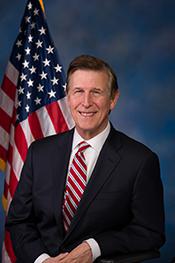
Donald S. Beyer, Jr.
DDemocratVA-8 · Representative
66
/ 100
Above Average
Attendance98
Avg: 96
Independence2
Avg: 4
Bipartisan Tone28
Avg: 15
Ethics Record100
Avg: 99
Transparency100
Avg: 53
Accountability Score — composite of attendance, independence, bipartisan tone, ethics record & transparency.
Methodology52
Bills Sponsored
0
Enacted into Law
0
Passed a Chamber
52
In Committee
All Sponsored Bills
HR10249In Committee
Kids Safety on Set Act of 2026
HR10120In Committee
National Flood Impact Reduction and Resilience Act of 2026
HR10014In Committee
Restoring Accountability in Appropriations Act
The proposal would allow private citizens and members of Congress to sue the federal government if it violates rules about how it spends money that Congress has already approved. Currently, only Congress as a whole can challenge when the president or agencies refuse to spend appropriated funds, but this change would give individuals and lawmakers the power to take legal action directly. The change aims to strengthen enforcement of spending laws by creating more ways to hold the government accountable when it withholds money Congress has already decided to allocate.
HR9977In Committee
Homebuilding Materials Tariff Relief Act
The proposal would remove tariffs on specific building materials used in home construction, allowing builders and homeowners to purchase these products without the extra taxes that would otherwise take effect starting January 20, 2025. This could lower construction costs for residential projects and potentially make new homes more affordable for buyers. The bill is currently being reviewed by congressional committees to determine which building products should qualify for the tariff exemption.
HR9835In Committee
Congressional Oversight and Agency Access Act
The legislation would grant members of Congress access to certain federal buildings, likely streamlining their ability to move through government facilities for official business. The bill has been referred to the House Committee on Transportation and Infrastructure for review and consideration.
HR9729In Committee
Human Authority over Autonomous Weapons Act of 2026
The military would be required to maintain human control and decision-making authority over autonomous weapons and AI systems used by the Armed Forces, rather than allowing machines to operate independently in combat situations. This ensures that military commanders remain responsible for how these advanced technologies are deployed and used in the field. The bill affects how the Department of Defense develops and uses robotic and artificial intelligence weapons systems.
HR9730In Committee
Foreign Service Test-Free Reentry Act of 2026
The legislation would make it easier for the State Department to rehire former career diplomats and Foreign Service officers who left their positions, potentially streamlining the process to bring experienced professionals back into government roles. This could help fill staffing gaps at the State Department and other diplomatic agencies by reducing bureaucratic barriers that previously made it difficult to quickly rehire people with existing expertise. The measure affects former Foreign Service members and the federal government's ability to manage its diplomatic workforce.
HR9696In Committee
Saving Lives and Reducing Health Care Waste by Improving Diagnosis in Medicine Act
The legislation aims to enhance how doctors diagnose diseases and medical conditions by improving diagnostic accuracy, reducing unnecessary tests, and ensuring patients receive appropriate care based on their actual health needs. It would affect healthcare providers, patients, and the healthcare system by establishing standards and practices that help doctors make better diagnostic decisions while potentially lowering costs from misdiagnosis or redundant testing.
HR9622In Committee
Modernizing Aeronautical Standards Act
NASA would be required to study how aeronautical standards—the technical rules that govern aircraft design and safety—could be updated to reflect modern technology and practices. The study would help identify which current standards are outdated and what changes might be needed to keep aviation safe and competitive in today's world. This would affect aircraft manufacturers, airlines, and the Federal Aviation Administration that oversees aviation safety.
HR9261In Committee
Comprehensive Paid Leave for Federal Employees Act
Federal employees would be able to take up to 12 weeks of paid leave per year to care for a new child, a seriously ill family member, or their own serious health condition, while continuing to receive their regular paychecks. The bill would also extend similar protections to federal workers dealing with military family issues and other qualifying life events. This would give federal workers benefits similar to those many private companies already offer their employees.
HR9213In Committee
American Electric Rail Mapping Act of 2026
The federal government would be required to study how to convert railroad systems across the country to run on electricity instead of diesel fuel, examining the costs, benefits, and practical challenges of making this transition. This research would help policymakers and railroad companies understand what it would take to modernize the nation's rail infrastructure, potentially reducing pollution and operating costs. The study would affect railroad operators, environmental advocates, and communities that depend on rail transportation.
HR9183In Committee
Artificial Intelligence Environmental Impacts Act of 2026
The EPA would study how artificial intelligence data centers and their power plants affect the environment, while the National Institute of Standards and Technology would bring together experts to discuss these impacts. The EPA would also create a system for companies to report how much energy and resources their AI operations use and what environmental damage they cause. This affects tech companies running AI services, energy providers, and communities near data centers.
HR9181In Committee
Rail Motive Power Source Integration Act of 2026
The Federal Railroad Administration would be required to create a test program to explore using multiple types of power sources (such as electricity, hydrogen, or other fuels) to run trains instead of relying solely on diesel. This pilot program would help the railroad industry learn whether switching to cleaner or alternative energy sources is practical and cost-effective. The program would affect railroad companies, workers in the rail industry, and potentially passengers who use trains.
HR9182In Committee
Southeastern Rail Technologies Mapping Act of 2026
The Federal Railroad Administration would be required to study ways to improve rail service and adopt new power technologies like electric or hydrogen trains in the southeastern United States. This research would help determine how the region could modernize its rail system and potentially reduce pollution from freight and passenger trains. The findings could guide future investments in rail infrastructure across the Southeast.
HR9047In Committee
Arlington National Cemetery Viewshed Protection Act
The proposal would prevent the construction of large ceremonial arches in Washington D.C. and surrounding areas, likely to protect the appearance and historical character of the nation's capital and its monuments. The restriction would apply to government and private projects in designated zones around the capital region. The bill was sent to the House Committee on Natural Resources for review.
HR9023In Committee
CLEAN UP Mines Act of 2026
The proposal would update federal rules governing coal mining operations to require stricter environmental protections and better oversight of how mining companies restore land after they finish extracting coal. Coal companies and mining workers would need to follow tougher standards for managing water pollution, dust, and habitat damage, while regulators would gain stronger tools to enforce these requirements and ensure mined areas are properly reclaimed.
HR8919In Committee
To nullify the decision and order of the Endangered Species Committee with respect to certain oil and gas activities, and for other purposes.
The proposal would overturn a decision made by the Endangered Species Committee that restricted certain oil and gas drilling activities, allowing those operations to proceed despite potential impacts on protected wildlife. The bill would affect oil and gas companies seeking to expand drilling in areas where endangered species are present, as well as environmental groups and wildlife advocates who supported the committee's restrictions. It is currently under review by the House Committee on Natural Resources.
HR8783In Committee
To amend the Internal Revenue Code of 1986 to exclude from gross income charitable distributions from certain employer-sponsored retirement plans, and for other purposes.
Workers who are 70½ years old or older could make direct charitable donations from their employer retirement accounts without having to count that money as taxable income. This would allow older employees and retirees to support charities they care about while potentially reducing their tax bills. The change would primarily benefit people with significant retirement savings who want to donate to qualified charitable organizations.
HR8567In Committee
UNLEADED Act
Undoing National Lead Emissions through Authorizing Directed Education from DOT Act or the UNLEADED Act This bill directs the Federal Aviation Administration (FAA) to establish and disseminate an education program to provide information about new unleaded aviation gasoline authorized for use in aircraft and aircraft engines by the FAA. Specifically, the FAA must publish the information on an FAA website or a public website for general aviation pilots, flight schools, airport managers and operators, aircraft maintenance technicians, fixed-base operators, and other members of the general aviation community. The FAA must also facilitate annual education and training for leadership and staff of fixed-base operators (in coordination with the general aviation industry, fuel providers, and fixed-base operators) to ensure that individuals assisting with transporting and handling unleaded aviation gasoline are informed of fuel type differences and the impacts such fuels have on airplanes. The FAA must periodically brief Congress on the status of, and any findings with respect to, the education program.
HR8438In Committee
Wildlife Corridors and Habitat Connectivity Conservation Act of 2026
This bill would establish protections and funding for wildlife corridors—pathways that allow animals to move safely between different habitats—and support efforts to connect fragmented natural areas across the country. The legislation would affect landowners, conservation organizations, and federal agencies by providing resources and incentives to preserve and restore these migration routes, which help wildlife populations survive and thrive. It aims to address the problem of habitat loss that forces animals into smaller, isolated areas where they struggle to find food, mates, and genetic diversity.
HR8294In Committee
Millionaires Surtax Act
This bill would add an extra tax on top of regular income taxes for wealthy individuals, meaning people earning above a certain income threshold would pay a higher percentage of their earnings to the federal government. The additional revenue would go toward federal programs and deficit reduction. High-income earners would be the primary group affected by this change.
HR8094In Committee
AI Foundation Model Transparency Act of 2026
This bill would require companies that develop large artificial intelligence systems to disclose information about how those systems were built, what data they were trained on, and how well they perform on various tasks. The goal is to give regulators, researchers, and the public more visibility into how these powerful AI tools work so potential risks can be better understood and addressed. The requirements would apply to companies creating advanced AI models used across many industries.
HR6778In Committee
Parkway Safety and Reinvestment Act
This bill would improve safety conditions and fund repairs and upgrades at national parkways—the scenic road corridors managed by the National Park Service that millions of Americans drive through each year. The legislation aims to address maintenance backlogs, fix hazardous road conditions, and potentially enhance visitor facilities along these routes. Drivers, tourists, and local communities near parkways would benefit from safer roads and better-maintained infrastructure.
HR8031In Committee
GUARDRAILS Act
The bill would establish safety standards and oversight mechanisms for artificial intelligence systems to ensure they operate safely and responsibly. It likely addresses how AI technology is developed, tested, and deployed across industries while protecting consumers and the public from potential harms. The proposal affects tech companies developing AI, government agencies regulating the technology, and the general public who use AI-powered services.
HR7937In Committee
Working Americans’ Tax Cut Act
This bill would reduce federal income taxes for working Americans, though the specific details of which income levels would benefit and by how much are not yet finalized. The proposal aims to put more money back in workers' paychecks by lowering the tax burden on individuals and families. The House Committee on Ways and Means will review the proposal to determine whether it moves forward.
HR7684In Committee
SCOPE Act of 2026
The bill would require the EPA to study how companies should measure and report their indirect emissions—the pollution created by their suppliers, customers, and other business partners throughout their supply chain—and then publish official guidance on the best way to do this. This would help standardize how large corporations track and disclose these "scope 3" emissions, which often represent the biggest portion of a company's total environmental impact. The guidance would affect businesses across industries that need to report their environmental footprint to investors, regulators, or the public.
HR7524In Committee
Older Workers’ Bureau Act
The bill would create a new government bureau dedicated to helping workers aged 55 and older find jobs, access training programs, and address age discrimination in the workplace. This new agency would work to connect older Americans with employment opportunities and provide resources to both workers and employers dealing with age-related hiring and retention issues. The proposal aims to support older workers who want to continue working or re-enter the job market.
HR7486In Committee
Protecting Hospitals from Disaster Act of 2026
This bill would likely provide financial assistance and support to hospitals that face major disruptions from natural disasters, public health emergencies, or other catastrophic events. The legislation aims to help hospitals maintain operations and continue serving patients during crises by offering federal funding, tax relief, or other resources to cover emergency costs and recovery expenses. This would affect hospital administrators, patients relying on hospital care, and communities dependent on local healthcare facilities during emergencies.
HR7460In Committee
Airborne Act of 2026
The bill would likely modify tax rules related to aviation or airborne activities, though the specific provisions aren't detailed in the available information. Based on its referral to the House Ways and Means Committee, it probably affects how airlines, aircraft owners, or aviation businesses are taxed. The exact impact on workers, travelers, or companies would depend on whether it raises, lowers, or restructures existing aviation-related taxes.
HR7416In Committee
Methane Monitoring Science Act of 2026
This bill would establish new scientific programs and requirements for monitoring methane emissions—a potent greenhouse gas—likely through improved technology and data collection methods. The legislation would help researchers and government agencies better track where methane is being released into the atmosphere, which is important for understanding climate change and developing strategies to reduce these emissions. The bill affects scientists, environmental agencies, and potentially companies in industries like oil and gas that produce significant methane emissions.
HR7351In Committee
NURSE Visa Act of 2026
This bill would create a new visa category to allow foreign-trained nurses to immigrate to the United States more easily, helping address nursing shortages in American hospitals and healthcare facilities. The visa would streamline the process for nurses to come work in the U.S. without going through the standard employment-based immigration system, making it faster for healthcare employers to hire qualified nurses from other countries.
HR7278In Committee
Cost of Police Misconduct Act of 2026
This bill would likely establish new rules about how police misconduct cases are handled and paid for, possibly requiring departments or the government to cover costs of settlements and judgments when officers are found to have acted improperly. The measure would affect police departments, taxpayers, and people who have experienced misconduct by law enforcement. The specific details of how costs would be allocated and what types of misconduct are covered would depend on the bill's final language.
HR6709In Committee
Office of Fusion Act of 2025
The bill would establish a new government office dedicated to advancing fusion energy technology, which aims to create clean electricity by combining atoms rather than splitting them. This office would likely coordinate research, development, and commercialization efforts across federal agencies and private companies working on fusion power as a potential long-term energy solution. The proposal affects energy researchers, technology companies, and the broader push to develop alternative energy sources.
HR6617In Committee
Keeping All Students Safe Act
Keeping All Students Safe Act This bill prohibits the use of seclusion and limits the use of physical restraint in schools and Head Start programs that receive federal funding. Specifically, the bill prohibits the use of seclusion , which is the involuntary confinement of a student alone in a room or area from which the student is physically prevented from leaving. The term does not include a time out, which may involve separating the student from others in a non-locked setting. The bill prohibits the use of mechanical or chemical restraints or physical restraints that restrict breathing or are life threatening. The bill outlines the requirements for the use of physical restraint, including that the student's behavior must pose an imminent danger of serious physical injury to the student or other individual. Each state must ensure that a sufficient number of program personnel are trained and certified by a state-approved crisis intervention training program. Additionally, each program must establish procedures to follow after an incident involving physical restraint. Further, the bill establishes enforcement provisions, including a private right of action for a student who has been subjected to unlawful seclusion or restraint. The Department of Education and the Department of Health and Human Services must withhold payments from a program for unlawful seclusion or restraint. Finally, the bill requires each state educational agency (SEA) to establish, implement, and enforce policies and procedures required by the bill. It also creates a grant program to assist SEAs with these activities.
HR5902In Committee
Innovative Practices for Soil Health Act of 2025
The legislation would support farmers in adopting practices that improve soil quality and health, such as cover cropping, reduced tillage, and crop rotation, potentially through grants, technical assistance, or research programs. These practices help soil retain water and nutrients while reducing erosion, which can increase crop productivity and environmental sustainability. The bill would affect farmers, agricultural researchers, and conservation organizations working to improve farming practices.
HR6294In Committee
Childhood Diabetes Reduction Act of 2025
Childhood Diabetes Reduction Act of 2025 This bill requires health warnings on labels and in advertisements for food and beverages that are sweetened, processed, or contain a high level of certain nutrients, and it prohibits specifically advertising such products to children. It also expands research and outreach on proper nutrition. The bill requires various Food and Drug Administration (FDA) warnings on labels for (1) sugar-sweetened beverages, (2) food and beverages with non-sugar sweeteners, (3) ultra-processed food and beverages (as defined by the FDA based on recommendations from the National Academies of Science, Engineering, and Medicine), and (4) food and beverages with certain nutrients (e.g., sugar, saturated fat, sodium) at levels that increase health risks. These warnings must contain specified information regarding the risks of developing certain health conditions (e.g., diabetes); warnings for sugar-sweetened beverages and for non-sugar sweetened food and beverages must specifically say that these products are not recommended for children. Additionally, the bill prohibits marketing or advertising these products to children under the Federal Food, Drug, and Cosmetic Act, which is primarily enforced by the FDA. Further, marketing or advertising these products to children, or without the required warnings, is considered an unfair or deceptive trade practice that is subject to action by the Federal Trade Commission (FTC). The bill specifically restores the FTC's statutory authority to regulate advertising targeting children (this authority was limited in 1980). Finally, the bill expands research on nutrition science and requires a public education campaign about nutrition and the new warning labels.
HR6078In Committee
Wildlife Road Crossings Program Reauthorization Act of 2025
This bill would continue federal funding and support for programs that help wildlife safely cross roads and highways, reducing collisions between animals and vehicles. The program would likely provide grants to states and local communities to build wildlife bridges, underpasses, and other crossing structures in areas where roads cut through animal habitats. This affects both drivers who could face fewer dangerous wildlife encounters on roads and animals whose populations are threatened by vehicle strikes.
HR6127In Committee
AIM Act
ATF Improvement and Modernization Act of 2025 or the AIM Act This bill removes limitations on the authority of the Bureau of Alcohol, Tobacco, Firearms and Explosives (ATF) to conduct activities related to the administration of federal firearms laws. Specifically, the bill removes provisions that limit the use of firearms tracing data; prohibit consolidating or centralizing records maintained by federal firearm licensees, or FFLs (e.g., gun dealers); prohibit imposing a requirement that gun dealers conduct a physical inventory; require background check records to be destroyed within 24 hours; limit the disclosure of data under the Freedom of Information Act; prohibit the ATF from altering the definition of or denying certain import applications for a curio or relic firearm; prohibit the denial of a federal firearms license due to lack of business activity; prohibit the electronic retrieval of information gathered from firearm transaction records of FFLs that go out of business; prohibit the ATF from denying an application to import certain shotguns; and limit the number of annual compliance inspections. Additionally, the bill lowers the standard for denying or revoking a federal firearms license due to violations of federal firearms laws by requiring only a knowing violation rather than a willful violation, and removes the requirement that an appeal of a denial or revocation of a federal firearms license shall be subject to the de novo standard of judicial review (i.e., without deference to the agency determination).
HR5903In Committee
PROVE Act
The PROVE Act would require voters to show identification at polling places during federal elections. The bill aims to establish consistent voter ID requirements across all states, affecting how millions of Americans cast their ballots in presidential and congressional races.
HR5544In Committee
Ejiao Act of 2025
The bill addresses trade and regulatory issues related to ejiao, a traditional Chinese medicine product made from donkey hides, which has raised concerns about animal welfare, environmental impact, and international trade practices. The legislation would likely establish new rules or restrictions on how ejiao is imported, traded, or used in the United States, affecting companies that sell traditional medicine products and potentially influencing U.S. trade relationships with countries that produce it. The bill's referral to multiple committees suggests it involves complex questions about trade policy, wildlife protection, border enforcement, and legal authority.
HR5134In Committee
Appalachian Trail Centennial Act
The legislation would authorize funding and support for celebrating the 100th anniversary of the Appalachian Trail, a 2,190-mile hiking trail stretching from Georgia to Maine that millions of visitors use annually. The bill would help pay for commemorative events, trail improvements, and educational programs to mark the milestone while enhancing the experience for hikers and local communities along the trail corridor.
HR4632In Committee
Fair Representation Act
Fair Representation Act This bill requires ranked-choice voting (a system in which voters rank candidates in order of preference) in certain federal elections and requires the use of multi-member districts in certain states. It also outlines criteria for congressional redistricting and generally prohibits mid-decade redistricting. Specifically, the bill requires states to use ranked-choice voting in elections for Senators and Members of the House of Representatives. The Election Assistance Commission must make payments to states to implement ranked-choice voting. The bill generally requires (1) that states entitled to six or more Representatives establish districts such that three to five Representatives are elected from each district, and (2) that states entitled to fewer than six Representatives elect all Representatives on an at-large basis. The bill also sets forth criteria for congressional redistricting, including by (1) requiring congressional districts to comply with the U.S. Constitution and the Voting Rights Act of 1965, and (2) prohibiting the use of a redistricting plan that was drawn with the intent (or has the effect of) materially favoring or disfavoring any political party. The bill creates judicial remedies if a state fails to enact a final congressional redistricting plan. In particular, if a state fails to enact such a final plan by the applicable deadline, then a three-judge district court shall have the exclusive authority to develop and publish the congressional redistricting plan for the state. The bill also includes a provision to prevent states from redistricting more than once following an apportionment (i.e., mid-decade redistricting).
HR4439In Committee
Unemployment Insurance Modernization and Recession Readiness Act
HR3622In Committee
Joan Trumpauer Mulholland Congressional Gold Medal Act
This bill would award the Congressional Gold Medal to Joan Trumpauer Mulholland, a civil rights activist who participated in the Freedom Rides and other major protests against racial segregation in the 1960s. The medal is one of the highest civilian honors Congress can give, recognizing her contributions to the civil rights movement and her lifelong advocacy for equality. The award itself is largely ceremonial but serves as an official recognition of her historical significance and impact on American society.
HR3505In Committee
Barriers to Suicide Act of 2025
This bill would require the federal government to work with states and local communities to install safety barriers and protective measures on bridges and other high-risk locations to prevent suicides. The legislation aims to reduce access to means of suicide by making physical changes to infrastructure, which research suggests can save lives without simply shifting the problem to other locations. The bill affects transportation agencies, state and local governments, and ultimately aims to help people struggling with suicidal thoughts.
HR3093In Committee
REHIRE Act
The REHIRE Act would allow federal agencies to more easily rehire former employees who left government service, potentially streamlining the hiring process and reducing paperwork for both workers and agencies. This could help the government fill vacant positions faster by tapping into a pool of people who already have security clearances and federal experience. The bill affects federal workers, government agencies, and taxpayers who rely on efficient government operations.
HR3094In Committee
PREP Act
The PREP Act would likely establish requirements or procedures for how the federal government prepares for and responds to emergencies or public health crises, though the specific details depend on the bill's full text. Based on its referral to the Oversight Committee, it probably aims to improve coordination between government agencies or establish clearer protocols that federal officials must follow during emergencies. This could affect how quickly the government responds to disasters and how well different agencies work together.
HR2588In Committee
Improving Reporting to Prevent Hate Act of 2025
HR2033In Committee
Military Spouse Hiring Act
This bill would likely provide tax incentives or credits to employers who hire military spouses, recognizing the employment challenges these families face due to frequent relocations and military service. The measure aims to make it easier for military spouses to find and keep jobs by giving companies financial reasons to hire them. Military families and employers would be the main groups affected by this tax-related incentive program.
HR1903In Committee
Congressional Trade Authority Act of 2025
This bill would give the President faster authority to negotiate and finalize trade agreements with other countries, likely by allowing Congress to vote on completed deals without being able to amend them. The streamlined process is designed to make it easier for the U.S. to reach trade deals quickly, though it reduces Congress's ability to modify agreements before they take effect. The bill would affect American workers, businesses, and consumers by potentially changing tariffs, import rules, and trade relationships with other nations.
HR1657In Committee
Humane Cosmetics Act of 2025
Humane Cosmetics Act of 2025 This bill generally prohibits animal testing in the evaluation of cosmetic products, and it prohibits the sale or transport of cosmetics developed using animal testing, subject to civil penalties. These prohibitions begin one year after enactment. The bill specifies exceptions to these prohibitions, including if such animal testing (1) is conducted outside the United States to comply with a foreign regulatory authority; (2) is pursuant to a finding by the Food and Drug Administration (FDA) that there are no nonanimal alternatives to test the safety of a potentially dangerous cosmetic product or ingredient; (3) is of a product or ingredient for a drug or device subject to regulation by the FDA; or (4) is required for a noncosmetic purpose pursuant to a state, federal, or foreign regulatory authority. Further, evidence derived from animal testing conducted more than one year after the bill's enactment may not be used to establish the safety of a cosmetic product or ingredient that is regulated by the FDA, subject to limited exceptions.
HJRES63In Committee
Redesignating the Robert E. Lee Memorial as the "Arlington House National Historic Site".
This joint resolution redesignates the memorial to Robert. E. Lee in Arlington National Cemetery as the Arlington House National Historic Site.