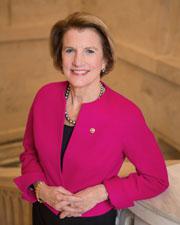
Shelley Moore Capito
RRepublicanWV · Senator
54
/ 100
Average
Attendance98
Avg: 97
Independence23
Avg: 23
Bipartisan Tone18
Avg: 14
Ethics Record100
Avg: 100
Transparency6
Avg: 47
Accountability Score — composite of attendance, independence, bipartisan tone, ethics record & transparency.
Methodology23
Bills Sponsored
1
Enacted into Law
2
Passed a Chamber
14
In Committee
Bills That Became Law
All Sponsored Bills
S5653In Committee
Bipartisan American Affordability and Jobs Act of 2026
S5243In Committee
A bill to provide for the automatic establishment of Trump accounts using information collected under the Enumeration at Birth Program of the Social Security Administration.
S5207In Committee
RCORP Authorization Act
The legislation would continue funding and support for a federal program that helps rural areas combat opioid addiction through treatment, prevention, and recovery services. Rural communities, which often lack access to addiction treatment facilities and resources, would benefit from sustained federal assistance to address the opioid crisis in their regions.
S4949Reported
Water Resources Development Act of 2026
The legislation would authorize federal funding and projects to improve water infrastructure across the country, including dams, levees, flood control systems, and water supply projects managed by the Army Corps of Engineers and other federal agencies. It would affect communities that depend on federal water projects, construction companies that build these systems, and taxpayers who fund them. The bill would also likely address environmental concerns related to water management and navigation on major rivers and waterways.
SRES750Introduced
A resolution recognizing "National Public Works Week" and the contributions of public works professionals.
This resolution officially designates a week to honor public works professionals—the engineers, construction workers, and maintenance crews who build and maintain roads, bridges, water systems, and other infrastructure that communities depend on daily. The resolution recognizes their contributions to public safety and quality of life without creating any new laws or funding programs. It passed the Senate unanimously as a symbolic gesture of appreciation for these workers.
S98Enacted
Rural Broadband Protection Act of 2025
Rural Broadband Protection Act of 2025 This act requires the Federal Communications Commission (FCC) to vet the qualifications of applicants for certain funding programs that support affordable broadband deployment in high-cost areas (e.g., rural communities). Specifically, the FCC must develop a vetting process for applicants seeking funding under high-cost universal service programs for the deployment of a broadband-capable network and the provision of supported services over the network. The FCC must require applicants to submit a proposal that contains sufficient detail and documentation for the FCC to ascertain that the applicant possesses the technical, financial, and operational capabilities related to the proposed deployment and has a reasonable business plan. The FCC must evaluate applications against reasonable and well-established standards and must consider each applicant’s history of compliance with the requirements of other government broadband funding programs. The FCC must establish this vetting process through a rulemaking proceeding. After the rule is finalized, funds may only be awarded to applicants that satisfy the standards established therein. Finally, the FCC must set financial penalties for applicants that default in some manner during the evaluation process before they are authorized to begin receiving support.
S4221In Committee
Ensuring Better Interest Treatment and Deductibility Act (EBITDA)
This bill would change how businesses calculate their taxable income by adjusting rules around interest deductions and earnings calculations, potentially allowing some companies to deduct more interest expenses on their taxes. The changes would affect how corporations and large businesses report their profits to the IRS, which could reduce the taxes they owe or increase the taxes some pay depending on their specific financial situation.
S4036In Committee
AADAPT Act
The AADAPT Act aims to improve health outcomes by making healthcare services and information more accessible to people with disabilities and other vulnerable populations. The bill likely focuses on removing barriers that prevent these groups from getting quality medical care, whether through better accommodations, clearer communication, or expanded access to treatment options. It has been sent to the Senate committee responsible for health policy for review and consideration.
S3472In Committee
National Strategy for School Security Act of 2025
National Strategy for School Security Act of 2025 This bill requires the Department of Homeland Security (DHS) to develop a national strategy to secure elementary and secondary schools from acts of terrorism. DHS must submit this strategy to Congress, annually update the strategy (if appropriate) through 2033, and provide annual briefings to Congress on those updates.
SRES537Introduced
A resolution honoring the service and sacrifice of United States Army Specialist Sarah Beckstrom and United States Air Force Staff Sergeant Andrew Wolfe, who were tragically shot in Washington, D.C., in a targeted assault against United States service members on November 26, 2025.
This resolution honors the service and sacrifice of U.S. Army Specialist Sarah Beckstrom and U.S. Air Force Staff Sergeant Andrew Wolfe as members of the West Virginia National Guard and extends sympathy, gratitude, and support for their families in the wake of the attack on November 26, 2025, in Washington, DC. The resolution also honors the bravery of the other National Guard members on the scene, expresses gratitude for the action of first responders and National Guard members, and condemns the attack.
S351Passed Senate
STEWARD Act of 2025
Strategies To Eliminate Waste and Accelerate Recycling Development Act of 2025 or the STEWARD Act of 2025 This bill establishes requirements to expand recycling and composting efforts, including by creating (1) a pilot grant program, and (2) data collection and reporting requirements. The bill directs the Environmental Protection Agency (EPA) to establish a pilot program that awards grants for improving recycling accessibility in communities, particularly in underserved communities. States, local governments, Indian tribes, and public-private partnerships may apply for those grants. The bill also directs the EPA to collect data related to composting and recycling infrastructure from states, local governments, and Indian tribes. Within three years and every four years thereafter, the EPA must prepare an inventory of certain recycling facilities in the United States. The EPA must also develop a metric for determining the proportion of recyclable materials in commercial and municipal waste streams that are being diverted from a circular market. The bill allows the EPA to develop (1) a standardized estimated rate of recyclable materials that have been brought to recycling or composting facilities, and (2) an estimated national recycling rate. The EPA may use the rates and information collected to provide states, local government, and Indian tribes data and technical assistance, such as assistance to reduce their overall waste and to increase their recycling and composting rates. The bill establishes a variety of reporting requirements for the EPA and directs the Government Accountability Office to publish a report on certain federal agency activities related to recycling.
SJRES96In Committee
A joint resolution requesting the Secretary of the Interior to authorize unique and one-time arrangements for displays on the National Mall and the Washington Monument during the period beginning on December 31, 2025, and ending on January 5, 2026.
Congress is asking the Secretary of the Interior to allow special temporary displays and arrangements on the National Mall and around the Washington Monument during New Year's week 2025-2026, likely for holiday celebrations or commemorative events. This one-time permission would let organizers set up exhibits or decorations in these normally restricted federal spaces for about a week. The request has been sent to the Senate's energy and natural resources committee for review.
S3209In Committee
NOPAIN for Veterans Act
The proposal would expand access to pain management treatments for veterans, including options like medical cannabis and other alternative therapies that aren't currently available through the VA system. Veterans dealing with chronic pain from service-related injuries would have more choices beyond traditional medications, potentially reducing their reliance on opioids. The measure aims to give veterans and their doctors greater flexibility in treating pain while staying within federal regulations.
S2587Introduced
Departments of Labor, Health and Human Services, and Education, and Related Agencies Appropriations Act, 2026
Departments of Labor, Health and Human Services, and Education, and Related Agencies Appropriations Act, 2026 This bill provides FY2026 appropriations to the Departments of Labor, Health and Human Services, and Education; and related agencies. The bill provides appropriations to the Department of Labor for the Employment and Training Administration, Veterans' Employment and Training, the Employee Benefits Security Administration, the Pension Benefit Guaranty Corporation, the Wage and Hour Division, the Office of Labor-Management Standards, the Office of Federal Contract Compliance Programs, the Office of Workers' Compensation Programs, the Occupational Safety and Health Administration, the Mine Safety and Health Administration, the Bureau of Labor Statistics, the Office of Disability Employment Policy, and Departmental Management. The bill provides appropriations to the Department of Health and Human Services for the Health Resources and Services Administration, the Centers for Disease Control and Prevention, the National Institutes of Health, the Substance Abuse and Mental Health Services Administration, the Agency for Healthcare Research and Quality, the Centers for Medicare and Medicaid Services, the Administration for Children and Families, the Administration for Community Living, the Administration for Strategic Preparedness and Response, and the Office of the Secretary. The bill provides appropriations to the Department of Education for Education for the Disadvantaged; Impact Aid; School Improvement Programs; Indian Education; Innovation and Improvement; Safe Schools and Citizenship Education; English Language Acquisition; Special Education; Rehabilitation Services; Special Institutions for Persons with Disabilities; Career, Technical, and Adult Education; Student Financial Assistance; Student Aid Administration; Higher Education; Howard University; the College Housing and Academic Facilities Loans Program; the Historically Black College and University Capital Financing Program Account; the Institute of Education Sciences; and Departmental Management. The bill also provides appropriations to several related agencies, including the Committee for Purchase From People Who Are Blind or Severely Disabled, the Corporation for National and Community Service, the Federal Mediation and Conciliation Service, the Federal Mine Safety and Health Review Commission, the Institute of Museum and Library Services, the Medicaid and CHIP Payment and Access Commission, the Medicare Payment Advisory Commission, the National Council on Disability, the National Labor Relations Board, the National Mediation Board, the Occupational Safety and Health Review Commission, the Railroad Retirement Board, and the Social Security Administration. The bill also sets forth requirements and restrictions for using funds provided by this and other appropriations acts.
SRES294Introduced
A resolution designating the week of May 18 through May 24, 2025, as "National Public Works Week".
This resolution designates the week of May 18-24, 2025, as National Public Works Week.
SJRES55Passed Senate
A joint resolution providing for congressional disapproval under chapter 8 of title 5, United States Code, of the rule submitted by the National Highway Traffic Safety Administration relating to "Federal Motor Vehicle Safety Standards; Fuel System Integrity of Hydrogen Vehicles; Compressed Hydrogen Storage System Integrity; Incorporation by Reference".
This joint resolution nullifies the final rule issued by the National Highway Traffic Safety Administration titled Federal Motor Vehicle Safety Standards; Fuel System Integrity of Hydrogen Vehicles; Compressed Hydrogen Storage System Integrity; Incorporation by Reference and published on January 17, 2025. This final rule establishes two new Federal Motor Vehicle Safety Standards (FMVSS) specifying performance requirements for all motor vehicles that use hydrogen as a fuel source. FMVSS No. 307 sets requirements for the fuel system in hydrogen vehicles during normal vehicle operations and after crashes, as well as performance requirements for the hydrogen fuel system. FMVSS No. 308 regulates the compressed hydrogen storage system (CHSS) and includes performance requirements intended to ensure the CHSS is unlikely to leak or burst during use. It also specifies performance requirements for different CHSS closure devices (i.e., the check valves, shut-off valves, and thermally activated pressure relief devices that control the flow of hydrogen into or out of a CHSS). The final rule is based on Global Technical Regulation (GTR) No. 13, Hydrogen and Fuel Cell Vehicles. As background, the United States is a contracting party to a 1998 agreement that is administered by the UN Economic Commission for Europe's World Forum for the Harmonization of Vehicle Regulations and concerns the establishment of GTRs.
S1843In Committee
Second Chance Reauthorization Act of 2025
Second Chance Reauthorization Act of 2025 This bill reauthorizes through FY2030 various federal grants for state, local, and tribal governments, nonprofit organizations, and service providers to support individuals who reenter the community following a period of incarceration. Specifically, the bill reauthorizes the following: grants for adult and juvenile offender reentry demonstration projects; grants for family-based substance abuse treatment programs; grants to evaluate and improve educational methods at prisons, jails, and juvenile facilities; grants for career training education; the offender reentry substance abuse and criminal justice collaboration program; and grants to nonprofit organizations for community-based mentoring and transitional services.
S1702In Committee
Access to Prescription Digital Therapeutics Act of 2025
Access to Prescription Digital Therapeutics Act of 2025 This bill provides for Medicare and Medicaid coverage of prescription digital therapeutics (i.e., software applications that are used to prevent, manage, or treat medical conditions). The Centers for Medicare & Medicaid Services must establish a Medicare payment methodology for payments to manufacturers that takes into account certain factors (e.g., ongoing use); manufacturers must report specified information about private payors, subject to civil penalties.
SJRES45In Committee
A joint resolution providing for congressional disapproval under chapter 8 of title 5, United States Code, of the rule submitted by the Environmental Protection Agency relating to "California State Motor Vehicle and Engine Pollution Control Standards; Advanced Clean Cars II; Waiver of Preemption; Notice of Decision".
This joint resolution nullifies the Environmental Protection Agency notice titled California State Motor Vehicle and Engine Pollution Control Standards; Advanced Clean Cars II; Waiver of Preemption; Notice of Decision (90 Fed. Reg. 642) and published on January 6, 2025. Among other elements, the notice grants the California Air Resources Board request for a waiver for its Advanced Clean Cars II (ACC II) regulations. (Under the Clean Air Act, California may seek waivers of the preemption prohibiting states from enacting certain emission standards.)
S925In Committee
Credit for Caring Act of 2025
The proposal would allow workers to claim a tax credit for expenses they pay out of pocket to care for family members or dependents, such as costs for adult day care, nursing services, or in-home assistance. This tax break would help offset the financial burden on employees who balance work with caregiving responsibilities, potentially making it easier for people to afford necessary care while staying employed. The credit would apply to various types of caregiving situations, from elderly parents to disabled relatives.
SRES59In Committee
An original resolution authorizing expenditures by the Committee on Environment and Public Works.
The Senate Committee on Environment and Public Works is requesting approval to spend money on its operations and staff for the upcoming period. This resolution sets a budget for the committee's work on environmental protection, infrastructure, and public works projects. The proposal is currently under review by the Rules and Administration Committee, which oversees how Senate committees manage their resources.
S347Reported
Brownfields Reauthorization Act of 2025
Brownfields Reauthorization Act of 2025 This bill extends through FY2030 and modifies the Brownfields Program under the Comprehensive Environmental Response, Compensation, and Liability Act of 1980 (CERCLA). The Brownfields Program is administered by the Environmental Protection Agency (EPA) to provide grants and technical assistance to states, communities, tribes, and other entities to assess, clean up, and reuse contaminated properties. First, the bill expands eligibility for Brownfields Program resources to tax-exempt organizations defined under section 501(c)(6) of the Internal Revenue Code, which are organizations that are not organized for profit and do not provide net earnings to private shareholders or individuals (e.g., chambers of commerce). Additionally, the bill increases to $1 million the maximum grant amount that the EPA may provide for brownfield remediation per site, removes the 5% cap that a grant recipient may use for administrative costs, reduces the cost-sharing requirement for grant recipients from 20% to 10%, requires the EPA to waive cost-sharing requirements for grant recipients located in small communities or disadvantaged areas, authorizes the use of grants by a state or Indian tribe for the implementation of a response program, modifies the criteria used to rank grant applications by requiring the consideration of whether the applicant has a plan to engage a diverse set of local groups and organizations that represent the views of the local community directly affected by the proposed brownfield project, and requires the EPA to report on and update application ranking criteria and the approval process.
HR5788In Committee
Mine Safety Accountability and Improved Protection Act
Mine Safety Accountability and Improved Protection Act - Amends the Federal Mine Safety and Health Act of 1977 to establish an independent National Mine Safety Board, which shall conduct an independent investigation of any coal or other mine accident involving three or more deaths. Allows the closest relative of a miner who is entrapped or otherwise prevented by an accident to designate a representative for the miner to participate in a mine inspection. Requires mine inspections to be conducted during various shifts and days of the week when miners are normally present. Prohibits an attorney from representing both a mine operator and miner during an inspection, investigation, or litigation, unless such miner willfully waives all possible conflicts of interest. Requires the Secretary of Labor to issue regulations establishing certain criteria for determining whether to place a mine on pattern (of violation) status. Requires a numerical Safe Performance Index to be determined for each mine. Prescribes remediation requirements for mine operators having a pattern of recurring accidents, citations, and withdrawal orders. Establishes in the Treasury the Mines in Pattern Status Inspection Fund for deposit of fees collected from mines in pattern status for the costs of additional inspections. Requires the Secretary to: (1) revoke the approval of mine operator plans or programs based on certain criteria; and (2) provide the operator with a detailed explanation of the reasons approval was revoked. Prescribes a process for the Secretary's approval of proposed operator programs, plans, or plan revisions. Revises civil and criminal penalties and related administrative procedures. Grants an operator who has been issued a citation or order during an inspection the right to a review with a designated Conference Litigation Representative of the Secretary prior to the assessment of any penalty. Establishes a process for requesting a conference review. Revises certain miner protections against discrimination. Prohibits discriminating against a miner or other employee of a mine operator for refusing to perform duties out of a good-faith and reasonable belief that performing such duties would pose a safety or health hazard. Entitles a miner to full compensation by a mine operator at the regular rate of pay for the remainder of the current shift and the next eight hour shift for which the miner is idled because of a Secretary's withdrawal order. (Under current law, miners are entitled to full compensation only for the balance of their shift, and up to four hours of the next working shift if an order is not terminated beforehand.) Requires each underground coal mine operator to implement a communication program to ensure that each miner entering a mine is made aware, at the start of a shift, of current mine conditions. Prescribes additional requirements for the monitoring of coal dust in underground mines. Requires the Director of the National Institute for Occupational Safety and Health (NIOSH), acting through the Office of Mine Safety and Health Research, to issue recommendations to the Secretary regarding the use of atmospheric monitoring systems in the underground coal mining industry. Revises mine operator health and safety training program requirements. Increases from 8 to 9 the minimum number of hours of refresher training all miners must receive at least once every 12 months, including 1 hour of training on miners statutory rights and responsibilities. Requires the Secretary to order a mine operator to provide additional training to miners if a serious or fatal accident has occurred at a mine or it has experienced above-average accident and injury rates, citations, or withdrawal orders. Requires the Secretary to issue mandatory standards to establish certification requirements and procedures for persons authorized by a coal mine operator to perform duties or provide training under such Act. Establishes in the Treasury a Mine Safety and Health Certification Fund for deposit of operator fees to fund the certification program. Authorizes the Secretary to make grants to states to assist them in developing and implementing miner certification programs. Revises eligibility requirements for scholarships to eligible individuals enrolled at community colleges or other universities to increase the skilled workforce for both private sector coal mine operators and mine safety inspectors and other regulatory personnel for the Mine Safety and Health Administration. Repeals requirements for a minimum length of full-time employment in mining or mining-related activities. Directs the Secretary to require each mine inspector to receive a full week of training in addition to the training required before enactment of this Act.