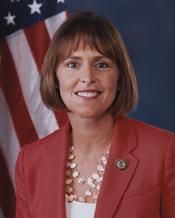
Kathy Castor
DDemocratFL-14 · Representative
63
/ 100
Average
Attendance98
Avg: 96
Independence3
Avg: 4
Bipartisan Tone32
Avg: 15
Ethics Record100
Avg: 99
Transparency78
Avg: 53
Accountability Score — composite of attendance, independence, bipartisan tone, ethics record & transparency.
Methodology20
Bills Sponsored
0
Enacted into Law
1
Passed a Chamber
19
In Committee
All Sponsored Bills
HR10540In Committee
21st Century FTC Act
HR10110In Committee
Housing Price Transparency Act
HR9843In Committee
Enhancing Electric Grid Resilience Act
The proposal would change how costs are divided among states and utilities when building new electric power transmission lines that cross state borders or are built in ocean waters. Currently, there are disputes over who should pay for these expensive infrastructure projects, and this bill would establish clearer rules for sharing those costs fairly. This affects electric utilities, state governments, and ultimately consumers who pay electricity bills.
HR9084In Committee
Department of Energy Nuclear Transparency Act
The Department of Energy would be required to publicly disclose more information about how it authorizes nuclear facilities, making the approval process more transparent to Congress and the public. This affects nuclear power plants, research reactors, and other nuclear operations that need DOE approval, as well as anyone interested in understanding how the government oversees nuclear safety and security decisions.
HR7305Passed House
Energy Threat Analysis Center Act of 2026
Energy Threat Analysis Center Act of 2026 This bill reauthorizes through FY2031 and expands the pilot Energy Sector Operational Support for Cyber Resilience Program of the Department of Energy (DOE). The program aims to protect energy infrastructure through collaboration between the federal government and the energy sector and enhancing DOE’s emergency response capabilities. Specifically, the bill expands the program objectives to include enhancing collaboration between the government and the energy sector to address threats to energy systems, advancing the collective understanding of national security risks and vulnerabilities associated with the energy sector that may be exploited by adversaries, and helping the energy sector increase its understanding of tactics of adversaries that present risks to the energy sector. The bill allows DOE to establish an Energy Threat Analysis Center at one or more physical locations for program activities. The bill also eliminates technical assistance provided under the program to small electric utilities. Under the bill, the decision to provide assistance or information under the program to a governmental or private entity is at the sole discretion of the Secretary of Energy and is unreviewable. The bill authorizes the Secretary to (1) enter into and perform contracts, grants, and other transactions with public agencies, private organizations, and persons to carry out the program; and (2) establish and utilize preapproved national security contracting mechanisms, model partnership agreements, and expedited review procedures for purposes of entering into such transactions. In addition, the bill exempts the program from certain public disclosure and other transparency requirements.
HR2986In Committee
Expediting Generator Interconnection Procedures Act of 2025
The bill would speed up the process for connecting new power generators—including solar, wind, and other energy sources—to the electrical grid by setting strict timelines for utility companies to review and approve interconnection requests. This would help renewable energy companies and other power producers get their facilities online faster, potentially lowering costs and reducing delays that can take years under current procedures. Utility companies and energy developers would be the main groups affected by these new requirements.
HJRES197In Committee
Providing for congressional disapproval under chapter 8 of title 5, United States Code, of the rule submitted by the Centers for Medicare & Medicaid Services of the Department of Health and Human Services relating to "Patient Protection and Affordable Care Act, HHS Notice of Benefit and Payment Parameters for 2027; and Basic Health Program".
Congress would reject a new rule from Medicare and Medicaid that sets health insurance payment amounts and benefits for 2027 under the Affordable Care Act, preventing the rule from taking effect. This would affect millions of Americans who get health insurance through the ACA marketplace or state basic health programs, as well as insurance companies and healthcare providers who rely on these payment guidelines. The measure is currently being reviewed by the House Committee on Energy and Commerce.
HRES1337In Committee
Recognizing the contributions of academic medicine and observing Academic Medicine Week from June 8 through 12, 2026.
This resolution designates June 8-12, 2026 as Academic Medicine Week to recognize the work of doctors, researchers, and educators at teaching hospitals and medical schools across the country. The measure honors how academic medical centers train the next generation of physicians, conduct medical research, and provide patient care in their communities. No new laws or funding are created; this is primarily a symbolic recognition of the contributions these institutions make to American healthcare and medicine.
HR8923In Committee
At HOME Services Act
Medicare would test a two-year program allowing hospitals to provide observation care services to seniors in their homes instead of requiring them to come to the hospital. This would let doctors monitor patients' conditions remotely while they recover at home, potentially making care more convenient and comfortable for elderly Medicare patients. The program would help determine whether home-based observation services are safe and cost-effective compared to traditional hospital-based care.
HR8651In Committee
Advancing Safe Medications for Moms and Babies Act of 2026
The legislation would require the Food and Drug Administration to improve how it evaluates and labels medications that pregnant women and nursing mothers take, ensuring that doctors and patients have better information about safety risks for both mother and baby. It would also establish new research programs to fill gaps in knowledge about which drugs are safe during pregnancy and breastfeeding, since many medications have never been properly tested in these situations. The changes would affect pregnant women, new mothers, their healthcare providers, and pharmaceutical companies that develop and market these drugs.
HR6561In Committee
PREVENT HPV Cancers Act of 2025
The legislation would expand access to HPV vaccines by requiring insurance coverage without cost-sharing and increasing funding for vaccination programs in underserved communities. It aims to prevent certain cancers caused by human papillomavirus infection, particularly cervical cancer and other cancers in both men and women. The bill would affect patients, insurance companies, and public health programs working to increase vaccination rates across the country.
HR6178In Committee
Increasing Access to Lung Cancer Screening Act
Increasing Access to Lung Cancer Screening Act This bill provides for coverage without prior authorization requirements of annual lung cancer screenings under Medicaid, Medicare, and private health insurance for individuals for whom screenings are recommended under U.S. Preventive Services Task Force guidelines. It also expands Medicaid coverage of counseling and pharmacotherapy for cessation of tobacco use to all individuals, rather than only pregnant women. The Department of Health and Human Services must conduct outreach on the importance of lung cancer screenings and who should be screened, and the Government Accountability Office must report on the demographics of those diagnosed with lung cancer and recommend ways the federal government can improve screenings.
HR6080In Committee
CLEANER Act of 2025
The CLEANER Act would establish new environmental protection standards and regulations, likely focusing on reducing pollution and improving air or water quality across the United States. The bill would affect businesses that produce emissions or pollutants, as well as everyday Americans who benefit from cleaner air and water. The proposal is currently under review by the House Committee on Energy and Commerce to determine its specific requirements and potential impacts.
HR4786In Committee
Honest Elections and Campaign, No Gain Act
Honest Elections and Campaign, No Gain Act This bill establishes certain requirements for disbursing unused funds after a federal election. The bill also requires former candidates serving as registered lobbyists or foreign agents to comply with disbursement requirements. Specifically, the bill requires each authorized committee or leadership political action committee (PAC) of a candidate to disburse all unused funds within a specified time period beginning after an election or before the candidate registers as a lobbyist or foreign agent, unless the candidate files to run for office again before the disbursement period begins. A committee or PAC disbursing unspent funds shall first pay any obligations incurred. If funds are left over, the committee or PAC may only disburse the funds in one or more of the following ways: (1) returning funds to donors; (2) making contributions to nonprofit organizations; and (3) transferring funds without limitation to a national, state, or local committee of a political party. The bill generally prohibits disbursements to relatives of the candidate. A former candidate must, in order to register as a lobbyist or foreign agent, comply with the disbursement requirements outlined by this bill.
HR4785In Committee
Ethics in Energy Act of 2025
This bill would establish new ethics rules and oversight requirements for the energy industry, likely aiming to prevent conflicts of interest and ensure transparency in how energy companies operate and make decisions. It would probably affect energy companies, their executives, and potentially government officials who work with the energy sector. The specific requirements would depend on the bill's detailed provisions, which would be developed as it moves through the House Committee on Energy and Commerce.
HR4641In Committee
Keep Kids Covered Act
The proposal would extend health insurance coverage for children whose parents' jobs end or change, ensuring kids don't lose their health benefits during family transitions. It would allow children to stay on their parents' insurance plans for a longer period when coverage would otherwise be lost due to job loss, reduced work hours, or similar employment changes. This would primarily affect families with children and help prevent gaps in medical coverage during economically difficult times.
HRES531In Committee
Recognizing the contributions of academic medicine and observing Academic Medicine Week from June 23 through 27, 2025.
This resolution expresses support for the designation of Academic Medicine Week.
HR2703In Committee
Advancing GETs Act of 2025
The bill aims to advance geothermal energy technology and development in the United States, likely by providing funding, tax incentives, or regulatory support to make geothermal power more accessible and cost-effective. This would affect energy companies, utilities, and communities looking to develop geothermal resources as a renewable energy source. The measure has been sent to the House Committee on Energy and Commerce for review.
HR2673In Committee
Florida Coastal Protection Act
This bill would likely establish protections or regulations for Florida's coastal areas, possibly related to energy development, infrastructure, or environmental safeguards along the state's shorelines. The specific measures could affect energy companies, coastal property owners, and residents living in vulnerable areas, though the exact details would depend on the bill's provisions. It is currently under review by the House Committee on Natural Resources to determine whether it should move forward for a vote.
HR2414In Committee
To amend the Public Health Service Act to reauthorize a military and civilian partnership for trauma readiness grant program.
The federal government would continue funding a grant program that helps military and civilian hospitals work together to improve how they treat trauma patients and prepare for emergencies. This partnership allows military medical expertise and resources to be shared with civilian hospitals, strengthening trauma care capabilities across both systems. The program supports training, equipment, and coordination efforts that benefit patients in emergency situations at participating hospitals.