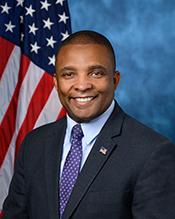
Donald G. Davis
DDemocratNC-1 · Representative
65
/ 100
Above Average
Attendance98
Avg: 96
Independence22
Avg: 4
Bipartisan Tone4
Avg: 15
Ethics Record100
Avg: 99
Transparency100
Avg: 53
Accountability Score — composite of attendance, independence, bipartisan tone, ethics record & transparency.
Methodology22
Bills Sponsored
0
Enacted into Law
1
Passed a Chamber
21
In Committee
All Sponsored Bills
HR10732In Committee
No Betting on Your Own Race Act
HR10085In Committee
Lifelong Learning Act
HR9668In Committee
STOP Senior Fraud Act
Banks and other financial institutions would be allowed to pause or block transactions they suspect might be exploiting elderly people or other vulnerable adults, such as those with cognitive impairments. The law would protect these institutions from legal liability when they take such actions in good faith to prevent financial abuse. This gives financial companies a tool to help prevent scams and fraud targeting seniors and vulnerable populations.
HRES1293In Committee
Recognizing and celebrating "National Salvation Army Week" on May 11 through May 17, 2026.
Congress would officially designate May 11-17, 2026 as National Salvation Army Week to recognize and celebrate the charitable organization's work serving communities across the country. The Salvation Army, known for operating food banks, homeless shelters, disaster relief programs, and other social services, would be honored during this week for helping millions of Americans in need. This is a ceremonial measure that does not create new laws or funding but acknowledges the organization's contributions to American communities.
HR7530In Committee
Assistance for Rural Water Systems Act of 2026
This bill would provide federal funding and technical support to help rural communities build, repair, and maintain their water systems. It aims to address challenges like aging pipes, contaminated water supplies, and lack of infrastructure in areas that often struggle to afford these improvements on their own. Rural residents, farmers, and small towns would be the primary beneficiaries of this assistance program.
HR6433In Committee
Rural Uplift and Revitalization Assistance Act
Rural Uplift and Revitalization Assistance Act This bill requires the Department of Agriculture (USDA) to provide technical assistance in geographically underserved and distressed areas for USDA rural development programs. Specifically, USDA must provide (directly or through cooperative agreements) technical assistance and strengthen local capacity to improve USDA rural development program access for local partners (e.g., local governments, businesses, and nonprofit organizations) in geographically underserved and distressed areas. Under the bill, a geographically underserved and distressed area means a rural area (1) in a socially vulnerable community; (2) in a persistent poverty county; (3) in an economically distressed area; or (4) that lacks adequate water services, sewer services, or decent housing in any region near the border between the United States and Mexico. On an annual basis, USDA must submit to Congress (and make publicly available) a report on how the provision of technical assistance under this bill has affected geographically underserved and distressed areas.
HR6385In Committee
Farm Transitions Act of 2025
This bill would help farmers transition their land and operations to new owners, likely through tax breaks, loans, or other financial support to make it easier for young or beginning farmers to buy existing farms. The legislation aims to address challenges in agricultural succession planning, where aging farmers struggle to pass their operations to the next generation or sell to new farmers. It would affect current farm owners, aspiring farmers, and agricultural lenders involved in farm purchases and transfers.
HR6295In Committee
The Working for Tips Tax Relief Act of 2025
HR5939In Committee
USMC Helicopter Support in Vietnam Congressional Gold Medal Act
This bill would award a Congressional Gold Medal to recognize the helicopter crews and support personnel who served in the U.S. Marine Corps during the Vietnam War, honoring their contributions and sacrifices. The medal is a prestigious award that acknowledges exceptional service and bravery, and this one specifically celebrates the pilots, mechanics, and other military personnel who operated and maintained helicopters in that conflict. Veterans and their families would benefit from this formal recognition of their service to the country.
HR5837In Committee
Restoring Electoral Stability to Enhance Trust (RESET) Act of 2025
The bill would make changes to how federal elections are run and administered, likely aimed at addressing concerns about election integrity and voter confidence in the electoral process. The specific reforms would be determined through the House Judiciary Committee's review, but based on the title's focus on "stability" and "trust," the bill probably proposes modifications to voting procedures, election security measures, or how election results are certified. These changes would affect voters, election officials, and states responsible for conducting federal elections.
HR2625Passed House
VERY Act of 2025
Veterans Employment Readiness Yield Act of 2025 or the VERY Act of 2025 This bill revises terminology used under the Veteran Readiness and Employment program, specifically by replacing the use of employment handicap with employment barrier .
HR3530In Committee
Flight Education Access Act
This bill would likely make flight training and aviation education more accessible and affordable for students by potentially reducing costs, expanding funding opportunities, or creating new educational pathways into the aviation industry. The measure would affect aspiring pilots, flight schools, and potentially the broader aviation workforce. The bill is currently under review by the House Committee on Education and Workforce to determine its specific provisions and feasibility.
HRES404In Committee
Recognizing and celebrating "National Salvation Army Week" on May 12 through May 18, 2025.
Congress would officially recognize the week of May 12-18, 2025 as "National Salvation Army Week" to honor and celebrate the charitable organization's work serving communities across the country. The Salvation Army, known for operating food banks, homeless shelters, disaster relief programs, and other social services, would receive this formal recognition from the federal government. This is a ceremonial measure that doesn't create new laws or funding, but rather designates a specific week for public acknowledgment of the organization's contributions to helping vulnerable populations.
HR2707In Committee
Protecting American Families and Servicemembers from Anthrax Act
The bill would protect military members and their families from anthrax exposure by establishing new safety standards and requirements for how the military handles anthrax in laboratories and other facilities. It aims to prevent accidental contamination and ensure that servicemembers receive proper medical care and compensation if they are exposed to this dangerous bacterium. The legislation would also require better monitoring and reporting of any anthrax-related incidents within the armed forces.
HR2109In Committee
Cybersecurity for Rural Water Systems Act
Cybersecurity for Rural Water Systems Act This bill amends the Department of Agriculture (USDA) Circuit Rider Program to include cybersecurity technical assistance for rural water systems serving fewer than 10,000 people. Under the program, USDA provides technical assistance to rural water systems that are experiencing day-to-day operational, financial, or managerial issues. Specifically, the program's cybersecurity technical assistance must (1) assess system efficacy in protecting against cyber threats; and (2) implement cybersecurity plans, procedures, and technologies to protect against cyber threats. The bill also reauthorizes the Circuit Rider Program through FY2030.
HR2542In Committee
Old Drugs, New Cures Act
Old Drugs, New Cures Act This bill exempts manufacturers of certain long-standing drugs from paying specialized rebates under the Medicaid Drug Rebate Program and the Medicare Prescription Drug Inflation Rebate Program. (Under these programs, drug manufacturers pay rebates to state Medicaid programs for certain drugs covered under Medicaid and to the Centers for Medicare & Medicaid Services for certain drugs covered under Medicare.) Specifically, manufacturers may request that a drug that would otherwise be considered a line extension under the Medicaid and Medicare rebate programs to instead be designated as a priority research drug. (A line extension refers to an oral dose of a new formulation of an existing drug, such as an extended release formulation, that would subject the drug to specialized rebates under the Medicaid and Medicare drug rebate programs.) Under the bill, a drug qualifies as a priority research drug if (1) at least 10 years have elapsed since the drug was first approved, (2) the manufacturer is investigating a new use of the drug that would address a significant unmet need, and (3) the new use addresses a disease or condition that has a high prevalence among beneficiaries of Medicaid, Medicare, or other federal health care programs.
HR1858In Committee
Flooding Prevention, Assessment, and Restoration Act
Flooding Prevention, Assessment, and Restoration Act This bill expands Department of Agriculture (USDA) watershed programs. Under the Emergency Watershed Protection (EWP) Program, the bill allows USDA to undertake certain measures that go beyond addressing the immediate impairment of the watershed. Specifically, USDA may undertake measures that increase the level of protection of the watershed if USDA determines that the restoration is (1) in the best interest of the long-term health and the protection of the watershed from repetitive impairments; and (2) cost-effective and appropriate, given risks to the environment. As background, the EWP Program assists sponsors, landowners, and operators in implementing emergency recovery measures for runoff retardation and erosion prevention to relieve imminent hazards to life and property created by natural disasters. In addition, for Watershed Rehabilitation Program projects, the bill increases the federal cost-share to 90%, from 65%, of the total rehabilitation costs. The Watershed Rehabilitation Program assists project sponsors in rehabilitating aging watershed dams that are reaching the end of their design life or no longer meet federal or state safety criteria or performance standards. The bill also exempts rehabilitation projects under the Watershed Rehabilitation Program from a requirement that specifies that each project must contain benefits directly related to agriculture, including rural communities, that account for at least 20% of the total benefits of the project. USDA must also submit a national agriculture flood vulnerability report to Congress that contains the results of a conservation effects assessment project that studies flood risk on agricultural lands.
HR1672In Committee
Maintaining Investments in New Innovation Act
Maintaining Investments in New Innovation Act This bill requires drug products with genetically targeted technology to have had market approval for at least 11 years in order to qualify for the Medicare Drug Price Negotiation Program. (The program requires the Centers for Medicare & Medicaid Services to negotiate the prices of certain prescription drugs under Medicare beginning in 2026. Among other requirements, drugs must have had market approval for at least 7 years (for drug products) or 11 years (for biologics) to qualify for negotiation.)
HR1377In Committee
Sarah Keys Evans Congressional Gold Medal Act
Sarah Keys Evans Congressional Gold Medal Act This bill provides for the award of a Congressional Gold Medal to Sarah Keys Evans in recognition of her achievements relating to the desegregation of passengers on interstate buses in the 1950s.
HR1363In Committee
Honor and Remember Flag Recognition Act
Honor and Remember Flag Recognition Act This bill designates the Honor and Remember Flag, created by Honor and Remember, Inc., as a national symbol to honor service members who died in the line of duty and specifies federal locations and dates for its display.
HR1298In Committee
Veterans Jobs Opportunity Act
This bill likely creates tax incentives or credits to encourage businesses to hire veterans returning from military service. The measure would probably offer companies financial benefits like tax breaks or deductions when they employ veterans, making it cheaper for employers to add military-trained workers to their payroll. Veterans and employers would be the main groups affected by these tax changes.
HR1060In Committee
Modern Authentication of Pharmaceuticals Act of 2025
Modern Authentication of Pharmaceuticals Act of 2025 This bill requires each dose of a pharmaceutical product that is a controlled substance and that is taken orally in solid form (i.e., pills) to include a physical chemical identifier. (Physical chemical identifiers are substances that possess a unique physical or chemical property, such as inks, pigments, flavors, and molecular taggants, that unequivocally identify and authenticate a drug or dosage.) Under the bill, physical chemical identifiers must be included in or on the product and must be machine readable. The bill applies to products manufactured beginning five years after the bill's enactment.