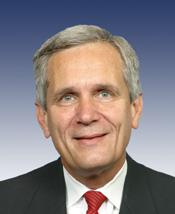
Lloyd Doggett
DDemocratTX-37 · Representative
55
/ 100
Average
Attendance97
Avg: 96
Independence2
Avg: 4
Bipartisan Tone30
Avg: 15
Ethics Record100
Avg: 99
Transparency28
Avg: 53
Accountability Score — composite of attendance, independence, bipartisan tone, ethics record & transparency.
Methodology20
Bills Sponsored
0
Enacted into Law
0
Passed a Chamber
20
In Committee
All Sponsored Bills
HR10548In Committee
To amend the African Growth and Opportunity Act to exclude from eligibility each sub-Saharan African country that does not effectively enforce its environmental laws and fulfill its international environmental obligations.
HR10258In Committee
PROOF Act
HRES1470In Committee
Expressing support for the designation of July 2026 as "Plastic Pollution Action Month".
Congress would officially recognize July 2026 as "Plastic Pollution Action Month" to raise awareness about the problems caused by plastic waste in the environment and oceans. The designation would encourage individuals, businesses, and organizations to take action during that month to reduce plastic use and pollution. This is a symbolic measure that doesn't create new laws or requirements, but aims to draw public attention to plastic waste issues.
HR9544In Committee
Save MEDICARE Act of 2026
The proposal would adjust how Medicare pays insurance companies that offer Medicare Advantage plans to seniors, aiming to ensure payments are appropriate and fair. The changes could affect millions of older Americans enrolled in these private insurance alternatives to traditional Medicare, as well as the insurance companies that provide them.
HR9672In Committee
Vaccine Injury Compensation Modernization Act of 2026
The proposal would update how the government compensates people who suffer serious injuries from vaccines by making changes to the existing Vaccine Injury Compensation Program. This affects people who believe they've been harmed by vaccines, vaccine manufacturers, and potentially taxpayers who fund the compensation system. The bill has been sent to two congressional committees for review and consideration.
HR8744In Committee
TREE Act
The proposal would ban the import of products made from illegally deforested wood or materials sourced from deforested land, and prevent companies from selling such items across state lines in the United States. This would affect businesses that import or sell goods like timber, beef, soy, and other commodities linked to forest destruction, potentially making these products more expensive or harder to find. The goal is to reduce demand for products that contribute to deforestation around the world by cutting off their access to the American market.
HR8100In Committee
Safe Staffing Saves Lives Act
This bill would require hospitals to maintain minimum staffing levels for nurses and other healthcare workers to ensure patient safety and quality care. The legislation would likely set standards for how many patients each nurse can care for and establish penalties for hospitals that fail to meet these requirements. The bill affects hospitals, healthcare workers, and patients who receive care in hospital settings.
HR7493In Committee
Stop Corporate Inversions Act of 2026
This bill would prevent large U.S. corporations from moving their headquarters to other countries to avoid paying American taxes, a practice known as a corporate inversion. The legislation would make it harder or more costly for companies to relocate their tax home abroad while keeping most of their operations in the United States, affecting multinational corporations and potentially increasing federal tax revenue.
HR7095In Committee
Ending Importation of Laundered Russian Oil Act
Ending Importation of Laundered Russian Oil Act This bill prohibits the importation of energy products that were produced at any refinery that uses crude oil originating in Russia. Current law prohibits the importation of Russian products that are classified under Chapter 27 of the Harmonized Tariff Schedule of the United States (which includes mineral fuels, mineral oils and products of their distillation, bituminous substances, and mineral waxes) unless the President terminates the prohibition after meeting certain requirements. The bill extends this prohibition and the termination provisions to products that were produced at any refinery that uses crude oil originating in Russia. Under the termination provisions, the President may terminate this prohibition, subject to congressional disapproval, if the President certifies that Russia (1) has reached an agreement with Ukraine to withdraw Russian forces and cease military hostilities in Ukraine, (2) poses no immediate military threat of aggression to any North Atlantic Treaty Organization member, and (3) recognizes the right of the Ukrainian people to independently and freely choose their own government.
HR7094In Committee
No Aid for Russian Energy Act
This bill would prohibit the U.S. government from providing financial assistance or aid to Russia's energy sector, likely in response to Russian military actions or geopolitical tensions. The measure would affect American foreign aid programs and any government funding that might support Russian oil, gas, or other energy industries. The bill is currently under review by congressional committees to determine which provisions fall under their respective areas of responsibility.
HR4077In Committee
GUARD Veterans’ Health Care Act
The legislation would expand health care benefits and services for members of the National Guard and Reserve forces, ensuring they have better access to medical care both during and after their service. It aims to address gaps in current coverage that these part-time military personnel often face compared to active-duty service members, potentially including mental health services, preventive care, and treatment for service-related injuries. The bill would affect hundreds of thousands of Guard and Reserve members across the country who juggle civilian jobs with military duties.
HR4559In Committee
Prompt and Fair Pay Act
The bill would require health insurance companies and healthcare providers to process and pay medical claims more quickly and fairly, likely setting deadlines for claim decisions and penalties for unreasonable delays. This would affect patients who submit insurance claims, healthcare workers who process them, and insurance companies that handle them. The goal is to ensure people get reimbursed faster when they receive medical care.
HR3140In Committee
Stop Subsidizing Multimillion Dollar Corporate Bonuses Act
The proposal would limit tax deductions that large corporations can claim for executive bonuses and compensation packages worth over $1 million per employee. Companies would no longer be able to write off these high-level pay packages as business expenses, effectively making it more expensive for them to award multimillion-dollar bonuses. This change would primarily affect large corporations and their highest-paid executives while potentially increasing federal tax revenue.
HRES127In Committee
Of inquiry requesting the President and directing the Secretary of the Treasury to transmit, respectively, certain documents to the House of Representatives relating to the Department of Government Efficiency's access to the Treasury payment systems and confidential taxpayer information.
This resolution requests that the President provide (and directs the Department of the Treasury to provide) to the House of Representatives all communication related to access to or use of the Treasury payment system by the Department of Government Efficiency (DOGE), Elon Musk, or any member of his team; access to or use of confidential tax returns or tax return information by DOGE, Elon Musk, or a member of his team; and any screenshots taken of the data or records in the Treasury payment system by DOGE, Elon Musk, or a member of his team.
HR2045In Committee
Medicare Dental, Vision, and Hearing Benefit Act of 2025
Medicare Dental, Vision, and Hearing Benefit Act of 2025 This bill provides for Medicare coverage of dental, vision, and hearing care. Coverage includes (1) routine dental cleanings and exams, basic and major dental services, emergency dental care, and dentures; (2) routine eye exams, eyeglasses, and contact lenses; and (3) routine hearing exams, hearing aids, and exams for hearing aids. With respect to such care, the bill establishes special payment rules, limitations, and coinsurance requirements.
HR1918In Committee
Farewell to Foam Act of 2025
This bill would ban or restrict the use of foam products—like foam cups, food containers, and packaging materials—that are difficult to recycle and harmful to the environment. The restrictions would affect businesses that manufacture, import, or sell these foam items, as well as restaurants and retailers that currently use them for serving food and drinks. The goal is to reduce plastic waste in landfills and oceans by pushing companies and consumers toward more environmentally friendly alternatives.
HR995In Committee
No Tax Breaks for Outsourcing Act
This bill would eliminate tax deductions and credits for companies that move jobs and production overseas, making it more expensive for businesses to outsource work to other countries. The goal is to discourage American companies from relocating operations abroad by removing financial incentives that currently make outsourcing cheaper. The legislation would affect large corporations that export jobs or manufacturing, potentially keeping more employment and business activity within the United States.
HR930In Committee
Stop the Wait Act of 2025
Stop the Wait Act of 2025 This bill phases out the initial waiting period for Social Security Disability Insurance (SSDI) benefits and eliminates the waiting period for certain disabled individuals to become eligible for Medicare. Under current law, individuals generally must wait five months after the onset of disability to begin receiving SSDI benefits. The bill would gradually reduce this waiting period before eliminating it entirely in the year 2030. Further, the bill would eliminate the 24-month waiting period for certain disabled workers and other individuals to become eligible for Medicare. Under current law, individuals under the age of 65 may generally enroll in Medicare after they have been eligible for SSDI or Social Security child’s, widow’s, or widower’s benefits by reason of disability for 24 months. The bill would eliminate this waiting period for individuals for whom the annual cost of certain medical insurance would exceed a specified percentage of their household income (i.e., those who cannot afford minimum essential coverage). Medicare eligibility for these individuals must be available retroactively to the first month that an individual qualified for SSDI or Social Security child’s, widow’s, or widower’s benefits by reason of disability.
HR610In Committee
Close the Medigap Act of 2025
Close the Medigap Act of 2025 This bill (1) expands guaranteed issue rights with respect to Medigap policies (Medicare supplemental health insurance policies), (2) eliminates certain limitations on Medigap policies for newly eligible Medicare beneficiaries, and (3) modifies other provisions related to Medigap policies. (Guaranteed issue rights require that a policy be offered to any eligible applicant without regard to health status.)
HR609In Committee
Assuring Medicare’s Promise Act of 2025
Assuring Medicare’s Promise Act of 2025 This bill increases the net investment tax for certain taxpayers and appropriates revenue from the net investment tax to the Federal Hospital Insurance Trust Fund (which finances Medicare Part A). The bill also requires the Internal Revenue Service (IRS) to issue additional guidance on the net investment tax. The bill requires individuals with a modified adjusted gross income (MAGI) exceeding $400,000 ($500,000 for joint filers and $250,000 for married individuals filing separately), estates, and trusts to pay a tax of 3.8% on the greater of their specified net income or net investment income, subject to limitations. (Under current law, individuals with a MAGI exceeding $200,000 [or $250,000 for joint filers], estates, and trusts pay a 3.8% tax on net investment income.) The bill defines specified net income by expanding the definition of net investment income to include gross income from any trade or business (unless subject to employment taxes), including interest, dividends, annuities, royalties, and rents; include net gain from the disposition of business property; eliminate the exclusion of income from the investment of working capital; and eliminate the exception related to certain active partnership or S corporation interests. The bill also expands the net investment tax definition of a trade or business , disallows net operating losses in calculating net investment income, includes certain foreign-sourced income in net investment income, and requires the IRS to issue guidance on the treatment of certain corporate distributions for purposes of the net investment tax.