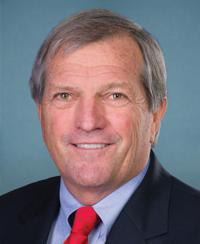
Mark DeSaulnier
DDemocratCA-10 · Representative
61
/ 100
Average
Attendance98
Avg: 96
Independence2
Avg: 4
Bipartisan Tone7
Avg: 15
Ethics Record100
Avg: 99
Transparency97
Avg: 53
Accountability Score — composite of attendance, independence, bipartisan tone, ethics record & transparency.
Methodology25
Bills Sponsored
0
Enacted into Law
0
Passed a Chamber
25
In Committee
All Sponsored Bills
HR10775In Committee
Bots Research Act
HR10641In Committee
Employee and Retiree Access to Justice Act
HR10662In Committee
Better Transit for Riders Act
HR10546In Committee
Confronting and Correcting Historical Injustices Act
HR10331In Committee
Patient Navigation Assistance Act
Patient Navigation Assistance Act This bill requires state Medicaid programs to cover patient navigator services for enrollees. Patient navigator services are services that help link an individual with medical, social, logistical, financial, or other programs or services to address the individual's needs.
HR10332In Committee
Sunset Section 230 Act
HR10228In Committee
Strengthening Protections for Children with Food Allergies Act
HR10203In Committee
Improving Access to Higher Education Act
HR10087In Committee
Cancer Care Planning and Communications Act
Cancer Care Planning and Communications Act This bill provides for Medicare coverage and payment of cancer care planning and coordination services for individuals who are diagnosed with or treated for cancer, including the development of treatment plans, follow-up care, and any necessary revisions.
HR10019In Committee
Incentivizing Value Capture for Greener Transportation Act
The legislation would create financial incentives for communities and transportation agencies to capture and reinvest the increased property values that result from new public transit projects, directing those gains toward funding additional green transportation improvements. This approach aims to help pay for buses, trains, and other low-emission transit systems by tapping into the economic benefits that neighborhoods experience when transit access improves. The bill would primarily affect local governments, transit agencies, and property owners in areas receiving new transportation infrastructure.
HJRES208In Committee
Proposing an amendment to the Constitution of the United States to require the United States and the States to jointly ensure a high-quality education to all persons within the United States.
This proposed constitutional amendment would require the federal government and individual states to work together to guarantee that every person in the United States receives a high-quality education. The change would make education a constitutional right rather than leaving it primarily to state control, potentially giving the federal government more authority to set education standards and funding levels. Students, teachers, school districts, and state governments would all be affected by this shift in how education is guaranteed and funded across the country.
HR9947In Committee
Offshore Oil and Gas Worker Whistleblower Protection Act
Workers on offshore oil and gas platforms would gain legal protections if they report safety violations, environmental hazards, or other illegal activities to government agencies or their employers without fear of being fired, demoted, or punished. The law would allow these workers to sue their companies if they face retaliation for speaking up about dangerous conditions, and would require companies to inform employees of their whistleblower rights. This protection aims to encourage workers to report problems that could prevent accidents and protect both worker safety and the environment.
HR9737In Committee
Consumer Health Claim Assistance Act
The proposal would create a new program to help workers better understand and access the health insurance and other benefits their employers offer through employee benefit plans. This program would provide assistance to workers who struggle to navigate complex benefit options or need help filing claims and resolving disputes with their insurance plans. The change would affect millions of American workers and their families who rely on employer-sponsored health coverage.
HR9045In Committee
Early Childhood Mental Health Support Act
The federal government would review Head Start programs—which provide early education and services to low-income preschoolers—to identify what works best and then put those successful approaches into practice across the country. This would affect millions of young children in disadvantaged families and the teachers and staff who run these programs. The goal is to improve the quality and effectiveness of early childhood education for the students who need it most.
HR8607In Committee
Equitable Transit Oriented Development Support Act
The bill would change how federal transportation funding reaches community development financial institutions, which are specialized lenders that invest in underserved neighborhoods and small businesses. By modifying the transportation finance program, it aims to make it easier for these institutions to help fund local transportation projects in low-income communities. This would affect transportation planners, community lenders, and residents in areas that currently struggle to access federal infrastructure money.
HR8608In Committee
Federal Law Enforcement and Public Protection Act
The proposal would strengthen rules around how federal law enforcement officers store, handle, and secure their service weapons to prevent theft, loss, or unauthorized use. It aims to improve safety protocols for FBI agents, DEA officers, and other federal law enforcement personnel who carry firearms as part of their jobs. The changes would apply to federal agencies and their officers across the country.
HR8465In Committee
Funding Early Childhood is the Right IDEA Act
The legislation would increase federal funding and support for early childhood education and care programs, helping states and communities expand access to quality preschool and childcare services for low- and moderate-income families. This would affect working parents who struggle to afford childcare, young children who would benefit from early learning programs, and childcare providers and educators who would receive additional resources. The bill aims to make early education more affordable and available while supporting the workforce of teachers and caregivers in this field.
HR8073In Committee
Protection and Advocacy for Student Success Act
Protection and Advocacy for Student Success Act This bill directs the Department of Education to award grants for protection and advocacy systems to protect and advocate the rights of students with disabilities.
HR7590In Committee
Protecting Student Athletes from Concussions Act
This bill would require schools to establish policies and training programs to help prevent, identify, and manage concussions in student athletes. It would likely set standards for when injured athletes must sit out of play, require coaches and athletic staff to receive concussion training, and ensure parents are informed when their child suffers a head injury. The goal is to protect young athletes' health by reducing the risk of serious brain injuries from sports.
HR6923In Committee
Jobs for a Carbon Free Transportation System Act
This bill would create jobs and provide training programs focused on building and maintaining zero-emission vehicles and transportation infrastructure, such as electric buses, charging stations, and rail systems. It aims to help workers transition into clean transportation jobs through education and workforce development initiatives, while also supporting the shift away from fossil fuel-based transportation. The legislation would affect workers in manufacturing and transportation sectors, environmental companies, and communities looking to develop cleaner public transit options.
HR6849In Committee
To designate the facility of the United States Postal Service located at 2121 Meridian Park Boulevard in Concord, California, as the "Carl Jefferson Post Office Building".
This bill designates the facility of the United States Postal Service located at 2121 Meridian Park Boulevard in Concord, California, as the "Carl Jefferson Post Office Building".
HR5731In Committee
School Food Modernization Act
The bill would update federal rules for school meal programs to modernize nutrition standards, food sourcing, and meal preparation practices. It likely aims to improve the quality of breakfasts and lunches served to students while potentially supporting American farmers and food producers. The changes would affect school cafeterias, food service workers, students who eat school meals, and agricultural suppliers across the country.
HR5711In Committee
Metropolitan Planning Enhancement Act
The legislation would strengthen how cities and regions plan and coordinate transportation projects by requiring better communication between local governments, transit agencies, and federal transportation officials. It aims to make the planning process more efficient and ensure that roads, buses, trains, and other transportation systems work together better to serve commuters and businesses. The changes would primarily affect city planners, transportation departments, and communities that rely on public transit.
HR4918In Committee
Advancing Gun Safety Technology Act
Advancing Gun Safety Technology Act This bill authorizes the National Institute of Justice to establish a pilot program to make grants to small business concerns for the development of gun safety technology.
HR4882In Committee
Gun Safety Board and Research Act
The proposal would establish a federal board to study gun violence as a public health issue and fund research into its causes and prevention methods, similar to how the government studies other health threats. This would allow scientists and public health experts to conduct studies on gun injuries and deaths that have been limited in recent years, potentially informing policy decisions. The research would affect public health officials, medical professionals, and policymakers working on violence prevention strategies.