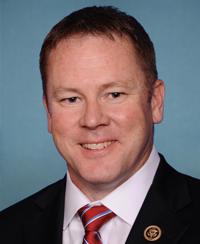
Warren Davidson
RRepublicanOH-8 · Representative
59
/ 100
Average
Attendance98
Avg: 96
Independence11
Avg: 4
Bipartisan Tone23
Avg: 15
Ethics Record100
Avg: 99
Transparency53
Avg: 53
Accountability Score — composite of attendance, independence, bipartisan tone, ethics record & transparency.
Methodology19
Bills Sponsored
0
Enacted into Law
1
Passed a Chamber
16
In Committee
All Sponsored Bills
HR10491In Committee
CHARGE Act
HR7866In Committee
American Lending Fairness Act of 2026
Without specific subjects listed, this bill likely addresses lending practices and fairness in the financial system, possibly by regulating how banks and lenders treat borrowers or by addressing discrimination in loan approval processes. The bill would probably affect consumers seeking loans, banks and lending institutions, and potentially small business owners who rely on credit. The House Financial Services Committee will review the proposal to determine whether it should move forward for a vote.
HR10309In Committee
HOMEFRONT Act of 2026
HR9900In Committee
Privately Insured Credit Unions Conversion Modernization Act
The legislation would update rules that allow privately insured credit unions to convert to federal charters, making the process more flexible and modern for these financial institutions. Credit unions that switch to federal oversight would gain access to updated regulations and potentially streamlined procedures. This change primarily affects credit union members and the institutions themselves, which serve millions of Americans as alternatives to traditional banks.
HR425Reported
Repealing Big Brother Overreach Act
Repealing Big Brother Overreach Act This bill repeals the Corporate Transparency Act. The act requires existing companies and newly created companies to report beneficial ownership information to the Department of the Treasury’s Financial Crimes Enforcement Network for purposes of addressing the financing of terrorism and money laundering.
HR8962In Committee
PERFECT Act of 2026
I don't have enough information to write an accurate summary. The bill title "PERFECT Act of 2026" and its referral to the House Committee on Armed Services suggest it relates to military or defense matters, but without the actual bill text or specific subjects listed, I cannot determine what concrete actions it would take or who it would affect. To provide you with a reliable summary, I would need access to the bill's detailed provisions.
HR6624In Committee
Biological Intellectual Property Protection Act of 2025
This bill would establish protections for biological materials and genetic information developed by American researchers and companies, likely preventing other countries from using or profiting from U.S. biological innovations without permission. The legislation aims to strengthen international agreements and enforcement mechanisms to ensure American scientists and biotech firms maintain control over their discoveries in areas like medicine, agriculture, and biotechnology. It affects researchers, pharmaceutical companies, agricultural businesses, and the U.S. government's ability to negotiate trade deals involving biological resources.
HR7688Reported
DPA Modernization Act of 2026
The DPA Modernization Act updates the Defense Production Act, a law that allows the federal government to direct private companies to prioritize producing critical goods during national emergencies like wars or major disasters. The bill likely streamlines how the government can request increased production of essential items such as medical supplies, semiconductors, or other strategic materials, and may clarify which industries and products qualify for these emergency powers. This affects manufacturers, supply chain companies, and government agencies that coordinate emergency response efforts.
HR7901In Committee
Government Surveillance Reform Act of 2026
This bill would make changes to how the federal government conducts surveillance of foreign intelligence targets, likely addressing rules about when and how agencies like the FBI and NSA can monitor communications. The reforms would affect intelligence agencies, law enforcement, and potentially everyday Americans whose communications might be caught up in foreign surveillance operations. The specific changes are not yet detailed, but the bill has been sent to the Judiciary and Intelligence committees for review.
HR4645In Committee
NARCO Act of 2025
The legislation would strengthen U.S. efforts to combat international drug trafficking and narcotics production, likely through increased coordination with foreign governments, enhanced law enforcement tools, and targeted sanctions against drug trafficking organizations. It would affect federal agencies involved in drug enforcement, international partners working on counter-narcotics operations, and potentially communities impacted by drug trafficking. The bill is currently under review by the House Foreign Affairs Committee.
HR2706In Committee
Aid Accountability Act of 2025
HJRES14In Committee
Proposing an amendment to the Constitution of the United States to repeal the sixteenth article of amendment.
This joint resolution proposes a constitutional amendment repealing the Sixteenth Amendment to the Constitution. The Sixteenth Amendment to the Constitution, ratified in 1913, specifies that Congress may collect federal income taxes.
HR1915In Committee
Stop the Cartels Act
Stop the Cartels Act This bill addresses various issues relating to immigration, law enforcement cooperation with Mexico, and drug cartels. The bill bars federal financial assistance for state or local jurisdictions that (1) restrict compliance with immigration detainers issued by the Department of Homeland Security, or (2) have any law or policy that violates immigration laws. Furthermore, under this bill, the detention of alien minors must be governed by specified sections of the Immigration and Nationality Act and not any judicial decree or settlement. (A 1997 settlement agreement imposes requirements related to the treatment of such minors, including limits on how long they may be detained under certain conditions.) The bill also makes various changes to asylum applications, including by (1) increasing the burden that an asylum applicant must meet to establish a credible fear of persecution, and (2) establishing refugee application and processing centers in Central America. In addition, certain Department of State and U.S. Agency for International Development assistance may not be made available to Mexico's government until the State Department certifies that Mexico has removed certain barriers to law enforcement cooperation and intelligence sharing between the United States and Mexico. The bill also establishes the foreign Special Transnational Criminal Organization designation and establishes penalties related to designated organizations, such as making it a crime to knowingly provide material support to such an organization. The State Department must designate specified organizations, including the Sinaloa Cartel, with the designation, and may designate other organizations that fit the bill's criteria.
HR1857In Committee
Capital Gains Inflation Relief Act of 2025
The proposal would allow people and businesses to adjust the original purchase price of investments upward based on inflation before calculating taxes owed when those investments are sold, potentially reducing the capital gains taxes they pay. This would primarily benefit wealthy investors and business owners who hold stocks, real estate, and other assets for long periods, since they could exclude inflation-driven gains from taxation. The change could reduce federal tax revenue but would lower tax bills for people selling appreciated assets.
HR386Passed House
Chinese Currency Accountability Act of 2025
Chinese Currency Accountability Act of 2025 This bill requires the United States to oppose, absent specified conditions, any increase in the weight of Chinese currency (i.e., the renminbi) in the basket of currencies (currently, a set of five currencies, each with different weightings) used to determine the value of Special Drawing Rights. Special Drawing Rights are international reserve assets created by the International Monetary Fund (IMF) to supplement member countries' official foreign exchange reserves. Specifically, the Department of the Treasury must instruct certain U.S. officials at the IMF to oppose any such increase unless Treasury has certified that China is in compliance with certain standards and international agreements, including that (1) China is in compliance with all general obligations of members of the IMF, (2) China has not been found to have manipulated its currency in the preceding 12 months, and (3) China adheres to the rules and principles of the Paris Club and the Organisation for Economic Co-operation and Development (OECD) Arrangement on Officially Supported Export Credits.
HR724In Committee
CBO Show Your Work Act
CBO Show Your Work Act This bill requires the Congressional Budget Office (CBO) to make available to Congress and the public each fiscal model, policy model, and data preparation routine that the CBO uses to estimate the costs and other fiscal, social, or economic effects of legislation. For each estimate of the costs and other fiscal effects of legislation, the CBO must also disclose, in a manner sufficient to permit replication by individuals not employed by the CBO, the data, programs, models, assumptions, and other details of the computations used to prepare the estimate. For data that may not be disclosed, the CBO must make available to Congress and the public a complete list of all data variables for the data; descriptive statistics for all data variables for the data, to the extent that the descriptive statistics do not violate the rule against disclosure; a reference to the statute requiring that the data not be disclosed; and contact information for the individual or entity who has unrestricted access to the data.
HRES11In Committee
Fair Representation Amendment
Fair Representation Amendment This resolution directs specified House committees to conduct a comprehensive review of laws within their jurisdiction and to recommend changes to eliminate excessive executive branch discretion in the application of those laws. Thereafter, the Committee on Oversight and Government Reform must report legislation containing all such recommendations with the short title Article One Restoration Act . The requirement applies to the following House committees: Agriculture Armed Services Budget Education and Workforce Energy and Commerce Financial Services Foreign Affairs Judiciary Natural Resources Oversight and Government Reform Science, Space, and Technology Small Business Transportation and Infrastructure Veterans’ Affairs Ways and Means Permanent Select Committee on Intelligence
HR148In Committee
Keep Your Coins Act of 2025
Keep Your Coins Act of 2025 This bill prohibits federal agencies from restricting a person's use of convertible virtual currency for their own purposes or to conduct transactions through a self-hosted wallet.
HRES10In Committee
HEALTH Act
House Endeavor to Accelerate a Legislative Transformation of Healthcare Act or the HEALTH Act This resolution establishes the Committee on Health, a standing committee of the House of Representatives, and specifies the subjects within its jurisdiction. The Committee on Health is responsible for all legislation and other matters relating to biomedical research and development (including the Food and Drug Administration); health, health facilities, and health care supported by general revenues (except veterans’ hospitals, medical care, and treatment); and public health and quarantine (including the Centers for Disease Control and Prevention). The resolution also removes these topics from the jurisdiction of the Committee on Education and the Workforce and the Committee on Energy and Commerce.