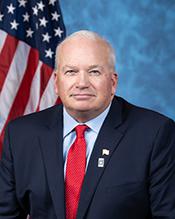
Scott Fitzgerald
RRepublicanWI-5 · Representative
46
/ 100
Below Average
Attendance99
Avg: 96
Independence3
Avg: 4
Bipartisan Tone0
Avg: 15
Ethics Record100
Avg: 99
Transparency7
Avg: 53
Accountability Score — composite of attendance, independence, bipartisan tone, ethics record & transparency.
Methodology25
Bills Sponsored
0
Enacted into Law
3
Passed a Chamber
21
In Committee
All Sponsored Bills
HR9385Reported
PROTECT USA Act of 2026
This bill would prevent U.S. companies considered vital to national interests—such as those in defense, energy, or technology—from having to follow foreign environmental and labor reporting rules, particularly the European Union's Corporate Sustainability Due Diligence Directive. The measure aims to protect American businesses from what supporters view as burdensome foreign regulations that could disadvantage them compared to competitors. Companies affected would include those in critical industries, though the bill would need to define which businesses qualify as "integral to national interests."
HR10390In Committee
Judicial Conduct and Disability Reform Act of 2026
HR6048Passed House
NDO Fairness Act of 2025
NDO Fairness Act This bill increases the requirements the government must meet to obtain a nondisclosure order (NDO) under the Stored Communications Act (SCA). The SCA generally prohibits providers of remote computing services or electronic communication services (providers) from disclosing stored electronic communications or records (e.g., emails) or information pertaining to customers or subscribers. However, the SCA authorizes the government seek a warrant, order, or subpoena to compel providers to disclose electronic communications or records or information pertaining to customers or subscribers during an investigation. Providers may notify customers and subscribers of the warrant, order, or subpoena unless the government obtains a court order—an NDO—that delays the notification. This bill raises the standard the government must meet to obtain (or extend) an NDO. The bill also requires the court, before issuing an NDO, to issue a written determination that the standard was met based on specific and articulable facts, and to review the underlying warrant, order, or subpoena. The bill requires NDOs to be narrowly tailored. It also limits their duration to 90 days for most investigations, though it permits a duration of up to one year for investigations pertaining to an offense involving child pornography or sexual exploitation of children. Finally, the bill requires the Department of Justice to report annually on data related to NDOs, including the number of customers or subscribers targeted; applications for orders; orders granted, extended, or denied; and orders targeting members of the media or conduct related to certain protected activities.
HR7495In Committee
To authorize the establishment of memorials to the Wisconsin infantry officers and enlisted men who fought in the Battle of Antietam and the Second Battle of Bull Run, and for other purposes.
This bill would authorize the creation of memorials to honor Wisconsin soldiers who fought and died in two major Civil War battles—Antietam and the Second Battle of Bull Run. The memorials would recognize the contributions and sacrifices of both officers and enlisted men from Wisconsin who participated in these historically significant battles. The bill has been referred to the House Committee on Natural Resources, which typically handles matters involving public lands where such memorials might be constructed.
HR9461In Committee
Working Families Home Construction Act of 2026
The bill would allow two major government-backed mortgage companies, Freddie Mac and Fannie Mae, to buy and bundle residential construction loans into securities that can be sold to investors. This change would make it easier for builders and developers to get financing for new home construction projects by expanding the types of loans these companies can purchase. The measure could increase the availability of credit for residential construction and potentially help address housing supply issues.
HR9460In Committee
Sustainable Homeownership Act
This bill would change rules about what types of mortgages Fannie Mae and Freddie Mac (the government-backed companies that buy and sell home loans) are allowed to own and manage. The changes would affect how these companies operate and could impact homebuyers and the mortgage market by shifting which loans these organizations can purchase from banks and lenders.
HR9459In Committee
Home Affordability Through Mortgage Simplification Act
This bill would update mortgage lending rules to make disclosure documents simpler and clearer for borrowers while giving lenders more flexibility in how they present information. It would change waiting periods before closing, allow slightly larger margins of error in interest rate calculations, and create safe zones where lenders won't face penalties for minor mistakes in disclosures. The changes would affect anyone getting a mortgage, as well as banks and lending companies that originate home loans.
HR9142In Committee
Prohibiting Adversarial Patents Act of 2026
The proposal would prevent people deemed a threat to national security from obtaining or enforcing patents in the United States, giving the government authority to block patent rights for individuals or entities that pose security risks. This would affect inventors, companies, and foreign nationals seeking patent protection in the U.S. by allowing security agencies to intervene in the patent process when national security concerns arise.
HR9143In Committee
Foreign Adversary Patent Disclosure Act
The bill would require companies and inventors applying for U.S. patents to disclose any financial connections, ownership stakes, or business relationships they have with China and other countries considered foreign adversaries. The Patent and Trademark Office would use this information to review applications and potentially flag concerns about sensitive technology being developed with foreign involvement. This affects patent applicants, tech companies, and researchers who want to protect their inventions in the United States.
HR9093In Committee
BRIDGE Act
The government would be required to study and report on how China's Belt and Road Initiative (a major infrastructure and investment program) might be used to weaken American influence around the world, and then develop a detailed plan for how the U.S. can respond to counter these efforts. This affects policymakers, diplomats, and international relations specialists who work on U.S. foreign policy and competition with China.
HR9092In Committee
Thwarting Regional Adversary Investments Now Act
The legislation would restrict U.S. investments in countries considered regional adversaries, likely requiring the government to block or limit American companies and investors from putting money into certain nations' economies. This could affect multinational corporations, investment firms, and pension funds that currently have financial interests in those countries. The bill aims to use economic pressure as a foreign policy tool to counter the influence of adversarial nations.
HR6260Passed House
Keeping Violent Offenders Off Our Streets Act of 2025
Keeping Violent Offenders Off Our Streets Act of 2025 This bill broadens the definition of the term business of insurance , for the purposes of federal crimes related to insurance fraud, to include the posting of monetary bail, criminal bail bonds, and federal immigration bail bonds. Under the bill, entities and organizations that pay cash bond or bail for defendants (e.g., charitable bail funds) are engaged in the business of insurance under federal law and subject to federal criminal provisions related to insurance fraud, as well as state licensing requirements and regulation by state insurance commissions.
HR5877In Committee
Combatting Money Laundering in Cyber Crime Act of 2025
Combatting Money Laundering in Cyber Crime Act of 2025 This bill expands the investigative authority of the U.S. Secret Service, extends reporting requirements related to public-private information sharing, and requires the Government Accountability Office (GAO) to evaluate existing requirements to combat money laundering and related crimes. Specifically, the bill authorizes the Secret Service to investigate money laundering and structured transactions (i.e., structuring currency transactions to evade currency reporting requirements). Additionally, the bill extends the requirement for the Financial Crimes Enforcement Network (FinCEN) to report on the efforts of the FinCEN Exchange. The FinCEN Exchange is a voluntary public-private information sharing partnership among law enforcement agencies, national security agencies, financial institutions, and FinCEN to combat money laundering and related crimes, including the financing of terrorism. The bill also extends the requirement for the U.S. executive director at the International Monetary Fund to support the increased use of the fund's administrative budget to help members prevent money laundering and the financing of terrorism. The requirement expires on December 20, 2025. Finally, the bill directs the GAO to report on implementation of provisions of the Anti-Money Laundering Act of 2020 that expanded information sharing with tribal authorities and expanded reporting requirements related to money laundering and terrorist financing. The GAO must focus on evaluating the ability of law enforcement to identify and deter money laundering in cybercrimes.
HR7732In Committee
Promoting Innovation in Blockchain Development Act
This bill would likely establish rules and protections for companies and developers working on blockchain technology while addressing concerns about how it could be misused for illegal activities. It would probably clarify which blockchain activities are legal, create standards for how blockchain companies should operate, and give law enforcement tools to investigate crimes involving cryptocurrency and blockchain without stifling legitimate innovation in the field. The bill affects tech companies, cryptocurrency businesses, software developers, and law enforcement agencies.
HR6570In Committee
Merger Agreement Approvals Clarity and Predictability Act
This bill would establish clearer rules and timelines for how federal agencies review and approve major business mergers and acquisitions, making the process more predictable for companies involved. By setting specific deadlines and procedures for agencies like the Federal Trade Commission and Department of Justice to make their decisions, the legislation aims to reduce uncertainty and delays that can drag out merger reviews for months or years. The changes would primarily affect large corporations and financial institutions planning major deals, while potentially speeding up business transactions across the economy.
HR2189Passed House
To modernize Federal firearms laws to account for advancements in technology and less-than-lethal weapons, and for other purposes.
Law-Enforcement Innovate to De-Escalate Act This bill removes less-than-lethal projectile devices (e.g., certain TASERs) from regulation under the Gun Control Act. The term less-than-lethal projectile device means a device that (1) is not designed or intended to expel (and may not be readily converted to discharge) commonly used ammunition or projectiles exceeding a velocity of 500 feet per second; (2) is designed and intended to be used in a manner not likely to cause death or serious bodily injury; and (3) does not accept (and cannot be readily modified to accept) an ammunition feeding device. The bill also requires the Bureau of Alcohol, Tobacco, Firearms and Explosives to determine whether a device satisfies the definition of a less-than-lethal projectile device within 90 days of a request.
HRES907In Committee
Honoring the victims of the devastating attack that took place at the Waukesha, Wisconsin, Christmas parade on November 21, 2021.
This resolution honors the victims of an attack during a Christmas parade in Waukesha, Wisconsin, on November 21, 2021.
HR5262In Committee
Bank Competition Modernization Act
Bank Competition Modernization Act This bill allows financial regulators to approve certain bank mergers without considering if the merger is noncompetitive or monopolistic. Currently, regulators are prohibited from approving a bank acquisition, merger, or consolidation that would result in a monopoly, that would be in furtherance of a conspiracy or attempt to create a monopoly, the approval of which would substantially lessen competition, or that would otherwise restrain trade. The bill prohibits regulators from considering these factors for mergers that would result in an entity with less than $10 billion in assets. This threshold must be adjusted annually to reflect increases in the U.S. nominal gross domestic product.
HR4658In Committee
STUDENT Act
Stopping Teachers Unions from Damaging Education Needs Today Act or the STUDENT Act This bill revises the federal charter for the National Education Association. The bill specifies that the corporation and its state and local affiliates may only accept payment of membership dues or fees from a state or local government employee if the employee (1) has been notified of the employee's right under the First Amendment to refrain from membership and payment of associated dues or fees, (2) has clearly and affirmatively consented to membership and payment of associated dues or fees, and (3) has authorized the transmittal of membership dues or fees without the use of payroll deduction. Further, the corporation and its state or local affiliates must process and honor cancellation requests for membership or payment of dues as soon as practicable following receipt of the request. The bill also outlines requirements for the corporation, such as prohibiting the corporation or its directors or officers from contributing to, supporting, or participating in political activities; requiring each officer of the corporation to be a U.S. citizen; requiring the corporation to submit annual reports to Congress; prohibiting the corporation and its affiliates from requiring staff, officers, affiliates, or members to affirm, adopt, or adhere to certain principles related to race or sex; and prohibiting the corporation and its affiliates from calling or participating in a strike, work stoppage, or slowdown affecting a state or local government. The bill repeals the corporation's exemption from District of Columbia property taxes.
HR4279In Committee
PROTECT USA Act of 2025
I don't have access to the specific text or details of the PROTECT USA Act of 2025 beyond its title and referral information. To write an accurate summary of what this bill would actually do, I would need to review its full text or legislative summary. I'd recommend checking Congress.gov for the complete bill details so I can provide you with a factual, plain-English explanation of its concrete effects.
HR4167In Committee
Expanding Access to Lending Options Act
This bill would likely make it easier for people and small businesses to borrow money by expanding the types of lenders available and reducing restrictions on how they can operate. The changes would probably affect banks, credit unions, online lenders, and borrowers by creating more lending options and potentially lowering barriers for non-traditional lenders to enter the market. The goal appears to be giving consumers and businesses more choices when they need loans while potentially increasing competition among lenders.
HR3379In Committee
HUMPS Act of 2025
The legislation would establish new regulations and oversight requirements for financial institutions handling certain types of transactions or assets in the finance sector. The bill aims to address specific compliance and reporting standards that would affect banks, investment firms, and other financial companies operating in the United States. Workers in the financial industry and consumers using financial services could see changes in how their accounts and transactions are managed and monitored.
HR3437In Committee
Insurance Data Protection Act
Insurance Data Protection Act This bill limits the ability of federal entities to compel insurance companies to share information. Specifically, the bill eliminates the subpoena power of the Federal Insurance Office. Under current law, the office has the power to subpoena information from insurers to, among other purposes, identify issues that could contribute to a systemic crisis in the insurance industry or the U.S. financial system. The bill also eliminates the ability of the Office of Financial Research to subpoena insurance companies. When seeking to collect insurance company data under specified consumer protection laws, a financial regulator must obtain the data from other regulators or from publicly available sources if possible. Otherwise, the financial regulator may only collect this data directly from the insurance company if the regulator complies with the Paperwork Reduction Act.
HR1606In Committee
Making the CFPB Accountable to Small Businesses Act of 2025
Making the CFPB Accountable to Small Businesses Act of 2025 This bill requires the Consumer Financial Protection Bureau (CFPB) to consider the impact of proposed rules on small entities. In addition, the CFPB, the Environmental Protection Agency, and the Occupational Safety and Health Administration must justify decisions to not adopt certain alternatives to regulations that are applicable to small entities.
HR427In Committee
Interstate Commerce Simplification Act of 2025
Interstate Commerce Simplification Act of 2025 This bill expands the definition of solicitation of orders to include business activities that serve an independently valuable business function apart from the solicitation of orders for purposes of the limitation on a state’s authority to impose a net income tax on an out-of-state seller. Under current law, a state is prohibited from imposing a net income tax on income derived from within the state from interstate commerce if the only business activity within the state is the solicitation of orders for the sale of tangible personal property, provided that the orders are approved (or rejected) and filled by shipment or delivery from outside of the state. Further, the Supreme Court has held that the term solicitation of orders includes (1) activities that are strictly essential to making requests for purchases, and (2) ancillary activities that serve no independent business function apart from their connection to requests for purchases. Under the bill, the definition of solicitation of orders is expanded to include business activities that facilitate the solicitation of orders even if such business activities serve an independently valuable business function apart from the solicitation.