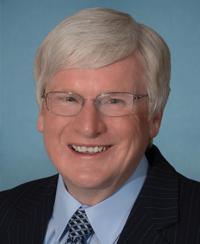
Glenn Grothman
RRepublicanWI-6 · Representative
60
/ 100
Average
Attendance98
Avg: 96
Independence4
Avg: 4
Bipartisan Tone20
Avg: 15
Ethics Record100
Avg: 99
Transparency73
Avg: 53
Accountability Score — composite of attendance, independence, bipartisan tone, ethics record & transparency.
Methodology29
Bills Sponsored
0
Enacted into Law
2
Passed a Chamber
27
In Committee
All Sponsored Bills
HR10799In Committee
To amend the Immigration and Nationality Act to modernize the wage required for exempt H-1B workers, and for other purposes.
HR3342In Committee
BOP Direct-Hire Authority Act
The Bureau of Prisons would be allowed to hire staff more quickly without going through the standard federal hiring process, which typically involves lengthy application reviews and competitive examinations. This would let the agency fill guard, counselor, and other prison jobs faster to address staffing shortages at federal facilities. The change would primarily affect job applicants seeking federal prison positions and the operations of federal correctional institutions.
HR10439In Committee
Veterans and Consumers Fair Credit Act
HR10335In Committee
Restoring Civil Rights Attorney’s Fees Act of 2026
HR10051In Committee
PERM Backlog Reduction Act of 2026
HR9605In Committee
Less Bureaucracy, Better Foreign Medical Accreditation Act
Less Bureaucracy, Better Foreign Medical Accreditation Act This bill transfers specified functions relating to accreditation for foreign medical schools from the Department of Education (ED) to the Department of Health and Human Services (HHS). Specifically, the bill transfers to HHS all the functions and authorities exercised by ED before the bill's effective date related to the National Committee on Foreign Medical Education and Accreditation. (This committee evaluates the standards of accreditation applied to foreign medical schools and determines the comparability of those standards to standards applied to U.S. medical schools. On November 18, 2025, ED announced an interagency agreement with HHS for HHS to provide subject matter expertise, coordinate meetings, and manage technology systems to assist ED in managing and overseeing this committee.) Additionally, the bill transfers to HHS all personnel and appropriations related to the functions that are transferred under this bill. The bill outlines the authority of the Office of Management and Budget (OMB) related to the functions that are transferred under this bill, including that OMB must ensure that this bill does not create a net increase in full-time equivalent employees at HHS or ED. Further, OMB must certify compliance with the bill to specified congressional committees. The transfer of these functions does not affect any suits, proceedings, or applications for benefits, services, licenses, permits, certificates, or financial assistance that are pending on the date of this bill's enactment.
HR9627In Committee
Hmong Congressional Gold Medal Act
The government would award a Congressional Gold Medal to the Hmong people to honor their military service during the Vietnam War and their efforts against communist forces. This medal is one of the highest civilian honors Congress can give and recognizes the sacrifices and contributions of the Hmong community during that conflict. The proposal is currently being reviewed by congressional committees to determine whether it should move forward.
HR9515In Committee
MFA Act
The proposal would require healthcare.gov, the federal website where people shop for health insurance, to use multi-factor authentication—an extra security step like a text message code in addition to a password—when users access their personal health information. This change would make it harder for hackers or unauthorized people to access sensitive details like Social Security numbers, medical records, and insurance information. The requirement would affect millions of Americans who use the website to enroll in coverage or manage their health insurance plans.
HR9315In Committee
Workforce Dignity Act
This bill updates federal laws to replace the outdated term "sheltered workshop" with "community rehabilitation program" across multiple government programs and tax codes. The change affects how the government refers to and regulates facilities that provide employment and training services for people with disabilities, aiming to use more modern and respectful language. The bill also makes related adjustments to small business rules, tax law, and Social Security programs that reference these facilities.
HR8428Passed House
Federal Fraud Prevention Workforce Training Act
Federal Fraud Prevention Workforce Training Act This bill requires the Office of Management and Budget (OMB) and the Department of the Treasury to establish and maintain a mandatory antifraud and improper payment prevention training program for federal employees whose roles involve federal financial assistance or oversight of federal programs. The program must also be made available to state, local, and tribal governments to train relevant personnel. Under the bill, federal agencies must ensure that all federal employees in roles involving oversight of federal programs or federal financial assistance complete the training every two years. (Such positions include program administrator or officer, financial administrator or manager, disbursement certifying official, auditing official, and grants manager.) The Office of Personnel Management shall certify and maintain records of completion. Treasury must also provide the program and related technical assistance to state, local, and tribal governments for training employees who are responsible for the administration of federally funded programs. Federal agencies may make completion of the program a condition of a federal grant or award. The program curriculum must include comprehensive instruction on specified topics, including (1) identifying fraud and improper payment risks in federal programs; (2) using government-wide antifraud data sharing and other payee validation programs; and (3) reporting mechanisms for suspected fraud, waste, and abuse. No later than two years after the date of the bill's enactment, Treasury and OMB must provide Congress with a report on program implementation. Finally, Treasury may prescribe any regulations necessary to implement and administer the training program.
HR9083In Committee
State Emissions Authority Act of 2026
The proposal would allow individual states to set their own air pollution standards and emissions limits rather than following a single national standard, giving state governments more control over environmental regulations within their borders. This would affect businesses that produce emissions, power plants, manufacturers, and states themselves as they decide how strictly to regulate pollution. States could choose to adopt stricter environmental protections than federal requirements or maintain looser standards depending on their priorities.
HR8736In Committee
Restoration of Employment Choice for Adults with Disabilities Act
Restoration of Employment Choice for Adults with Disabilities Act This bill relaxes requirements that allow entities with a special wage certificate to pay subminimum wages to individuals with disabilities. Specifically, the bill eliminates a requirement that an individual with a disability who is age 24 or younger receive pre-employment transition services and meet specified vocational rehabilitation criteria before beginning subminimum wage work. The bill also relaxes career counseling and service referral requirements that apply to an individual with a disability who is paid at a subminimum wage. Current law requires an entity to ensure that an individual employed at subminimum wage receives periodic career counseling, information, and referrals to other services from the designated state agency. Under the bill, this requirement is met if the employer makes a documented effort to contact the state agency for those resources on behalf of the employee, and the state agency subsequently fails to provide the counseling, information, and referrals.
HR7362In Committee
Form 5500 Filing Simplification Act
This bill would simplify the paperwork that employers with retirement plans must file with the government each year, making it easier and less costly for companies to comply with reporting requirements. The changes would primarily affect small and medium-sized businesses that sponsor 401(k) plans and similar retirement accounts for their employees. By reducing the complexity of these annual filings, the bill aims to cut down on administrative burden while still keeping the government informed about how retirement plans are being managed.
HR8972In Committee
OPT Fair Tax Act
This proposal would require international students on F-1 visas who participate in optional practical training (work experience related to their studies) to pay Social Security and Medicare taxes, just like regular employees do. Currently, these students are often exempt from these payroll taxes even though they're working in the United States. The change would affect both the students and their employers, who would need to withhold and contribute these taxes.
HR8511In Committee
Ending Discrimination in Government Contracting Act
This bill would eliminate federal contracting preferences that currently help disadvantaged businesses and individuals—including women-owned, minority-owned, and veteran-owned small businesses—win government contracts. The change would affect how federal agencies award billions of dollars in contracts each year, potentially reducing opportunities for these groups to compete for and win government work. Companies and workers in disadvantaged communities could face increased competition from larger, more established businesses for federal spending.
HR7721In Committee
CRACKDOWN Act of 2026
The bill aims to address issues affecting families, though the specific provisions are not detailed in the available information. Based on its title and subject matter, it likely proposes enforcement or regulatory measures related to family-related policies or protections. Without access to the bill's full text, the exact impact on families—whether involving child welfare, domestic issues, or other family-centered concerns—cannot be determined from this summary alone.
HR8082In Committee
COMPETE Act
The COMPETE Act would likely aim to increase competition in the health care industry, possibly by reducing barriers that prevent new providers or companies from entering the market or by limiting practices that reduce consumer choice. The bill could affect patients by potentially lowering health care costs or expanding access to services, while also impacting hospitals, insurance companies, and other health care providers. The specific details of how it would accomplish these goals would depend on the bill's full text and provisions.
HR7940In Committee
SAFE Pathways Act
This bill would establish new procedures for managing public lands and natural resources, likely creating pathways for development or conservation projects to move forward more efficiently. The legislation would affect federal land management agencies, private companies seeking to use public lands, and communities that depend on natural resource industries or public land recreation. The bill has been sent to the House Committee on Energy and Commerce for review and debate.
HR2299In Committee
Ensuring Workers Get PAID Act of 2025
Ensuring Workers Get PAID Act of 2025 This bill provides statutory authority for the Payroll Audit Independent Determination program, which is administered by the Department of Labor and allows employers to self-report federal minimum wage and overtime compensation violations as an alternative to litigation. Employers may apply to the program by submitting certain information from a self-audit that includes calculations of any unpaid minimum or overtime wages. Labor must verify the calculations and, if the application is approved, supervise a settlement with affected employees that provides payment of any unpaid wages. Employees who accept a settlement under the program waive their private right of action to recover the unpaid wages provided under the settlement.
HR7538In Committee
Migrant Child Safety Act
This bill would establish new protections and safety standards for children who migrate to the United States, likely addressing issues like housing conditions, medical care, and legal representation in immigration proceedings. The legislation would affect migrant children, immigration agencies, and organizations that work with vulnerable youth in the immigration system. It aims to ensure that children in government custody or going through immigration cases receive appropriate care and support.
HR7213In Committee
Safeguarding Benefits for Americans Act of 2026
This bill would likely establish new protections or eligibility requirements for federal benefit programs like Social Security, Medicare, and welfare assistance, though the specific changes aren't yet clear from the title alone. The measure has been sent to the House Oversight Committee, suggesting it may address concerns about how benefits are distributed, who qualifies for them, or how fraud is prevented. The bill would affect millions of Americans who receive government assistance or social insurance benefits.
HR5346Passed House
Fair and Accountable IRS Reviews Act
Fair and Accountable IRS Reviews Act This bill provides that an Internal Revenue Service (IRS) employee’s immediate supervisor for purposes of approving certain federal tax penalties is the person to whom such employee reports. The bill also provides that an immediate supervisor’s approval of certain federal tax penalties must be obtained (in writing) before any written communication related to such penalties is sent to the taxpayer. As background, current law requires that the initial determination by an IRS employee to assess certain federal tax penalties be approved (in writing) by such employee’s immediate supervisor (or a designated higher-level official). Under IRS regulations, an immediate supervisor is any individual with responsibility to review another individual’s proposed federal tax penalties (without such proposal being subject to an intermediary’s approval). The IRS regulations also establish requirements for when such approval must be obtained based on whether the federal tax penalty is subject to pre-assessment review or raised in Tax Court proceedings.
HR4178In Committee
Enforce the Caps Act
Enforce the Caps Act This bill establishes annual discretionary spending limits for FY2026-FY2029.
HR4101In Committee
Cancer Drug Parity Act of 2025
This bill would require health insurance plans to treat cancer drugs the same way they treat other medications, preventing insurers from charging patients higher out-of-pocket costs or imposing stricter limits specifically for cancer treatments. The measure aims to make cancer drugs more affordable and accessible for patients by eliminating insurance practices that single out these medications for harsher coverage rules compared to drugs for other conditions.
HR3912In Committee
Stop the Baseline Bloat Act of 2025
Stop the Baseline Bloat Act of 2025 This bill changes the assumptions that the Congressional Budget Office uses to calculate the baseline for discretionary spending. (A baseline is a projection of federal spending and receipts during a fiscal year under current law.) Specifically, the bill changes the assumptions used for the discretionary spending baseline to exclude (1) resources designated as an emergency requirement, and (2) resources provided in supplemental appropriations laws.
HR3285In Committee
Student Loan Marriage Penalty Elimination Act of 2025
This bill would change how married couples's student loan debt is treated for tax purposes, eliminating a financial penalty that some married filers currently face when claiming student loan interest deductions. Currently, married couples filing jointly may lose eligibility for certain student loan tax breaks that single filers can claim, and this legislation aims to level that playing field. The change would benefit married couples with student loans by allowing them to claim the same tax deductions as unmarried borrowers.
HR2192In Committee
Air America Act of 2025
The Air America Act of 2025 would likely establish or modify programs related to military aviation operations and national security capabilities. Based on its referral to the House Intelligence Committee, the bill probably addresses covert or sensitive air operations, intelligence gathering, or special operations aviation assets used by the armed forces. The legislation would affect military personnel, defense contractors, and intelligence agencies involved in these operations.
HR1415In Committee
No IRIS Act of 2025
The legislation would restrict or eliminate the use of per- and polyfluoroalkyl substances (PFAS), commonly known as "forever chemicals," in industrial and consumer products to protect drinking water and the environment. The bill would affect manufacturers, water utilities, and consumers by requiring companies to phase out these persistent chemicals that accumulate in the body and environment over time. Environmental groups and public health advocates support such measures because PFAS contamination has been found in water supplies across the country and linked to health concerns.
HR937In Committee
Protecting Taxpayers from Student Loan Bailouts Act
Protecting Taxpayers from Student Loan Bailouts Act This bill limits the authority of the Department of Education (ED) to propose or issue regulations and executive actions related to federal student aid programs. The bill prohibits ED from issuing such a proposed rule, final regulation, or executive action if ED determines that the rule, regulation, or action (1) is economically significant, and (2) would result in an increase in a subsidy cost. Economically significant refers to a regulation or executive action that is likely to (1) have an annual effect on the economy of $100 million or more; or (2) adversely affect in a material way the economy, a sector of the economy, productivity, competition, jobs, the environment, public health or safety, or state, local, or tribal governments or communities.