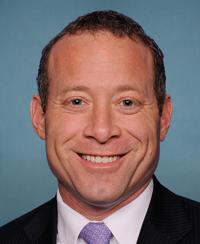
Josh Gottheimer
DDemocratNJ-5 · Representative
65
/ 100
Above Average
Attendance87
Avg: 96
Independence9
Avg: 4
Bipartisan Tone31
Avg: 15
Ethics Record100
Avg: 99
Transparency100
Avg: 53
Accountability Score — composite of attendance, independence, bipartisan tone, ethics record & transparency.
Methodology75
Bills Sponsored
0
Enacted into Law
3
Passed a Chamber
72
In Committee
All Sponsored Bills
HR10821In Committee
To amend the Federal Deposit Insurance Act to make changes to the Standard Maximum Deposit Insurance Amount, and for other purposes.
HRES1618In Committee
Recognizing the third anniversary of the October 7, 2023, terrorist attacks on Israel, honoring the victims and the hostages, and calling for the complete disarmament of Hamas for a durable end to the war in Gaza.
HR10757In Committee
To provide for a limitation on contributions to the United Nations.
HRES1612In Committee
Honoring Captain Smit Machchhar and the crew and passengers of Flydubai Flight 1073, and condemning the attempted terrorist attack on that flight.
HR10671In Committee
Securing Our Critical Infrastructure Act
HR10670In Committee
China FIREWALL Act of 2026
HR10519In Committee
To direct the Secretary of Homeland Security, acting through the Director of the Cybersecurity and Infrastructure Security Agency, to establish a Critical Infrastructure AI Cyber Defense Pilot Program, and for other purposes.
HR10405In Committee
Kylie’s Voices for Childhood Cancer Act
HR10362In Committee
Stop Rogue AI Act
HR10363In Committee
No Grounds for Discrimination Act
HRES1515In Committee
Recognizing New Jersey's first responders, including its law enforcement officers, firefighters, and emergency medical personnel, who responded to the September 11, 2001, attacks at the World Trade Center and who carried out the rescue, recovery, and medical relief efforts in the days and months that followed.
HR10315In Committee
AI LABS Act
HR10314In Committee
To direct the Secretary of Education to conduct a study on the efforts of States, local educational agencies, and public elementary and secondary schools to educate students about the terrorist attacks of September 11, 2001, and for other purposes.
HR10112In Committee
Empowering States to Protect Seniors from Bad Actors Act
HR9981In Committee
Foodborne Illness Rapid Response Act
The proposal would prevent the Centers for Disease Control and Prevention from laying off workers or cutting staff in certain divisions of the agency. This would protect CDC employees in those specific divisions from workforce reductions, ensuring the agency maintains its current staffing levels in those areas. The bill affects CDC workers and potentially the public health services those divisions provide.
HR9982In Committee
Polisario Front Terrorist Designation Act of 2026
The proposal would punish the Polisario Front, a Western Saharan independence movement, with economic and diplomatic penalties if it works with groups connected to Iran that the U.S. considers terrorist organizations. The measure targets the leadership and supporters of the Polisario Front by restricting their access to U.S. financial systems and potentially freezing any assets they hold in America. This would affect the organization's ability to operate internationally and raise funds if it maintains ties to Iranian-backed militant groups.
HR6007Passed House
To name the Department of Veterans Affairs community-based outpatient clinic in Newton, New Jersey, as the "Anthony 'Tony' J. Gallopo VA Clinic".
This bill designates the community-based outpatient clinic of the Department of Veterans Affairs in Newton, New Jersey, as the Anthony “Tony” J. Gallopo VA Clinic.
HR9706In Committee
Facial Recognition to Protect Children Act
Online gambling and betting platforms would be required to use facial recognition technology to verify that users are old enough to legally gamble, helping prevent minors from accessing these sites. The requirement would apply to all companies operating wagering or prediction market platforms, which are websites where people bet money on sports, elections, or other events. This measure aims to strengthen age verification protections beyond current methods like entering a birthdate.
HR9626In Committee
To amend the Internal Revenue Code of 1986 to eliminate the State and local tax deduction marriage penalty.
The proposal would change tax rules so that married couples filing jointly don't face a disadvantage compared to unmarried people when deducting state and local taxes they pay. Currently, married couples hit a lower cap on how much they can deduct for these taxes than two single people filing separately would be allowed, which some view as penalizing marriage. The change would affect millions of households that pay significant state and local taxes, particularly in high-tax states.
HR9578In Committee
Spot the Fakes Act
The proposal would require that content created by artificial intelligence be clearly marked as AI-generated, either through visible labels or hidden digital information embedded in the files. This would affect tech companies, content creators, and platforms that use AI tools, helping consumers and viewers know when they're encountering machine-generated rather than human-created material. The requirement aims to increase transparency and prevent people from being misled about the origin of images, text, audio, or video they encounter online.
HR9546In Committee
Cloud Security Act
The legislation would create exceptions to requirements that people and organizations notify the U.S. Government when dealing with certain foreign entities, allowing them to conduct business with these groups without triggering mandatory reporting rules in specific circumstances. This would primarily affect companies, researchers, and other organizations that work internationally and currently must report their interactions with designated foreign entities to federal agencies. The bill is currently under review by the House Judiciary Committee.
HRES1379In Committee
Condemning Lebanese Hezbollah's repeated violations of ceasefire agreements and calling for the Lebanese Government to ensure Lebanese Hezbollah immediately ceases all attacks and disarms, in accordance with the ceasefire.
This resolution condemns Hezbollah’s repeated violations of ceasefire agreements and calls on the Lebanese government to ensure Hezbollah immediately ceases all attacks against Israel and disarms in the South Litani Sector, in accordance with ceasefire terms.
HR9218In Committee
Marcus’s Law
Schools that receive federal funding would be required to give high school students heart screening tests—an electrocardiogram and an echocardiogram—before they can participate in sports for the first time. These tests check the heart's electrical activity and structure to catch potential problems that could cause sudden cardiac events during athletic activity. The requirement would apply to students in grades 9 through 12 across the country.
HR9059In Committee
National Police Athletic/Activities League Youth Enrichment Reauthorization Act
The federal government would provide grants to the National Police Athletic/Activities League, an organization that runs after-school and community programs where police officers mentor young people in sports and other activities. These programs aim to help kids do better in school, stay out of trouble, and avoid becoming crime victims by keeping them engaged in positive activities outside of school hours. The grants would support expanding these youth programs in communities across the country.
HR8927In Committee
Stop the Doxx Act
The proposal would make it a federal crime to publicly share personal information like home addresses, phone numbers, or family details about police officers, prosecutors, and judges with the intent to harass, threaten, or endanger them. This would protect these officials from coordinated online attacks that could put them and their families at risk. The bill is currently under review by the House Judiciary Committee.
HR8895In Committee
No Rigged Grocery Prices Act
Food stores and delivery services like DoorDash would be banned from using personal information about customers to charge different prices to different people for the same products. The law would prevent companies from tracking your shopping habits, location, or purchase history to decide what price you see at checkout. This affects grocery shoppers and anyone who uses food delivery apps, as well as the retailers and delivery companies that currently use this pricing strategy.
HCONRES75Passed House
Directing the President, pursuant to section 5(c) of the War Powers Resolution, to remove the United States Armed Forces from hostilities against the Islamic Republic of Iran.
This concurrent resolution directs the President to remove U.S. Armed Forces from hostilities against Iran or any part of its government or military no later than March 30, 2026, unless a declaration of war or authorization to use military force for such purpose has been enacted. The resolution specifies that it shall not be construed to prevent the United States from defending itself, its Armed Forces, its diplomatic facilities, or allied states from imminent attack.
HR8728In Committee
Feed Our Kids Act of 2026
The proposal would require all public schools to provide free breakfast and lunch to every student, regardless of family income, rather than only offering free meals to low-income families. This would eliminate the current system where some families pay for school meals while others receive them at no cost. The change would affect millions of schoolchildren across the country and require increased federal funding to reimburse schools for the meals they provide.
HR8655In Committee
Jersey Pride Tax Credit Act of 2026
The proposal would give tax breaks to businesses that sell products promoting New Jersey, such as souvenirs or goods featuring the state's name or symbols. It would also require port authorities to prioritize renting retail space to these New Jersey-focused businesses over other retailers. The changes aim to boost local businesses and tourism by making it financially attractive to sell state-branded merchandise.
HRES1239In Committee
Condemning antisemitic hate-filled rhetoric and content disseminated by prominent online personalities, and urging social media platforms and public leaders to denounce and address such conduct.
Congress is calling out online personalities who spread antisemitic hate speech and messages, and pushing social media companies and public officials to publicly reject and take action against this type of harmful content. The resolution doesn't create new laws but instead expresses the legislative body's strong disapproval of antisemitic rhetoric online and urges platforms like Facebook, Twitter, and YouTube to enforce their own policies against hate speech more aggressively. This affects social media users, content creators, platform companies, and anyone concerned about the spread of antisemitic material on the internet.
HR8480In Committee
Protect our Pets Act
Protect our Pets Act This bill increases federal criminal penalties for animal crushing. The term animal crushing includes conduct to purposely crush, burn, drown, suffocate, or impale living animals. The bill also establishes a new federal criminal offense for abandoning or endangering domesticated animals. Current law imposes criminal penalties—a fine, a prison term of up to seven years, or both—for animal crushing. Under this bill, an individual who commits an animal crushing offense is subject to a fine, a prison term of up to 10 years, or both for a first offense; and a fine, a prison term of up to 15 years, or both for a second or subsequent offense. Additionally, the bill establishes a new federal criminal offense for knowingly abandoning a domesticated animal or committing an act of violence that endangers a domesticated animal. A violator is subject to criminal penalties—a fine, a prison term of up to 10 years, or both for a first offense; and a fine, a prison term of up to 15 years, or both for a second or subsequent offense. The bill provides exceptions, including for conduct that is (1) the slaughter of animals for food, (2) medical or scientific research, (3) necessary to protect the life or property of a person, or (4) performed as part of euthanizing an animal.
HR8262In Committee
Build More Power Act
Based on the title and committee referrals, this bill likely aims to increase electricity generation capacity in the United States, possibly through streamlining permitting processes, encouraging new power plant construction, or expanding grid infrastructure. The referral to both the Energy and Commerce Committee and the Science, Space, and Technology Committee suggests it may address multiple aspects of power generation, from traditional energy sources to emerging technologies. The bill would affect energy companies, utilities, and potentially consumers through changes to how power projects are approved and built.
HR8248In Committee
Grid Expansion and Reliability Act
This bill likely aims to make it easier and faster to build new power lines and upgrade the electrical grid to handle increased demand and improve reliability across the country. It would probably affect electric utilities, renewable energy companies, and consumers by streamlining the permitting process and potentially reducing costs for grid modernization projects. The changes could help integrate more solar and wind power into the system while reducing blackouts and power outages.
HR8250In Committee
Parents Decide Act
Parents Decide Act This bill establishes age-verification requirements for providers of operating systems, which includes software that supports the basic functions of a computer, mobile device, or other general purpose computing device. First, operating system providers must require users to provide their date of birth to set up an account on, and use, the operating system. If the user is under 18 years old, the operating system must require a parent or legal guardian to verify the user's date of birth. Additionally, operating system providers must develop a system to allow app developers to access information necessary to verify the date of birth of a user of the developer's app. The bill provides for enforcement of these requirements by the Federal Trade Commission (FTC). The FTC also must issue regulations on how operating system providers can (1) verify the date of birth of a parent or legal guardian and carry out requirements for verifying the ages of users, (2) secure data collected through the verification process, and (3) ensure parents or legal guardians have control over what users who are under 18 years old are able to access on a device. The FTC must brief Congress on the rulemaking process and report on how operating system providers carry out the requirements of the bill.
HR8247In Committee
Commonsense Review Act
Without specific subjects listed, this bill likely aims to streamline or reform some aspect of federal review processes, possibly related to environmental permits, land management, or natural resource projects given its referral to the House Committee on Natural Resources. The bill's focus on "commonsense" review suggests it may seek to reduce regulatory delays or simplify approval procedures that currently affect businesses, developers, or agencies managing public lands. More details about the specific review processes targeted would be needed to describe its concrete effects.
HR8249In Committee
Making Reviews Certain Act
This bill would likely establish clearer timelines and procedures for environmental reviews that federal agencies must complete before approving projects like pipelines, dams, or mining operations. The changes would affect companies seeking federal permits or approvals, environmental groups monitoring those decisions, and communities where major projects are proposed. The goal appears to be making the review process more predictable and efficient, though the specific details would depend on the bill's actual language.
HR8138In Committee
DPA Specialized Staffing Act
The bill would allow the federal government to use the Defense Production Act—a law that lets the president direct private companies to prioritize certain production during emergencies—to address staffing shortages in government agencies. This could enable the government to require businesses to supply workers or redirect employees to fill critical federal positions during times of need. The measure affects both government agencies struggling with staffing and private companies that could be required to contribute personnel.
HR7870In Committee
ICE Standards Act
The bill would establish federal standards for how Immigration and Customs Enforcement (ICE) operates its detention facilities and conducts immigration enforcement activities. It likely aims to set requirements around conditions of detention, treatment of immigrants, and oversight procedures to ensure consistency and accountability across ICE operations nationwide. The bill would affect immigrants in ICE custody, detention facility operators, and ICE agents who carry out enforcement activities.
HRES1079In Committee
Recognizing the significance of Charcot-Marie-Tooth disease and the need for robust funding of the National Institute of Neurological Disorders and Stroke at the National Institutes of Health.
This resolution recognizes that Charcot-Marie-Tooth (CMT) disease is significant and expresses the sense that CMT should receive robust funding for research. CMT disease is a neurological disorder that causes damage to the peripheral nerves.
HR7693In Committee
Leo’s Law
Leo's Law This bill extends by 180 days the relevant periods of market exclusivity for drugs for rare diseases or conditions (i.e., orphan drugs) for which applications were submitted during the COVID-19 emergency period.
HR7694In Committee
Gwenn’s Law
I don't have enough information to write an accurate summary. The bill's subjects aren't listed, and "Gwenn's Law" alone doesn't indicate what policy area it addresses. To provide a meaningful explanation of what this bill would do and who it affects, I would need additional details about its actual provisions or subject matter.
HR7576In Committee
AI Workforce Training Act
This bill would likely create tax incentives or funding mechanisms to help workers learn artificial intelligence and related skills through training programs. By using the tax code to encourage or finance AI education, the legislation aims to prepare the workforce for jobs in a rapidly changing economy where AI skills are increasingly valuable. Workers seeking retraining, employers offering AI courses, or educational institutions could potentially receive tax benefits or credits under this approach.
HR7428In Committee
SECURES Act of 2026
The SECURES Act would likely strengthen security measures and infrastructure protections for transportation systems across the country, such as roads, bridges, ports, and transit networks. The bill aims to address vulnerabilities in how these critical systems are managed and protected, potentially affecting transportation agencies, workers, and the traveling public. By improving security standards and coordination between different transportation authorities, the legislation seeks to make travel and goods movement safer and more resilient.
HR7465In Committee
Federal Investment in Grants for Health Transportation and Flu-vaccination Local Units Act of 2026
The bill would provide federal grants to local health departments and organizations to improve transportation services for patients trying to reach medical appointments and to expand flu vaccination programs in their communities. This funding would help remove barriers that prevent people from getting healthcare, particularly in rural or underserved areas where transportation is difficult. The money would go directly to local health units that work with residents to identify their specific needs.
HR7429In Committee
Miranda’s Law
Without access to the specific text of this bill, it appears to address transportation and public works policy, though the vague title makes the exact purpose unclear. Based on its referral to the Transportation and Infrastructure Committee, it likely proposes changes to how the federal government funds, regulates, or manages roads, bridges, public transit, or other infrastructure projects. To understand what this bill would actually do and who it affects, you would need to review the full legislative text or bill summary from Congress.
HR7178In Committee
U.S.-Israel Anti-Killer Drone Act of 2026
This bill would likely establish restrictions or regulations on the use of autonomous weapons systems (killer drones) in U.S.-Israel military cooperation and operations. The legislation would affect military planners, defense contractors, and potentially international relations between the two countries by setting rules around how unmanned weapons can be used. The bill has been sent to committees that handle military and foreign policy matters to determine what specific rules should apply.
HR7100In Committee
Sikh American Anti-Discrimination Act of 2026
This bill would protect Sikh Americans from discrimination in employment, housing, education, and public services by explicitly including them under federal civil rights laws. It aims to address discrimination based on religious practices like wearing turbans and uncut beards, which are important parts of the Sikh faith. The law would give Sikhs the same legal protections against discrimination that other religious and ethnic groups currently have.
HR6924In Committee
Porch Pirates Act of 2025
HR6714In Committee
American Products in Parks Act
The legislation would require that products sold in national parks and other federal public lands be made in the United States, affecting both the businesses that supply goods to these parks and the visitors who shop there. This would apply to items like souvenirs, food, camping equipment, and other merchandise sold at park gift shops and concessions. The goal is to support American manufacturers and workers by prioritizing domestic products in federal park operations.
HR6319In Committee
Benay Taub Lung Cancer Research Act
This bill would direct federal funding and resources toward lung cancer research, likely including support for clinical trials, prevention studies, and new treatment development. The funding would help scientists and medical institutions work on better ways to detect, prevent, and treat lung cancer, which affects thousands of Americans each year. The bill has been sent to the House Committee on Energy and Commerce for review.
HR6027In Committee
To amend title 38, United States Code, to provide for an annual increase in the rates of compensation for veterans with service-connected disabilities and the rates of dependency and indemnity compensation for the survivors of certain disabled veterans, and for other purposes.
This bill requires the Department of Veterans Affairs (VA) to increase the amounts payable for wartime disability compensation, additional compensation for dependents, the clothing allowance for certain disabled veterans, and dependency and indemnity compensation for surviving spouses and children. Specifically, the VA must increase the amounts by the same percentage as the cost-of-living increase in benefits for Social Security recipients that is effective on December 1 of each year. The bill requires the VA to publish the amounts payable, as increased, in the Federal Register. The VA is authorized to make a similar adjustment to the rates of disability compensation payable to persons who have not received compensation for service-connected disability or death.
HR5623In Committee
SEIZE Act of 2025
The SEIZE Act of 2025 would give the U.S. government authority to seize and use assets belonging to foreign entities, likely targeting countries or organizations designated as threats to national security or involved in sanctions violations. This could affect international businesses, foreign governments, and individuals with assets in the United States who are connected to hostile regimes or sanctioned activities. The bill is currently under review by the House Foreign Affairs Committee.
HR4981In Committee
Stamp Out Lyme Disease Act
The bill would direct federal health agencies to increase research, prevention, and treatment efforts focused on Lyme disease, which is spread by infected ticks and causes joint pain, fatigue, and other serious symptoms in thousands of Americans each year. It likely aims to improve how the government tracks Lyme disease cases, funds research into better diagnostics and vaccines, and educates the public about tick prevention and early treatment options.
HR4979In Committee
Tick Identification Pilot Program Act of 2025
The bill would create a pilot program to help people identify ticks and understand which ones carry diseases like Lyme disease and Rocky Mountain spotted fever. The program would likely involve educational materials, testing resources, or tools to help the public recognize dangerous tick species in their area. This would help workers, outdoor enthusiasts, and families reduce their risk of tick-borne illnesses.
HR4980In Committee
BITE Act
The proposal would establish new regulations and oversight for how food and beverage companies market their products, particularly regarding claims about health benefits and nutritional content. It aims to protect consumers—especially children—from misleading advertising by requiring companies to provide clearer, more accurate information about what's actually in their products. The changes would affect food manufacturers, restaurants, and advertising companies that promote eating and drinking products.
HR1469Passed House
Senior Security Act of 2025
National Senior Investor Initiative Act of 2025 or the Senior Security Act of 2025 This bill establishes the Senior Investor Taskforce within the Securities and Exchange Commission. The taskforce must report on topics relating to investors over the age of 65, including industry trends and serious issues impacting such investors, and make recommendations for legislative or regulatory actions to address problems encountered by senior investors. The Government Accountability Office must report on the financial exploitation of senior citizens.
HR4326In Committee
To require the Congressional Budget Office to conduct an economic review of the economic impact of tariff modifications before implementation.
This bill requires the Congressional Budget Office (CBO) to conduct an economic review of the potential economic effects of modifications to tariffs before their implementation. Specifically, the bill prohibits a modification to any tariff or other duty on imports from taking effect until CBO publishes on a publicly available website an economic review of the expected economic impact of the modification.
HR3876In Committee
LIHEAP Staffing Support Act
The Low Income Home Energy Assistance Program (LIHEAP) helps low-income families pay heating and cooling bills, but the agencies running it often lack enough staff to process applications quickly. This bill would provide funding and support to hire more workers at these agencies so they can help more people get assistance faster. The change would primarily benefit low-income households struggling with energy costs and the state and local agencies that administer the program.
HR3811In Committee
Elder Pride Protection Act of 2025
The legislation would protect older adults from discrimination based on sexual orientation, gender identity, and other characteristics in housing, healthcare, employment, and other services. It would establish legal protections and enforcement mechanisms to ensure seniors, particularly LGBTQ+ older adults, cannot be denied access to care facilities, housing, or jobs because of who they are. The law would affect nursing homes, assisted living facilities, healthcare providers, employers, and housing providers that serve elderly populations.
HR3683In Committee
FBI Animal Cruelty Taskforce Act of 2025
This bill would create a dedicated FBI taskforce to investigate and prosecute animal cruelty crimes across state lines. The new unit would help law enforcement agencies coordinate on cases involving serious animal abuse, fighting rings, and trafficking, giving federal authorities more resources to pursue these crimes. Animal welfare advocates and law enforcement agencies would benefit from having specialized federal investigators focused on these cases.
HR2712In Committee
Reclaiming Congressional Trade Authority Act of 2025
This bill would give Congress more direct control over trade deals and tariffs, reducing the president's ability to make major trade decisions on their own. It likely aims to shift power away from the executive branch so that lawmakers have a stronger say in negotiating trade agreements and setting trade policy that affects American workers and businesses. The bill has been sent to two committees for review before any vote can take place.
HR2711In Committee
Invest to Protect Act of 2025
Invest to Protect Act of 2025 This bill directs the Office of Community Oriented Policing Services within the Department of Justice to award grants to local and tribal governments that employ fewer than 175 law enforcement officers. Grant funds may be used for various activities, including to provide de-escalation training and improve recruitment and retention.
HR2680In Committee
Expanding Access to School Meals Act of 2025
Expanding Access to School Meals Act of 2025 This bill increases student access to free school lunches and breakfasts under the National School Lunch Program and School Breakfast Program of the Department of Agriculture (USDA). Specifically, the bill expands program eligibility to include students in households with income at or below 224% of the federal poverty level. (Currently, students in households with income at or below 130% are eligible.) The bill also eliminates the reduced price school lunch and breakfast programs and prohibits USDA from providing reimbursements for reduced price programs. States may use Medicaid participation data to directly certify students for free school meals. (Direct certification allows schools to approve meals without the need for a separate application for children who receive assistance under other programs.) Under current law, states may apply to participate in a USDA demonstration project to directly certify children for free and reduced price meals based on household income data acquired through Medicaid. Further, the bill increases the number of free meals a school in a high-poverty area may be reimbursed for at the free-meal rate under the Community Eligibility Provision. (This provision allows eligible schools, groups of schools, and school districts to offer free meals at no cost to all enrolled students without collecting separate applications.) Specifically, the bill increases from 1.6% to 2.5% the reimbursement multiplier, which is used to calculate how many meals USDA will reimburse the school for at the free meal rate.
HR1380In Committee
Meat and Poultry Special Investigator Act
Meat and Poultry Special Investigator Act This bill establishes the Office of the Special Investigator for Competition Matters within the Agricultural Marketing Service's Packers and Stockyards Division. Specifically, the office must use all available tools (e.g., subpoenas) to investigate and prosecute violations of the Packers and Stockyards Act of 1921 (P&S Act). Further, the bill grants the office the authority to bring any civil or administrative action authorized by that act. Additionally, the office must serve as a liaison to the Department of Justice and the Federal Trade Commission with respect to competition and trade practices in the food and agricultural sector, consult with the Department of Homeland Security on national security and critical infrastructure security in the food and agricultural sector, and maintain a staff of attorneys and other professionals with appropriate expertise. As background, the purposes of the P&S Act are to assure fair competition and trade practices, safeguard farmers and ranchers, protect consumers, and protect livestock, meat, and poultry industry members from unfair, deceptive, unjustly discriminatory, and monopolistic practices. Those engaged in the business of marketing livestock, meat, and poultry in commerce are subject to the P&S Act.
HR1831In Committee
To direct the Secretary of Homeland Security to carry out a pilot program for the prevention and mitigation of acts of terrorism using motor vehicles, and for other purposes.
This bill directs the Department of Homeland Security (DHS) to establish a pilot program for the prevention and mitigation of acts of terrorism using motor vehicles. Among other things, the pilot program must develop a uniform standard for the type of information collected by rental agencies; distribute guidance for improving the suspicious activity reporting process; and establish a procedure for dealers and rental companies to check information against a designated watch list to provide notice of a sale or rental to the Federal Bureau of Investigation, if DHS determines that this is necessary. Under the bill, a dealer or rental company is not liable for any action taken in accordance with the pilot program. DHS and the Transportation Security Administration must jointly submit regular reports to Congress on the pilot program. In addition, DHS must submit a study to Congress that examines how to work with rental car and ride sharing companies on how to identify risks and threats of terrorist attacks.
HR1610In Committee
FIRE Cancer Act of 2025
Firefighter Investments to Recognize Exposure to Cancer Act of 2025 or the FIRE Cancer Act of 2025 This bill expands the Federal Emergency Management Agency's (FEMA's) Assistance to Firefighters Grant program for fire departments and emergency medical services organizations to include cancer prevention programs (e.g., multi-cancer early detection testing) for firefighting personnel. It also establishes a joint cancer research program between FEMA and the Centers for Disease Control and Prevention (CDC) through which firefighting personnel may voluntarily share the anonymized results of preventative cancer testing so the CDC can study trends or causes of cancer in such personnel.
HR1524In Committee
ALYSSA Act
Alyssa's Legacy Youth in Schools Safety Alert Act or the ALYSSA Act This bill requires each local educational agency (LEA), as a condition of receiving federal elementary and secondary education funds, to ensure that each elementary and secondary school served by the LEA is equipped with at least one silent panic alarm for use in a school security emergency.
HR1412In Committee
Know Your Rates Act
This bill would require energy companies to clearly disclose their rates and pricing information to customers so people can easily understand what they're paying for electricity or gas. The goal is to make it simpler for households and businesses to compare energy costs and make informed decisions about their utility providers. It affects anyone who pays an electric or gas bill.
HR1414In Committee
Cameron’s Law
Cameron's Law This bill increases the orphan drug tax credit to 50% (from 25%) of qualified clinical testing expenses paid or incurred in the development of drugs to treat certain rare diseases or conditions. As background, the Tax Cuts and Jobs Act reduced the orphan drug tax credit (for tax years after 2017) to 25% of qualified clinical testing expenses (e.g., wages, supplies, and certain contract expenses) paid or incurred in the development of drugs to treat certain rare diseases or conditions. For 2017 and prior tax years, the orphan tax credit was 50% of such expenses paid or incurred.
HR1411In Committee
No Veteran Should Go Hungry Act of 2025
No Veteran Should Go Hungry Act of 2025 This bill requires that preseparation counseling provided to members of the Armed Forces under the Transition Assistance Program include information regarding federal food and nutrition assistance programs (e.g., the Supplemental Nutrition Assistance Program, commonly referred to as SNAP).
HR1121In Committee
No DeepSeek on Government Devices Act
No DeepSeek on Government Devices Act This bill directs the Office of Management and Budget to develop standards and guidance requiring removal of the DeepSeek application from federal agency information technology. Such standards and guidance also apply to any successor application developed or provided by High Flyer or entities owned by High Flyer. DeepSeek is an artificial intelligence start-up founded in 2023 and based in Hangzhou, China. DeepSeek's chief executive officer also created High Flyer, a hedge fund that is reportedly the sole funder of DeepSeek.
HRES118In Committee
Calling on Federal law enforcement, led by the Federal Bureau of Investigation, the Department of Homeland Security, and the Federal Aviation Administration, to provide an immediate briefing to the public regarding the recent drone activity in New Jersey and New York.
HR768In Committee
Holocaust Education and Antisemitism Lessons Act
Holocaust Education and Antisemitism Lessons Act This bill directs the U.S. Holocaust Memorial Museum to study and report on Holocaust education efforts in states, local educational agencies (LEAs), and public elementary and secondary schools. Among other elements, the study must (1) determine whether states and LEAs require Holocaust education as part of the curriculum taught in public elementary and secondary schools, (2) identify the standards and requirements relating to Holocaust education, and (3) identify the types of instructional material used to teach students about the Holocaust.
HRES65In Committee
Reaffirming the freedom to decide and expressing continued support for medication abortion access.
This resolution expresses that the House of Representatives (1) affirms that federal law authorizes the distribution of medication abortion, including by mail, as stated in a 2022 Department of Justice memorandum; and (2) condemns restrictions on the access and coverage of reproductive health care, including medication abortion.
HR614In Committee
SAFE Grilling Act
Strengthening Awareness and Funding Education for Grilling Act or SAFE Grilling Act This bill requires the Consumer Product Safety Commission to develop and implement a public awareness campaign about the dangers associated with cooking using a grill and best practices for using a grill safely to prevent injuries and fires.