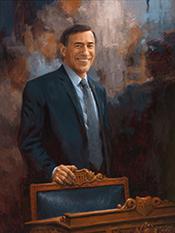
Darrell Issa
RRepublicanCA-48 · Representative
48
/ 100
Below Average
Attendance99
Avg: 96
Independence2
Avg: 4
Bipartisan Tone7
Avg: 15
Ethics Record100
Avg: 99
Transparency12
Avg: 53
Accountability Score — composite of attendance, independence, bipartisan tone, ethics record & transparency.
Methodology39
Bills Sponsored
0
Enacted into Law
3
Passed a Chamber
32
In Committee
All Sponsored Bills
HR8483In Committee
Barona Group of Capitan Grande Band of Mission Indians Land Transfer Act of 2026
The federal government would transfer ownership of specific land in California to the Barona Group of the Capitan Grande Band of Mission Indians, placing it under federal trust status for the tribe's benefit. This change would give the tribe greater control over the land and its resources, similar to other tribal lands already held in trust by the federal government. The bill is currently being reviewed by the House Committee on Natural Resources.
HR10364In Committee
American Copyright Protection Act of 2026
HR8546In Committee
Pechanga Band of Indians Water Rights Settlement Technical Amendments Act
The legislation makes technical corrections to a 2000 settlement agreement that resolved water rights disputes between the Pechanga Band of Luiseño Indians and the state of California. These changes clarify and update specific provisions in the original agreement to ensure the tribe can properly manage and use its allocated water resources. The bill affects the Pechanga Band, California water agencies, and other parties involved in implementing the water rights settlement.
HR10317In Committee
Inventory Act of 2026
HR10208In Committee
To provide for the continued use of certain trust land in San Diego County for healthcare purposes.
HR10025In Committee
Preventing Abuse of Digital Replicas Act
The legislation would update trademark law to clarify how federal rules apply to digital copies of people's distinctive personal characteristics—like their voice, face, or likeness—when used online or in digital products. This would give individuals and companies clearer legal guidance on when they can or cannot use someone's digital replica without permission, potentially affecting tech companies, entertainment producers, and anyone whose image or voice might be recreated digitally.
HR10026In Committee
Honoring Circuit Judge Pauline Newman Act of 2026
The bill would name a specific courtroom in a federal courthouse building in Washington, DC after Pauline Newman, likely in recognition of her judicial service or contributions to the legal system. This is a ceremonial designation that honors Newman by attaching her name to the courtroom, though it does not change how the courtroom operates or affects the public directly. The proposal is currently under review by the House Committee on Transportation and Infrastructure.
HR4283Reported
To designate the facility of the United States Postal Service located at 1157 West Mission Avenue in Escondido, California, as the "Captain E. Royce Williams Post Office Building".
This bill designates the facility of the United States Postal Service located at 1157 West Mission Avenue in Escondido, California, as the "Captain E. Royce Williams Post Office Building".
HJRES201In Committee
Designating an official residence for the Speaker of the House of Representatives.
The proposal would establish an official residence where the Speaker of the House can live while serving in that leadership position, similar to how the President has the White House and the Vice President has an official residence. This would give the Speaker a designated government property to use during their time in office rather than relying on personal housing arrangements. The change would affect how the Speaker's living situation is managed and potentially impact federal property and budget decisions related to maintaining such a residence.
HR5682Passed House
To take certain land in the State of California into trust for the benefit of the Pechanga Band of Indians, and for other purposes.
This bill takes approximately 860 acres of land in Riverside County, California, into trust for the benefit of the Pechanga Band of Indians. The land is currently administered by the Bureau of Land Management. The land taken into trust shall be (1) part of the tribe's reservation; (2) maintained as an open space; and (3) used only for purposes consistent with the maintenance of the land as open space and for the protection, preservation, and maintenance of the archaeological, cultural, and wildlife resources on the land. Further, the bill prohibits gaming on the land.
HR8974In Committee
To authorize the Development Finance Corporation to invest in Venezuela.
The proposal would allow the U.S. Development Finance Corporation, a government agency that invests in businesses and projects abroad, to put money into Venezuelan companies and ventures. This would enable American investment in Venezuela's economy, potentially supporting businesses and economic development there, though it would require congressional approval and oversight. The measure affects American investors, Venezuelan businesses, and U.S. foreign policy toward Venezuela.
HR8973In Committee
Sergeant Rafael Peralta Medal of Honor Authorization Act
The legislation would allow the President to award the Medal of Honor, the military's highest decoration for bravery, to Sergeant Rafael Peralta for his heroic actions during the Iraq War. This special authorization is needed because the Medal of Honor typically must be awarded within a specific timeframe after the action occurs, and this case falls outside that window. The bill recognizes Peralta's extraordinary courage and sacrifice in combat.
HJRES186In Committee
Congressional Apportionment Amendment Deadline Act
The proposal would set a specific deadline for Congress to complete the apportionment process—the process of dividing House of Representatives seats among states based on population changes revealed by the decennial census. This affects all Americans by determining how many representatives each state gets and therefore how much influence each state has in the House. The measure aims to ensure this reallocation happens on a predictable schedule rather than being delayed or left incomplete.
HRES1211In Committee
Expunging the December 18, 2019, and January 13, 2021, Impeachments of President Donald Trump.
The proposal would remove the official records of President Donald Trump's two impeachments from congressional records. If passed, it would erase the formal documentation of these proceedings from the House of Representatives' official history, affecting how these events are recorded for the public and future generations.
HR8285Reported
Protecting American Competition Act of 2026
Protecting American Competition Act of 2026 This bill establishes additional requirements for the Department of Commerce's Bureau of Industry and Security (BIS) to review applications for export licenses and establishes related reporting requirements. Specifically, the bill directs BIS, when reviewing an application for a license or other authorization for the export, reexport, or in-country transfer of controlled items, to consider whether the requested license or other authorization would be the initial license or other authorization for the export, reexport, or in-country transfer of the item to an ultimate consignee or end user. After issuing an initial license or other authorization, BIS must attempt to administer in a timely manner any subsequent license application by a different applicant for the same or a similar item to the same ultimate consignee or end user as the initial license. The bill requires BIS to submit annual reports to specified congressional committees on initial licenses granted by BIS. Additionally, BIS must report to Congress on how it is implementing the bill's provisions.
HR1071In Committee
No Censors on our Shores Act of 2025
No Censors on our Shores Act This bill makes certain non-U.S. nationals ( aliens under federal law) who were involved in conduct that would have been in violation of the First Amendment to the Constitution if it had occurred in the United States (1) inadmissible for entry into the United States, and (2) deportable. Specifically, the bill applies to an individual who, while serving as a foreign government official, carried out or was responsible for activity against a U.S. citizen located in the United States that would have violated the First Amendment if committed by a U.S. government official in the United States.
HR7311In Committee
Lebanon Election Integrity and Diaspora Voting Protection Act of 2026
This bill would establish measures to protect the integrity of elections in Lebanon and enable Lebanese citizens living abroad to participate in voting. The legislation aims to support democratic processes in Lebanon while ensuring diaspora communities can exercise their voting rights, likely through provisions addressing election monitoring, voting access for overseas citizens, or anti-fraud safeguards. The bill affects Lebanese-Americans and other diaspora members who want to vote in Lebanese elections, as well as Lebanon's electoral system overall.
HR7054Reported
To require the Secretary of State to submit to Congress a notification of certain construction projects using nonstandard designs.
The State Department would be required to notify Congress whenever it plans to build or renovate diplomatic facilities using designs that differ from standard construction methods or specifications. This gives lawmakers advance notice and oversight of major construction projects at U.S. embassies and consulates around the world, allowing them to review whether these nonstandard approaches are necessary and appropriate before work begins.
HR7015In Committee
Protecting TPLF From Abuse Act
The proposal would establish legal protections and safeguards for the Tigray People's Liberation Front (TPLF), a political and military organization in Ethiopia, against what supporters view as abusive treatment or persecution. The bill aims to prevent discrimination or harmful actions directed at the organization and its members, potentially affecting how U.S. law enforcement and government agencies interact with TPLF-affiliated individuals and groups. This would impact Ethiopian diaspora communities in the United States, humanitarian organizations working in the region, and U.S. foreign policy toward Ethiopia.
HR435Reported
Direct Hire To Fight Fires
Direct Hire To Fight Fires This bill provides permanent direct-hire authority to the Department of Agriculture (USDA) and the Department of the Interior to fill wildland firefighter and firefighting support positions in the Forest Service and Interior agencies. The bill also requires USDA and Interior to implement policies to recruit and retain wildland firefighters and related personnel, such as by streamlining the hiring process and reducing barriers for firefighters transferring between agencies. Further, the bill requires USDA and Interior to annually report related data to Congress, including the number of firefighters needed for the coming year, the number of firefighting vacancies in each state, and existing barriers to filling such vacancies. The report must also be made available on a public website.
HR1848In Committee
Houthi Human Rights Accountability Act
This bill would establish mechanisms to investigate and hold accountable members of the Houthi militant group for alleged human rights violations, potentially including war crimes and crimes against humanity. It would likely direct U.S. government agencies to document abuses, support international legal proceedings, and possibly impose sanctions or other consequences against Houthi leaders and members responsible for harming civilians. The measure affects U.S. foreign policy toward Yemen and could impact international efforts to address violations committed during the ongoing conflict in that region.
HR6036In Committee
To ensure that certain members of the Armed Forces who served in female cultural support teams receive proper credit for such service.
Women who served in female cultural support teams embedded with military units in Afghanistan and Iraq would receive official military credit and recognition for their service, which could affect their eligibility for veterans' benefits and honors. Currently, many of these women are not recognized as official service members even though they worked directly with combat troops in dangerous conditions. The change would ensure they receive the same veteran status and benefits as other military personnel who served in similar roles.
HR1109In Committee
Litigation Transparency Act of 2025
Litigation Transparency Act of 2025 This bill generally requires parties in a civil action to disclose to the court and other named parties the identity of any person (other than counsel) that has a right to receive a payment or thing of value contingent upon the outcome of the civil action. The bill also requires parties to produce the agreement creating the contingent right to payment or a thing of value. These requirements apply to claims that are pending on or commenced after this bill's date of enactment.
HR3770In Committee
FIREARM Act
Fighting Irrational Regulatory Enforcement to Avert Retailers’ Misfortune Act or the FIREARM Act This bill prohibits the Bureau of Alcohol, Tobacco, Firearms and Explosives (ATF) from bringing an enforcement action to revoke or deny renewal of a federal firearms license on the basis of a self-reported violation that is correctable, so long as the violation did not involve the transfer of a firearm to a prohibited person. The term self-reported violation means a violation of a statutory provision or implementing regulation by a federal firearms licensee (e.g., a gun dealer) that the licensee reports to the ATF before it is discovered during a compliance inspection. The bill applies retroactively.
HR5042In Committee
To define "showerhead" for the purpose of determining the acceptable water pressure for a showerhead, and for other purposes.
The federal government would establish a clear definition of what counts as a "showerhead" and set standards for how much water pressure showerheads can deliver, which could affect both manufacturers and consumers buying bathroom fixtures. This rule would apply to products sold across the country and aims to balance water conservation with shower performance. The measure is currently under review by the House Committee on Energy and Commerce.
HR4982In Committee
To designate the facility of the United States Postal Service located at 1444 Main Street in Ramona, California, as the "Archie Moore Post Office Building".
This bill designates the facility of the United States Postal Service located at 1444 Main Street in Ramona, California, as the "Archie Moore Post Office Building".
HR4676In Committee
Modern Firearm Safety Act
The proposal would establish new safety requirements for firearm manufacturers and sellers, likely including features like personalized locks or technology that prevents unauthorized use. Gun owners, manufacturers, and retailers would need to comply with these standards, which aim to reduce accidental shootings and theft of firearms. The measure is currently under review by the House Judiciary Committee.
HRES604In Committee
A resolution unequivocally condemning nationwide violent attacks on Federal agents enforcing America's immigration laws.
This resolution formally expresses Congress's strong disapproval of violent attacks against federal immigration enforcement officers while they perform their duties. The measure is intended to send a clear message that such violence against law enforcement is unacceptable and condemnable, affecting federal agents who work in immigration enforcement agencies like ICE and Border Patrol.
HR4454In Committee
SOIL Act of 2025
The SOIL Act would establish new international policies and financial mechanisms related to soil conservation and agricultural sustainability across borders. The legislation affects farmers, environmental organizations, and companies involved in agriculture and land management, as well as U.S. foreign policy toward developing nations. The bill is currently being reviewed by multiple congressional committees to determine how its provisions fit within their respective areas of responsibility.
HR4072In Committee
Pro Codes Act
The bill would establish standards and requirements for professional licensing codes used across different states and industries, making it easier for workers to move between states without having to get completely new licenses. This would help skilled professionals like electricians, plumbers, and other tradespeople work across state lines more efficiently while maintaining safety and quality standards. The measure affects both workers seeking to practice their trade in multiple states and businesses that employ them.
HR4009In Committee
Pro Codes Act
The Pro Codes Act would establish rules around professional licensing and certification standards across different industries and states. The bill aims to make it easier for workers with credentials in one state to work in another state without having to get completely new licenses, which could help skilled professionals move more freely for jobs. This would affect workers in fields like construction, healthcare, and trades, as well as the businesses that employ them.
HR1526Passed House
NORRA of 2025
No Rogue Rulings Act or NORRA This bill limits the authority of federal district courts to issue injunctions. Specifically, it prohibits a district court from issuing an injunction unless the injunction applies only to the parties of the particular case before the court.
HRES300Passed House
Electing Members to certain standing committees of the House of Representatives.
The House of Representatives approved a measure to select members for specific standing committees, which are the permanent panels that handle different areas of legislation like healthcare, defense, and taxes. These committee assignments determine which lawmakers will review and debate bills in their assigned areas before they go to the full House for a vote. The motion to reconsider the decision was rejected, making the committee assignments final.
HR2442In Committee
Freedom from Unfair Gun Taxes Act of 2025
Freedom from Unfair Gun Taxes Act of 2025 This bill prohibits a state or any political subdivision of a state from imposing or collecting an excise tax on the sale of a firearm, ammunition, or any part or component of a firearm or ammunition by a manufacture or dealer.
HRES222In Committee
Recognizing the patriotism and contributions of veterans service organizations, veteran advocacy groups, and volunteers.
This resolution honors and recognizes the patriotism and contributions made by generations of veterans service organizations, veteran advocacy groups, and volunteers and commends the members of such organizations for their dedicated service to members of the Armed Forces, veterans, their families, and their communities. The resolution also encourages the people of the United States to promote awareness of the contributions and dedication of members of veterans service organizations, veteran advocacy groups, and volunteers to members of the Armed Forces, veterans, and their families. Additionally, the resolution calls on citizens to follow the example of such groups and volunteer support and services to those who have served the country.
HR1928In Committee
Sanctuary City Accountability Act
The legislation would require cities and states that limit cooperation with federal immigration enforcement to report how many undocumented immigrants they release from local custody and provide data on crimes committed by those individuals. It would also potentially tie federal funding to compliance with immigration enforcement requests, affecting local law enforcement agencies, city budgets, and immigrant communities in jurisdictions with these policies.
HR1702In Committee
JUDGES Act of 2025
Judicial Understaffing Delays Getting Emergencies Solved Act of 2025 or the JUDGES Act of 2025 This bill creates 64 U.S. district court judgeships—63 permanent and 1 temporary—and expands the jurisdictional coverage of two district courts. Specifically, the bill creates 63 new permanent judgeships across 14 states over a 10-year period beginning in 2025. The state and total number of judgeships added over the 10-year period are as follows: Arizona (1), California (20), Colorado (2), Delaware (2), Florida (9), Georgia (2), Idaho (1), Indiana (1), Iowa (1), Nebraska (1), New Jersey (3), New York (5), Oklahoma (2), and Texas (13). Additionally, the bill creates one temporary judgeship in the Eastern District of Oklahoma in 2025. Finally, the bill adds locations where court must be held in two district courts—one in California and one in Texas. Specifically, the bill adds College Station to the list of places where court must be held in the Houston Division of the Southern District of Texas. Also, the bill adds El Centro to the list of places where court must be held in the Southern District of California. The bill directs the Government Accountability Office to submit reports to Congress on judicial caseloads and detention space. The bill also directs the Administrative Office of the U.S. Courts to make available on its website the biennial report by the Judicial Conference of the United States on judgeship recommendations.
HR861In Committee
American Music Fairness Act of 2025
This bill would require radio stations to pay musicians and artists when they play their songs on the air, similar to how streaming services and other platforms already do. Currently, radio broadcasters don't have to compensate performers, even though they profit from playing music, so this change would create a new revenue stream for artists, songwriters, and record labels. The measure affects radio stations, music companies, and performers across the country.
HR779In Committee
Stop Sexually Violent Predators Act
The proposal would strengthen federal laws and enforcement tools to prosecute and incarcerate individuals convicted of sexually violent crimes, likely including enhanced penalties and expanded definitions of relevant offenses. It would affect law enforcement agencies, the federal court system, and potentially state and local authorities who work on these cases. The bill has been sent to multiple congressional committees for review to determine which parts fall under each committee's area of responsibility.