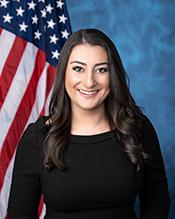
Sara Jacobs
DDemocratCA-51 · Representative
56
/ 100
Average
Attendance100
Avg: 96
Independence2
Avg: 4
Bipartisan Tone18
Avg: 15
Ethics Record100
Avg: 99
Transparency49
Avg: 53
Accountability Score — composite of attendance, independence, bipartisan tone, ethics record & transparency.
Methodology24
Bills Sponsored
0
Enacted into Law
0
Passed a Chamber
22
In Committee
All Sponsored Bills
HR10188In Committee
Protecting Pentagon Press Access Act
HR10189In Committee
Defense AI Reliability and Reporting Act
HR9782In Committee
Security Sector Governance Compacts Act
The proposal would establish formal agreements between the United States and other countries to improve how their military and security forces are governed and held accountable. These compacts would set standards for things like preventing corruption, protecting human rights, and ensuring proper oversight of security operations in partner nations. The bill aims to strengthen U.S. relationships with allies while promoting more transparent and responsible security practices worldwide.
HR9470In Committee
SAFER Health Act of 2026
The proposal would strengthen privacy protections for medical records related to pregnancy termination or miscarriage under existing federal health privacy laws, preventing health insurers and providers from sharing this sensitive information without explicit patient consent. It would apply to doctors, hospitals, insurance companies, and other healthcare organizations that handle patient data. The goal is to protect patients from having their pregnancy loss or abortion information disclosed to law enforcement, employers, or other third parties.
HR9220In Committee
Restore Military Families’ Voices Act
This bill would change the rules for military families living in privately-owned housing on or near military bases, making it easier for them to report problems like mold, pest infestations, or safety hazards without being punished by their landlords. Currently, some housing contracts include secrecy agreements that prevent tenants from speaking publicly about conditions or complaints, but this legislation would ban those restrictions and protect military families from losing their housing or facing other retaliation if they report issues to authorities or the media. The changes would apply to military personnel and their families who rent from private companies contracted to manage military housing.
HR9125In Committee
Sectoral AI Governance Act of 2026
Federal agencies would gain the power to create rules limiting how companies and government offices use artificial intelligence systems that could break laws the agencies are supposed to enforce. For example, the Labor Department could restrict AI hiring tools that discriminate against workers, or the Consumer Financial Protection Bureau could regulate algorithms that unfairly deny loans. This would give regulators a clearer way to prevent algorithmic systems from causing illegal discrimination, fraud, or other violations before they happen.
HRES1312In Committee
Honoring the victims of the Islamic Center of San Diego shooting in San Diego, California, on May 18, 2026.
This resolution honors the victims of a shooting that occurred at the Islamic Center of San Diego on May 18, 2026, and recognizes the impact of this tragedy on the community. The measure expresses the House's condolences to the victims' families and survivors while acknowledging the broader concerns about gun violence and community safety. Such resolutions serve as official statements of respect and solidarity during times of national mourning.
HCONRES101In Committee
Directing the President, pursuant to section 5(c) of the War Powers Resolution, to remove United States Armed Forces from hostilities with Iran.
This concurrent resolution directs the President to remove U.S. Armed Forces from hostilities against Iran or any part of its government or military unless a declaration of war or authorization to use military force for such purpose has been enacted. The resolution specifies that it shall not be construed to prevent the United States from defending itself, its Armed Forces, its diplomatic facilities, or allied states from imminent attack.
HR8412In Committee
To direct the Secretary of Health and Human Services, acting through the Commissioner of Food and Drugs, to revise certain regulations related to infant and toddler beverages, and for other purposes.
The FDA would be required to update its rules about what can be sold as infant and toddler drinks, potentially restricting added sugars, artificial ingredients, or other components in beverages marketed for young children. This change would affect manufacturers of baby drinks and parents shopping for their young children, with the goal of improving nutrition and health outcomes for infants and toddlers.
HR8161In Committee
Expeditionary Diplomacy Act
This bill would encourage the State Department to conduct more "expeditionary diplomacy," which means sending diplomats out into the field to work directly in communities and regions rather than staying only in embassy offices. The goal is to help diplomats better understand local conditions and build stronger relationships with people in foreign countries by being more present and engaged on the ground. This would affect how the State Department operates and conducts its diplomatic work around the world.
HCONRES82In Committee
Supporting the goals and ideals of International Transgender Day of Visibility.
This resolution expresses support for International Transgender Day of Visibility, a day dedicated to recognizing and celebrating transgender people and raising awareness about discrimination they face. The measure affirms congressional support for transgender rights and equality, though as a resolution it does not create new laws or programs but rather makes a statement of principle about protecting transgender individuals from discrimination.
HR6196Reported
Locally Led Development and Humanitarian Response Act
This bill would give local communities and organizations in developing countries more control over how international aid and humanitarian assistance are planned and delivered, rather than having decisions made primarily by foreign governments or international agencies. The goal is to make aid programs more effective by letting people on the ground decide what their communities actually need. The bill affects how U.S. foreign aid is distributed and managed, impacting both aid-receiving countries and the organizations that deliver humanitarian assistance.
HR7903In Committee
Justice for Hind Rajab Act
This bill addresses international accountability for actions that resulted in the death of a Palestinian child, likely by establishing legal mechanisms or diplomatic measures related to investigations and potential consequences. The legislation would affect U.S. foreign policy and international relations, particularly regarding how the country responds to civilian casualties in conflict zones. The bill has been sent to committees that handle foreign affairs and legal matters to determine what actions the U.S. government should take.
HR7052Reported
Conflict Prevention Act
The legislation would establish new diplomatic tools and funding mechanisms to help prevent conflicts between nations before they escalate into wars. It would direct the State Department and other agencies to identify regions at risk of violence and deploy resources like mediation efforts, economic partnerships, and development aid to reduce tensions. The measure affects foreign policy professionals, international organizations, and countries receiving U.S. diplomatic engagement.
HRES963In Committee
Condemning antisemitism in all its forms, including the proliferation and amplification of antisemitic content on artificial intelligence (AI) platforms, urging robust, transparent safeguards for AI, and recognizing stakeholders working to counter this threat.
Congress is calling for stronger protections against antisemitic hate speech on artificial intelligence platforms and urging AI companies to be more transparent about how they prevent such content from spreading. The resolution recognizes that AI systems can amplify hateful messages and demands that tech companies put safeguards in place to stop this from happening. It also acknowledges organizations and individuals already working to combat antisemitism online.
HR6797In Committee
Bipartisan IVF for Military Families Act
This bill would make in vitro fertilization (IVF) treatments more accessible and affordable for active-duty military members and their families by expanding coverage through military health insurance. The legislation aims to help military families who struggle with infertility access fertility treatments that are often expensive, recognizing that military service can sometimes delay family planning or create unique healthcare needs. The bill would apply to service members in all branches of the military and their eligible dependents.
HR6573In Committee
AI Talent Act
The legislation would allow the federal government to hire and retain artificial intelligence experts and tech specialists more easily by offering them competitive salaries and benefits similar to what private tech companies provide. This would help government agencies recruit talented workers in AI and related fields who might otherwise choose higher-paying jobs in the private sector, potentially improving how federal agencies develop and use AI technology.
HR4502In Committee
Silver Shield Act of 2025
The bill likely aims to strengthen U.S. diplomatic or military partnerships and protections in response to international challenges, though the specific details are unclear from the title alone. Based on its referral to the Foreign Affairs Committee, it probably addresses how America engages with other countries, manages international agreements, or supports allies abroad. The exact impact on workers, businesses, or citizens would depend on whether it involves trade, military aid, sanctions, or other foreign policy tools.
HR3916In Committee
My Body, My Data Act of 2025
The legislation would give people stronger control over their personal health and genetic information collected by companies, requiring businesses to get clear permission before buying, selling, or sharing this sensitive data. Companies would have to tell people what health data they collect and allow individuals to delete or correct their information. The rules would apply to health tech companies, insurers, employers, and other businesses that handle personal medical or genetic information.
HR2557In Committee
IVF for Military Families Act
The proposal would make in vitro fertilization (IVF) treatments more accessible and affordable for active-duty military members, veterans, and their families by expanding coverage through military health insurance. Currently, military health plans have limited or no coverage for IVF, making fertility treatments expensive for service members who want to start or expand their families. The bill aims to help military families access the same reproductive health options that many civilian insurance plans already provide.
HCONRES23In Committee
Supporting the goals and ideals of International Transgender Day of Visibility.
This resolution expresses support for International Transgender Day of Visibility, which occurs annually on March 31st to recognize and celebrate transgender people and raise awareness about discrimination they face. The measure is largely symbolic and doesn't create new laws or programs, but rather affirms Congress's recognition of transgender rights and visibility issues. It affects how the federal government acknowledges and supports transgender individuals and communities.
HR2059In Committee
To prohibit the issuance of licenses for the exportation of certain defense articles to the United Arab Emirates, and for other purposes.
This bill would prevent the U.S. government from approving the sale and shipment of certain military equipment and weapons to the United Arab Emirates. The measure would restrict defense exports to that country, potentially affecting defense contractors and military aid relationships in the Middle East.
HR732In Committee
The Disaster Recovery Efficiency Act
The proposal would streamline how federal agencies respond to and recover from disasters by improving coordination between different government departments and reducing bureaucratic delays in getting aid to affected communities. It would help disaster victims, businesses, and local governments receive emergency assistance and rebuilding support more quickly after hurricanes, floods, earthquakes, and other major emergencies. The changes would affect FEMA, state emergency management agencies, and anyone who needs disaster relief.
HR515In Committee
Ensuring Military Readiness Not Discrimination Act
Ensuring Military Readiness Not Discrimination Act This bill addresses the standards for eligibility for service in the Armed Forces. Specifically, the bill provides that any qualifications established or applied relating to eligibility for service in any of the Armed Forces must not include any criteria relating to the race, color, national origin, religion, or sex (including gender identity, sexual orientation, or sex characteristics) of an individual. Additionally, any personnel policy developed or implemented by a military department with respect to members of the Armed Forces must ensure equality of treatment and opportunity for all persons, without regard to race, color, national origin, religion, or sex (including gender identity, sexual orientation, or sex characteristics).