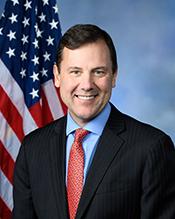
Thomas H. Kean, Jr.
RRepublicanNJ-7 · Representative
47
/ 100
Below Average
Attendance78
Avg: 96
Independence5
Avg: 4
Bipartisan Tone5
Avg: 15
Ethics Record100
Avg: 99
Transparency35
Avg: 53
Accountability Score — composite of attendance, independence, bipartisan tone, ethics record & transparency.
Methodology31
Bills Sponsored
0
Enacted into Law
3
Passed a Chamber
27
In Committee
All Sponsored Bills
HR10760In Committee
Healthy Minds for a Better Future Act
Healthy Minds for a Better Future Act This bill establishes the Middle School Mental Health Task Force at the Department of Education and the Department of Health and Human Services. The task force must study and report on the resources that are available to secondary school educators and parents for helping students who are experiencing mental health issues.
HR10678In Committee
Fight Against Fentanyl Act
HR10626In Committee
HELP STATES Act
HR10567In Committee
AI Emergency Button Act
HR10338In Committee
SEAL Team Six Congressional Gold Medal Act
HR10340In Committee
9/11 Legacy Preservation Act of 2026
HRES1523In Committee
Expressing support for the designation of November 20, 2026, as "Carbon Monoxide Poisoning Awareness Day".
HR10339In Committee
Terrorism Judgment Collection Act
HR5634In Committee
Veterans Flight Training Responsibility Act of 2026
This bill would establish new rules and oversight for flight training programs offered to veterans, likely requiring better accountability for how these programs are run and ensuring veterans receive quality instruction. The legislation would affect veterans seeking pilot training or aviation careers after military service, as well as the flight schools and organizations that provide these programs. It aims to protect veterans from poor-quality training while making sure federal support for these programs is used responsibly.
HR10160In Committee
Vet CENTERS for Mental Health Act of 2026
HR10244In Committee
No Taxpayer Funds for Congressional First Class Flights Act
HR10161In Committee
MANNARINO Act
HR10028In Committee
MOVE Act
The proposal would require Fannie Mae and Freddie Mac, the government-backed companies that buy and sell most home mortgages in the U.S., to start purchasing and packaging "portable mortgages" that borrowers could potentially transfer to a new home instead of paying off the old loan and getting a new one. This could make it easier and cheaper for homeowners to move without losing favorable mortgage terms, though it would represent a significant change to how the mortgage market currently operates. The change would primarily affect homebuyers, homeowners, mortgage lenders, and the two mortgage companies themselves.
HRES1444In Committee
Expressing support for maintaining the designation of the Delaware Water Gap National Recreation Area.
This resolution expresses congressional support for keeping the Delaware Water Gap National Recreation Area, a scenic area along the Pennsylvania-New Jersey border, under its current federal protection status. The measure affirms that Congress wants to maintain the recreation area's designation, which allows the public to use the land for outdoor activities like hiking, fishing, and camping while preserving its natural environment.
HR9709In Committee
Medicare Premiums Reduction Act of 2026
The proposal would change how Medicare Part B premiums are calculated for higher-income seniors, adjusting the rules about when wealthier beneficiaries have to pay extra charges on top of their regular premiums. Currently, Medicare uses income thresholds from two years prior to determine these surcharges, and this bill would modify that system in ways that could affect what seniors pay depending on their income level. The change would primarily impact higher-income Medicare beneficiaries and could alter how much they contribute to the program.
HR9551In Committee
Mental Health Parity Enforcement and Funding Act
Insurance companies and health plans that fail to treat mental health coverage the same as physical health coverage would face financial penalties from the federal government. The law would give regulators a stronger enforcement tool to ensure that people with mental health conditions aren't charged higher copays, denied coverage, or face other unfair treatment compared to those seeking treatment for physical illnesses. This affects anyone with health insurance who relies on mental health services like therapy or psychiatric care.
HR5584In Committee
LIFT AI Act
Literacy in Future Technologies Artificial Intelligence Act or the LIFT AI Act This bill authorizes the National Science Foundation to make merit-based grants to institutions of higher education, nonprofit organizations, and consortia of such entities to support artificial intelligence (AI) literacy for K-12 students and educators. Grants may be used for research and development of educational curricula, instructional material, professional development for teachers, and evaluation methods for AI literacy at the K-12 level.
HR9061In Committee
PREEMPT Act
The federal government would direct states to cover certain blood tests that screen for and detect preeclampsia—a dangerous pregnancy condition—under Medicaid and the Children's Health Insurance Program. This would help ensure pregnant women, particularly low-income women covered by these programs, can access early detection tests that could prevent serious health complications. The guidance would clarify which specific tests states should pay for to catch this condition before it becomes life-threatening.
HR6322In Committee
Stop Stealing our Chips Act
Stop Stealing our Chips Act This bill creates a whistleblower incentive program and establishes whistleblower protections for individuals who provide information to the Department of Commerce's Bureau of Industry and Security (BIS) related to violations of U.S. export control laws. Currently, BIS administers and enforces controls on the export of dual-use goods (e.g., items with both civilian and military uses) and certain military parts and components. These export controls are implemented primarily under the Export Control Reform Act of 2018 (ECRA) through the Export Administration Regulations. Under the bill, BIS must establish a whistleblower incentive program to reward individuals who voluntarily report original information that results in BIS (1) imposing fines under ECRA on persons that violate, attempt to violate, conspire to violate, or cause a violation of ECRA or any related regulation, order, license, or authorization; or (2) requiring the forfeiture of property that results in net proceeds. Additionally, BIS must establish a secure online portal for whistleblowers to report violations of ECRA. The bill outlines requirements for BIS to review, investigate, and provide status updates related to these reports. The bill requires BIS to pay an award to certain whistleblowers who voluntarily reported original information that led to the imposition of a fine under ECRA. The bill establishes the Export Compliance Accountability Fund for paying these awards and funding related activities. The bill also sets forth whistleblower protections by (1) prohibiting employers from impeding communication or retaliating against individuals who act as whistleblowers, and (2) establishing confidentiality requirements.
HR8106In Committee
RESCUE Act
This bill would impose financial and economic penalties against Rosatom, Russia's state nuclear energy company, likely in response to Russian government actions or policies. The sanctions could restrict Rosatom's ability to do business with American companies, access U.S. financial markets, or conduct other international transactions. The measure would primarily affect the Russian government and nuclear industry, though it could have indirect impacts on global energy markets and companies that do business with Rosatom.
HRES1133In Committee
Designating November 7 of each year as ''Shwachman Diamond Syndrome Awareness Day''.
This bill would officially recognize November 7 each year as Shwachman Diamond Syndrome Awareness Day to help raise public attention about this rare genetic blood disorder that affects bone marrow function and digestion. The designation would encourage awareness campaigns and education about the disease, which primarily impacts children and can lead to serious health complications. This is a symbolic measure that does not create new programs or funding, but aims to highlight a condition that many people have never heard of.
HR5419Passed House
Enhancing Administrative Reviews for Broadband Deployment Act
Enhancing Administrative Reviews for Broadband Deployment Act This bill requires the Department of the Interior and the Forest Service to study and report on any barriers to and staffing needs for completing timely reviews of requests for communications use authorizations. (These are requests for easements, rights-of-way, leases, licenses, or other authorizations to locate or modify a transmitting device, support structure, or other communications facility on public lands or National Forest System land.)
HR7648In Committee
Local Taxpayer Protection Act of 2026
The bill would likely restrict how federal funds flow to local governments and organizations that don't fully cooperate with federal immigration enforcement efforts. It aims to protect taxpayers by potentially withholding federal money from cities or states that limit their police departments' involvement in immigration enforcement or that provide services to undocumented immigrants. The measure would affect local governments, law enforcement agencies, and communities that have adopted sanctuary policies limiting immigration enforcement cooperation.
HR7168In Committee
Seton Hall Fire Victims Remembrance Act of 2026
HR6265Reported
Safer GAMING Act
The bill would establish new safety standards and protections for online gaming platforms, likely including requirements for age verification, fraud prevention, and responsible gambling features to protect players from exploitation and underage access. It would affect gaming companies, online platforms, and individual players by imposing rules on how these services operate and market their products. The measure has advanced through a House subcommittee and is being considered by the full committee.
HR6423In Committee
HELP Copays Act
The bill would likely reduce or limit the copayments that patients have to pay when they visit the doctor or fill prescriptions, making healthcare more affordable for people struggling with out-of-pocket costs. By lowering these upfront fees, the legislation could help more people access medical care without delaying treatment due to cost concerns. The bill has been sent to two House committees for review and consideration.
HR5956In Committee
Defending Against Foreign Propaganda Act
This bill would likely create rules or requirements for identifying and limiting the spread of propaganda and disinformation from foreign governments on American platforms and media. It would probably affect social media companies, news outlets, and other communications platforms by requiring them to disclose or take action against foreign-sponsored content. The goal appears to be protecting Americans from being manipulated by foreign governments trying to influence public opinion or interfere in U.S. affairs.
HRES848In Committee
Supporting the role of the United States in helping save the lives of children and protecting the health of people in low-income countries with vaccines and immunization through Gavi, the Vaccine Alliance ("Gavi").
The U.S. government would provide financial support to Gavi, an international organization that works to deliver vaccines and immunization programs to children and people in low-income countries around the world. This funding would help expand vaccination efforts in developing nations to prevent diseases and save lives. The bill affects American taxpayers who would fund this international health initiative, as well as millions of children and families in poorer countries who would gain access to vaccines.
HR5772In Committee
Remembering American Hostages Act of 2025
The legislation would establish a federal holiday or commemorative day to honor Americans who have been held hostage by foreign governments or terrorist organizations. The measure aims to recognize the sacrifices of hostages and their families while raising public awareness about hostage situations. This would affect how the government acknowledges these cases and could include official recognition ceremonies or educational initiatives.
HR2503Passed House
Undersea Cable Control Act
Undersea Cable Control Act This bill requires the President and the Department of Commerce to take certain actions to prevent foreign adversaries from acquiring items needed to support the construction, maintenance, or operation of undersea cable projects. For the purposes of this bill, a foreign adversary is any foreign government or nongovernment person (entity or individual) engaged in certain conduct that significantly and adversely affects U.S. national security. Within one year of the bill's enactment, the President must seek to enter into agreements with allies and partners to prevent such items from being available to foreign adversaries. Furthermore, Commerce must determine the appropriate level of export and transfer controls for such items under the Export Administration Regulations. The bill also requires Commerce to develop a strategy to prevent such items from being available to foreign adversaries. The President must report annually to Congress on this strategy.
HR1765Passed House
Promoting United States Wireless Leadership Act of 2025
Promoting United States Wireless Leadership Act of 2025 This bill requires the National Telecommunications and Information Administration (NTIA) to encourage companies and other relevant stakeholders to participate in organizations that set standards for wireless communications networks and equipment. NTIA must also offer technical assistance to facilitate such participation. NTIA may not encourage or facilitate participation by companies and stakeholders determined to pose a threat to U.S. national security.