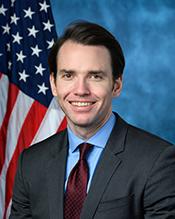
Kevin Kiley
RRepublicanCA-3 · Representative
63
/ 100
Average
Attendance99
Avg: 96
Independence8
Avg: 4
Bipartisan Tone26
Avg: 15
Ethics Record100
Avg: 99
Transparency74
Avg: 53
Accountability Score — composite of attendance, independence, bipartisan tone, ethics record & transparency.
Methodology14
Bills Sponsored
0
Enacted into Law
0
Passed a Chamber
13
In Committee
All Sponsored Bills
HR3495In Committee
Direct Seller and Real Estate Agent Harmonization Act
Direct Seller and Real Estate Agent Harmonization Act This bill excludes a real estate agent or a direct seller of consumer products from the definition of an employee for the purpose of applying the Fair Labor Standards Act of 1938 (FLSA). Workers who are considered employees under the FLSA must be paid the minimum wage and are generally eligible to receive overtime compensation for hours worked in excess of a 40-hour workweek.
HR9746In Committee
Biomass Facility Construction Act
The legislation would provide tax incentives and financial support to help companies build new facilities that convert biomass—organic materials like wood waste, agricultural residue, and other plant-based materials—into energy or fuel. This would affect energy companies, construction workers, and rural communities that produce agricultural and forestry waste, potentially creating jobs while promoting renewable energy alternatives to fossil fuels.
HR4889In Committee
To prohibit States from carrying out more than one Congressional redistricting after a decennial census and apportionment.
This bill prohibits a state where the congressional districts have been redistricted after a decennial census from carrying out another redistricting until after the next apportionment of Representatives following a decennial census, unless a court requires the state to conduct a subsequent redistricting to comply with the Constitution or enforce the Voting Rights Act of 1965. The bill is applicable to any congressional redistricting which occurs after the November 2024 election.
HR8692In Committee
SAM Act of 2026
The federal government would allow transportation grants to be used for buying and setting up technology for self-driving shared vehicles, such as autonomous shuttles or ride-sharing cars. This would give cities and transportation agencies more flexibility in how they spend federal money to modernize their transportation systems. The change would primarily affect local governments, transportation companies, and technology developers working on autonomous vehicle projects.
HR8252In Committee
Gas Tax Reduction Act
This bill would likely reduce the federal tax on gasoline that drivers pay at the pump, which currently funds road and bridge construction and maintenance. Lower gas taxes would mean cheaper fuel for consumers and businesses that rely on transportation, but could reduce the money available for infrastructure projects unless replaced by other funding sources. The bill has been sent to the House transportation committee for review.
HR7619In Committee
Keep Jobs in California Act of 2026
This bill would likely impose taxes or create tax penalties on companies that move jobs out of California or relocate their operations to other states. The measure is designed to discourage businesses from leaving the state and protect California workers from losing employment opportunities. It would affect corporations and businesses considering relocation, potentially making it more expensive for them to move operations elsewhere.
HR1320In Committee
Modern Worker Security Act
The bill would update labor protections and workplace security rules for employees in the modern economy, likely addressing issues like gig work, remote employment, or workplace safety standards that have changed since existing laws were written. It would affect workers across various industries and potentially require employers to meet new requirements for how they classify and protect their workforce. The measure is currently under review in Congress before any vote takes place.
HR1319In Committee
Modern Worker Empowerment Act
This bill specifies a legal standard for determining whether an individual is considered an independent contractor rather than an employee for the purposes of federal labor laws that address issues such as the federal minimum wage, overtime compensation, and collective bargaining. The rights and protections provided by these laws exclusively apply to employees. Under the bill, an individual is considered an independent contractor if (1) another individual or entity does not exercise significant control over the details of how the individual's work is performed, without regard to any control the other individual or entity may exercise over the final result of the work performed; and (2) while performing such work, the individual has opportunities and risks inherent with entrepreneurship (for example, the discretion to exercise professional judgment). The bill also sets forth factors that may not be used to determine whether an individual is an employee. Specifically, factors such as whether another individual or entity requires the individual to meet certain legal, health and safety, insurance, or performance requirements may not be used to make such a determination.
HR7255In Committee
Santini-Burton Modernization Act of 2026
This bill would update federal policies governing public lands and natural resources, likely modernizing how the government manages forests, parks, and other publicly owned land. The changes would affect how federal agencies operate, potentially impacting outdoor recreation, conservation efforts, and resource extraction on public property, as well as communities and businesses that depend on access to these lands.
HR5820In Committee
Mono Lake Kootzaduka’a Tribe Recognition Act
Mono Lake Kootzaduka'a Tribe Recognition Act This bill extends federal recognition to the Mono Lake Kootzaduka'a Tribe. The bill makes the tribe and its members eligible for services and benefits provided to federally recognized tribes and their members, without regard to the existence of a reservation or the location of the residence of any member. The service area of the tribe is considered to be Mono and Inyo Counties, California. In addition, the bill grants the tribe hunting and fishing rights on all federal lands within its aboriginal land area. Further, the tribe must submit a membership roll to the Department of the Interior as a condition of receiving recognition, services, and benefits. The tribe must maintain the membership roll. Interior, upon the request of the tribe, must take into trust certain land in Mono County, California, for the benefit of the tribe.
HR5194In Committee
Beautifying Federal Civic Architecture Act of 2025
This bill would establish new standards and requirements for the design and appearance of federal government buildings to make them more visually appealing and architecturally significant. The legislation likely aims to improve how federal buildings look and function, potentially affecting federal employees who work in these buildings, the public who visits them, and construction companies hired to renovate or build them. The bill has been sent to a subcommittee that handles federal property and building management.
HR3007In Committee
Medicare Protection Act of 2025
Medicare Protection Act of 2025 This bill excludes the proceeds of a sale of an individual's principal residence from counting as income for purposes of determining the individual's premiums under Medicare medical services.
HR1874Introduced
To amend the Coastal Zone Management Act of 1972 to establish a conclusive presumption that a State concurs to certain activities, and for other purposes.
This bill would change how states approve coastal development projects by automatically treating a state as having approved certain activities if it doesn't respond within a set timeframe, rather than requiring explicit approval. The change would make it easier for companies and developers to move forward with coastal projects like energy infrastructure or construction without waiting for formal state permission. States and environmental groups would likely be affected, as this shifts power away from state governments to block unwanted coastal development.
HR584In Committee
No Medicaid for Illegal Immigrants Act of 2025
No Medicaid for Illegal Immigrants Act of 2025 This bill prohibits state Medicaid programs from covering individuals who are unlawfully present in the United States, except for certain emergency services for which federal payment is authorized under current law.