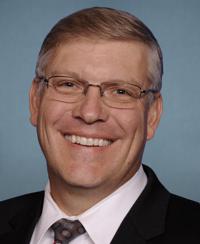
Barry Loudermilk
RRepublicanGA-11 · Representative
52
/ 100
Average
Attendance94
Avg: 96
Independence1
Avg: 4
Bipartisan Tone10
Avg: 15
Ethics Record100
Avg: 99
Transparency45
Avg: 53
Accountability Score — composite of attendance, independence, bipartisan tone, ethics record & transparency.
Methodology15
Bills Sponsored
0
Enacted into Law
2
Passed a Chamber
13
In Committee
All Sponsored Bills
HR1483In Committee
Protecting Investors’ Personally Identifiable Information Act
Protecting Investors' Personally Identifiable Information Act This bill limits certain disclosures of personally identifiable information belonging to a participant in the securities market for purposes of tracking market activity. Specifically, the bill prohibits the Securities and Exchange Commission (SEC) from requiring a national securities exchange, a national securities association, or a member of such an exchange or association to provide such information to satisfy the reporting requirements of the Consolidated Audit Trail (data used by regulators to track market activity).
HR5362Passed House
To name the Department of Veterans Affairs multispecialty clinic in Marietta, Georgia, as the "Colonel Michael H. Boyce Department of Veterans Affairs Multispecialty Clinic".
This bill designates the multispecialty clinic of the Department of Veterans Affairs in Marietta, Georgia, as the Colonel Michael H. Boyce Department of Veterans Affairs Multispecialty Clinic or the Colonel Michael H. Boyce VA Clinic.
HR5775In Committee
FCRA Liability Harmonization Act
FCRA Liability Harmonization Act This bill limits the amount of damages and costs consumer credit reporting agencies must pay for violations of the Fair Credit Reporting Act (FCRA), which regulates the use of consumer information for credit reporting purposes. Under FCRA, consumer credit reporting agencies may be found civilly liable to consumers for willful or negligent noncompliance. The bill eliminates the ability of courts to award unlimited punitive damages to a consumer for a consumer credit reporting agency’s willful noncompliance with FCRA. Regarding a consumer credit reporting agency’s willful or negligent noncompliance with FCRA, the bill limits the amount that may be awarded to consumers for court costs, and in class action lawsuits, specifically by prohibiting the court from applying a minimum amount of damages for each class member and by limiting the total recovery amount of the class.
HRES1314In Committee
America 250 Commemorative Flag Act.
The legislation would authorize the creation and sale of a special commemorative flag to mark the 250th anniversary of American independence in 2026. Proceeds from selling these flags would go toward funding patriotic events and educational programs celebrating this milestone. The measure would allow Americans to purchase an official flag design while supporting community commemoration activities.
HR1799In Committee
Financial Reporting Threshold Modernization Act
Financial Reporting Threshold Modernization Act This bill increases the threshold amounts for certain reporting by financial institutions, adjusts these amounts periodically for inflation, and requires a review of specified financial forms and reporting requirements. The bill increases the threshold dollar amounts above which financial institutions are required to file currency-transaction and suspicious-activity reports with the Financial Crimes Enforcement Network (FinCEN). The bill also increases the transaction threshold above which an entity must register with FinCEN as a money services business. Further, these amounts must be updated every five years to reflect the change in the consumer price index. Treasury must review and report on the effectiveness and efficiency of the forms and requirements regarding domestic coin and currency transactions, foreign currency transactions, and anti-money laundering and combating the financing of terrorism measures, among other matters. Treasury must also make appropriate updates to such forms. The bill also extends through 2031 the requirement that the director of FinCEN must be made annually available for testimony before congressional committees regarding certain FinCEN issues, including resources needed to implement beneficial ownership reporting requirements.
HR6550In Committee
American FIRST Act of 2025
The bill aims to strengthen financial regulations and oversight of the banking and financial sector, likely focusing on consumer protections, lending practices, or market stability. While the specific provisions aren't detailed in the available information, the legislation would affect banks, financial institutions, and potentially consumers who use financial services. The bill is currently awaiting consideration by the full House of Representatives.
HR6551In Committee
New BANK Act of 2025
The New BANK Act would make changes to banking regulations and financial sector rules, though the specific details aren't clear from the title alone. Based on its placement in the legislative process, the bill likely aims to modify how banks operate, what they're required to do, or how they're supervised by federal agencies. The changes would affect banks, their customers, and potentially borrowers and investors who rely on the financial system.
HR1078In Committee
Respect State Housing Laws Act
Respect State Housing Laws Act This bill eliminates a provision that requires a 30-day notice period before a landlord may begin eviction proceedings against a tenant in federally assisted or federally backed housing.
HR5644In Committee
Catastrophic Specialty Hospital Act of 2025
This bill would establish a new category of specialty hospitals designed to treat patients with severe, complex medical conditions that require intensive care. The legislation likely aims to create Medicare payment rules and operational standards for these hospitals so they can serve critically ill patients while managing costs for the healthcare system. The bill would affect hospitals specializing in catastrophic care, Medicare beneficiaries needing intensive treatment, and potentially insurance companies and healthcare providers involved in treating the most medically complex cases.
HR5520In Committee
Portal for Appraisal Licensing Act of 2025
The legislation would create a centralized online system where people can apply for and manage appraisal licenses across different states, streamlining a process that currently requires navigating separate state requirements. This would make it easier for appraisers—professionals who evaluate property values for banks and homebuyers—to get licensed and work in multiple states without duplicating paperwork and fees. The change could speed up home loan approvals and reduce costs for both appraisers and the financial institutions that hire them.
HRES605Passed House
Establishing the Select Subcommittee to Investigate the Remaining Questions Surrounding January 6, 2021.
This resolution establishes a select investigative subcommittee of the Committee on the Judiciary called the Select Subcommittee to Investigate the Remaining Questions Surrounding January 6, 2021. The select subcommittee shall be composed of not more than eight Members, Delegates, or the Resident Commissioner appointed by the Speaker of the House, of whom not more than three shall be appointed in consultation with the minority leader. The resolution authorizes and directs the select subcommittee to conduct a full and complete investigation and study and issue a final report of the events surrounding January 6, 2021. The resolution authorizes the chair of the select subcommittee to receive information available to the Permanent Select Committee on Intelligence; to extend certain periods for questioning witnesses; and to use depositions, subpoenas, and interrogatories to collect information. The select subcommittee may not hold a markup of legislation. The select subcommittee's final report shall be submitted to the Committee on the Judiciary by December 31, 2026. The select subcommittee terminates 30 days after filing the final report or on the last day of the 119th Congress, whichever comes first.
HR3380In Committee
TAILOR Act of 2025
Taking Account of Institutions with Low Operation Risk Act of 2025 or the TAILOR Act of 2025 This bill addresses the supervision of financial institutions. Federal financial regulatory agencies must (1) tailor any regulatory actions so as to limit burdens on the institutions involved, with consideration of the risk profiles and business models of those institutions; and (2) report to Congress on specific actions taken to do so, as well as on other related issues. The bill's tailoring requirement applies to future regulatory actions and to regulations adopted within the last 15 years. The bill also reduces certain reporting requirements for community banks eligible for a simplified capital leverage ratio. Finally, federal banking agencies must report on the modernization of bank supervision, including examiner workforce and training and statutory changes necessary to achieve more effective supervision.
HR3402In Committee
To amend the Securities Exchange Act of 1934 to require certain disclosures by institutional investment managers in connection with proxy advisory firms, and for other purposes.
This bill requires certain institutional investment managers that use proxy advisory firms to disclose information related to voting on shareholder proposals. (Proxy advisory firms provide voting services and advice to institutional investors in public companies for proposals presented at shareholder meetings.) Generally, institutional investment managers must report annually (1) how the manager voted on each shareholder proposal, (2) the percentage of votes cast in accordance with proxy advisory firm recommendations, and (3) explanations such as how votes are reconciled with fiduciary duties. Managers must also certify that votes were based solely on the best economic interest of the shareholders. In addition, large institutional investment managers must (1) inform customers that shareholders are not required to vote on every proposal; (2) on certain votes, determine through an economic analysis the vote that is in the best economic interest of shareholders; and (3) report any such analysis annually.
HR3355In Committee
Ensuring U.S. Authority over U.S. Banking Regulations Act
Ensuring U.S. Authority over U.S. Banking Regulations Act This bill requires specified federal banking regulators to make disclosures (1) when issuing major rules to conform with recommendations from non-governmental international organizations, and (2) when engaging with certain non-governmental international organizations about climate-related topics. Specifically, the Board of Governors of the Federal Reserve System, the Office of the Comptroller of the Currency, the Federal Deposit Insurance Corporation, the National Credit Union Administration, and the Federal Housing Finance Agency must submit to Congress notice, testimony, and a detailed economic analysis with respect to a major covered rule prior to its issuance. A major covered rul e under the bill is a rule (1) that has an effect on the U.S. economy of at least $10 billion over a 10-year-period, and (2) that is intended to align or conform with a recommendation from a non-governmental international organization (including the Financial Stability Board and the Basel Committee on Banking Supervision). Further, in order to engage with certain international organizations about climate-related financial risks, these regulators must report annually on (1) the international organization’s activities that the regulator participates in, such as a task force or committee; and (2) the organization's governmental and non-governmental funding sources.
HR2331In Committee
Transparency in CFPB Cost-Benefit Analysis Act
Transparency in CFPB Cost-Benefit Analysis Act This bill sets forth information required to be included in a rulemaking made by the Consumer Financial Protection Bureau (CFPB). Specifically, the CFPB must publish a justification of the proposed rulemaking; a quantitative and qualitative assessment of all anticipated direct and indirect costs and benefits; alternatives to the proposed rulemaking; impacts on small businesses; and any assumptions, data, or studies used in preparing this information.