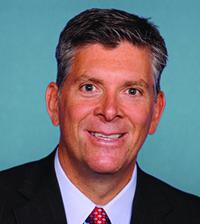
Darin LaHood
RRepublicanIL-16 · Representative
59
/ 100
Average
Attendance94
Avg: 96
Independence1
Avg: 4
Bipartisan Tone33
Avg: 15
Ethics Record100
Avg: 99
Transparency55
Avg: 53
Accountability Score — composite of attendance, independence, bipartisan tone, ethics record & transparency.
Methodology29
Bills Sponsored
0
Enacted into Law
3
Passed a Chamber
26
In Committee
All Sponsored Bills
HR10499In Committee
Meals for Communities Tax Credit Act
HR5470In Committee
Route 66 National Historic Trail Designation Act
This bill would officially designate Route 66 as a National Historic Trail, giving it the same protected status as other historically significant trails across the country. The designation would help preserve the famous highway's cultural and historical landmarks while potentially increasing tourism and funding for restoration projects along the route that stretches from Chicago to Los Angeles. States and communities along Route 66 would gain federal support and resources to maintain and promote the trail's historical significance.
HR10075In Committee
First-Time Homebuyer Affordability Act
HR9518In Committee
Health Savings for Families Act of 2026
Currently, married couples cannot contribute to a health savings account if either spouse has a health flexible spending account, even if they have separate coverage. This bill would change that rule to allow one spouse to contribute to a health savings account while the other spouse uses a flexible spending account. The change would give families more flexibility in how they save money for medical expenses.
HR9150In Committee
Boxing Therapy for Parkinson’s Access Act
Boxing Therapy for Parkinson's Access Act This bill requires the Department of Veterans Affairs (VA) to furnish boxing-based exercise classes to veterans who (1) are enrolled in the VA health care system, (2) have been diagnosed with Parkinson's disease (or a similar movement disorder), and (3) elect to participate in such classes to treat the disease or disorder.
HR9100In Committee
Modernizing Agricultural and Manufacturing Bonds Act
The legislation would update the rules for special bonds that help finance agricultural and manufacturing projects, making it easier for farmers and factory owners to access cheaper financing for equipment, facilities, and other business investments. By modernizing these bond programs, the bill aims to reduce borrowing costs for businesses in these industries while potentially spurring economic growth in rural and industrial communities. The changes would affect agricultural operations, manufacturing companies, and the financial institutions that help fund their expansion and modernization efforts.
HR8933In Committee
Dietary Supplements Access Act
The proposal would allow people to use tax-advantaged health savings accounts and flexible spending accounts to pay for dietary supplements like vitamins and minerals without paying income taxes on that money, similar to how they currently use these accounts for prescription drugs and doctor visits. This change would primarily benefit individuals who regularly purchase supplements and have access to these employer-sponsored health accounts. The measure is currently under review by the House Committee on Ways and Means.
HR7432Passed House
Fostering the Future Act
Foster Youth Housing Opportunity Act This bill expands states' permissible uses of federal funds under the John H. Chafee Foster Care Program for Successful Transition to Adulthood (Chafee program) to include supportive housing services. The Chafee program is administered by the Department of Health and Human Services (HHS) Children's Bureau and provides funding to support youth and young adults who are in, or were formerly in, foster care with their transition to adulthood. The program is funded through formula grants awarded to child welfare agencies in states, certain territories, and participating tribes. The bill allows states to use such funds to provide supportive services (e.g., financial counseling) for youth up to the age of 26 who are seeking to obtain or retain housing and who have experienced foster care and receive assistance under the Department of Housing and Urban Development (HUD) Section 8 Family Unification Program. Additionally, HHS and HUD must jointly develop and issue guidance to state public child welfare agencies and public housing authorities to improve alignment and coordination of housing supportive services. HHS, in consultation with HUD, also must report information about foster youth who are receiving federal housing assistance and the outcomes for such youth, including the extent to which such youth are able to access stable housing and the rates of homelessness. The report must include findings from any evaluations of state programs and recommendations for improving coordination between public child welfare agencies and federal housing programs.
HRES1171In Committee
Supporting the designation of the week of April 20 through April 24, 2026, as "National Home Visiting Week".
This resolution would officially recognize the week of April 20-24, 2026, as "National Home Visiting Week" to raise awareness about programs where trained professionals visit families in their homes to provide support, education, and resources. Home visiting programs typically help new parents, low-income families, and families with young children by offering guidance on child development, parenting skills, and connections to community services. The designation aims to highlight the importance of these programs and encourage public recognition of the work they do to support families and improve child outcomes.
HRES1127In Committee
Expressing support for the designation of the week of March 22, 2026, through March 28, 2026, as "National Cleaning Week".
This resolution asks Congress to officially recognize the week of March 22-28, 2026, as "National Cleaning Week" to raise awareness about the cleaning industry and its workers. The designation is largely symbolic and doesn't create new laws or funding, but it encourages people and businesses to acknowledge the importance of cleaning professionals and sanitation practices. The measure affects cleaning companies, workers, and the general public by promoting recognition of an industry that many people rely on daily.
HR7620In Committee
CHEERS Act of 2026
The CHEERS Act would likely modify tax rules related to alcohol beverages or the hospitality industry, based on the acronym and taxation focus. Without access to the full bill text, the specific changes—such as tax rates, deductions, or credits for breweries, distilleries, bars, or restaurants—cannot be determined, but the measure would affect businesses and potentially consumers in the beverage and hospitality sectors. The bill is currently under review by the House committee responsible for tax legislation.
HR7594In Committee
Workforce Development Through Post-Graduation Scholarships Act of 2026
This bill would likely create tax incentives or credits to help employers or individuals pay for scholarships and training programs for recent college graduates entering the workforce. The goal appears to be making it easier and more affordable for young workers to gain additional skills or certifications after graduation, while potentially encouraging businesses to invest in employee development. Workers and employers in various industries would be the main groups affected by these tax changes.
HRES1022In Committee
Supporting the contributions of Catholic schools in the United States and celebrating the 52nd annual National Catholic Schools Week.
This resolution supports the goals of National Catholic Schools Week, an event cosponsored by the National Catholic Educational Association and the U.S. Conference of Catholic Bishops and established to recognize the contributions of Catholic elementary and secondary schools in the United States.
HR4689In Committee
To name the Department of Veterans Affairs community-based outpatient clinic in Bloomington, Illinois, as the "Andrew Jackson Smith Medal of Honor Department of Veterans Affairs Clinic".
This bill designates the community-based outpatient clinic of the Department of Veterans Affairs in Bloomington, Illinois, as the Andrew Jackson Smith Medal of Honor Department of Veterans Affairs Clinic.
HR5146In Committee
Federal Receivership Fairness Act
HR3919In Committee
Advanced AI Security Readiness Act
This bill would require the U.S. military and national security agencies to develop plans and standards for protecting against threats posed by advanced artificial intelligence systems, both from foreign adversaries and from AI systems that could malfunction or be misused. It aims to ensure that the armed forces and intelligence community are prepared to defend against AI-based attacks and can safely integrate AI technology into their own operations. The bill affects military personnel, defense contractors, and intelligence agencies responsible for keeping the country secure.
HR167Passed House
Community Reclamation Partnerships Act of 2025
Community Reclamation Partnerships Act of 2025 This bill revises the Abandoned Mine Land Reclamation Program, which restores land and water adversely impacted by surface coal mines that were abandoned before August 3, 1977. Until September 30, 2032, the bill allows a state with an approved reclamation program to enter into a memorandum of understanding with relevant federal or state agencies for remediating mine drainage on abandoned mine land and water impacted by abandoned mines. In addition, the bill authorizes a partnership between a state and a community reclaimer for remediating abandoned mine land if certain conditions are met. A community reclaimer is a person who (1) voluntarily assists a state in a reclamation project, (2) did not participate in the creation of site conditions at the proposed site or activities that caused any land or waters at the site to become eligible for reclamation or drainage abatement expenditures, and (3) is not subject to outstanding violations of surface coal mining permits.
HR3401In Committee
Retreaded Tire Jobs, Supply Chain Security and Sustainability Act of 2025
This bill would likely provide tax incentives or benefits related to the retreading (refurbishing) of used tires to encourage their reuse instead of disposal, while also addressing supply chain issues in the tire industry and promoting environmental sustainability. The measure would affect tire manufacturers, retreading businesses, and potentially consumers who purchase retreaded tires. By making tire retreading more economically attractive through tax policy, the bill aims to reduce waste, lower costs, and strengthen domestic tire supply chains.
HR3156In Committee
Jobs and Opportunity with Benefits and Services (JOBS) for Success Act of 2025
Jobs and Opportunity with Benefits and Services (JOBS) for Success Act of 2025 This bill reauthorizes the Temporary Assistance for Needy Families (TANF) program through FY2030, establishes new metrics for measuring states’ performance within the program, and makes other changes to the program’s requirements. Under current law, states participating in TANF are required to meet certain minimum participation rates, or percentages of beneficiaries engaged in work. The bill eliminates minimum participation rates and replaces them with metrics tied to employment outcomes, such as former beneficiaries’ rates of unsubsidized employment and earnings at particular points in time. The Department of Health and Human Services must publish a website with information on each state’s performance. The bill also requires states to create an individual opportunity plan for each beneficiary and to meet with each work-eligible beneficiary at least every 90 days to review the individual’s progress under their plan. (Under current law, individual plans are optional.) Further, the bill prohibits states from using TANF funds to provide benefits to families with monthly incomes that exceed twice the poverty line. Finally, the bill requires states to spend at least 25% of their TANF grant funds on certain activities, including work supports, education and training, and apprenticeships. The bill also lowers the percentage of TANF funds that a state may spend on administrative costs to 10%, with an exception for costs related to case management necessary to assist in the development of individual opportunity plans.
HR2940In Committee
Advancing Water Reuse Act
This bill would likely create tax incentives or credits to encourage businesses and municipalities to invest in water reuse systems that recycle and treat wastewater for reuse instead of discharging it. By making these water recycling projects more affordable through tax breaks, the legislation aims to help communities conserve water supplies and reduce strain on freshwater resources. The bill would primarily affect water utilities, industrial companies, and local governments that treat and manage water.
HR2941In Committee
Historic Tax Credit Growth and Opportunity Act of 2025
This bill would expand tax credits that encourage private investment in restoring historic buildings, making it easier and more profitable for developers and property owners to rehabilitate older structures instead of demolishing them. The changes would likely increase the financial incentives available to companies and individuals undertaking historic preservation projects, potentially spurring more renovation activity in communities across the country. Historic preservation workers, construction companies, and real estate developers would be the primary beneficiaries of these expanded tax benefits.
HR2725In Committee
Affordable Housing Credit Improvement Act of 2025
This bill would make changes to the Low-Income Housing Tax Credit, a program that gives tax breaks to developers and investors who build or renovate affordable housing for low-income renters. The changes would likely make it easier or more attractive for developers to participate in the program, potentially increasing the supply of affordable housing in communities across the country. Renters struggling with housing costs and housing developers would be the main groups affected.
HR1152Passed House
Electronic Filing and Payment Fairness Act
Electronic Filing and Payment Fairness Act This bill provides that a federal tax document or payment that is electronically submitted to the Internal Revenue Service (IRS) shall be considered delivered to the IRS on the date such document or payment is sent. Further, the bill requires the IRS to issue guidance on electronically submitted federal tax documents and payments no later than December 31, 2025. Under current law, a federal tax document or payment that is sent by mail is considered delivered to the IRS on the date that such document or payment is postmarked and is considered timely if the postmark date is on or before the due date of such document or payment. (This is known as the mailbox rule.) Further, under current law, the IRS is authorized to provide guidance on electronically submitted federal tax documents but not payments. In accordance with such authority, IRS guidance provides that the date that an authorized electronic return transmitter receives the transmission of an electronically filed document on its host system is the electronic postmark date. The bill expands the mailbox rule to include all electronically submitted federal tax documents and payments and specifically requires the IRS to provide guidance on electronically submitted payments.
HRES247In Committee
Expressing support for the designation of the week of March 23, 2025, through March 29, 2025, as "National Cleaning Week".
This resolution recognizes the essential services provided by the cleaning industry in maintaining sanitary conditions and supports the designation of National Cleaning Week to promote safe and clean environments at work, in schools, and at home.
HR1708In Committee
Rebuild America’s Health Care Schools Act of 2025
Rebuild America’s Health Care Schools Act of 2025 This bill allows hospitals to receive reimbursement under Medicare for certain costs associated with training nursing and allied health students in settings other than the hospital itself. Currently, hospitals may receive reimbursement under Medicare for the reasonable costs associated with training nursing and allied health students if certain conditions are met; the criteria vary depending on whether the students are enrolled in an educational program that is operated by the hospital or another entity. If the students are part of a program that is operated by another entity, the training must occur at the hospital itself or in areas immediately surrounding the hospital in order to qualify for reimbursement (among other requirements). The bill allows hospitals to receive reimbursement for these costs if the training is conducted at an entity that is related to the hospital (i.e., common ownership or control). The bill requires the Centers for Medicare & Medicaid Services (CMS) to update regulations to reflect these changes. Additionally, the CMS may not recoup or reduce payments to hospitals with respect to costs that are allowed under the bill and must refund any such recoupments or reductions that occurred during the six-year period prior to the bill's enactment.
HR1616In Committee
Promoting Access to Diabetic Shoes Act
Promoting Access to Diabetic Shoes Act This bill allows a nurse practitioner or physician assistant to fulfill documentation requirements for coverage, under Medicare, of special shoes for diabetic individuals. Under current law, such requirements may be satisfied only by a physician.
HR1200In Committee
Freight RAILCAR Act of 2025
The bill would likely provide tax incentives or breaks related to freight railcars, possibly to encourage companies to invest in rail transportation equipment or modernize their fleets. This could affect railroad companies, shippers who use rail transport, and potentially manufacturers of railcars by making it more affordable to buy or upgrade freight equipment. The specific tax benefits would be determined once the bill moves through the House Ways and Means Committee.
HCONRES4In Committee
Expressing the sense of Congress that tax-exempt fraternal benefit societies have historically provided and continue to provide critical benefits to the people and communities of the United States.
This concurrent resolution expresses the sense of Congress that tax-exempt fraternal benefit societies serve as a private economic and social support system, providing benefits to their members is necessary to support the charitable and fraternal activities of the volunteer chapters, and their work should continue to be promoted.
HRES74In Committee
Supporting the contributions of Catholic schools in the United States and celebrating the 51st annual "National Catholic Schools Week".
This resolution supports the goals of National Catholic Schools Week, an event cosponsored by the National Catholic Educational Association and the U.S. Conference of Catholic Bishops and established to recognize the contributions of Catholic elementary and secondary schools in the United States.