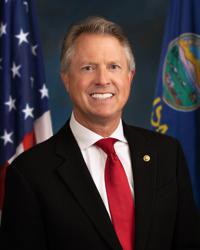
Roger Marshall
RRepublicanKS · Senator
53
/ 100
Average
Attendance99
Avg: 97
Independence23
Avg: 23
Bipartisan Tone6
Avg: 14
Ethics Record100
Avg: 100
Transparency16
Avg: 47
Accountability Score — composite of attendance, independence, bipartisan tone, ethics record & transparency.
Methodology57
Bills Sponsored
2
Enacted into Law
0
Passed a Chamber
50
In Committee
Bills That Became Law
All Sponsored Bills
S2403Enacted
Retire through Ownership Act
Retire through Ownership Act This bill allows the fiduciary of an Employee Stock Ownership Plan (ESOP) to rely on a valuation provided by an independent valuation expert or business appraiser in determining the fair market value of the plan's securities if the securities are not traded on a national securities exchange (i.e., not publicly traded) and the expert or appraiser follows specified methodologies. In general, ESOPs are defined contribution pension plans where employees accrue shares of their employers' stock in individual accounts as part of their compensation. After separating from employment or retiring, employees receive the cash value of their shares. Under the bill, an independent expert or appraiser must adhere to the methodology established under the Internal Revenue Service Ruling 59-60, which prescribes the factors a professional business appraiser should consider in forming a valuation of the stock for a closely held business.
S5672In Committee
Patients First Act of 2026
Patients First Act of 2026 This bill modifies payments and incentive programs under the Medicare physician fee schedule. The bill establishes a temporary program to provide hybrid payments for certain primary care services. Under the program, payments for services relating to care management, behavioral health integration, office-based evaluation and management (including telehealth), and communications (e.g., phone calls) are made on a monthly basis to providers for each individual that is attributed to the provider's practice. The monthly amount is based on the national average amount for such services. Providers may opt into the model; in order to qualify, providers must be owned or controlled by health care practitioners and must have had the majority of their prior year's payments consist of payments for the covered services. The bill also renames the Merit-based Incentive Payment System (MIPS) and modifies the program to include performance measures relating to care efficiency (e.g., reducing avoidable hospitalizations). (MIPS is an incentive program under Medicare that allows health professionals to receive payment adjustments based on certain performance measures.) The bill generally reduces the program's performance-based payment adjustments, including positive adjustments for providers that are not owned or controlled by health care practitioners. Finally, the bill allows for larger annual adjustments to the Medicare physician fee schedule and bases these adjustments on inflation. It also requires certain corrections to compensate for expenditures under the fee schedule that exceed a certain amount in a given year, and it limits how much certain adjustment factors may vary each year.
S5228In Committee
STOP the SWAMP Act
S5156In Committee
Retirement Simplification and Clarity Act
The proposal would allow people to move money from their existing retirement accounts into individual retirement annuities without waiting until retirement, giving workers more flexibility in how they manage their savings. This change would let people buy annuities (insurance products that provide guaranteed income) earlier in their careers if they choose to do so. The bill also includes other unspecified changes to tax rules related to retirement accounts.
S2355Reported
Patients Deserve Price Tags Act
This bill would require hospitals and healthcare providers to publicly display the prices they charge for medical services before patients receive treatment, similar to price tags in stores. The goal is to help patients understand what they'll pay out-of-pocket and compare costs between different providers, giving them more control over their healthcare spending decisions. The bill affects hospitals, clinics, insurance companies, and patients seeking medical care.
S5030In Committee
TRUTH in Coverage Act of 2026
This bill would require health insurance plans to cover medical treatments and procedures aimed at reversing or addressing complications from gender transition surgeries, if those plans currently cover gender transition procedures themselves. The requirement would apply to both employer-sponsored group health plans and individual insurance policies. Insurance companies and employers would need to provide these reversal or harm-reduction treatments to the same extent they cover transition-related care.
S4964In Committee
Protecting Innocent Taxpayers from Endless Assessments Act
Protecting Innocent Taxpayers from Endless Assessments Act This bill limits the amount of time the Internal Revenue Service (IRS) has to assess taxes related to fraudulent or false federal tax returns where there is no intent by the taxpayer to evade taxes. As background, the IRS generally has three years from the date that a tax return is filed (statute of limitations) to assess taxes owed by the taxpayer for the tax year. However, if a false or fraudulent tax return is filed with the intent to evade tax (fraud exception), then the IRS may assess taxes at any time. In Murrin v. Commissioner the U.S. Tax Court held (and the U.S. Court of Appeals for the Third Circuit affirmed) that the fraud exception applies when a tax return preparer places false or fraudulent entries on a tax return without the taxpayer’s knowledge. In contrast, the U.S. Court of Federal Claims held in BASR Partnership v. Commissioner that the fraud exception only applies if the taxpayer intends to evade taxes. The bill limits the fraud exception to cases in which the taxpayer intends to evade taxes.
SRES793Introduced
A resolution congratulating the Johnson County Community College Cavaliers on winning the 2026 National Junior College Athletic Association Division I Baseball National Championship.
Congress is officially recognizing and congratulating the Johnson County Community College baseball team for winning the 2026 NJCAA Division I national championship. This resolution honors the athletes, coaches, and staff who contributed to the team's success. The measure passed the Senate unanimously without any changes.
S3799Reported
Healthy Start Reauthorization Act of 2026
Healthy Start Reauthorization Act of 2026 This bill reauthorizes through FY2031 the Healthy Start program, which is administered by the Maternal and Child Health Bureau within the Health Resources and Services Administration. This program provides grants and other support for communities experiencing high rates of infant mortality and adverse maternal health outcomes, including support for case management, medical care, and health education. (For additional information on the Healthy Start program see CRS Insight IN12550 .)
S4628In Committee
A bill to direct the Secretary of Agriculture to establish an initiative to address the availability, quality, and cost of childcare in rural areas, and for other purposes.
This bill requires the Department of Agriculture (USDA) to establish the Expanding Childcare in Rural America Initiative to prioritize certain loans and grants that address childcare in rural areas. Under the bill, childcare includes eligible programs that provide quality care and early education for children who have not yet entered first grade. Under the initiative, USDA must give priority to applicants that propose to use certain loans or grants to address the availability, quality, or costs of childcare in rural areas. In addition, USDA must ensure a balanced geographical distribution of the benefits. USDA must conduct a comprehensive quantitative and qualitative evaluation of the projects carried out under the initiative and submit a report to Congress.
S4604In Committee
Protecting America’s Small Oil and Gas Producers and Rural Jobs Act
The proposal would change how oil and gas companies calculate tax deductions related to the depletion of their wells over time. Currently, these companies can deduct a percentage of their revenue as the oil and gas reserves get used up, and this bill would modify those percentage rates or rules. The changes would affect how much in taxes oil and gas producers owe to the federal government.
S4507In Committee
Bereaved Parents Rights Act
Hospitals and birthing centers would be required to inform mothers who experience miscarriages about their legal rights regarding what happens to the fetal remains, such as options for burial, cremation, or donation. The bill aims to ensure that mothers receive clear information about these choices during an emotionally difficult time rather than having decisions made without their knowledge or input. This requirement would apply to facilities that receive Medicare funding.
SRES710In Committee
A resolution recognizing Maternal Mental Health Day to raise awareness about maternal mental health.
Congress would officially recognize a day dedicated to raising awareness about the mental health challenges that mothers face, such as postpartum depression and anxiety. The resolution aims to draw public attention to maternal mental health issues and encourage support for pregnant women and new mothers dealing with these conditions. This symbolic action has no direct legal effect but signals congressional support for prioritizing maternal mental health as a public health concern.
S4479In Committee
ACCESS Act
The proposal would help low-income seniors and disabled people afford assisted living facilities by expanding Medicaid coverage for these services and creating tax credits to encourage developers to build more affordable housing with supportive services. This would make it easier for older adults and people with disabilities who cannot afford private assisted living to access care while remaining in their communities rather than moving to nursing homes. The changes would affect state Medicaid programs, housing developers, and millions of Americans struggling to pay for long-term care.
S4426In Committee
STOP Act
The bill would ban medical procedures related to gender transition for people under 18 years old and allow the federal government to fine doctors and medical providers who perform these procedures on minors. It would affect transgender youth seeking medical care, their families, and healthcare providers across the country. The proposal is currently under review by a Senate committee.
S4418In Committee
Lowering Input Costs for American Farmers Act
The bill would prevent the government from placing tariffs on imported phosphate fertilizers, which are commonly used in agriculture to help crops grow. This would keep fertilizer prices lower for American farmers and potentially reduce food production costs, though it could affect domestic fertilizer manufacturers who compete with foreign suppliers.
S4384In Committee
Medicare Advantage Improvement Act of 2026
The proposal would make changes to how Medicare Advantage plans operate, which are private insurance options that serve millions of seniors and disabled people who get their Medicare benefits through private companies instead of traditional government Medicare. The specific reforms would be determined as the bill moves through Congress, but they could affect how these plans are priced, what benefits they must cover, or how they operate. Seniors, disabled Medicare beneficiaries, and insurance companies offering these plans would be the main groups impacted by any changes.
S4372In Committee
No Bias in the Baseline Act
The legislation would require federal agencies to analyze how their spending and tax policies affect different demographic groups before implementing new programs or changes. This would help identify whether government decisions unintentionally favor or disadvantage certain populations based on race, gender, age, or other characteristics. The requirement would apply to Congress and executive agencies as they develop budgets and policies affecting workers, businesses, and the general public.
S4353In Committee
Health Savings Account Expansion Act
The proposal would make it easier for more people to open and use health savings accounts, which are special accounts where individuals can set aside pre-tax money to pay for medical expenses. Currently, these accounts are only available to people with high-deductible health insurance plans, but this change would expand who qualifies to use them. Workers and families would benefit by having more options to save money for healthcare costs in a tax-advantaged way.
S864In Committee
HELP Copays Act
This bill would likely limit or reduce the amount patients have to pay out-of-pocket when they visit the doctor or fill prescriptions, making healthcare more affordable for people struggling with high copayment costs. The legislation appears designed to ease the financial burden on patients while potentially affecting how insurance companies and healthcare providers structure their payment systems.
S3401In Committee
Pathways to Prosperity Act
This bill aims to create new educational and training programs to help workers develop job skills and advance their careers, particularly in growing industries. It likely focuses on connecting students and job seekers with apprenticeships, vocational training, and other pathways to well-paying jobs without requiring a four-year college degree. The legislation would affect workers seeking better employment opportunities, employers looking to fill skilled positions, and educational institutions offering training programs.
S3525In Committee
American Franchise Act
The bill would change how franchise businesses classify their workers, likely making it easier for franchisees (the people who own individual franchise locations) to be treated as independent business owners rather than employees of the parent company. This could affect whether workers at franchise locations like fast-food restaurants qualify for employee benefits and labor protections. The change would primarily impact franchise companies, franchise owners, and their workers.
S3842In Committee
21st Century WIC Act of 2026
This bill would modernize the WIC program (which provides food assistance to low-income pregnant women, new mothers, and young children) by updating how it operates in the 21st century, likely including changes to what foods can be purchased, how benefits are distributed, or how the program uses technology. The changes would affect millions of low-income families who rely on WIC to buy nutritious groceries for their children.
SRES593Introduced
A resolution honoring the victims of the 2025 Potomac River mid-air collision.
This resolution honors the memory of the victims of the Potomac River mid-air collision near Ronald Reagan Washington National Airport on January 29, 2025, and offers condolences to the families, loved ones, and friends of those who lost their lives in the incident. It also (1) acknowledges the bravery and professionalism of the first responders and emergency personnel, servicemembers, medical professionals, and investigators who assisted in the rescue and recovery efforts; and (2) expresses a commitment to translating the safety lessons learned from the collision into action.
S3637In Committee
ACE Agriculture Act of 2026
Advancing Cutting Edge Agriculture Act of 2026 or the ACE Agriculture Act of 2026 This bill reauthorizes the Agriculture Advanced Research and Development Authority (AGARDA) through FY2031 and expands the program's environmental sustainability goals. This Department of Agriculture (USDA) program supports innovative research and development of technology, research tools, and products to address long-term and high-risk challenges related to food and agriculture. The bill expands the program's goals to include water conservation; responding to greenhouse gas emissions; and resilience to drought, infectious diseases, and plant and animal pathogens and pests. The bill also expands the program's goals to include undertaking advanced research and development in areas in which industry by itself is not likely to do so because of economic cost. Further, the bill removes the current pilot program designation and requires USDA to establish and maintain an AGARDA staff. Finally, the bill allows USDA to use any unobligated USDA funds to implement the program.
S222Enacted
Whole Milk for Healthy Kids Act of 2025
Whole Milk for Healthy Kids Act of 2025 This act revises requirements for milk provided by the National School Lunch Program of the Department of Agriculture (USDA) to allow schools to offer students whole and reduced-fat milk. The act also requires that local school food service personnel receive annual training and certification on food allergies. The act permits schools to offer students whole, reduced-fat (2%), low-fat (1%), and fat-free flavored and unflavored milk. The milk that is offered may be organic or nonorganic. Currently, USDA regulations require milk to be fat-free or low-fat and allow milk to be flavored or unflavored. The act also removes the requirement that schools participating in the program must provide milk that is consistent with the most recent Dietary Guidelines for Americans. The act also expands the nondairy beverages that are included in the program by allowing schools to offer all students nondairy beverages that are nutritionally equivalent to fluid milk and that meet nutritional standards established by USDA. Further, schools currently must provide a substitute for fluid milk, on receipt of a written statement from a licensed physician, for students whose disability restricts their diet. Under the act, a parent or legal guardian may also provide the written statement. In addition, the act excludes fluid milk from the saturated fat content calculation for school meals. Currently, schools participating in the program must provide meals that meet certain nutrition requirements; USDA regulations require that the average saturated fat content of the meals offered must be less than 10% of the total calories. Under the act, milk fat included in any fluid milk provided by the program must not be considered saturated fat for the purposes of measuring compliance with USDA regulations. Finally, the program's mandatory training and certification for local school food service personnel must include a module on food allergies, including information on the best practices to prevent, recognize, and respond to food-related allergic reactions. Food service personnel must receive an annual certification to demonstrate competence in the food allergies training and other training modules that are provided.
S3642In Committee
WALZ Act
I don't have enough information to write an accurate summary. The title "WALZ Act" is too vague without knowing what it stands for or its specific provisions. To provide a meaningful explanation of what this bill would actually do and who it affects, I would need access to the bill's text or more detailed subject information beyond just "Health."
S3623In Committee
Credit Card Competition Act of 2026
S3602In Committee
Public Charge Clarification Act of 2026
S3412In Committee
Presidential Fitness Test Act of 2025
This bill would likely establish or reinstate a fitness testing program for school-age children, similar to historical presidential fitness initiatives, to measure and encourage physical fitness among students. The program would probably set fitness standards and track how well young people meet goals in areas like strength, endurance, and flexibility. Schools and students would be the main groups affected, as they would participate in the testing and potentially receive recognition for meeting fitness benchmarks.
S3389In Committee
Lowering Health Care Costs for Americans Act
The proposal aims to reduce what Americans pay for health care through various cost-control measures affecting insurance companies, pharmaceutical manufacturers, and healthcare providers. It would likely impact patients by lowering their out-of-pocket expenses and insurance premiums, while also potentially affecting how much drug companies can charge and how hospitals set their prices. The bill is currently under review by the Senate Finance Committee.
SRES496Introduced
A resolution expressing support for the designation of November 8, 2025, as "National First-Generation College Celebration Day".
This resolution expresses support for the designation of November 8, 2025, as National First-Generation College Celebration Day.
S3122In Committee
Better FDA Act of 2025
The legislation would make changes to how the Food and Drug Administration operates, though the specific reforms are not detailed in the available information. The bill would affect patients, pharmaceutical companies, and medical device manufacturers who interact with FDA approval processes. Once referred to the Senate committee, lawmakers will review the proposed modifications to FDA procedures and regulations.
S3099In Committee
DIRECT Act of 2025
The DIRECT Act of 2025 aims to strengthen agriculture and food systems, though the specific provisions are not yet detailed in available sources. Based on its referral to the Agriculture Committee, the bill likely addresses issues affecting farmers, food producers, or the food supply chain. Once the full text becomes available, it will be clearer which groups—such as agricultural workers, consumers, or rural communities—would be most affected by its provisions.
S2927In Committee
Mobile Cancer Screening Act
This bill would establish or expand mobile cancer screening programs that bring diagnostic services to underserved communities, making it easier for people who lack access to traditional medical facilities to get screened for various types of cancer. The legislation likely aims to reduce barriers like transportation and distance that prevent early cancer detection, particularly for low-income and rural populations who might otherwise go unscreened.
SRES359In Committee
A resolution honoring the life of Undersheriff Brandon Gaede and expressing condolences to his family.
SRES360In Committee
A resolution honoring the life of Deputy Elijah Ming and expressing condolences to his family.
S2316In Committee
Cooper Davis and Devin Norring Act
Based on the bill's title and crime-related subjects, this legislation likely addresses a specific law enforcement issue or creates new protections related to the individuals named in the title, though the exact provisions would depend on the bill's full text. The bill has been sent to the Judiciary Committee for review and discussion before any potential vote.
S2114In Committee
Commercial Motor Vehicle English Proficiency Act
S2090In Committee
Budget Reform Act of 2025
The proposal would change how the federal government creates and manages its annual budget, likely including new rules for how Congress plans spending and handles deficits. The changes would affect taxpayers, federal employees, and anyone who relies on government programs by potentially altering how quickly or efficiently funding decisions get made. Specific details about what reforms it includes are not yet available since the bill is still in early stages of review.
SRES274In Committee
A resolution commending Federal, State, and local law enforcement for their efforts in protecting Americans by combating drug trafficking and agroterrorism and for their recent actions in Kansas and across the country.
S1999In Committee
USDA CROP Act of 2025
The USDA CROP Act would likely establish or modify environmental protections related to agricultural practices, crop production, or land management under the Department of Agriculture's oversight. The bill would affect farmers, agricultural companies, and potentially consumers by setting new standards or requirements for how crops are grown and how farmland is managed to protect the environment. Since it's currently in committee, the specific details of what environmental rules it would create are still being developed.
SRES261In Committee
A resolution honoring the life of Sarah Lynn Milgrim and condemning the recent extremist attacks.
S1906In Committee
Innovative FEED Act of 2025
Innovative Feed Enhancement and Economic Development Act of 2025 or the Innovative FEED Act of 2025 This bill provides for the regulation of zootechnical animal food substances as food additives. The bill defines zootechnical animal food substance as a substance that is added to the food or drinking water of animals and that affects only the animal's gastrointestinal tract, with the intended purpose of affecting the byproducts of the animal's digestion, reducing foodborne pathogens, or altering the animal's gastrointestinal biome. The definition does not include substances that are used to treat or prevent diseases in animals, hormones, or active ingredients of animal drugs. Labels for zootechnical animal food substances must include a disclaimer that the substance may not be used to treat or prevent diseases in animals.
S1907In Committee
Plant Biostimulant Act of 2025
Plant Biostimulant Act of 2025 This bill excludes certain plant biostimulants (i.e., substances, microorganisms, or mixtures thereof that support a plant's natural processes independently of the nutrient content) from regulation as pesticides under the Federal Insecticide, Fungicide, and Rodenticide Act (FIFRA). Specifically, the bill excludes biological plant biostimulants (or those that are synthetic but structurally similar to substances of biological origin) from being classified as plant regulators, which are substances regulated as pesticides under FIFRA. Additionally, the bill excludes nutritional chemicals and plant biostimulants from being classified as nitrogen stabilizers, which are generally regulated as pesticides under FIFRA. The bill also establishes statutory definitions for plant biostimulants, nutritional chemicals, and vitamin hormone products. The bill requires the Department of Agriculture to study and report on the types of plant biostimulants and practices of plant biostimulant use that best achieve certain results, such as increasing organic matter content.
S1816In Committee
Improving Seniors’ Timely Access to Care Act of 2025
Improving Seniors' Timely Access to Care Act of 2025 This bill establishes several requirements and standards relating to prior authorization processes under Medicare Advantage (MA) plans. Specifically, MA plans must (1) establish an electronic prior authorization program that meets specified standards; (2) annually submit to the CMS for publication specified prior authorization information, including the percentage of requests approved and the average response time; and (3) meet other standards, as set by the Centers for Medicare & Medicaid Services (CMS), relating to the quality and timeliness of prior authorization determinations. The CMS and the Office of the National Coordinator for Health Information Technology must publish on the CMS' website a report that analyzes the information received from MA plans, the feasibility of implementing real-time decision making with respect to prior authorization requests, and the impact of decisions that are made using artificial intelligence on patient access.
S1734In Committee
Justice for Angel Families Act
S1551In Committee
No Subsidies for Gender Transition Procedures Act
S1162In Committee
SHORT Act
The proposal would modify tax rules, though the specific changes are not detailed in the available information. Without knowing the exact provisions, it's unclear who would be affected—whether it targets individual taxpayers, businesses, or specific industries. The bill is currently under review by the Senate Finance Committee.
S1147In Committee
Defining Male and Female Act of 2025
S1129In Committee
Dietary Guidelines Reform Act of 2025
Dietary Guidelines Reform Act of 2025 This bill increases the requirements for the Dietary Guidelines for Americans (DGA). The DGA are federally developed recommendations by the Department of Agriculture (USDA) and the Department of Health and Human Services (HHS). Under the bill, USDA and HHS must jointly publish guidelines at least once every 10 years (currently 5 years), and the final DGA is subject to rulemaking requirements. The DGA must be based on significant scientific agreement that is determined by evidence-based review. Current law requires that the guidelines be based on a preponderance of current scientific and medical knowledge. Further, the guidelines must address issues such as (1) high-priority areas to advance health outcomes, (2) achieving nutritional adequacy and promoting health, and (3) common nutrition-related chronic diseases. In updating the guidelines, USDA and HHS must establish an Independent Advisory Board that must submit a list of scientific questions to be used as the basis for the proposed DGA. Members of the board must (1) have expertise in nutrition science or food science, and (2) disclose all relevant financial and nonfinancial conflicts of interest. The bill prohibits the DGA from being based on or including topics that are not relevant to dietary guidance (e.g., taxation, social welfare policies, food and agricultural production practices, and race). The bill provides specified funds through FY2029 to carry out these requirements. Finally, the bill specifies that the 2020 DGA are the controlling guidelines until new guidelines are published in accordance with these requirements.
S1048In Committee
Connecting Small Businesses with Career and Technical Education Graduates Act
Connecting Small Businesses with Career and Technical Education Graduates Act This bill includes within the responsibilities of Small Business Development Centers and Women's Business Centers the provision of assistance to small businesses in hiring graduates from career and technical education programs and to graduates of such programs in starting small businesses.
S977In Committee
End Taxpayer Funding of Gender Experimentation Act of 2025
The legislation would prohibit federal funding—including through Medicare, Medicaid, and Veterans Affairs—for gender-affirming medical treatments and procedures. This would affect transgender and non-binary individuals who rely on government health programs to access care such as hormone therapy and surgeries, as well as the hospitals and clinics that provide these services.
S576In Committee
One Flag for All Act
SJRES14In Committee
A joint resolution providing for congressional disapproval under chapter 8 of title 5, United States Code, of the rule submitted by the Environmental Protection Agency relating to "Phasedown of Hydrofluorocarbons: Management of Certain Hydrofluorocarbons and Substitutes Under the American Innovation and Manufacturing Act of 2020".
This joint resolution nullifies the Environmental Protection Agency rule titled Phasedown of Hydrofluorocarbons: Management of Certain Hydrofluorocarbons and Substitutes Under the American Innovation and Manufacturing Act of 2020 and published on October 11, 2024. The rule establishes an emission reduction and reclamation program for the management of hydrofluorocarbons, which are greenhouse gases. The rule also establishes alternative Resource Conservation and Recovery Act standards for certain ignitable spent refrigerants being recycled for reuse.
S387In Committee
Small Business Regulatory Reduction Act
S171In Committee
A bill to remove the lesser prairie-chicken from the lists of threatened species and endangered species published pursuant to the Endangered Species Act of 1973, to amend that Act to exclude the lesser prairie-chicken from the authority of that Act, and for other purposes.
This bill removes the lesser prairie-chicken ( Tympanuchus pallidicinctus ), including each of its distinct population segments, from the threatened and endangered species lists that are published under the Endangered Species Act of 1973. Further, the bill prohibits the U.S. Fish and Wildlife Service from designating such species as threatened or endangered, and thus, protecting such species under such act.