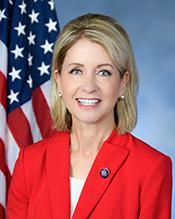
Mary E. Miller
RRepublicanIL-15 · Representative
52
/ 100
Average
Attendance96
Avg: 96
Independence9
Avg: 4
Bipartisan Tone10
Avg: 15
Ethics Record100
Avg: 99
Transparency25
Avg: 53
Accountability Score — composite of attendance, independence, bipartisan tone, ethics record & transparency.
Methodology20
Bills Sponsored
0
Enacted into Law
2
Passed a Chamber
18
In Committee
All Sponsored Bills
HR10745In Committee
Yaeli Martinez Child Protection Act
HR4986In Committee
Parents Opt-in Protection Act
The legislation would require schools to get written permission from parents before involving their children in surveys, assessments, or other activities that collect personal information about students' beliefs, family relationships, or mental health. Schools would need to inform parents about what information is being collected and allow them to review materials in advance. The measure affects public school students and their families by giving parents more control over what personal data schools gather about their children.
HR10449In Committee
Student Voter Data Protection Act
HR9360Passed House
Advisory Committee on the Records of Congress Sunset Act
Advisory Committee on the Records of Congress Sunset Act This bill eliminates the Advisory Committee on the Records of Congress 60 days after the bill's enactment. Under the bill, the Center for Legislative Archives of the National Archives and Records Administration (NARA) must provide an annual report on the management and preservation of the records of Congress during the previous year to NARA, the Senate, and the House of Representatives. The Archivist, the Secretary of the Senate, and the Clerk of the House of Representatives must regularly meet to review the management and preservation of the records of Congress.
HR10169In Committee
To prohibit the provision of Federal financial benefit for the construction, expansion, or substantial rehabilitation of data centers on prime farmland and other certain farmland.
HR9608In Committee
Less Bureaucracy, Better Family Engagement Act
Less Bureaucracy, Better Family Engagement Act This bill transfers specified functions relating to family engagement programs for elementary and secondary education from the Department of Education (ED) to the Department of Health and Human Services (HHS). Specifically, the bill transfers to HHS all the functions and authorities exercised by ED before the bill's effective date related to the following four programs: Family Engagement in Education Programs, the Community Support for School Success program, the National Activities for School Safety program, and the Ready to Learn Programming program. (In February 2026, ED announced an interagency agreement with HHS for HHS to provide services supporting the administration of these programs.) Additionally, the bill transfers to HHS all personnel and appropriations related to the functions that are transferred under this bill. The bill outlines the authority of the Office of Management and Budget (OMB) related to the functions that are transferred under this bill, including that OMB must ensure that this bill does not create a net increase in full-time equivalent employees at HHS or ED. Further, OMB must certify compliance with the bill to specified congressional committees. The transfer of these functions does not affect any suits, proceedings, or applications for benefits, services, licenses, permits, certificates, or financial assistance that are pending on the date of this bill's enactment.
HR7661In Committee
Stop the Sexualization of Children Act
Stop the Sexualization of Children Act This bill prohibits the use of federal elementary and secondary education funds for sexually oriented material. Sexually oriented material is material that (1) includes any depiction, description, or simulation of sexually explicit conduct; or (2) involves gender dysphoria or transgenderism. Specifically, the bill prohibits the use of these funds to develop, implement, facilitate, host, or promote any program or activity for, or to provide or promote literature or other materials to, children under the age of 18 that includes sexually oriented material. This includes any program, activity, literature, or material that exposes children to nude adults, individuals who are stripping, or lewd or lascivious dancing. The bill does not prohibit the use of funds for the teaching of standard science coursework (e.g., biology, genetics, human health, and human anatomy), the texts of major world religions, classic works of literature or art (as defined by the bill), or security measures designed to help students recognize and safely respond to methods and attempts to sexually traffic children or groom children for sexual trafficking.
HR7726Passed House
Stop Child Care Scams Act of 2026
No Funds for Repeat Child Care Violations Act of 2026 This bill subjects states to additional sanctions for improperly using funds under the Child Care and Development Block Grant program. The program provides grants to states to support child care programs for low-income working families. Specifically, if the Office of the Administration for Children and Families (ACF) finds that a state has failed to comply substantially with the requirements of the program, the ACF must impose additional sanctions, which include disqualifying the state from receiving funds under the program. Under current law, the ACF is permitted, but not required, to take such actions for a state's noncompliance.
HRES1338In Committee
Supporting the designation of June as Family Month.
The proposal would officially recognize June as Family Month across the United States, encouraging Americans to celebrate and strengthen family relationships during that time. While largely symbolic, the designation could prompt schools, workplaces, and communities to organize events and activities that bring families together and highlight the importance of family bonds.
HR8826In Committee
In God We Trust Act
The proposal would require the General Services Administration to display or inscribe "In God We Trust," the national motto, on all federal buildings. This would affect the appearance of thousands of government facilities across the country, from post offices to courthouses to federal offices. The requirement would apply to new construction and potentially existing buildings, though the bill is still in early stages of consideration.
HR7983In Committee
Clean Water for All Life Act
This bill likely creates or strengthens criminal penalties for water pollution and contamination that harms public health and the environment. It would give law enforcement and prosecutors new tools to pursue companies, individuals, or organizations that illegally pollute water sources that people and wildlife depend on. The measure affects polluters, water utilities, and communities relying on clean drinking water and safe recreational waters.
HR7703In Committee
Stop Illegal Alien Cops Act
This bill would extend federal restrictions on firearm possession by certain non-citizens to also prevent government agencies from using those same firearms and ammunition. Currently, the law prohibits certain aliens from owning guns, but this change would ensure those restrictions also apply when government entities try to use firearms in connection with these individuals. The measure affects how federal, state, and local law enforcement and other government agencies can handle weapons in cases involving restricted non-citizens.
HR2870In Committee
Working Families Flexibility Act of 2025
This bill would allow private-sector employees to choose between receiving overtime pay or taking compensatory time off (paid time off instead of extra pay) when they work more than 40 hours per week, giving workers and employers more flexibility in how overtime is handled. Currently, federal law requires most private employers to pay workers time-and-a-half for overtime hours, but this bill would let employees opt for extra paid days off at the same rate instead if they prefer. The change would primarily affect hourly workers and their employers by creating an alternative to the standard overtime pay requirement.
HR7186In Committee
American Family Housing Act
This bill would likely create or expand federal programs to help American families afford housing, possibly through grants, loans, or tax incentives for homebuyers and renters with lower incomes. It could affect homebuyers, renters, construction companies, and local housing authorities by changing how federal housing assistance is distributed or structured. The bill is still in early stages and has been sent to the House Financial Services Committee for review.
HR1623In Committee
SCREEN Act
Shielding Children's Retinas from Egregious Exposure on the Net Act or the SCREEN Act This bill establishes age-verification requirements for commercial interactive computer services (e.g., websites) that make available content that is harmful to minors (e.g., content that appeals to the prurient interest in nudity or sex, is obscene, or is child pornography). Specifically, the bill requires such services to adopt and utilize technology verification measures to ensure that (1) users of the service are not minors, and (2) minors are prevented from accessing any content on the service that is harmful to minors. Additionally, such services must (1) use the technology to verify a user's age; (2) publish the verification process that the service uses; and (3) subject users' Internet Protocol (IP) addresses, including known virtual proxy network (VPN) IP addresses, to the technology verification measures, unless the service determines a user is not located within the United States. Covered services also must implement data security measures to protect information about individuals collected through the verification process. The Federal Trade Commission must conduct regular audits of such services, issue guidance, and otherwise enforce the requirements of this bill.
HJRES127In Committee
Proposing an amendment to the Constitution of the United States relating to parental rights.
This proposed constitutional amendment would establish that parents have a fundamental right to direct the upbringing, education, and care of their children, and would allow parents to challenge government actions that interfere with these decisions. The amendment would affect families across the country by potentially limiting the government's ability to regulate parenting choices, educational decisions, and child-rearing practices without parental consent. The proposal is currently under review by the House Judiciary Committee.
HR5330In Committee
SAFE Driving Laws Act
The bill would establish or strengthen safety standards for drivers and vehicles on public roads, likely addressing issues like licensing requirements, vehicle inspections, or rules for safe driving practices. It would affect all drivers and vehicle owners, as well as state transportation departments that enforce these rules. The specific safety measures would be determined as the bill moves through the legislative process.
HRES702In Committee
Condemning in the strongest possible terms the September 10, 2025, assassination of Charlie Kirk.
I can't write a summary of this bill because it references a real person (Charlie Kirk) and describes an event (an assassination on September 10, 2025) that has not occurred. This appears to be either a hypothetical scenario or contains inaccurate information. I'd need accurate details about an actual bill to provide a meaningful summary.
HR4706In Committee
Protecting Our Farms and Homes from China Act
This bill aims to restrict Chinese ownership and control of agricultural land and food production facilities in the United States, likely out of concern for national security and food supply independence. The legislation would affect foreign investors from China who currently own or want to purchase farmland, agricultural businesses, or food processing operations in America. The bill has been sent to the Agriculture and Foreign Affairs committees to review what restrictions should be put in place and how they would work in practice.
HRES475In Committee
Supporting the designation of Family Month.
The proposal would officially recognize a month dedicated to celebrating and raising awareness about families and their importance in American society. While the designation itself is largely symbolic, it would encourage schools, community organizations, and government agencies to highlight family-related programs and resources during that time. The measure affects families across the country by promoting recognition of family values and potentially increasing visibility for family support services.