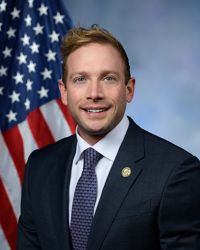
Max L. Miller
RRepublicanOH-7 · Representative
51
/ 100
Average
Attendance96
Avg: 96
Independence4
Avg: 4
Bipartisan Tone26
Avg: 15
Ethics Record80
Avg: 99
Transparency33
Avg: 53
Accountability Score — composite of attendance, independence, bipartisan tone, ethics record & transparency.
Methodology20
Bills Sponsored
0
Enacted into Law
2
Passed a Chamber
18
In Committee
All Sponsored Bills
HR10786In Committee
Civic Literacy in Higher Education Act
HRES1601In Committee
Recognizing September as "Childhood Cancer Awareness Month".
HR9500Passed House
Tax Relief for Fraud Victims Act
Tax Relief for Fraud Victims Act This bill expands the federal tax deduction for personal casualty and theft losses by eliminating certain limits, including the requirement that such losses arise from certain disasters. The bill also extends the tax refund deadline and modifies certain retirement plan rules related to certain fraud losses. The bill repeals the limit on the federal tax deduction for personal casualty losses (not attributable to a trade, business, or transaction entered into for profit) that allows such losses only if arising from a federal or state declared disaster or to the extent that such losses offset personal casualty gains. The bill allows taxpayers to elect to claim a tax deduction for losses arising from a theft involving fraud, deceit, or misrepresentation in the tax year such losses occur (rather than in the tax year discovered). Further, the bill extends the deadline for a refund claim related to a tax deduction for such losses to no less than one year after the date on which the losses are discovered and eliminates certain restrictions on the amount of such refund. For early distributions from a qualified retirement plan arising from a theft loss involving fraud, deceit, or misrepresentation for which a tax deduction is allowed, the bill waives the 10% penalty, extends the deadline for filing a refund claim and eliminates certain restrictions on the amount of such refund, and allows one year (beginning on the day after the theft loss is discovered) to repay such early distributions.
HR10213In Committee
To name the community-based outpatient clinic of the Department of Veterans Affairs in Medina County, Ohio, as the "Leland John Codding VA Clinic".
HR8899In Committee
Digital Asset PARITY Act
The proposal would change how the federal government taxes digital assets like cryptocurrencies and NFTs, establishing clearer rules for when people owe taxes on these investments and how much they owe. This would affect anyone who buys, sells, or trades digital assets, as well as businesses that accept or deal in cryptocurrencies. The bill is currently under review by the House committee responsible for tax policy.
HR8808In Committee
Cable Security Fleet Expansion Act
The federal government would maintain and expand a fleet of specialized ships designed to protect and repair underwater cables that carry internet, phone, and power signals across the ocean. The fleet would grow to include at least 6 vessels capable of responding to cable damage or security threats, ensuring that critical infrastructure connecting the United States to other countries remains operational. This affects telecommunications companies, internet users, and national security by reducing dependence on foreign ships for maintaining these vital undersea networks.
HR7343In Committee
Foster Youth Workforce Opportunity Act
This bill would create job training and employment programs specifically for young people who have aged out of the foster care system, helping them develop work skills and find stable jobs. The legislation aims to address the challenges that former foster youth face in entering the workforce by providing support services and potentially tax incentives or funding for employers who hire them. Young adults transitioning from foster care would be the primary beneficiaries, along with employers participating in the program.
HR8662In Committee
To provide assisted living assistance through Medicaid and low-income housing tax credit.
The bill would expand Medicaid coverage to help pay for assisted living services for low-income seniors and disabled people who need help with daily activities like bathing and medication management. It would also increase tax credits available to developers and investors who build or renovate affordable housing, making it easier for low-income families to find places to live. Together, these changes aim to help vulnerable populations afford both housing and the care services they need to live independently.
HR8621In Committee
China-Africa Mining Transparency Act
The federal government would be required to publish an annual list of Chinese companies operating mines in African countries that either use forced labor or cause serious environmental damage. This list would help identify problematic mining operations and could inform U.S. trade and foreign policy decisions regarding these companies. The requirement affects Chinese mining companies, African nations where mining occurs, and U.S. policymakers deciding how to respond to labor and environmental violations.
HR6331In Committee
ADVERSARIES Act
The bill would establish new tools and authorities for the federal government to identify and respond to unfair trade practices by countries considered adversaries to the United States, potentially including tariffs, sanctions, or restrictions on imports and investments. It affects American businesses that trade internationally, workers in import-competing industries, and consumers who may face higher prices on certain goods. The measure aims to protect U.S. economic interests by giving officials more power to counter what they view as hostile economic actions from rival nations.
HRES1196In Committee
Recognizing April as Cancer Prevention and Early Detection Month.
This resolution designates April as a national month to raise awareness about cancer prevention and early detection, encouraging Americans to learn about healthy habits and screening options that can catch cancer earlier when treatment is often more effective. The measure aims to highlight the importance of preventive health practices and encourage people to talk with their doctors about cancer risk factors and screening recommendations. No new laws or funding are created; instead, it's a symbolic declaration meant to focus public attention on cancer awareness during that month.
HR7306In Committee
CLOSE Act
The CLOSE Act would restrict or eliminate certain tax benefits and deductions that companies currently use, likely to increase tax revenue or close perceived loopholes in the tax code. The bill would primarily affect businesses and corporations, potentially changing how they calculate their tax obligations. Without more specific details on which provisions it targets, the exact impact on workers, consumers, or specific industries cannot be determined from the title alone.
HR6999In Committee
Tax Relief for Fraud Victims Act
People who lose money to fraud would be allowed to claim a tax deduction for their losses, similar to how they can deduct other casualty losses on their tax returns. This would help victims of scams, identity theft, and other fraudulent schemes reduce their taxable income and potentially lower their tax bills. The change would primarily benefit individual taxpayers who have been defrauded and can document their losses.
HR6985In Committee
Facilitating Useful Loss Limitations to Help Our Unique Service Economy (FULL HOUSE) Act
This bill would change how businesses can use financial losses to reduce their tax bills, likely allowing companies to carry losses forward or backward across different tax years to offset profits and lower their overall tax burden. The changes would primarily affect small and medium-sized businesses in service industries like hospitality, retail, and professional services that experience significant year-to-year income fluctuations. The bill aims to provide tax relief to these businesses during down years while they recover economically.
HR6914In Committee
Trusted Importer and Competitive Manufacturing Act of 2025
The legislation would create a program allowing certain importers to pay lower tariffs if they meet specific requirements related to their trading history and business practices, while also providing incentives for domestic manufacturers to expand production in the United States. The bill aims to reward companies that have demonstrated reliable importing practices while encouraging more manufacturing to happen domestically rather than overseas. This would affect importers, domestic manufacturers, and ultimately consumers through potential changes in product prices and availability.
HR6421In Committee
IMPACT Act of 2025
I don't have enough information to write an accurate summary. The bill's subjects are listed as "None," and only the title "IMPACT Act of 2025" is provided. To write a factual summary explaining what the bill would do, who it affects, and what concrete changes it would make, I would need access to the bill's actual text or description of its provisions.
HR4625In Committee
NEPTUNE Act
The proposal would establish new requirements and authorities for the Department of Defense related to naval operations and maritime security. It affects military personnel, defense contractors, and potentially coastal communities by defining how the armed forces manage ocean-based activities and resources. The bill is currently under review by the House Armed Services Committee to determine whether it should move forward.
HR3358In Committee
Harvest to Hue Act
Harvest to Hue Act This bill directs the Department of Agriculture (USDA) to enhance the capacity of U.S. farmers to produce color additives which are derived from agricultural components. (The bill refers to these as natural color additives.) Specifically, USDA must (1) facilitate these efforts within the department; (2) promote collaboration among USDA, other federal agencies, agriculture producers, and food industry partners; and (3) focus research initiatives, within existing research capabilities, to support these efforts.
HR1719In Committee
Farm to Fly Act of 2025
Farm to Fly Act of 2025 This bill directs the Department of Agriculture (USDA) to integrate the advancement of sustainable aviation fuels into its programs. Specifically, this bill includes sustainable aviation fuel as an advanced biofuel for the purposes of several USDA bioenergy programs that primarily provide support and incentives for renewable energy projects. For purposes of these programs, the bill defines sustainable aviation fuel as liquid fuel, the portion of which is not kerosene, which (1) meets specific international standards, (2) is not derived from coprocessing specific materials (e.g., triglycerides) with a non-biomass feedstock, (3) is not derived from palm fatty acid distillates or petroleum, and (4) is certified as having a lifecycle greenhouse gas emissions reduction percentage of at least 50% compared with petroleum-based jet fuel (based on specific standards and agreements). In addition, the bill specifically includes fostering and advancing sustainable aviation fuels as part of the Biorefinery, Renewable Chemical, and Biobased Product Manufacturing Assistance Program. Further, USDA must carry out a comprehensive and integrated pursuit of all USDA mission areas for the advancement of sustainable aviation fuels, including through the identification of opportunities to maximize the development and commercialization of the fuels, supporting rural economic development through improved sustainability for aviation, and advancing public-private partnerships.
HR1534Passed House
IMPACT Act
Innovative Mitigation Partnerships for Asphalt and Concrete Technologies Act or the IMPACT Act This bill requires the Department of Energy (DOE) to establish a temporary program that supports advanced production of low-emissions cement, concrete, and asphalt. Specifically, the program must support research, development, and commercial application of production processes for low-emissions cement, concrete, and asphalt that are more cost-effective, durable, or resource-efficient (i.e., advanced production). The program must particularly focus on carbon capture technologies, energy-efficient processes, research involving novel materials, and other specified technologies and innovative processes. DOE must select entities to implement relevant demonstration projects; eligible entities include government, nonprofit, educational, and private sector entities. DOE may terminate these projects if it determines that sufficient amounts of low-emissions cement, concrete, and asphalt that are produced through advanced production are commercially available at reasonable prices. The program terminates seven years after the bill is enacted.