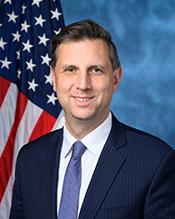
Seth Magaziner
DDemocratRI-2 · Representative
58
/ 100
Average
Attendance97
Avg: 96
Independence4
Avg: 4
Bipartisan Tone15
Avg: 15
Ethics Record100
Avg: 99
Transparency65
Avg: 53
Accountability Score — composite of attendance, independence, bipartisan tone, ethics record & transparency.
Methodology21
Bills Sponsored
0
Enacted into Law
1
Passed a Chamber
19
In Committee
All Sponsored Bills
HR7436Passed House
Department of Homeland Security Intelligence and Analysis Training Act
Department of Homeland Security Intelligence and Analysis Training Act This bill requires the Office of Intelligence and Analysis (I&A) of the Department of Homeland Security (DHS) to implement training programs for new I&A employees, including training on federal privacy rights and civil liberties. Specifically, I&A must implement standard, entry-level training for all new hires, including training on federal privacy rights, civil rights, civil liberties, and information practices. New hires in analytic positions must also receive training on (1) intelligence community (IC) analytic standards; and (2) I&A’s mission to integrate intelligence operations DHS-wide and to share intelligence with state, local, tribal, territorial, and private sector partners. New hires in open-source intelligence collection positions must also receive training on (1) principles of open-source intelligence collection and data management, including how to navigate sources and use data in accordance with federal law and policy; and (2) IC open-source intelligence collection standards and related DHS authorities. Further, I&A must develop specialized training curricula, including raw intelligence release authority training, to improve I&A operations and promote professional development. I&A must periodically provide employees with a list of specialized training offered by other IC elements and the Department of Defense (DOD). I&A must also implement a system to track employee completion of training. Finally, the Government Accountability Office must submit a report to Congress on the implementation of these provisions, including a comparison of training developed under these provisions and training provided by other IC elements and DOD.
HR10342In Committee
American Seafood Competitiveness Act of 2026
HR10146In Committee
AI Advertising Disclosure Act
HR9358In Committee
Improving the Lives of the American People Act
I cannot provide an accurate summary because the bill's title and subjects are too vague to determine what specific policies it would actually implement. The referral to nearly every major congressional committee suggests this is either a broad omnibus bill covering many different policy areas, or a placeholder bill awaiting specific language to be added. Without knowing the actual provisions, I cannot explain in concrete terms what this bill would do or who it would affect.
HR7314In Committee
Advancing Commonsense Policies Act
This bill appears to be a broad package of policy changes affecting multiple areas of government, including veterans benefits, military operations, energy, transportation, finance, education, agriculture, and homeland security. Because it touches so many different policy areas, it has been referred to nearly every major congressional committee for review. Without access to the specific provisions, the exact changes proposed cannot be determined, but the wide referral suggests it aims to address what sponsors view as common-sense reforms across numerous federal programs and agencies.
HR7315In Committee
Advancing Policy Priorities Act
This bill appears to be a comprehensive package addressing multiple policy areas across government, touching on everything from veterans' benefits and military spending to energy, transportation, financial regulation, education, and agriculture. Because it covers so many different topics, it has been referred to nearly every major congressional committee so each can review the parts relevant to their area. The specific details of what the bill would actually change are unclear from the title alone, but its broad referral suggests it aims to advance the administration's priorities across numerous federal agencies and programs.
HR8518In Committee
Domenic and Ed’s Law
Parents who took out federal student loans to help their children pay for college would have those loans forgiven if their child becomes permanently disabled. Currently, only the student's own loans are automatically discharged in this situation, leaving parents responsible for repaying what they borrowed. This change would extend disability-based loan forgiveness to parent borrowers, protecting families from debt when a child faces a serious disability.
HR8517In Committee
Clean Energy Workforce Act
The legislation would fund the creation of training programs and physical facilities at schools to teach students skills in renewable energy industries like solar and wind power. Students in career and technical education programs would gain hands-on experience and credentials to prepare them for jobs in the growing clean energy sector. This would help address workforce shortages in renewable energy while giving young people practical career pathways outside of traditional four-year college routes.
HR7435In Committee
DHS Intelligence Transparency and Oversight Program Office and Ombuds Act
This bill would create a new office within the Department of Homeland Security to oversee intelligence activities and an ombudsman position to handle complaints from the public about DHS intelligence operations. The goal is to increase transparency and accountability so that DHS intelligence programs are properly monitored and citizens have a way to report concerns about how their information is being used. This would give Congress and the public better visibility into what DHS intelligence agencies are doing.
HRES1013In Committee
Amending the Rules of the House of Representatives to establish a Permanent Select Committee on Aging.
This proposal would create a permanent House committee dedicated to issues affecting older Americans, such as healthcare, Social Security, and retirement security. Currently, Congress handles aging-related matters through various existing committees, but this new dedicated committee would give these issues more focused attention and resources. The change would affect how Congress organizes its work and could lead to more specialized legislation targeting seniors' needs.
HR6731In Committee
Restore Trust in Government Act
Without access to the bill's specific provisions, this legislation appears aimed at addressing public confidence in federal government institutions through reforms to how government operates and conducts its business. The bill has been referred to multiple committees overseeing government operations, elections administration, and federal spending, suggesting it may include measures related to transparency, ethics, or fiscal accountability. The exact changes would depend on the bill's detailed language once it moves through the committee review process.
HR5554In Committee
Stand Strong for Medicare Act of 2025
This bill would protect Medicare benefits and prevent cuts to the program that provides health insurance to seniors and some disabled Americans. The legislation aims to maintain current coverage levels and payment rates for doctors and hospitals that serve Medicare patients. The bill has been sent to three House committees for review and debate before any vote can take place.
HJRES120In Committee
Proposing an amendment to the Constitution of the United States to limit the number of consecutive terms that a Member of Congress may serve.
This proposed constitutional amendment would prevent members of Congress from serving more than a set number of consecutive terms in the House of Representatives and Senate, effectively creating term limits for lawmakers. Currently, there are no limits on how many times a representative or senator can be reelected, so this change would force experienced legislators to eventually leave office. The amendment would need approval from two-thirds of both the House and Senate, plus ratification by three-fourths of state legislatures to become part of the Constitution.
HR5325In Committee
Unclaimed Retirement Rescue Plan
The bill aims to help workers find and recover retirement savings they may have left behind at previous jobs. It would likely create a system to track down unclaimed 401(k)s, IRAs, and similar retirement accounts so people can reunite with their money instead of losing it to employers or financial institutions. This would primarily benefit workers who have changed jobs multiple times or lost track of old retirement accounts.
HR5048In Committee
Don’t STEAL Act
The legislation would prohibit employers from requiring workers to sign non-compete agreements that prevent them from working for competitors or starting their own businesses after leaving their job. The bill aims to protect employees' ability to find work and advance their careers by limiting these restrictive employment contracts that can trap workers in low-wage jobs or force them to relocate. This would primarily affect workers across various industries who currently face legal barriers to changing employers.
HR4763In Committee
PTO Act
The bill would likely establish or modify paid time off (PTO) requirements for employers, potentially guaranteeing workers a minimum amount of paid leave for vacation, sick days, or personal time. The proposal affects private employers and possibly federal contractors or government agencies, and has been referred to multiple committees to review different aspects such as labor standards, federal employee benefits, and implementation details.
HR4699In Committee
BIKE Act of 2025
The proposal would increase federal funding and support for bicycle infrastructure projects, such as building new bike lanes, trails, and safe routes for cyclists in communities across the country. It aims to make biking a more practical transportation option by improving connections between neighborhoods and reducing barriers for people who want to cycle instead of drive. The bill would benefit cyclists, pedestrians, and communities looking to reduce traffic congestion and improve public health through active transportation options.
HR4106In Committee
Prevent Illegal Gun Sales Act
Prevent Illegal Gun Sales Act This bill broadens the authority of the Bureau of Alcohol, Tobacco, Firearms and Explosives (ATF) to administer federal laws governing the licensing, inspection, and enforcement of federally licensed dealers, importers, and manufacturers of firearms (federal firearms licensees, or FFLs). The bill also increases criminal penalties for FFLs and licensed collectors who commit certain recordkeeping violations. With respect to licensing, the bill allows the ATF to deny an application for a federal firearms license if it would endanger public safety or if the applicant is unlikely to comply with the law. Additionally, the bill enhances the ATF's inspection authority, including by increasing the maximum number of annual compliance inspections to three (currently, one) and by authorizing an additional 80 personnel to conduct inspections. The bill also expands the ATF's enforcement authority, including by allowing it to suspend the license of or impose a civil penalty on an FFL who violates federal firearms laws or regulations and by allowing it to require an FFL to conduct physical inventories if the FFL unlawfully transfers a firearm or if 10 or more firearms used in a crime are traced back to the FFL. Finally, the bill increases the maximum prison term to five years (currently, one year) for an FFL or licensed collector who knowingly makes a false statement or representation in required firearms records.
HR2139Reported
Strengthening State and Local Efforts to Counter Transnational Repression Act
The federal government would work with state and local law enforcement to identify and counter efforts by foreign governments to intimidate, threaten, or harm people living in the United States, including dissidents, activists, and journalists. The bill would provide resources, training, and coordination between federal agencies and local police to detect transnational repression activities like surveillance, harassment, and coercion directed at foreign nationals and U.S. citizens by hostile governments. This affects immigrants, political activists, and communities targeted by authoritarian regimes operating within U.S. borders.
HR2375In Committee
Rhode Island Fishermen’s Fairness Act of 2025
The legislation would establish new protections and regulations for commercial fishermen operating in Rhode Island waters, addressing concerns about fair access to fishing grounds and sustainable resource management. The bill aims to balance the interests of fishing communities with environmental conservation by potentially modifying existing rules around catch limits, licensing, and fishing territories. Fishermen, fishing businesses, and coastal communities in Rhode Island would be the primary groups affected by these changes.
HR396In Committee
TRUST in Congress Act
Transparent Representation Upholding Service and Trust in Congress Act or the TRUST in Congress Act This bill requires a Member of Congress, as well as any spouse or dependent child of a Member, to place specified investments into a qualified blind trust (i.e., an arrangement in which certain financial holdings are placed in someone else's control to avoid a possible conflict of interest) until 180 days after the end of their tenure as a Member of Congress.