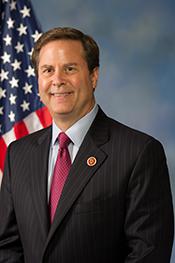
Donald Norcross
DDemocratNJ-1 · Representative
54
/ 100
Average
Attendance86
Avg: 96
Independence3
Avg: 4
Bipartisan Tone18
Avg: 15
Ethics Record100
Avg: 99
Transparency52
Avg: 53
Accountability Score — composite of attendance, independence, bipartisan tone, ethics record & transparency.
Methodology22
Bills Sponsored
0
Enacted into Law
2
Passed a Chamber
20
In Committee
All Sponsored Bills
HR10689In Committee
Remedial Education Improvement Act
HR10452In Committee
Credit for Prior Learning Act
HR10301In Committee
Peter McGuire Congressional Gold Medal Act
HR9790In Committee
Modernizing Opioid Treatment Access Act 2.0 of 2026
This bill would make it easier for people struggling with opioid addiction to access medication-based treatment by updating federal rules that currently limit how many patients doctors can treat and where treatment can happen. The changes would allow more healthcare providers, including those in rural areas and community health centers, to offer opioid addiction medications like methadone and buprenorphine. These updates aim to reduce barriers that prevent people from getting the help they need to overcome opioid dependence.
HR9684In Committee
PATH Act
The Labor Department would fund and help create training programs that prepare people for apprenticeships in construction and building trades, with a focus on reaching people from low-income areas, rural communities, and other groups that have historically had fewer opportunities in these fields. These pre-apprenticeship programs would teach basic skills and help participants get ready to enter paid apprenticeships where they can earn while they learn a trade. The goal is to expand access to good-paying construction jobs for people who might otherwise face barriers to entering the industry.
HRES1392In Committee
Supporting the designation of a "National Learn to Swim Week" beginning on the 4th Sunday in June.
The proposal would officially recognize a "National Learn to Swim Week" starting on the fourth Sunday in June each year. This designation would raise awareness about swimming education and water safety, encouraging communities and organizations to promote swimming lessons and drowning prevention programs. The recognition does not create new funding or requirements, but rather highlights the importance of teaching people—especially children—how to swim.
HR5408Passed House
Faster Labor Contracts Act
Faster Labor Contracts Act This bill establishes mandatory deadlines for parties negotiating an initial collective bargaining agreement (CBA) and provides for mediation and arbitration to finalize CBAs. Under the bill, CBA negotiations must begin within 10 days after an employer receives a written request from a newly recognized or certified bargaining representative. The bill provides that parties must make every reasonable effort to conclude and sign a CBA. Further, the bill provides that, if the parties have not reached an agreement after 90 days, either party may request mediation by the Federal Mediation and Conciliation Service (FMCS). The bill directs FMCS to use its best efforts to secure an agreement. If mediation does not result in an agreement within 30 days (or an additional period agreed to by both parties), FMSC must refer the parties to an arbitration panel to render a decision settling the dispute. The panel must consider specified factors, including the employer's financial prospects and employees' cost of living. The resulting CBA is binding on the parties for two years. (Parties may agree to amend the terms during the two-year period.) The bill specifies that (1) an employer must maintain current wages, hours, terms, and conditions of employment during negotiations; and (2) an employer's duty to collectively bargain continues even if a representative has been decertified. The Government Accountability Office must report to Congress regarding the average number of days between the certification or recognition of a bargaining representative and the date the initial CBA was executed.
HRES1140Passed House
Providing for consideration of the bill (H.R. 5408) to accelerate workplace time-to-contract under the National Labor Relations Act.
This resolution provides for the consideration of the bill (H.R. 5408) to accelerate workplace time-to-contract under the National Labor Relations Act.
HR7471In Committee
Give America a Raise Act
This bill would increase the federal minimum wage, which is the lowest hourly rate employers are legally allowed to pay workers. The change would affect millions of low-wage workers across the country by raising their base pay, though it could also lead some businesses to adjust their hiring or staffing decisions. The bill is currently being reviewed by the House Committee on Education and Workforce.
HR7116In Committee
SEPSIS Act
The proposal would improve how hospitals identify and treat sepsis, a life-threatening condition where the body's response to infection damages its own tissues, by requiring better training, faster testing, and clearer treatment guidelines for emergency room and hospital staff. This would affect patients who develop sepsis during hospital stays or emergency visits, as well as hospitals and healthcare workers who would need to implement new protocols. The goal is to reduce deaths and complications from sepsis, which kills thousands of Americans each year.
HR5970In Committee
Save Our Ships Act
The legislation would protect and preserve historic U.S. military vessels by establishing requirements for their maintenance and preventing their disposal or scrapping. It affects the Navy, veterans' organizations, and communities that host these ships as museums or memorials, ensuring these important pieces of American military history remain available for public education and remembrance.
HR5653In Committee
Trust Through Transparency Act of 2025
The bill would require federal immigration agencies to publicly disclose more information about immigration enforcement activities, detention practices, and case outcomes so that the public and Congress can better understand how immigration laws are being applied. It aims to increase accountability and transparency in how the Department of Homeland Security and related agencies handle immigration matters, affecting both immigrants and the general public's ability to monitor government operations.
HRES781In Committee
Expressing support for the designation of October 1, 2025, as "National Animal Rescue Day" to create awareness of the importance of animal adoption, to educate on the importance of spaying and neutering animals, and to encourage animal adoptions throughout the United States.
This resolution supports the designation of a National Animal Rescue Day to create awareness for animal rescue programs throughout the year and address the challenge of pet overpopulation through continued spaying and neutering.
HR5206In Committee
Empowering Striking Workers Act of 2025
This bill would provide financial support and benefits to workers who are on strike, likely including unemployment insurance or direct payments to help them cover living expenses during labor disputes. The legislation aims to strengthen workers' bargaining power by reducing the financial hardship they face when striking for better wages, working conditions, or other employment terms. It would affect both unionized and non-unionized workers involved in labor actions against their employers.
HR5069In Committee
Peter J. McGuire Labor Day Landmark Act
Peter J. McGuire Labor Day Landmark Act This bill designates the Peter J. McGuire Memorial and Peter J. McGuire Gravesite in Pennsauken, New Jersey, as the Peter J. McGuire Memorial National Commemorative Site. The Department of the Interior may enter into cooperative agreements to provide the public with educational and interpretive facilities and programs concerning the commemorative site. Interior may also provide technical and financial assistance to any entity with which it has entered into such cooperative agreement.
HR4896In Committee
Warehouse Worker Protection Act
The bill would establish new safety and working condition standards for warehouse workers, likely including rules about work hours, break times, and physical demands to prevent injuries and exhaustion. It would apply to large warehouses and distribution centers, affecting both the companies that operate them and the hundreds of thousands of workers employed in these facilities across the country.
HR3046In Committee
Workers’ Memorial Day
Workers' Memorial Day This bill establishes Workers' Memorial Day as a federal holiday.
HR2736In Committee
Public Service Freedom to Negotiate Act of 2025
This legislation would allow federal employees and postal workers to collectively bargain over a broader range of workplace issues, including pay, benefits, and working conditions that are currently set by law or management alone. The change would give public sector unions more negotiating power similar to what private sector unions have, potentially leading to different compensation packages and work arrangements across federal agencies. Federal employees, their unions, and federal agencies would be most directly affected by these expanded negotiation rights.
HR2692In Committee
No Tax Breaks for Union Busting (NTBUB) Act
No Tax Breaks for Union Busting (NTBUB) Act This bill excludes from the tax deduction for ordinary and necessary business expenses amounts paid or incurred to influence employees with respect to labor organizations or labor organization activities. The bill also imposes information reporting requirements related to such expenses and imposes penalties for failure to comply. Under the bill, amounts paid to influence employees with respect to labor organizations include amounts paid (including wages and other costs) in connection with an action that results in a complaint or settlement related to an unfair labor practice or a finding of interference, influence, or coercion related to railway employees’ rights to organize and bargain collectively; for any meeting or training attended by employees and at which labor organizations are discussed; and that require certain employer disclosures and financial reporting. (Some exceptions apply.) The bill requires employers to file a return reporting certain information related to expenses paid to influence employees with respect to labor organizations and imposes a penalty for noncompliance. The amount of the penalty is the greater of (1) $10,000, or (2) $1,000 multiplied by the number full-time equivalent employees. Additional penalties apply for violations that continue for more than 90 days. The bill also imposes information reporting requirements on persons conducting activities on behalf of another person to influence employees with respect to labor organizations. The bill allows certain penalties for noncompliance with the reporting requirements to be waived if noncompliance is due to reasonable cause and not willful neglect.
HR2151In Committee
Seizure Awareness and Preparedness Act
Seizure Awareness and Preparedness Act This bill directs the Department of Education to award competitive grants to states and, through them, subgrants to local educational agencies (LEAs) for carrying out a program that supports elementary and secondary students who have epilepsy or a seizure disorder. Specifically, LEAs must use these subgrants to train school personnel on seizure awareness and preparedness that covers individualized health care plans and individualized emergency health care plans for students who have epilepsy or a seizure disorder.
HR1627In Committee
TREATS Act
Telehealth Response for E-prescribing Addiction Therapy Services Act or the TREATS Act This bill permanently allows health care practitioners to prescribe certain controlled substances for treating substance use disorders via telehealth without evaluating the patient in person. Generally, a health care practitioner may not prescribe a controlled substance via telehealth unless they first conduct an in-person medical evaluation. Federal regulations currently provide a temporary exception to this requirement, allowing practitioners to prescribe schedule II-V controlled substances for legitimate medical purposes (such as treating substance use disorders) via telehealth without an in-person evaluation. However, this temporary regulatory flexibility expires on December 31, 2025. The bill permanently allows practitioners to prescribe schedule III-V controlled substances for the treatment of a substance use disorder via telehealth without conducting an in-person evaluation. In such instances, a practitioner may conduct a telehealth evaluation using audio-only or audio and video equipment.
HR957In Committee
Parity Enforcement Act of 2025
The legislation would strengthen enforcement of mental health parity laws, which require health insurance plans to cover mental health and substance abuse treatment the same way they cover physical health care. It would give federal regulators more tools to investigate complaints and penalize insurance companies that unfairly limit mental health coverage compared to medical coverage. This would affect patients seeking mental health care, insurance companies, and employers who provide health benefits to their workers.