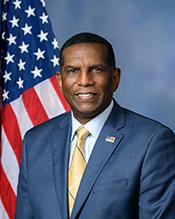
Burgess Owens
RRepublicanUT-4 · Representative
55
/ 100
Average
Attendance98
Avg: 96
Independence2
Avg: 4
Bipartisan Tone18
Avg: 15
Ethics Record100
Avg: 99
Transparency44
Avg: 53
Accountability Score — composite of attendance, independence, bipartisan tone, ethics record & transparency.
Methodology20
Bills Sponsored
0
Enacted into Law
1
Passed a Chamber
19
In Committee
All Sponsored Bills
HR9926In Committee
PATH Act
The proposal would change how the federal government decides whether to fund major public transportation projects like subway or light rail systems by allowing planners to use additional methods for predicting how many people will actually ride these systems. Currently, the government relies on specific forecasting approaches, and this bill would expand the tools available to make those predictions more accurate and flexible. This affects cities and transit agencies that apply for federal grants to build or expand public transportation infrastructure.
HR8183In Committee
MATCH Act of 2026
The MATCH Act would require employers to provide workers with information about how their pay is determined and what benefits they're eligible for, making compensation practices more transparent. The bill aims to help employees understand their wages and benefits packages so they can better negotiate with employers and identify potential pay gaps. This would affect most private sector workers and companies across the country.
HR8347In Committee
RURAL Healthcare Act
This bill would allow temporary doctors, nurses, and other advanced healthcare workers hired on a short-term basis to be classified as independent contractors rather than employees, which would exempt them from certain federal labor protections like minimum wage requirements and the right to organize unions. The change would affect how these healthcare professionals are paid and what workplace rights they have, potentially allowing healthcare facilities to hire them with fewer legal obligations. Healthcare companies and staffing agencies would gain flexibility in how they structure these temporary positions, while the workers themselves would lose some employee protections.
HR9604In Committee
Less Bureaucracy, Better Tribal Education Act
The proposal would transfer responsibility for managing Native American education and job training programs from their current agencies to the Department of Interior. This change would affect tribal communities and Native American workers by consolidating these services under a single federal department rather than having them split across multiple agencies. The bill is currently under review by the House Committee on Education and Workforce.
HR9527In Committee
STRONG Act
The government would be asked to review and potentially create a new job classification code specifically for strength and conditioning coaches, separate from other coaching categories. This change would help the government better track and understand this profession's employment data, which could affect how these coaches are counted in labor statistics and potentially influence training programs and job market analysis. The proposal is currently being reviewed by the House Committee on Education and Workforce.
HR7892Passed House
No Aid for Ghost Students Act of 2026
No Aid for Ghost Students Act of 2026 This bill requires the Department of Education (ED) to establish an identity fraud detection system for the Free Application for Federal Student Aid (FAFSA). Beginning on October 1, 2026, ED must use an identity fraud detection system to review each submitted application to determine whether the applicant presents a reasonable suspicion of identity fraud. If ED makes such a determination, it must notify the applicant and each institution of higher education (IHE) designated on the application that the applicant is subject to additional identity verification. An IHE may not disburse federal financial aid to an applicant that presents a reasonable suspicion of fraud unless the IHE verifies the applicant's identity in person or by live video. If the applicant's identity is confirmed, the IHE must notify ED that the applicant's identity has been verified. ED must establish guidelines for the identity verification procedures conducted by IHEs. (On April 26, 2026, ED began implementing a real-time identity fraud detection process within the FAFSA form that places applicants into one of four risk categories. High-risk applicants must confirm their identity by presenting documentation during the online application process, including via a live camera process. Applicants who are rejected via this automated process must then have their identity verified in person by IHEs.)
HR8705In Committee
CHARLIE Act
Civics and History Advancement to Restore Learning, Integrity, and Education Act or the CHARLIE Act This bill prohibits the use of federal funding made available for the American History and Civics Education program to fund discriminatory equity ideology or gender ideology, as defined in certain executive orders. Further, in awarding grants under this program, the Department of Education may not give priority to an eligible entity on the basis of race, sex, sexual orientation, gender identity, or immigration status. The bill defines discriminatory equity ideology in accordance with Executive Order 14190 , which was published on January 29, 2025. This definition refers to ideology that treats individuals as members of preferred or disfavored groups rather than as individuals, including listed ideologies (e.g., an ideology that members of one race, color, sex, or national origin are morally or inherently superior to members of another race, color, sex, or national origin, or that an individual is inherently racist, sexist, or oppressive by virtue of the individual's race, color, sex, or national origin). The bill defines gender ideology in accordance with Executive Order 14168 , which was published on January 20, 2025. This definition refers to an ideology that replaces categories of biological sex with gender identity.
HR8384In Committee
To provide for the conveyance of certain property to the Utah National Guard located in Lehi, Utah, and for other purposes.
The federal government would transfer ownership of a piece of property in Lehi, Utah to the Utah National Guard, likely to support military operations or facilities in that area. This type of conveyance allows the National Guard to use federal land for training, equipment storage, or other military purposes without having to purchase it separately.
HR8272In Committee
To classify qualified locum tenens professionals and advanced care practitioners as independent contractors for the purposes of the Fair Labor Standards Act of 1938 and the National Labor Relations Act.
This bill would allow temporary doctors, nurses, and other advanced healthcare workers hired on a short-term basis to be classified as independent contractors rather than employees, which would exempt them from certain federal labor protections like minimum wage requirements and the right to organize unions. The change would affect how these healthcare professionals are treated under federal labor laws, potentially giving healthcare facilities more flexibility in hiring but reducing some worker protections for these temporary staff members.
HR7677In Committee
Closing the Provider Fraud Gap Act
This bill would strengthen enforcement against healthcare providers who commit fraud—such as billing for services they didn't provide or overcharging insurance programs—by giving federal authorities better tools to investigate and prosecute these cases. The measure aims to protect families by reducing healthcare fraud that drives up insurance costs and wastes taxpayer money spent on government health programs like Medicare and Medicaid. It targets dishonest medical providers while leaving legitimate healthcare businesses unaffected.
HR4716In Committee
To transfer administrative jurisdiction of certain Federal land in Saratoga Springs, Utah, from the Secretary of the Interior to the United States Postal Service for construction of a post office, and for other purposes.
The federal government would hand over a piece of public land in Saratoga Springs, Utah to the Postal Service so it can build a new post office there instead of the Interior Department continuing to manage it. This transfer would allow the Postal Service to construct and operate the facility on land that is currently under federal control. The change would affect how the land is used and who is responsible for overseeing it.
HR7918In Committee
Kids in Classes Act
The bill aims to address education policy, though the specific provisions aren't detailed in the available information. Based on the title's focus on "kids in classes," it likely proposes changes to how students attend school or participate in classroom instruction. The measure would affect students, teachers, and schools across the country once it's reviewed by the House Committee on Education and Workforce.
HR2516In Committee
Accreditation for College Excellence Act of 2025
The legislation would change how colleges and universities are accredited by allowing the federal government to directly approve accrediting agencies rather than relying solely on the Department of Education's current system. This would affect students, colleges, and accrediting organizations by potentially creating new pathways for educational quality oversight and could influence which schools are eligible for federal student aid programs.
HR2617In Committee
Say No to Indoctrination Act
Say No to Indoctrination Act This bill prohibits the use of federal elementary and secondary education funds to teach or advance concepts related to gender ideology as defined by Executive Order 14168. This executive order, titled Defending Women From Gender Ideology Extremism and Restoring Biological Truth to the Federal Government , was published on January 20, 2025.
HR6809In Committee
Alyssa’s Act of 2025
Without access to the bill's specific provisions, this appears to be education-related legislation named after an individual, likely addressing a particular issue or gap in current education policy. The bill's referral to multiple committees including Judiciary, Homeland Security, and Oversight suggests it may involve school safety, student protections, or compliance issues that cross several policy areas. To provide a concrete summary of what the bill would actually do, the specific text of the legislation would need to be reviewed.
HR6475In Committee
Preventing Child Trafficking Act of 2025
This bill would strengthen law enforcement's ability to combat child trafficking by likely enhancing penalties for traffickers, improving coordination between agencies, and potentially expanding resources for victim support and prevention programs. The legislation would affect law enforcement agencies, prosecutors, and organizations that work with trafficking victims, while making it harder for criminals to exploit children. The bill aims to address child trafficking through tougher enforcement and better tools for federal and local authorities to investigate and prosecute these crimes.
HR3499In Committee
Outdoor Recreational Outfitting and Guiding Act
This bill would establish labor standards and protections for outdoor recreation guides and outfitters—people who lead hiking trips, fishing expeditions, hunting tours, and similar outdoor activities. It likely addresses issues like worker classification, safety requirements, and employment rights for this workforce. The bill affects both the guides and outfitters themselves as well as outdoor recreation companies that hire them.
HR2651In Committee
One Door to Work Act
The bill would streamline the process for workers to access job training and employment services by consolidating multiple government programs into a single, easier-to-navigate system. Instead of having to apply through different agencies and programs, job seekers and workers looking to retrain would go through one coordinated entry point to find the services they need. This change is intended to make it simpler for people to find help with job placement, skills training, and career development.
HR2457In Committee
Mining Schools Act of 2025
The bill would establish or support educational programs and schools focused on mining and related energy industries. It likely aims to train workers for careers in mining operations and help communities dependent on mining maintain skilled workforces. The proposal affects students, mining companies, and regions where mining is a major economic activity.
HR2271In Committee
Change of Ownership and Conversion Improvement Act
Change of Ownership and Conversion Improvement Act This bill revises the application and review process for institutions of higher education (IHEs) to change ownership or for a proprietary (i.e., for-profit) IHE to convert to public or other nonprofit status. Specifically, the bill (1) establishes a pretransaction review application, and (2) requires an IHE to pay an administrative fee to the Department of Education (ED) for change in ownership or conversion transactions or pretransaction reviews. In the case of a for-profit IHE seeking conversion or a pretransaction review for conversion, ED must remit 50% of the administrative fee to the Internal Revenue Service (IRS) to determine whether the IHE is exempt from tax and is otherwise in compliance with the applicable requirements of the Internal Revenue Code of 1986 (IRC). The bill establishes time frames for ED to approve or deny applications. The bill also includes various reporting requirements. An IHE that has been approved for conversion by ED must be subject to a five-year monitoring period and must also pay an annual fee for this monitoring. ED must remit 50% of the annual fee to the IRS for monitoring the IHE's compliance with the IRC. The Government Accountability Office must report on the implementation of this bill's provisions.