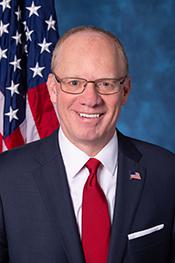
John W. Rose
RRepublicanTN-6 · Representative
51
/ 100
Average
Attendance94
Avg: 96
Independence3
Avg: 4
Bipartisan Tone21
Avg: 15
Ethics Record100
Avg: 99
Transparency21
Avg: 53
Accountability Score — composite of attendance, independence, bipartisan tone, ethics record & transparency.
Methodology9
Bills Sponsored
1
Enacted into Law
0
Passed a Chamber
8
In Committee
Bills That Became Law
All Sponsored Bills
HR10478In Committee
Aid and Attendance Assistance for Veterans Act
HR9876In Committee
BAN Act
The legislation would make it illegal for foreign nationals to enter the United States with the primary intention of giving birth so their child can automatically become a U.S. citizen. The bill would allow immigration officials to deny entry or visas to pregnant women suspected of coming to the country specifically to have a baby, and would impose penalties on people who help organize or profit from birth tourism schemes. This would affect pregnant foreign visitors, immigration officials enforcing the rules, and companies that market childbirth services to international clients.
HR7993In Committee
Somaliland Economic Access and Opportunity Act
This bill would allow the United States to conduct direct trade and economic relationships with Somaliland, a region in the Horn of Africa that operates independently but is not internationally recognized as a separate country. The measure aims to expand business opportunities and economic development in the region by removing barriers that currently prevent American companies and financial institutions from engaging there. The change would primarily affect U.S. businesses, financial firms, and the people of Somaliland seeking greater economic access and investment.
HR7775In Committee
CDFI Fund Transparency Act
This bill would require Community Development Financial Institutions (CDFIs)—lenders that provide financing to underserved communities and small businesses—to disclose more detailed information about their operations, lending practices, and financial performance to the public and regulators. The increased transparency would help borrowers, investors, and policymakers better understand how these institutions are using their funds and whether they're effectively serving low-income neighborhoods and disadvantaged entrepreneurs. The bill affects CDFIs themselves, their borrowers, investors, and communities that rely on these specialized lenders for economic development.
HR6293In Committee
Housing Supply Expansion Act of 2025
This bill aims to increase the number of affordable homes available by removing barriers that make it expensive and time-consuming to build new housing, likely through measures like streamlining approval processes, reducing regulatory costs, or providing incentives to developers. The changes would affect homebuyers and renters looking for affordable options, construction companies, local governments, and communities facing housing shortages. By making it easier and cheaper to build, the bill intends to help address the nationwide shortage of affordable housing.
HR2808Enacted
Homebuyers Privacy Protection Act
Homebuyers Privacy Protection Act This act limits the circumstances in which credit reporting agencies may provide consumer credit reports to third parties in connection with residential mortgage transactions. Specifically, the act prohibits a credit reporting agency from providing a consumer's credit report to a third party in connection with a residential mortgage transaction unless the transaction consists of a firm offer of credit or insurance and (1) the third party provides documentation certifying that it has the consumer's consent; or (2) the third party has originated a mortgage on behalf of the consumer, is a current mortgage loan servicer to the consumer, or has a current specified banking relationship with the consumer. These provisions take effect 180 days after enactment. The Government Accountability Office must study and report on the value of trigger leads (a marketing tactic facilitated by credit reporting agencies that may result in unsolicited credit offers to a consumer after a consumer applies for a separate type of credit) received by text message.
HR2274In Committee
Court Shopping Deterrence Act
Court Shopping Deterrence Act This bill gives the U.S. Supreme Court exclusive jurisdiction to hear appeals from a nationwide injunction issued by a U.S. district court.
HR1631In Committee
Safe Access to Cash Act of 2025
Safe Access to Cash Act of 2025 This bill specifies that robbery offenses involving ATMs and related cash constitute crimes under the federal bank robbery statute. Currently, the federal bank robbery statute makes it a federal crime to take or attempt to take, by force and violence or by intimidation, money or other property belonging to or in the care, custody, control, management, or possession of any bank, credit union, or savings and loan association. However, federal circuit courts have split on whether forcing someone to withdraw money from an ATM constitutes an offense under the federal bank robbery statute. The Fifth Circuit Court of Appeals has held that directly forcing a bank customer to withdraw money from an ATM does not constitute a federal bank robbery because the funds were in the possession of the customer, not the bank. In contrast, the Tenth and Seventh Circuits have held that directly forcing a bank customer to withdraw money from an ATM constitutes a federal bank robbery because the funds belonged to the bank when the withdrawal occurred. This bill specifies that for purposes of the federal bank robbery statute, an ATM and any cash in transit to, being loaded into, or being unloaded from an ATM is in the care, custody, control, management, or possession of, any bank, credit union, or any savings and loan association, regardless of whether the ATM is located on the physical premises of such an institution or owned or operated by such an institution.
HR1138In Committee
Payment Choice Act of 2025
Payment Choice Act of 2025 This bill requires retail businesses to accept cash as a form of payment for on-site sales of $500 or less and it prohibits them from charging cash-paying customers a higher price compared to customers not paying with cash. Businesses covered by this bill are those engaged in the business of selling or offering goods or services at retail to the public that accept in-person payments at a physical location. The bill establishes exceptions for this requirement, including by allowing a business to provide a device to provide prepaid cards on site for customers to use as payment. Among other requirements, such a card must not have a fee associated with its use and must not require a minimum payment of more than $1. The bill provides for enforcement through preventative relief, damages, and civil penalties.