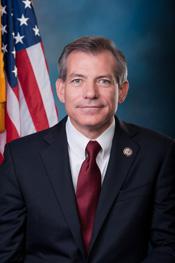
David Schweikert
RRepublicanAZ-1 · Representative
58
/ 100
Average
Attendance99
Avg: 96
Independence3
Avg: 4
Bipartisan Tone11
Avg: 15
Ethics Record100
Avg: 99
Transparency72
Avg: 53
Accountability Score — composite of attendance, independence, bipartisan tone, ethics record & transparency.
Methodology22
Bills Sponsored
0
Enacted into Law
1
Passed a Chamber
21
In Committee
All Sponsored Bills
HR10460In Committee
SMARTER Act
HR10400In Committee
SMARTER Act
HR7972In Committee
Taxpayer Workforce Modernization Act
Taxpayer Workforce Modernization Act This bill requires the Internal Revenue Service to establish a fellowship program to recruit qualified data scientists and a task force, which includes such fellows, to support audit case selection and effectiveness, efforts to address offshore tax evasion, use of artificial intelligence and data analytics in tax administration, and various training and educational efforts. The bill defines a qualified data scientist as a professional who has demonstrated skills applying advanced analytics, statistical modeling, or machine learning in complex regulatory, financial, or compliance environments while working alongside tax law specialists and other tax subject matter experts.
HR10288In Committee
Rural Broadband Modernization Act
HR10218In Committee
Advancing American Innovation Act
HR9772In Committee
Foreign Funding Transparency Act
Foreign Funding Transparency Act This bill requires certain organizations exempt from federal income tax to report to the Internal Revenue Service (IRS) information related to contributions received from foreign nationals. The bill applies to tax-exempt organizations described in Section 501(c) of the Internal Revenue Code (e.g., charities, social welfare organizations, labor organizations, and business or civics leagues) with (1) gross receipts for the preceding tax year of $200,000 or more, or (2) assets (determined at the close of the preceding tax year) of $500,000 or more. Such tax-exempt organizations that are required to file a Form 990 series information return with the IRS must report (1) the aggregate amount of contributions received during the tax year from foreign nationals, and (2) the portion of those contributions received from foreign nationals from China, Iran, Korea, or Russia. Under the bill, a tax-exempt organization may rely on the representation of the donor as to nationality unless the organization knows or should know that such representation is false.
HR9819In Committee
AIDEN (Advancing Integrated Data for Equitable National Child Welfare)
The federal government would be required to survey people in its custody who have been convicted of crimes to gather information about their history with child welfare agencies. This data collection would help authorities better understand patterns between criminal offenders and prior involvement with child protective services. The information could be used to inform law enforcement practices and child safety policies.
HR9715In Committee
Intelligent Arbitration Act of 2026
The proposal would allow companies and individuals to use artificial intelligence tools to help resolve disputes through arbitration, which is a private alternative to going to court. This could speed up and potentially lower the cost of settling disagreements between businesses, employers and workers, or consumers and companies, though it raises questions about whether AI systems can fairly evaluate complex legal arguments and evidence.
HR9565In Committee
Enhanced Counter-Narcotics Detection and Technology Act
The government would install advanced scanning equipment at busy U.S. border crossings to inspect vehicles and cargo without opening them up, focusing first on locations where smuggling and illegal border crossings are most common. This technology would help border agents detect contraband and security threats more quickly and efficiently while speeding up the flow of legitimate traffic through ports of entry. The change would affect travelers, truck drivers, and businesses that import goods across land borders.
HR9566In Committee
To establish a pilot program for use by U.S. Customs and Border Protection at land ports of entry along the Arizona border to assess the use of artificial intelligence through an anomaly detection algorithm, and for other purposes.
The government would test artificial intelligence technology at Arizona border checkpoints to automatically detect unusual patterns or suspicious items in vehicles and cargo. This pilot program would help U.S. Customs and Border Protection officers identify potential threats more quickly and efficiently at land border crossings. The test would determine whether this technology could improve security screening without slowing down legitimate travel and trade.
HR7971Passed House
Taxpayer Experience Improvement Act
Taxpayer Experience Improvement Act This bill requires the Internal Revenue Service (IRS) to provide certain information related to call volume, wait times, and other metrics. The bill also expands online taxpayer accounts and electronic access to federal tax return and refund information. Specifically, the bill requires the IRS to provide in real time on its public website the number of callers for each applicable phone number extension that are (1) connected to speak with an IRS representative, (2) connected to speak with an automated system, and (3) waiting to speak with either an IRS representative or an automated system. The website also must include the longest wait time of any caller waiting to speak with an IRS representative; the estimated wait time to speak with an IRS representative; if a callback service is available or when such service is scheduled to be available; and certain monthly metrics, including the average and median wait times and call lengths. Further, the bill expresses the sense of Congress that, by 2028, the IRS should provide an option to receive a callback for any call that is not answered within five minutes. Finally, the bill requires the IRS to make available (via website or mobile application) to any taxpayer certain information, including tax returns, documents, notices, or letters sent to the taxpayer by the IRS or filed with (or sent to) the IRS by the taxpayer; the status of a federal tax return or refund; and an estimated date for receipt of a refund.
HR8526In Committee
To amend the Public Health Service Act to update quality standards for mammography facilities for the use of AI systems, and for other purposes.
The proposal would update federal quality and safety standards for mammography facilities to account for the use of artificial intelligence systems in breast cancer screening. This would ensure that AI tools used to analyze mammograms meet the same rigorous standards as traditional screening methods, protecting patients by requiring facilities to validate that these new technologies are accurate and reliable. The changes would affect hospitals, imaging centers, and other facilities that perform mammograms, as well as the companies developing AI screening tools.
HR8277In Committee
To amend the Internal Revenue Code of 1986 to designate copper as an applicable critical mineral and to include ore extraction costs for purposes of the advanced manufacturing production credit.
This bill would make copper eligible for tax credits that help manufacturers produce advanced materials domestically, and would allow companies to count the costs of extracting copper ore when calculating those tax benefits. The changes would apply to copper mining and manufacturing operations, potentially making it cheaper for U.S. companies to process copper into finished products. The goal is likely to boost domestic copper production and reduce reliance on foreign sources of this metal, which is used in electronics, renewable energy equipment, and other industries.
HR7713In Committee
Combating Deceptive Practices in Assistance Programs Act of 2026
This bill would crack down on fraudulent schemes and deceptive marketing in government health assistance programs like Medicaid and Medicare, making it easier to catch and punish people who trick patients or the government into paying for unnecessary or fake services. It would likely increase penalties for healthcare fraud and give authorities better tools to identify suspicious billing patterns and misleading claims. The changes would affect healthcare providers, insurance companies, and patients who rely on these programs.
HR7558In Committee
AIMS Act of 2025
The Department of Defense and Veterans Affairs would be required to adopt the same image-sharing software so that medical records and images can be easily transferred between military and VA hospitals. This would allow veterans and active-duty service members to avoid repeating medical scans and tests when moving between these two healthcare systems, potentially saving time and money while improving care coordination.
HR4242In Committee
Innovate Less Lethal to De-Escalate Tax Modernization Act
This bill would provide tax incentives and modernize tax rules for companies that develop and manufacture less-lethal weapons and de-escalation equipment used by law enforcement and security personnel. The changes would make it easier for these companies to invest in research and production by offering tax breaks or other financial benefits. The goal is to encourage innovation in non-lethal alternatives that police and security forces can use instead of traditional weapons.
HR4988In Committee
Scam Farms Marque and Reprisal Authorization Act of 2025
This bill would authorize the U.S. government to issue "letters of marque and reprisal"—historical documents that allow private citizens and companies to pursue and take action against foreign entities engaged in scams or fraud targeting Americans. The legislation targets international scam operations, particularly those based overseas, by potentially allowing private parties to recover damages or assets from scammers rather than relying solely on traditional law enforcement. This approach would expand private remedies for Americans victimized by foreign fraud schemes.
HR4770In Committee
RESTART SUNSET Act of 2025
The bill would allow certain government programs or policies that are set to expire to be extended or restarted rather than automatically ending. It affects how Congress manages programs with expiration dates and could impact various government operations and the businesses or individuals who depend on those programs. The proposal is currently being reviewed by the Judiciary and Small Business committees to determine which parts fall under their authority.
HR4203In Committee
WEAR IT Act
The proposal would allow workers to deduct the cost of work-related clothing and uniforms from their taxes, similar to other job expenses. This would primarily benefit employees in fields like healthcare, hospitality, and trades who must purchase specialized or branded clothing required by their employers. The change would reduce taxable income for these workers, potentially lowering their overall tax bills.
HR3466In Committee
SMART Act
Securing Migration, Addressing Reform, and Talent Retention Act or the SMART Act This bill modifies the U.S. immigration system, including by eliminating the diversity and employment-based visa systems, establishing a points-based system, and capping other immigration categories. The diversity visa program—which makes visas available to individuals from countries that send fewer immigrants—is eliminated. The bill caps annual refugee admission at 50,000. Currently, the President sets annual limits. The bill limits the current family-sponsored immigration system by lowering the annual cap and narrowing the qualifications by, for example, lowering the age limit of qualifying children and eliminating siblings as a qualifying relationship. The bill also disqualifies noncitizen parents of adult U.S. citizens from this category and creates a new nonimmigrant visa for such parents. This visa has an initial authorization period of five years and may be extended for additional five-year periods. The bill also eliminates the employment-based visa system and replaces it with a points-based system. Points are awarded on the basis of characteristics such as age, education, English proficiency, the salary of prospective employment, investment in and management of a new commercial enterprise, and number of dependent children. Visas are awarded to the applicants with the most points (and their immediate family members) until the annual cap is reached. The bill also revises the H-1B visa program to award visas in order of compensation rate. The bill also creates a visa for immigrants who invest at least $5 million into a new commercial enterprise.
HR2653In Committee
Manifest Modernization Act of 2025
This bill would update the rules and procedures for how the U.S. government processes shipping documents and cargo information for goods entering and leaving the country, aiming to make international trade faster and more efficient for importers and exporters. The changes would likely modernize outdated paperwork systems to take advantage of digital technology and reduce delays at ports and borders. Businesses involved in importing or exporting goods would be the primary beneficiaries of these streamlined procedures.
HR402In Committee
DEBT Act
Debt Explanation Before Taxwriters Act or the DEBT Act This bill requires the Secretary of the Treasury to appear before the House Ways and Means Committee and the Senate Finance Committee before the federal debt limit is reached or extraordinary measures are taken to prevent the United States from defaulting on its obligations. The term extraordinary measures generally refers to a series of actions that the Department of the Treasury may implement to allow the United States to borrow additional funds without exceeding the debt limit. The measures generally include suspensions or delays of debt sales and suspensions or redemptions of investments in certain government funds. The bill requires the Secretary of the Treasury to appear before the committees to provide a detailed explanation of (1) the extraordinary measures that Treasury will take and the administrative costs of taking the measures, and (2) any reversal of such measures and any other changes in the funding of federal government obligations.