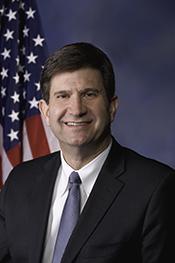
Bradley Scott Schneider
DDemocratIL-10 · Representative
54
/ 100
Average
Attendance98
Avg: 96
Independence4
Avg: 4
Bipartisan Tone8
Avg: 15
Ethics Record100
Avg: 99
Transparency44
Avg: 53
Accountability Score — composite of attendance, independence, bipartisan tone, ethics record & transparency.
Methodology21
Bills Sponsored
0
Enacted into Law
1
Passed a Chamber
19
In Committee
All Sponsored Bills
HR10805In Committee
Don’t Block LGBTQ Act of 2026
HR10175In Committee
Banning Antiquated Duties and Delivering Equitable American Levies (BAD DEAL) Act of 2026
HR9764In Committee
HONOR Act
Hindering Oppressive Nations from Obtaining Revenue Act or HONOR Act This bill prohibits a taxpayer from claiming the foreign tax credit (FTC) for taxes paid, accrued, or deemed paid to Russia. Under current law, a taxpayer may claim the FTC for income, war profits, and excess profits taxes (or taxes imposed in lieu of these taxes) paid, accrued, or deemed paid to a foreign country (and certain U.S. possessions), subject to limitations. However, under current law, a taxpayer may not claim the FTC for taxes paid to a foreign country if (1) the United States does not recognize the country’s government, (2) the United States severs or does not conduct diplomatic relations with the country, or (3) the country is designated by the Department of State as supporting international terrorist acts. (Currently, the FTC is disallowed for taxes paid, accrued, or deemed paid to Iran, North Korea, Sudan, and Syria.) Under the bill, a taxpayer may not claim the FTC for taxes paid, accrued, or deemed paid to Russia beginning 30 days after the date of enactment and until normal U.S. trade relations with Russia are restored (pursuant to requirements established by the Suspending Normal Trade Relations with Russia and Belarus Act).
HRES1417In Committee
Remembering the lives lost and honoring the survivors 4 years after the Independence Day Parade shooting that occurred on July 4, 2022, in Highland Park, Illinois.
This resolution honors the seven people killed and dozens injured in the July 4, 2022 mass shooting at a parade in Highland Park, Illinois, and recognizes the survivors and first responders affected by the tragedy. The measure serves as a formal congressional acknowledgment of the victims and the community's resilience four years after the shooting.
HR8834In Committee
Senator Paul Simon Study Abroad Program Act of 2026
The federal government would create a new program to help more college students study abroad and gain international experience, which supporters argue is important for competing in the global job market. The program would be run by the State Department and would likely provide funding or support to make it easier and more affordable for students to spend time studying in other countries. This would affect college students and universities across the country by expanding opportunities to learn about different cultures and gain skills employers value.
HR6956Passed House
BARCODE Efficiency Act
Barcode Automation for Revenue Collection to Organize Disbursement and Enhance Efficiency Act or the BARCODE Efficiency Act This bill requires the Internal Revenue Service (IRS) to use barcodes, barcode scanning technology, and optical character recognition (or similar) technology to digitize certain federal tax return information and correspondence, unless the technology is slower or less reliable than other IRS processes (subject to conditions). Specifically, the bill requires a scannable barcode on electronically-prepared federal tax returns that are printed and filed in paper format with the IRS. The bill also requires the IRS to use barcode scanning technology to convert data included on such returns into an electronic format. Further, the bill requires the IRS to use optical character recognition (or similar) technology to transcribe federal tax returns and correspondence received by the IRS that are not prepared electronically and are received in paper format. However, under the bill, the use of barcodes, barcode scanning technology, and optical character recognition (or similar) technology is not required if (1) such technology is slower or less reliable than manual transcription or any other IRS process, and (2) the IRS provides a report to Congress regarding the determination to not use such technology.
HR8490In Committee
Social Security Caregiver Credit Act of 2026
The legislation would allow people who take time out of the workforce to care for family members—such as children, elderly parents, or disabled relatives—to earn credit toward their Social Security benefits, helping ensure their retirement income isn't reduced due to caregiving gaps. This would primarily benefit workers, especially women, who interrupt their careers for unpaid family care responsibilities. The proposal aims to recognize caregiving as valuable work when calculating Social Security retirement payments.
HR8207In Committee
Parental Bereavement Act of 2026
This bill would likely require employers to give workers paid time off when they lose a child, recognizing parental grief as a serious life event similar to other family emergencies. The law would probably apply to federal employees and potentially private sector workers, ensuring parents have job protection and income while dealing with their loss. The bill aims to address the emotional and practical needs of grieving parents without forcing them to choose between mourning and keeping their paycheck.
HR7585In Committee
Investing in Tomorrow’s Workforce Act of 2026
This bill would likely fund or expand job training and education programs to help workers develop skills for future careers, particularly in growing industries. It probably affects workers seeking new skills, employers looking for trained employees, and educational institutions that provide training programs. The goal appears to be preparing the workforce for jobs that will be in demand in coming years.
HR3307Reported
Eastern Mediterranean Gateway Act
The bill likely aims to strengthen U.S. diplomatic, economic, or military relationships in the Eastern Mediterranean region, which includes countries like Greece, Turkey, Egypt, and Israel. Based on its referral to the Foreign Affairs Committee, it probably addresses trade partnerships, security cooperation, or strategic interests in this geographically important area where the U.S. has significant interests. The specific details would depend on what the bill proposes—whether it's funding initiatives, establishing new agreements, or coordinating policy among allied nations in the region.
HR5376In Committee
Impacts and Outcomes for Health Career Training Act
This bill would likely establish or modify federal programs that train people for healthcare jobs, such as nursing, medical technicians, or other health professions. The legislation probably aims to improve how these training programs work and measure whether they successfully prepare workers for actual healthcare careers. It would affect students pursuing health careers, healthcare employers looking to hire trained workers, and potentially federal funding for medical education programs.
HR5283In Committee
Healthcare Workforce Resilience Act
This bill would likely make it easier for foreign-born healthcare workers like nurses, doctors, and other medical professionals to come to the United States and stay here to work, addressing shortages in the healthcare industry. The changes would probably affect immigration rules and visa processes specifically for medical professionals, helping hospitals and clinics fill open positions while allowing skilled workers from other countries to pursue careers in American healthcare.
HR5056In Committee
Teachers Are Leaders Act of 2025
The proposal would create new programs and funding to support teachers in taking on leadership roles within their schools and districts, such as mentoring other teachers, leading professional development, and participating in school decision-making. It aims to improve teacher retention and school quality by recognizing teaching as a leadership profession and providing teachers with opportunities to advance their careers without leaving the classroom. Teachers, school administrators, and students in public schools would be the primary groups affected by these changes.
HR4726In Committee
Educational Toy Tax Relief Act
Educational Toy Tax Relief Act This bill prohibits the imposition of duties (i.e., tariffs) on specified baby toy items (e.g., products for children under the age of three, baby swings, and educational toys for babies and children) pursuant to certain presidential powers. Specifically, the bill prohibits the President from exercising authorities under the International Emergency Economic Powers Act (IEEPA) to impose duties on specified baby toy items entering the United States. (IEEPA provides the President with broad authority to regulate various economic transactions following a declaration of a national emergency.) Further, the President must terminate the duties on these items that were imposed pursuant to IEEPA and are in effect as of the date of the bill's enactment. The bill also prohibits the President from using any other authorities to impose duties on these items that are substantially similar to the duties imposed pursuant to IEEPA.
HRES558In Committee
Remembering the lives lost and honoring the survivors 3 years after the Independence Day Parade shooting that occurred on July 4, 2022, in Highland Park, Illinois.
This resolution honors the seven people killed and dozens injured in the July 4, 2022 mass shooting at a parade in Highland Park, Illinois, and recognizes the survivors and community members affected by the tragedy. The measure acknowledges the ongoing impact of the shooting on the victims' families and the Highland Park community three years after the event. It serves as a formal statement from Congress memorializing those lost and supporting those affected by the violence.
HR3696In Committee
Fair and Equal Housing Act of 2025
This bill would strengthen protections against housing discrimination by expanding the types of discrimination that are illegal and potentially increasing penalties for violations. It would affect landlords, property managers, homebuyers, and renters by clarifying what constitutes unfair housing practices and how they should be enforced. The legislation aims to ensure that people cannot be denied housing based on protected characteristics like race, religion, disability, or other specified categories.
HRES466In Committee
Expressing support for the designation of the first Tuesday in June as "National Cancer Survivor Beauty and Support Day".
This resolution expresses support for the designation of National Cancer Survivor Beauty and Support Day.
HR2609In Committee
PEACE Act
The bill's vague title makes it difficult to determine its specific purpose without additional details, but based on its referral to the House Committee on Foreign Affairs, it likely addresses some aspect of U.S. international relations, diplomacy, or foreign policy. The bill could potentially affect how the U.S. government conducts overseas operations, manages relationships with other countries, or allocates resources for international programs. More information about the bill's specific provisions would be needed to explain exactly what changes it would make and which groups—such as foreign aid recipients, military personnel, or international organizations—would be impacted.
HR2464In Committee
Repealing Outdated and Unilateral Tariff Authorities Act
Repealing Outdated and Unilateral Tariff Authorities Act This bill repeals the statute that directs the President to impose new or additional tariffs on articles produced by, or imported on the vessels of, foreign countries that discriminate against U.S. commerce.
HR1740In Committee
Default Proceed Sale Transparency Act
Default Proceed Sale Transparency Act This bill establishes new requirements in the case of a firearm transfer by a federally licensed dealer, manufacturer, or importer to an unlicensed person prior to the completion of a background check. Current law permits these transactions—default-proceed transactions—if a submitted background check remains incomplete after three business days. With respect to a default-proceed transaction, the bill requires a federally licensed dealer, manufacturer, or importer to report the transfer to the Federal Bureau of Investigation (FBI) within 24 hours; requires the National Instant Criminal Background Check System (NICS) to prioritize completing the background check related to the transfer; and requires the NICS to retain records related to a proposed or completed firearm transfer until the background check is complete. Finally, the bill requires the FBI to report publicly on data related to default-proceed transactions. Further, it requires the Bureau of Alcohol, Tobacco, Firearms and Explosives to report publicly on data related to the firearms transferred in default-proceed transactions.
HRES68In Committee
Expressing strong disapproval of the President's announcement to withdraw the United States from the Paris Agreement.