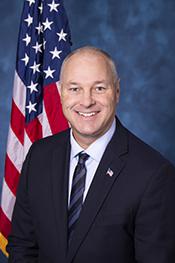
Pete Stauber
RRepublicanMN-8 · Representative
53
/ 100
Average
Attendance98
Avg: 96
Independence3
Avg: 4
Bipartisan Tone21
Avg: 15
Ethics Record100
Avg: 99
Transparency25
Avg: 53
Accountability Score — composite of attendance, independence, bipartisan tone, ethics record & transparency.
Methodology22
Bills Sponsored
2
Enacted into Law
6
Passed a Chamber
14
In Committee
Bills That Became Law
HJRES140Providing for congressional disapproval under chapter 8 of title 5, United States Code, of the rule submitted by the Bureau of Land Management relating to Public Land Order No. 7917 for Withdrawal of Federal Lands; Cook, Lake, and Saint Louis Counties, MN.HR452Miracle on Ice Congressional Gold Medal Act
All Sponsored Bills
HR4615In Committee
Small Business Payment for Performance Act of 2026
This bill would likely establish or modify how the federal government pays small businesses for work they do on government contracts, possibly by tying payments to meeting specific performance goals or deadlines. The changes could affect how quickly small contractors get paid and what standards they need to meet to receive full payment. Small business owners and federal agencies that work with contractors would be the main groups impacted by these payment rules.
HR10637In Committee
Voter Vouching Transparency Act
HR4090Passed House
Critical Mineral Dominance Act
Critical Mineral Dominance Act This bill directs the Department of the Interior to address mineral supply chain vulnerabilities, including by accelerating and expanding mineral production on federal land (i.e., National Forest System land, public lands, and any land that may be leased for the exploration, development, or production of hardrock minerals). Interior must (1) identify priority mining projects on federal lands that can be immediately approved, and (2) take all necessary and appropriate steps to expedite those projects. Interior must also identify active, inactive, or proposed mining projects on federal land that have the potential to (1) increase production of hardrock minerals or their byproducts, (2) expand existing operations to include such byproducts, or (3) produce hardrock minerals from mine tailings or coal byproducts. Further, Interior must identify certain federal land with potential for hardrock mining. Interior must prioritize identifying land where a mining project (1) can most quickly be fully permitted and operational, and (2) would have the greatest potential effect on the robustness of the domestic mineral supply chain. Interior must (1) suspend, revise, or rescind agency actions that place undue burdens on mining projects; (2) recommend changes to current law necessary to expand U.S. production of hardrock minerals; and (3) review state and local laws that impede development of domestic mining and mineral exploration projects. Interior must also report on the dollar value and overall economic impact of the United States' reliance on imports of certain mineral commodities. Finally, Interior must prioritize efforts to accelerate geologic mapping.
HR9588In Committee
FRAUD Act
State officials would be required to report cases of fraud involving federal money to the appropriate federal authorities, ensuring that misuse of taxpayer funds is properly investigated and addressed. This would apply to situations where state employees or contractors misuse federal grants, Medicare/Medicaid funds, or other federal assistance programs. The requirement aims to improve oversight and accountability for how federal dollars are spent at the state level.
HR7882In Committee
To provide for the leasing of certain deposits of minerals located within the City of Carlsbad, New Mexico.
This bill would allow the federal government to lease mineral deposits located in or near Carlsbad, New Mexico to private companies for extraction and development. The leases would generate revenue for the government while enabling energy and mining companies to access valuable mineral resources in the area. Local communities and workers in the region could see economic benefits from mining operations, though environmental impacts would depend on how the leases are structured and regulated.
HR8865In Committee
Protecting Taxpayers from Fraudulent Providers Act of 2026
Healthcare providers who are convicted of fraud-related crimes would be permanently banned from participating in Medicare, Medicaid, and other federal health programs, rather than facing temporary suspensions. This would affect doctors, hospitals, clinics, and other medical providers who commit fraud against the government or patients. The goal is to protect federal healthcare programs and patients by keeping convicted fraudsters out of the system for good.
HJRES140Enacted
Providing for congressional disapproval under chapter 8 of title 5, United States Code, of the rule submitted by the Bureau of Land Management relating to Public Land Order No. 7917 for Withdrawal of Federal Lands; Cook, Lake, and Saint Louis Counties, MN.
This joint resolution opens approximately 225,504 acres of National Forest System lands in Cook, Lake, and Saint Louis Counties in Minnesota to mineral and geothermal leasing. Specifically, the joint resolution nullifies Public Land Order 7917 , which withdrew such land from mineral and geothermal leasing for 20 years beginning in 2023. The Bureau of Land Management issued the order to protect and preserve the Rainy River Watershed, the Boundary Waters Canoe Area Wilderness, the Boundary Waters Canoe Area Wilderness Mining Protection Area, and the 1854 Ceded Territory of the Lake Superior Chippewa from potential adverse effects of mineral and geothermal exploration and development. The joint resolution removes such protections and allows such land to be leased for the exploration and development of minerals and geothermal energy.
HR6422Passed House
American Water Stewardship Act
American Water Stewardship Act This bill reauthorizes several water quality protection and restoration programs of the Environmental Protection Agency (EPA) and makes related requirements. Specifically, the bill reauthorizes through FY2031 the Great Lakes Restoration Initiative, the Long Island Sound Partnership program, the Columbia River Basin Restoration Program, the National Estuary Program, and the BEACH Act program. The bill also modifies some of those programs. For example, the bill modifies the National Estuary Program, including by establishing the Mississippi Sound as an estuary of national significance that may receive support under the program. It also modifies the BEACH Act program, including by allowing states or local governments to use grants provided under the program to identify specific sources of contamination for coastal recreation waters adjacent to beaches or similar points of access that are used by the public. Additionally, the bill modifies the San Francisco Estuary Partnership, including by making federal agencies eligible for grants provided under the program. The bill also prohibits funding made available for FY2026-FY2031 to carry out specified Clean Water Act programs from being provided to nonfederal entities that are domiciled in, located in, organized under, have a principal place of business in, or have agreements with foreign countries of concern. Finally, the bill directs the Government Accountability Office to evaluate and report on specified geographic programs of the EPA.
HR7923In Committee
Stop Fraud by SOMALIA Act
The bill aims to prevent fraud schemes that target families, likely by establishing new penalties or enforcement mechanisms for scams involving family benefits, assistance programs, or related services. The proposal has been sent to both the Judiciary Committee and the Education and Workforce Committee to determine which parts fall under each committee's authority. Families receiving government assistance or benefits would potentially be protected from fraudsters attempting to steal their information or benefits.
HR7634In Committee
Judicial Loyalty Act of 2026
I cannot provide a meaningful summary of this bill because the title is too vague and no substantive details about its provisions are available. Based on the title alone, this bill likely addresses some aspect of judicial conduct or ethics, but without knowing the specific policy changes it proposes—whether it affects judge appointments, disciplinary procedures, recusal rules, or something else—I cannot accurately explain what it would do or who it would affect.
HR7320In Committee
Minnesota Voter Integrity Act of 2026
This bill would make changes to Minnesota's voting rules and election procedures, likely including measures related to voter registration, identification requirements, or ballot security. The specific impacts on voters and election officials would depend on which voting policies the bill modifies, but such legislation typically affects how people register to vote, what they need to bring to polling places, or how ballots are counted and verified.
HR452Enacted
Miracle on Ice Congressional Gold Medal Act
Miracle on Ice Congressional Gold Medal Act This act provides for the award of Congressional Gold Medals to the members of the 1980 U.S. Olympic men's ice hockey team in recognition of the team's achievement at the 1980 Winter Olympic Games.
HR197Passed House
Lake Winnibigoshish Land Exchange Act of 2025
Lake Winnibigoshish Land Exchange Act of 2025 This bill directs the Forest Service to exchange specified land along the shoreline of Lake Winnibigoshish (commonly known as Lake Winnie) in the Chippewa National Forest in Minnesota for specified land owned by Big Winnie Land and Timber, LLC (BWLT), if BWLT offers to make the exchange. The land acquired by the Forest Service must be added to and managed as part of Chippewa National Forest. The bill outlines requirements and conditions for the exchange. For example, the Forest Service must reserve an easement for road access to certain land in the forest. The bill also conditions the exchange on the satisfactory completion of a Phase I Environmental Site Assessment by BWLT before the nonfederal land is accepted in the exchange. In addition, the exchange must be for equal value or the values must be equalized by a cash payment, subject to an exception. Finally, the bill directs BWLT to pay all closing costs associated with the exchange.
HR5337In Committee
Motor Carrier Safety Selection Standard Act of 2024
Motor Carrier Safety Selection Standard Act of 2024 This bill establishes a standard of care for the selection of brokers and other entities that contract with motor carriers (e.g., trucking companies) for the shipment of goods or household goods. (A broker is the middle person between a shipper and a motor carrier. Brokers arrange for the transportation of property or household goods.) Specifically, the bill requires such entities to verify that a transporting motor carrier (1) is properly registered with the Department of Transportation (DOT); (2) has obtained the minimum required insurance coverage; and (3) is in compliance with all Federal Motor Carrier Safety Administration safety standards, including through a public confirmation statement. Entities that comply with the verification requirements shall be considered reasonable and prudent in the selection of a covered motor carrier (for the purposes of a claim of negligent selection of a motor carrier). Further, DOT must promulgate final regulations that revise the methodology for issuing motor carrier safety fitness determinations. The regulations must provide a procedure for DOT to determine whether a motor carrier is not fit to operate a commercial motor vehicle that is in, or affects, interstate commerce. The bill exempts from the verification requirements an individual shipper (i.e., a shipper that owns the goods being transported and pays the tariff transportation charges) that contracts with a covered motor carrier.
HR3891In Committee
Northern Border Security and Staffing Reform Act
The legislation would increase staffing and resources for border security operations along the U.S.-Canada border, including hiring additional agents and modernizing equipment and technology. It would affect Border Patrol agents, customs officers, and other federal employees working at northern border checkpoints, as well as travelers and businesses that cross the border regularly. The bill aims to strengthen security and enforcement capabilities in that region.
HR1634Passed House
ThinkDIFFERENTLY About Disability Employment Act
ThinkDIFFERENTLY About Disability Employment Act This bill requires the Small Business Administration (SBA) to (1) provide assistance to individuals with disabilities who desire to become entrepreneurs or to be self-employed, (2) help individuals with disabilities find employment at small businesses; and (3) assist small businesses with hiring such individuals and with accessibility issues applicable to such individuals. The SBA must conduct outreach and education about such activities. The bill establishes reporting requirements with respect to these activities.
HR2654In Committee
Lifesaving Gear for Police Act of 2025
The bill would provide federal funding and support to help police departments purchase protective equipment like body armor, helmets, and other safety gear to protect officers from injury or death on the job. It aims to make law enforcement safer by ensuring departments have access to the latest lifesaving equipment, which could affect both police agencies and the communities they serve.
HR2348In Committee
Brake for Kids Act of 2025
Brake for Kids Act of 2025 This bill directs the Department of Transportation (DOT) to produce and distribute a national public safety campaign on the dangers of illegally passing stopped school buses. Specifically, the campaign must increase awareness and education about the issue through a variety of media, including television, radio, and social media advertising. DOT must use Infrastructure Investment and Jobs Act funds to produce and distribute the campaign.
HR818Passed House
SPUR Act
Small Business Procurement and Utilization Reform Act of 2025 or the SPUR Act This bill requires federal agencies to include on their annual scorecard for small business contracting the number of small businesses that receive a prime contract for the first time and are owned and controlled by service-disabled veterans, qualified HUBZone small business concerns, small business concerns owned and controlled by socially and economically disadvantaged individuals, or small business concerns owned and controlled by women.
HR1582In Committee
Volunteer Driver Tax Appreciation Act of 2025
This bill would allow volunteers who use their own vehicles for charitable or nonprofit organizations to claim a tax deduction for their mileage, similar to the deduction currently available to people who drive for medical appointments or charitable work. The change would make it easier for volunteers to get tax benefits when they donate their time and gas money to help their communities. This would primarily benefit people who regularly volunteer for nonprofits, food banks, disaster relief, and similar organizations.
HR1505In Committee
Public Safety Employer-Employee Cooperation Act
This bill would establish new rules for how police officers, firefighters, and other public safety workers can organize and negotiate with their employers over pay, benefits, and working conditions. It likely aims to strengthen the rights of these workers to form unions or employee groups and bargain collectively, while potentially limiting what employers can do to prevent such organizing. The changes would affect public safety agencies and the workers they employ across the country.
HCONRES11Passed House
Providing for a joint session of Congress to receive a message from the President.
This concurrent resolution provides for a joint session of Congress on Tuesday, March 4, 2025, to receive a message from the President.