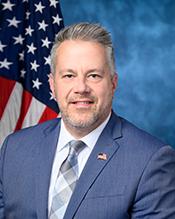
Eric Sorensen
DDemocratIL-17 · Representative
51
/ 100
Average
Attendance99
Avg: 96
Independence6
Avg: 4
Bipartisan Tone8
Avg: 15
Ethics Record100
Avg: 99
Transparency21
Avg: 53
Accountability Score — composite of attendance, independence, bipartisan tone, ethics record & transparency.
Methodology11
Bills Sponsored
0
Enacted into Law
1
Passed a Chamber
10
In Committee
All Sponsored Bills
HR10605In Committee
SUNRAY for Energy Act
HR2466Passed House
To designate the facility of the United States Postal Service located at 5225 Harrison Avenue in Rockford, Illinois, as the "Jay P. Larson Post Office Building".
This bill designates the facility of the United States Postal Service located at 5225 Harrison Avenue in Rockford, Illinois, as the "Jay P. Larson Post Office Building".
HR8908In Committee
STOP GAMES Act of 2026
The FDA would gain clearer authority to reject petitions that are primarily designed to stall the approval of generic or biosimilar drugs, helping these cheaper alternatives reach patients faster. This change targets situations where companies file petitions not out of genuine safety concerns but simply to delay competition from lower-cost medications. The bill aims to streamline the drug approval process while maintaining safety standards.
HR8636In Committee
Strengthening Educator Workforce Data Act
The federal government would collect more detailed information about teachers and school principals, including data on their backgrounds, qualifications, working conditions, and reasons they leave the profession. This expanded data collection would help policymakers and school districts better understand workforce challenges like teacher shortages and identify which schools struggle most to attract and retain experienced educators. The information gathered would be used to inform decisions about education policy and funding at the federal and state levels.
HR8457In Committee
Homegrown Fertilizer Act
The proposal would support American farmers in producing fertilizer domestically rather than relying on imports, potentially lowering costs and reducing supply chain disruptions. It aims to help agricultural businesses and rural communities by encouraging investment in domestic fertilizer production facilities and related infrastructure. Farmers across the country would benefit from more reliable access to fertilizer at potentially competitive prices.
HR7848In Committee
National Weather Safety Board Act
This bill would create a new independent agency to investigate severe weather events and natural disasters, similar to how the National Transportation Safety Board investigates plane crashes. The board would study what went wrong during hurricanes, tornadoes, floods, and other major weather emergencies to help communities and government agencies prepare better and respond more effectively in the future. This would affect emergency managers, local governments, and the general public by potentially improving how we predict, prepare for, and respond to dangerous weather.
HR3309In Committee
Autonomy for All Disabled Veterans Act
The legislation would expand decision-making authority for disabled veterans regarding their own medical care and benefits, allowing them greater control over treatment choices and how they manage their disability benefits. This would affect millions of veterans with service-connected disabilities by reducing bureaucratic requirements and giving them more say in their healthcare decisions rather than having the Department of Veterans Affairs make all choices for them.
HR6478In Committee
Air Guard STATUS Act of 2025
Air Guard Standardizing Tuition Assistance To Unify the Services Act of 2025 or the Air Guard STATUS Act of 2025 This bill requires the Department of the Air Force to establish a permanent program to pay all or a portion of tuition or expenses at an educational institution for members of the Air National Guard who are in compliance with training requirements (i.e., required field exercises and drills).
HR4733In Committee
Low-Income Household Water Assistance Program Establishment Act
This bill would create a federal assistance program to help low-income families pay their water and sewer bills, similar to existing programs that help with heating and electricity costs. The program would provide grants to states to distribute to households struggling to afford clean water and wastewater services. It aims to ensure that families below a certain income level can maintain access to essential water services without facing shutoffs or unaffordable bills.
HR4865In Committee
Advancing Research on Agricultural Soil Health Act of 2025
The legislation would direct federal funding and research efforts toward studying and improving soil health on farms, helping farmers understand how to maintain productive and sustainable soil. By supporting scientific research into soil management practices, the bill aims to help agricultural producers increase crop yields while protecting their land for long-term use. Farmers, agricultural researchers, and food producers would benefit from the expanded knowledge and resources focused on soil conservation and improvement.
HR1027In Committee
QUIET Act
Quashing Unwanted and Interruptive Electronic Telecommunications Act or the QUIET Act This bill establishes a disclosure requirement for robocalls that use artificial intelligence (AI) to emulate a human being and increases forfeiture and fine amounts for certain violations of the Telephone Consumer Protection Act (TCPA). (The TCPA prohibits certain telemarketing calls made without the recipient’s consent and using specified automated technologies.) Specifically, any robocall that uses AI to emulate a human being must include a disclosure at the beginning of the message indicating that AI is being used. Under the bill, robocalls are defined as calls made or text messages sent (1) using automatic dialing technology, or (2) using an artificially generated message or an artificial or prerecorded voice. Calls or texts that are made or sent using equipment that requires substantial human intervention are excluded. Further, the bill doubles the maximum forfeiture penalty and criminal fine that may be imposed for certain violations of the TCPA involving the use of AI to impersonate an individual or entity with the intent to defraud, cause harm, or wrongfully obtain anything of value. This provision applies to violations that occur after the bill’s enactment.