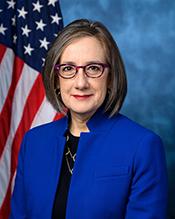
Andrea Salinas
DDemocratOR-6 · Representative
54
/ 100
Average
Attendance100
Avg: 96
Independence3
Avg: 4
Bipartisan Tone17
Avg: 15
Ethics Record100
Avg: 99
Transparency36
Avg: 53
Accountability Score — composite of attendance, independence, bipartisan tone, ethics record & transparency.
Methodology35
Bills Sponsored
0
Enacted into Law
1
Passed a Chamber
34
In Committee
All Sponsored Bills
HR10698In Committee
ICE Shootings Transparency Act
HR10458In Committee
Grand Ronde Land Transfer Act of 2026
HR10116In Committee
Lifeline for First Responders Act
HR10102In Committee
Data Center Community Reinvestment Act of 2026
HR10066In Committee
Stop Corrupt Trading Act
HR10038In Committee
FORK Act of 2026
Feeding Our Rural Kids Act of 2026 or the FORK Act of 2026 This bill establishes a summer meal delivery vehicle pilot program as part of the Summer Food Service Program (SFSP). (The SFSP is a federally funded, state-administered program that reimburses providers that serve no-cost, healthy meals and snacks to children and teens at summer sites in low-income communities.) Under the bill, the Department of Agriculture (USDA) must award one-year grants of up to $100,000 for service institutions (e.g., school food authorities) to purchase, retrofit, or repair vehicles to facilitate noncongregate meal distribution. This is meal distribution outside of the typically required group, or congregate, setting (e.g., grab-and-go meal service). Among other things, USDA must give priority to service institutions located in an area in which poor economic conditions exist and that serve a high proportion of students from socially disadvantaged backgrounds. USDA must also ensure, to the maximum extent practicable, that service institutions receiving grants are located in different states.
HR3029Passed House
To amend the Research and Development, Competition, and Innovation Act to support nucleic acid screening, and for other purposes.
Nucleic Acid Standards for Biosecurity Act This bill explicitly requires the National Institute of Standards and Technology (NIST) to support the development of best practices and technical standards for nucleic acid synthesis. Nucleic acids, including deoxyribonucleic acid (DNA) and ribonucleic acid (RNA), carry genetic information within cells. Nucleic acid synthesis is the process of designing and creating custom nucleic acids; it is used in the development of medications and agricultural products. However, this technology also poses a risk of misuse (e.g., the intentional or unintentional creation of dangerous biological agents). The bill requires NIST to carry out measurement research to support the development and improvement of biosecurity best practices and technical standards related to nucleic acid synthesis. This effort must address specified topics including nucleic acid synthesis screening, operational security, and conformity assessment. (A 2023 executive order titled Safe, Secure, and Trustworthy Development and Use of Artificial Intelligence directed NIST to develop and refine similar specifications and best practices for use by synthetic nucleic acid providers. NIST's work on this topic is ongoing.) In carrying out this effort, NIST must convene stakeholders to develop and periodically update consensus priorities and best practices for synthetic nucleic acid screening mechanisms. Within a specified period, NIST must submit a summary of the stakeholder group’s findings to Congress. NIST must also take steps to advance risk management best practices and technical standards for engineering biology and biomanufacturing, including with respect to risks associated with the use of artificial intelligence.
HRES1442In Committee
Supporting the designation of July 20, 2026, as "National Moon Landing Day".
The proposal would officially recognize July 20, 2026, as "National Moon Landing Day" to commemorate the 57th anniversary of the Apollo 11 moon landing. This designation would encourage Americans to celebrate and reflect on the historic achievement of the 1969 lunar mission and its significance in space exploration history. The measure affects no specific groups or policies but serves as a symbolic recognition of this important moment in American achievement.
HR9529In Committee
NO PROFIT Act
The proposal would require sitting U.S. Presidents to pay federal income tax on the increase in value of their investments and assets each year, rather than only when those assets are sold. This would affect Presidents' personal finances by requiring annual tax payments on unrealized gains from stocks, real estate, and other property holdings. The change would be handled through the tax code and reviewed by the House Committee on Ways and Means.
HRES1329In Committee
Expressing support for the designation of May 2026 as "Mental Health Awareness Month".
Congress would formally recognize May 2026 as "Mental Health Awareness Month" to encourage public attention to mental health issues and support for people struggling with mental illness and substance abuse. The designation aims to promote education, reduce stigma, and highlight the importance of mental health services for all Americans. This is a symbolic measure that doesn't create new programs or funding, but signals congressional support for mental health awareness efforts.
HR8631In Committee
KOMBUCHA
The proposal would prevent the federal government from taxing or regulating low-alcohol kombucha as an alcoholic beverage, even though it contains some alcohol. This would primarily benefit kombucha producers and consumers by keeping the drink exempt from the excise taxes and regulations that apply to beer, wine, and other alcoholic products. The change would clarify the tax treatment of kombucha, which is a fermented tea beverage that typically contains less than 1% alcohol by volume.
HR8237In Committee
Quantum Instrumentation for Science and Engineering Act
This bill would likely provide funding and support for developing quantum computing equipment and tools that scientists and engineers need for research and practical applications. The legislation aims to strengthen America's quantum technology capabilities by investing in the infrastructure and instruments required to advance quantum science across universities, national laboratories, and private companies. This could help the U.S. stay competitive in quantum computing, which experts believe will transform fields like medicine, cybersecurity, and materials science.
HR7474In Committee
Soil CARE Act of 2026
Soil Conservation And Regeneration Education Act of 2026 or the Soil CARE Act of 2026 This bill directs the Department of Agriculture (USDA) to establish a training program for soil health management in Natural Resources Conservation Service (NRCS) programs. Under the bill, soil health management means land management methods used to increase and balance soil health, such as microbial biomass and macrofauna, for the purpose of improving biological functions, including forming and stabilizing soil structure, cycling nutrients, controlling pests and disease, and degrading or detoxifying contaminants. The training program must (1) provide education, resources, and technical support to NRCS personnel and third-party providers on the rapidly evolving methodologies, science, and practices for improving soil health; and (2) assist NRCS personnel and third-party providers in supporting agricultural producers in understanding and implementing soil health management systems that regenerate farmland. The training program must be available twice every two years in each NRCS region and include both an online curriculum and in-person training workshops. The training program must be developed and delivered through cooperative agreements with entities with soil health management systems expertise and experience working with and training producers. The bill includes minimum curriculum requirements for the training program, including specific units on soil health and diversified production systems. USDA must review and update the training program curriculum and materials every two years.
HR7514In Committee
Rural Health Care Facilities Revitalization Act
This bill aims to improve healthcare services in rural areas by providing funding and support to help rural hospitals and clinics stay open and upgrade their facilities and equipment. It would affect rural communities that often struggle to access quality medical care, as well as healthcare workers and hospitals in farming regions. The legislation likely includes grants, loans, or other financial assistance to help these facilities serve their patients better.
HR7297In Committee
ICE and CBP Constitutional Accountability Act
This bill would create new legal accountability measures for Immigration and Customs Enforcement (ICE) and Customs and Border Protection (CBP) agents, likely allowing people to sue these agencies for constitutional violations and establishing oversight mechanisms for their operations. The legislation aims to address concerns about civil rights abuses and ensure that immigration enforcement officials follow constitutional protections like due process and protection against unreasonable searches. It would primarily affect immigrants and people detained by these agencies, as well as the agencies themselves through increased legal liability and oversight requirements.
HR6593In Committee
Domestic Organic Investment Act of 2025
This bill would likely provide financial support and incentives to help American farmers transition to or expand organic farming practices, which avoid synthetic pesticides and fertilizers. The measure aims to boost the domestic organic food industry by making it easier and more affordable for farmers to meet organic certification requirements and invest in organic production methods. Farmers, agricultural businesses, and consumers seeking locally-grown organic products would be the primary beneficiaries.
HR6817In Committee
Home-Based Telemental Health Care Act of 2025
The legislation would allow mental health providers to offer therapy and counseling services to patients through video calls and other remote technology from their homes, rather than requiring them to work only from traditional office settings. This change would make mental health care more accessible and convenient for patients who struggle to travel to appointments, while giving therapists more flexibility in how they work. The bill would apply to various mental health professionals including psychologists, counselors, and social workers who treat patients covered by Medicare and other insurance programs.
HR6672In Committee
Mental Health Professionals Workforce Shortage Loan Repayment Act of 2025
Mental Health Professionals Workforce Shortage Loan Repayment Act of 2025 This bill requires the Health Resources and Services Administration to establish a student loan repayment program for mental health professionals who work in designated workforce-shortage areas.
HR6041In Committee
Rural Partnership and Prosperity Act
The legislation aims to strengthen economic opportunities and development in rural communities by supporting agricultural partnerships and local business growth. It would likely provide resources, incentives, or policy changes to help farmers and rural entrepreneurs improve their operations and increase prosperity in areas outside major cities. Rural residents, agricultural workers, and small business owners would be the primary beneficiaries of these proposed changes.
HR6477In Committee
Housing to Homes Act of 2025
HR6226In Committee
Latino Youth Mental Health Empowerment Act
Latino Youth Mental Health Empowerment Act This bill requires the Substance Abuse and Mental Health Services Administration (SAMHSA) to conduct outreach and studies relating to mental health in the Hispanic and Latino community. SAMHSA must develop and implement an education and outreach campaign to promote mental health and reduce stigma associated with mental health within the Hispanic and Latino youth population. SAMHSA must also conduct studies on mental health among Hispanic and Latino youth and strategies for increasing the mental health professional workforce within the Hispanic and Latino community, and publish reports on the findings of the studies.
HR5604In Committee
National Guard Proper Use Act
National Guard Proper Use Act This bill prohibits, in accordance with the Posse Comitatus Act, members of the Armed Forces and members of the National Guard from being ordered to enforce immigration laws. Generally, the Posse Comitatus Act prohibits the use of the military for civil law enforcement purposes.
HR5557In Committee
Mental Health Services for Students Act of 2025
This bill would expand mental health services available to students in schools, likely by increasing funding, requiring schools to hire more counselors and therapists, or improving access to mental health treatment for young people. The legislation aims to help students struggling with depression, anxiety, and other mental health conditions get the support they need during the school day. Students, parents, and school districts would be the primary groups affected by these changes.
HR4723In Committee
Mental Health for Latinos Act of 2025
The legislation would expand mental health services and support specifically for Latino communities, addressing gaps in access to culturally appropriate mental health care. It would likely increase funding for mental health programs, training for providers who understand Latino cultural backgrounds, and outreach efforts to help Latino individuals and families get the mental health treatment they need. The bill affects Latino patients, mental health providers, and healthcare organizations serving these communities.
HR4613In Committee
Bubble Tax Modernization Act of 2025
The proposal would update how the federal government taxes certain financial transactions and corporate structures that currently exploit outdated tax rules, potentially closing loopholes that allow some large companies and investment firms to reduce their tax bills. The changes would affect corporations, investment funds, and financial institutions that use complex strategies to minimize taxes owed to the government. By modernizing these tax rules, the legislation aims to ensure fairer tax treatment across different types of businesses and potentially increase federal tax revenue.
HRES596In Committee
Supporting the designation of July 20, 2025, as "National Moon Landing Day".
The proposal would officially recognize July 20, 2025, as "National Moon Landing Day" to commemorate the anniversary of the Apollo 11 moon landing. This designation would encourage Americans to celebrate and learn about the historic 1969 achievement and the ongoing importance of space exploration and scientific advancement. The recognition would primarily affect schools, government agencies, and organizations that participate in observances and educational activities on that date.
HR3930In Committee
Roadless Area Conservation Act of 2025
This bill would protect millions of acres of undeveloped federal forest land from road construction and logging, preserving wilderness areas and wildlife habitats for future generations. The legislation affects timber companies, outdoor recreation businesses, environmental groups, and communities that depend on or use national forests. The bill has been sent to congressional committees that handle agriculture and natural resources policy for review.
HR3784In Committee
Farmers Feeding America Act of 2025
Farmers Feeding America Act of 2025 This bill reauthorizes The Emergency Food Assistance Program (TEFAP), increases funding for the program, and provides additional delivery options for geographically isolated states (i.e., Hawaii, Alaska, Puerto Rico, the Northern Mariana Islands, the U.S. Virgin Islands, and Guam). TEFAP is a federal program that helps supplement the diets of people with low income by providing them with emergency food assistance at no cost. Through TEFAP, the Department of Agriculture (USDA) purchases a variety of commodities and makes those food products (e.g., canned, frozen, dried, and fresh fruits and vegetables, eggs, meat, dairy, and whole-grain and enriched grain products) available to state distributing agencies. The bill increases funding for purchasing commodities under the program. Further, the bill directs USDA to coordinate with geographically isolated states to (1) establish alternative delivery options for allocated commodities, and (2) allow for the states to order commodities through the USDA Department of Defense Fresh Fruit and Vegetable Program. USDA may also provide geographically isolated states the ability to directly purchase domestically grown food in lieu of receiving a portion of the commodities. Under this option, USDA may distribute as cash to the state up to 20% of the cash value of the commodities that are allocated to the state under TEFAP. Further, USDA may consider additional factors beyond lowest price in determining winning bids for contracts for fresh produce packages (including product variety and transportation distance).
HR3655In Committee
STAR Plus Scholarship Act
HRES441In Committee
Expressing support for the designation of May 2025 as "Mental Health Awareness Month".
This resolution declares mental health a national priority and supports the designation of Mental Health Awareness Month.
HR3465In Committee
Civilian Conservation Center Enhancement Act of 2025
HR2741In Committee
PEER Support Act
The PEER Support Act would establish or expand programs that use trained peers—people with lived experience in mental health or substance abuse recovery—to help others going through similar challenges. This would affect patients seeking mental health treatment, people recovering from addiction, healthcare providers, and potentially employers offering employee wellness programs. The bill aims to make mental health and addiction support more accessible and relatable by having people who have successfully recovered help guide others through their own recovery journeys.
HR1499In Committee
To amend the Grand Ronde Reservation Act to address the hunting, fishing, trapping, and animal gathering rights of the Confederated Tribes of the Grand Ronde Community, and for other purposes.
This bill provides a process by which the Confederated Tribes of the Grand Ronde Community of Oregon and Oregon may negotiate to amend or replace the existing agreement defining the tribe's hunting, fishing, trapping, and animal gathering rights. The current agreement, which was made effective by a January 12, 1987, consent decree by the U.S. District Court for the District of Oregon, serves as the exclusive and final determination of the tribe's hunting, fishing, trapping, and gathering rights. This bill instead allows a December 2, 1986, agreement between the United States, Oregon, and the tribe (known as the Grand Ronde Hunting and Fishing Agreement) to define the tribe's rights until and unless it is amended or replaced upon mutual agreement of the tribe and Oregon. The bill allows the tribe and Oregon to return to the U.S. District Court for the District of Oregon to request the modification or termination of the January 12, 1987, consent decree. The bill prohibits a new or amended agreement from (1) affecting the other rights of the tribe or any other Indian tribe, (2) limiting Oregon from entering into separate agreements with other tribes to address the authority to take species within the geographic scope of the agreement, or (3) being used in a civil or criminal action to modify any treaty or other right of a tribe.
HR1096In Committee
HOPE and Mental Wellbeing Act of 2025
Helping Out Patients for Emotional and Mental Wellbeing Act or the HOPE and Mental Wellbeing Act of 2025 This bill provides for coverage under Medicare and Medicaid of three primary care visits per year without cost-sharing.
HR738In Committee
Universal Right To Vote by Mail Act of 2025
Universal Right To Vote by Mail Act of 2025 This bill expands voting by mail in federal elections. Specifically, the bill prohibits states from imposing on eligible voters additional conditions or requirements to cast ballots by mail in federal elections, except states may impose a deadline for requesting the ballot and related voting materials and for returning a ballot. The bill also requires states to provide individuals with notice and opportunity to cure discrepancies or defects with their absentee or mail-in ballots.