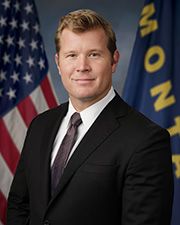
Tim Sheehy
RRepublicanMT · Senator
52
/ 100
Average
Attendance97
Avg: 97
Independence23
Avg: 23
Bipartisan Tone6
Avg: 14
Ethics Record100
Avg: 100
Transparency11
Avg: 47
Accountability Score — composite of attendance, independence, bipartisan tone, ethics record & transparency.
Methodology64
Bills Sponsored
1
Enacted into Law
2
Passed a Chamber
60
In Committee
Bills That Became Law
All Sponsored Bills
S5561In Committee
Protect America's Game Act
S5538In Committee
A bill to direct the Secretary of the Navy to recognize certain aspects of the National Navy UDT-SEAL Museum in Fort Pierce, Florida, as a national memorial, national memorial garden, and national K9 memorial, and for other purposes.
S3929In Committee
Air Traffic Situational Awareness Enhancement Act
This bill would improve how air traffic controllers and pilots see and track aircraft in the sky by enhancing the technology and information systems they use to monitor plane movements and prevent collisions. The changes would likely make air travel safer by giving controllers and pilots better real-time awareness of where other aircraft are located, especially in busy airspace or during bad weather. Airlines, pilots, air traffic control facilities, and ultimately passengers would benefit from the improved safety measures.
S5123Passed Senate
Lunar Landing Day Act
The proposal would make July 20 an official national observance day to commemorate the Apollo 11 moon landing in 1969. Americans would be encouraged to recognize this historic achievement in space exploration on that date each year. The designation would apply to all Americans and serve as a reminder of the nation's accomplishment in reaching the moon.
S5274In Committee
Ride in Freedom Act
S5265In Committee
USTRx Act
Use Sovereignty To reduce Rx Act or the USTRx Act This bill establishes the role of Chief Pharmaceutical Trade Negotiator within the Office of the U.S. Trade Representative (USTR). The negotiator must conduct trade negotiations, enforce trade agreements relating to U.S. pharmaceutical products, and address acts, policies, or practices of high-income countries that adversely impact the market access of U.S. pharmaceutical manufacturers. The USTR must annually compile a list of high-income countries based on official statistics of the International Bank for Reconstruction and Development of the World Bank. Based on that list, the negotiator must submit a report describing (1) such countries' actions and impacts relating to the pharmaceutical trade, and (2) the current status of any responsive actions taken by the United States. The bill also requires the USTR to submit to Congress a plan to respond to certain adverse acts, policies, or practices of high-income countries that are related to the trade of pharmaceutical products.
S5225In Committee
K–12 AI Literacy and Readiness Act of 2026
K-12 AI Literacy and Readiness Act of 2026 This bill authorizes states and local educational agencies (LEAs) to use Student Support and Academic Enrichment Grants for programs and activities that support instruction on the use of artificial intelligence (AI). For example, LEAs may use these grants to provide teachers, school librarians, administrators, and others with the knowledge and skills to use (and teach the use of) AI safely, effectively, and responsibly, including through professional development.
S5208In Committee
Special Operations Forces Concealed Carry Act
The proposal would allow certain military special operations personnel to carry concealed firearms in all U.S. states and territories, even in places where state or local laws normally prohibit it. This would give qualified special operators the same concealed carry rights across the country regardless of where they live or travel. The bill is currently under review by the Senate Judiciary Committee.
S5174In Committee
American Food for American Schools Act of 2026
Schools that participate in the federal lunch program would have to publicly post any waivers they receive that allow them to buy food from non-American sources instead of following the "Buy American" requirement. This transparency measure would let parents, taxpayers, and community members see when and why schools decide to purchase foreign food products rather than domestic ones. The change affects school districts across the country that serve meals to millions of students daily.
S5097In Committee
End H–1B Visa Abuse Act of 2026
The bill would temporarily stop the government from issuing H-1B work visas (which allow companies to hire skilled foreign workers) until new rules are put in place to limit how many of these visas are given out. This pause would affect both employers who want to hire international workers and foreign professionals seeking jobs in the United States. The bill is currently under review by the Senate Judiciary Committee.
S4691In Committee
Disaster Communications Coordination and Preparedness Act
The bill would help federal agencies better coordinate and communicate with each other during disasters and emergencies by improving awareness of available communication resources and tools. This would help ensure that first responders, emergency management officials, and other government agencies can quickly share information and coordinate their response efforts when disasters strike. The measure affects federal agencies, emergency responders, and the communities they serve during natural disasters, public health emergencies, and other crises.
S5047In Committee
Artificial Intelligence Physical Systems Coordination Act of 2026
The government would create a working group to help coordinate between different organizations and experts to study and address the combined risks that come from artificial intelligence systems that interact with the physical world, such as autonomous vehicles or industrial robots. This group would bring together stakeholders like tech companies, safety agencies, and researchers to identify potential problems and develop better safety standards. The effort aims to ensure that as AI systems become more integrated into physical infrastructure and everyday operations, the risks they pose are properly understood and managed.
S3456In Committee
Law Enforcement Officer and Firefighter Recreation Pass Act
Law Enforcement Officer and Firefighter Recreation Pass Act This bill directs the Forest Service and the Department of the Interior to make the National Parks and Federal Recreational Lands Pass available, without charge, to law enforcement officers and firefighters.
S4969In Committee
Warriors to Workforce Act of 2026
This bill would increase the amount of money the Department of Veterans Affairs pays to veterans during their first year of apprenticeship or on-the-job training programs. Veterans pursuing hands-on career training would receive higher educational assistance benefits to help cover costs during that initial year. The change aims to make it more affordable for veterans to transition into skilled trades and other career paths through apprenticeships.
S4824In Committee
Wildland Firefighter Hazard Pay Correction Act
Federal employees who conduct prescribed burns—controlled fires used to prevent dangerous wildfires—would receive extra hazard pay for this risky work. The change would update federal pay rules to recognize the dangers these workers face while protecting forests and communities from uncontrolled fires.
S4807In Committee
Honor Gold Star Families Act
The military currently pays a one-time cash payment called a death gratuity to families when a service member dies, and this bill would increase that payment amount and automatically adjust it each year to keep up with inflation. The change would help military families cope with the financial hardship of losing a loved one who served in the Armed Forces. This bill is currently under review by the Senate Armed Services Committee.
S4794In Committee
Precision Agriculture Cybersecurity Act
The federal government would be required to study and report back to Congress about cybersecurity risks in modern farming technologies, particularly those that use computers and internet connections to manage crops and equipment. The report would come from the Agriculture and Homeland Security departments working together to identify vulnerabilities that could be exploited by hackers to disrupt farms or steal agricultural data. This affects farmers who rely on digital farming tools, agricultural companies that develop these technologies, and the broader food supply chain that depends on secure farming operations.
S4688In Committee
CHEERS Act of 2026
Breweries and distilleries that invest in energy-efficient equipment for producing draft beer and spirits would be able to deduct the cost of that equipment over 15 years instead of a longer period, reducing their tax burden more quickly. This change would make it more affordable for alcohol producers to upgrade to environmentally friendly equipment by allowing them to recover their investment faster through tax deductions. The bill primarily benefits small and large breweries and distilleries looking to modernize their operations with energy-saving technology.
S4491In Committee
Biodefense Diplomacy Enhancement Act
The federal government would increase its diplomatic efforts to work with other countries on biotechnology development and biosecurity issues, including how to safely manage biological research and prevent dangerous pathogens from being misused. This would affect scientists, government agencies, and international partners by establishing clearer communication channels and coordinated policies around biological research standards and safety protocols. The goal is to ensure countries work together to advance beneficial biotechnology while protecting public health and security.
S4161Passed Senate
Maverick Act
Maverick Act This bill authorizes the Department of the Navy to transfer three surplus F-14D Tomcat aircraft to the U.S. Space and Rocket Center Commission in Huntsville, Alabama. (The F-14D Tomcat was a naval fighter aircraft that was retired from service in 2006.) The bill provides for certain conditions for the transfer, including that the transfer must be free of cost to the federal government. Additionally, the commission must not convey ownership interest in the aircraft to another party without Navy approval. If the commission breaches any conditions, the aircraft must revert to the United States. The bill also specifies that such aircraft may not have any combat capability. The Navy may provide excess spare parts to the commission to make one of the aircraft flyable or complete for a static display. The Navy may authorize the commission to enter into agreements with qualified nonprofit organizations to restore and operate the aircraft for public display, air shows, and commemorative events.
S4473In Committee
China-Africa Mining Transparency Act
The State Department would be required to publish an annual list of Chinese companies operating mines in African countries that either use forced labor or cause serious environmental damage. This list would help identify problematic mining operations and could inform U.S. policy decisions and business practices regarding trade and investment in Africa. The measure aims to increase transparency about labor and environmental practices in African mining industries dominated by Chinese firms.
S3993In Committee
Reducing Arbitrary Barriers to Apprenticeship Act of 2026
This bill would remove unnecessary requirements that prevent military veterans and service members from entering apprenticeship programs, making it easier for them to transition to civilian careers in skilled trades. The legislation aims to streamline credential recognition and reduce red tape so that veterans can quickly start apprenticeships in fields like construction, manufacturing, and electrical work without having to repeat training they've already completed in the military. Veterans and employers in skilled trades would be the main beneficiaries, as this could speed up hiring and reduce barriers to good-paying jobs for people leaving the armed forces.
S4220In Committee
Veterans Health Administration Novel Therapeutics Preparedness Act
This bill would help the Veterans Health Administration prepare to quickly adopt and use new medical treatments and therapies for veterans, likely by streamlining approval processes and ensuring the VA has the resources and authority to offer cutting-edge medicines and procedures. The goal is to make sure veterans have faster access to innovative treatments rather than waiting for lengthy standard approval timelines. This affects millions of veterans receiving care through the VA system.
S4304In Committee
TRAVEL Act of 2026
The bill would allow the Department of Veterans Affairs to send doctors to U.S. territories and possessions like Puerto Rico and Guam to provide temporary medical care to veterans in those areas. This would help veterans in remote locations access VA healthcare services without having to travel to the mainland. The measure aims to improve medical coverage for veterans living in these underserved regions.
S4256In Committee
Airmen Certificate Accessibility Act
Airmen Certificate Accessibility Act This bill allows a pilot to present a digital copy of certain certificates (e.g., an airman certificate or a medical certificate) when required to present such documentation by a Federal Aviation Administration (FAA) inspector. Under current FAA regulations, a pilot must present for inspection a physical copy of an airman certificate and other paperwork upon a request from the FAA; a federal, state, or local law enforcement officer; or an authorized representative of the Transportation Security Administration or the National Transportation Safety Board. This bill allows a pilot to present a certificate such as an airman certificate or a medical certificate to an FAA inspector as (1) a physical certificate, or (2) a digital copy stored on an electronic device or cloud storage platform. The FAA must update current regulations to implement this change.
S4274In Committee
WINGS Act
I don't have enough information to write an accurate summary. The bill's subjects aren't listed, and "WINGS Act" is too vague to determine its specific purpose without seeing the actual bill text. To provide a meaningful explanation of what this bill would do and who it affects, I would need either the bill's stated subjects or access to its legislative language.
S4084In Committee
Responder and Recovery Safety in EV Fires Act
This bill would establish safety standards and training requirements for emergency responders who handle electric vehicle fires, and would require automakers to provide better information about EV battery hazards to firefighters and rescue workers. The legislation aims to protect first responders and improve recovery procedures for damaged electric vehicles by ensuring they have the tools, knowledge, and resources needed to safely manage EV-related emergencies.
S3982In Committee
AI Fraud Accountability Act of 2026
This bill would create rules to hold companies accountable when they use artificial intelligence systems to commit fraud or deceive consumers. It likely establishes penalties for businesses that deploy AI to scam people, steal money, or spread false information, while potentially requiring companies to disclose when they're using AI in ways that could harm customers. The law would affect tech companies, financial institutions, and other businesses that use AI in their operations.
S3964In Committee
Contract Our Veterans Act of 2026
This bill would make it easier for veteran-owned businesses to win federal government contracts by giving them special advantages in the bidding process. The legislation aims to help veterans transition to civilian life by supporting their entrepreneurship and ensuring they have better opportunities to compete for work with federal agencies. Veterans and small business owners would be the primary beneficiaries of these contracting preferences.
SRES613Introduced
A resolution recognizing the Army-Navy football game as America's Game.
This resolution officially recognizes the annual Army-Navy football game as "America's Game," honoring its long history and cultural significance to the nation. The resolution is largely symbolic and doesn't create new laws or funding, but instead celebrates the tradition of the rivalry between the U.S. Military Academy and the Naval Academy as an important part of American sports and military heritage.
S3912In Committee
NIDIS Reauthorization Act of 2026
This bill would renew and continue funding for the National Integrated Drought Information System, a federal program that helps communities prepare for and respond to droughts by providing better weather forecasting and water management data. The reauthorization would support scientists, water managers, farmers, and local governments who rely on this information to make decisions about water use and drought preparedness. The bill covers how the program operates and what resources it receives over the coming years.
S3899In Committee
Maverick Act
The bill's vague title makes it difficult to determine its specific purpose without additional details, but based on its referral to the Armed Services Committee, it likely addresses military operations, personnel, or national defense policy. The bill is still in early stages and has not yet been debated or detailed publicly.
S2860In Committee
Revitalizing America’s Offshore Critical Minerals Dominance Act
This bill would allow the federal government to lease ocean areas off the U.S. coast for mining operations to extract critical minerals like rare earth elements and metals needed for batteries, electronics, and renewable energy technology. The goal is to reduce American dependence on other countries for these essential materials while creating jobs in the mining and energy sectors, though it would also affect ocean ecosystems and fishing communities in coastal areas.
S3778In Committee
Carbon Resource Innovation Act
This bill would likely create tax incentives or credits for companies that develop and use new technologies to capture, utilize, or manage carbon dioxide and other greenhouse gases. The changes would affect businesses in energy, manufacturing, and other industries that emit carbon, potentially making it cheaper for them to invest in carbon-reduction technologies. The goal appears to be encouraging innovation in carbon management solutions through the tax code.
S3728In Committee
Long-Distance Corridor Relief Enhancement Act
This bill would likely provide funding, tax breaks, or regulatory relief to improve long-distance transportation corridors—such as highways, rail lines, or bus routes—that connect different regions of the country. The changes would probably affect trucking companies, passenger transit operators, and travelers who use these routes regularly. The bill aims to make long-distance travel more efficient or affordable by reducing barriers to corridor development and maintenance.
S3608In Committee
Trade Transparency Unit Strategy Act
Trade Transparency Unit Strategy Act This bill requires a strategy and report related to the expansion of trade transparency units. Trade transparency units examine trade anomalies and financial irregularities associated with trade-based money laundering, customs fraud, contraband smuggling, and tax evasion. Specifically, the Department of Homeland Security must coordinate with the Departments of State, Commerce, and the Treasury to submit a strategy to Congress. This strategy must (1) expand information sharing between U.S. Customs and Border Protection, Homeland Security Investigations of U.S. Immigration and Customs Enforcement, appropriate elements of the Department of Commerce, the Financial Crimes Enforcement Network of the Department of the Treasury, and appropriate counterparts of foreign customs agencies through trade transparency units; and (2) improve intra-agency, interagency, and other multilateral information sharing with respect to these units. The Government Accountability Office must submit a report to Congress that includes an assessment of the strategy.
S902In Committee
Wildfire Response and Preparedness Act of 2025
This bill would strengthen the federal government's ability to prevent and respond to wildfires on public lands by improving funding, equipment, and coordination between agencies like the Forest Service and Bureau of Land Management. It likely includes measures to increase firefighting resources, support community preparedness programs, and potentially modify how the government manages forests to reduce fire risk. The changes would affect federal land managers, communities near public forests, and taxpayers who fund wildfire response efforts.
S3314In Committee
Written Informed Consent Act
This bill would require military members and veterans to give written permission before the Department of Defense or Veterans Affairs can use their personal health information for research or other purposes. The measure aims to give service members and veterans more control over how their medical records are shared and used by government agencies.
S3239In Committee
JAIL Act
S2996In Committee
Hiring Preference for Veterans and Americans With Disabilities Act
Hiring Preference for Veterans and Americans With Disabilities Act This bill allows states and local jurisdictions to give a hiring preference (when hiring election workers to administer an election in the state or local jurisdiction) to veterans, individuals with a disability, and nonresident military spouses or dependents. Further, the bill prohibits states and local jurisdictions from refusing to hire a nonresident military spouse or dependent as an election worker solely on the grounds that the individual does not maintain a place of residence in the state or local jurisdiction.
S2971In Committee
Plant Safety Authorities Coordination Act of 2025
S2916In Committee
Long-Distance Corridor Relief Act
S2917In Committee
Safety Funding Parity Adjustment Act of 2025
S2899In Committee
Rail Service Continuity and Stability Act of 2025
S2875In Committee
CHOICE Act
The proposal would modify tax rules to give individuals and businesses more flexibility in how they manage their finances and make economic decisions. It aims to reduce certain tax requirements or restrictions that currently apply to workers, investors, and companies. The specific changes would need to be reviewed by the Senate Finance Committee before moving forward.
S2911In Committee
Streamlining State Highway Safety Submissions Act
S2900In Committee
Work Zone Weather Integration Act of 2025
S2895In Committee
Surface Transportation Weather Safety Gap Analysis Act of 2025
S2901In Committee
Safer Emergency and Evacuation Routes Response Act of 2025
S2910In Committee
Work Zone Safety Enhancement Act
S2788In Committee
Safety Grant Consistency Act
S2789In Committee
Rural Safety Administration Flexibility Act
S2366In Committee
SAFE Cities Act
The SAFE Cities Act would likely establish new federal programs or funding to help cities reduce crime and improve public safety, possibly through grants to local police departments, community policing initiatives, or crime prevention strategies. The bill would affect city governments, law enforcement agencies, and communities dealing with crime issues. This is a crime prevention measure that has been sent to the Judiciary Committee for review.
S2267In Committee
Ensuring Workers Get PAID Act of 2025
This bill would require employers to provide workers with clear, written information about their pay rates, how their wages are calculated, and any deductions before they start working. The legislation aims to protect employees from wage theft and hidden pay practices by ensuring transparency in compensation across all types of jobs.
S160Enacted
Aerial Firefighting Enhancement Act of 2025
Aerial Firefighting Enhancement Act of 2025 This act reauthorizes the Department of Defense to sell its excess aircraft and aircraft parts that are acceptable for commercial sale for wildfire suppression purposes. Such authority begins June 12, 2025, and ends October 1, 2035. The act also provides that such aircraft may be used to deliver water by air in order to suppress wildfire (the previous authority only provided for the delivery of fire retardant). The act removes the previous limitation on providing international wildfire suppression assistance with such purchased aircraft.
S2017In Committee
S Corporation Modernization Act of 2025
S1417In Committee
Michael Enzi Voluntary Protection Program Act
This bill would expand and strengthen the Voluntary Protection Program, which recognizes companies that maintain excellent workplace safety records and practices. Employers who participate would receive regulatory benefits and public recognition for going above and beyond federal safety requirements, while workers at these companies would benefit from safer working conditions. The program aims to encourage more businesses to invest in injury prevention and worker protection.
S1307In Committee
Police Officers Protecting Children Act
Police Officers Protecting Children Act This bill specifies that certain active and retired law enforcement officers who are authorized to carry concealed firearms are also authorized to possess (or discharge) a firearm in a school zone under federal law.
S1017In Committee
Safe and Secure Transportation of American Energy Act
Safe and Secure Transportation of American Energy Act This bill expands the types of activities that are subject to criminal penalties related to damaging or destroying an interstate gas or hazardous liquid pipeline facility. Under current law, a person who knowingly and willfully damages or destroys a pipeline facility is subject to criminal penalties, including a fine, a prison term of up to 20 years, or both. If a death results from the offense, the person may be imprisoned for any term of years or life. Under the bill, these criminal penalties also apply to a person who knowingly and willfully vandalizes, tampers with, or disrupts or prevents the operation or construction of the facility.
S1039In Committee
PARTS Act of 2025
The PARTS Act would likely establish new requirements or penalties related to stolen vehicle parts or auto theft, based on its focus on crime and law enforcement. The bill would probably affect car owners, auto repair shops, and law enforcement agencies by creating stricter rules around how vehicle parts are tracked, sold, or recovered. This could help reduce car theft and the illegal resale of stolen auto components.
S441In Committee
Fit for Purpose Wildfire Readiness Act of 2025
This bill would update federal wildfire prevention and response strategies on public lands to better prepare communities and forests for increasingly severe fire seasons. It likely aims to improve coordination between federal agencies, streamline funding for fire management projects, and enhance preparedness measures that protect both natural resources and nearby communities from wildfire damage.
S333In Committee
Homeowner Energy Freedom Act
This bill would likely give homeowners more freedom to choose their own energy sources and reduce restrictions on how they power their homes, possibly including options like solar panels, backup generators, or alternative energy systems. The exact changes would depend on the bill's specific provisions, but the general intent appears to be removing barriers that prevent homeowners from having more control over their energy choices rather than relying solely on traditional utility companies.
S226In Committee
No Tax Dollars for Terrorists Act
No Tax Dollars for Terrorists Act This bill requires the Department of State to develop and implement a strategy to discourage foreign countries and nongovernmental organizations from providing financial or material support to the Taliban, including by using U.S.-provided foreign assistance to discourage countries and organizations from providing such support to the Taliban. The State Department must report to Congress on (1) foreign countries and nongovernmental organizations that have provided financial or material support to the Taliban and U.S. efforts to oppose such support; (2) the strategy to discourage such support and a plan for the strategy's implementation; (3) U.S.-funded direct cash assistance programs in Afghanistan; and (4) the Afghan Fund, including Taliban influence over Da Afghanistan Bank (the Afghan central bank).
S138In Committee
VA Home Loan Awareness Act of 2025
VA Home Loan Awareness Act of 2025 This bill requires mortgage lenders to include on the Uniform Residential Loan Application (i.e., Fannie Mae Form 1003 or Freddie Mac Form 65) a notification that applicants with military service may qualify for a Department of Veterans Affairs Home Loan. Not later than 18 months after the enactment of the bill, the Government Accountability Office must study and report on whether at least 80% of lenders using the loan application form have met this requirement.